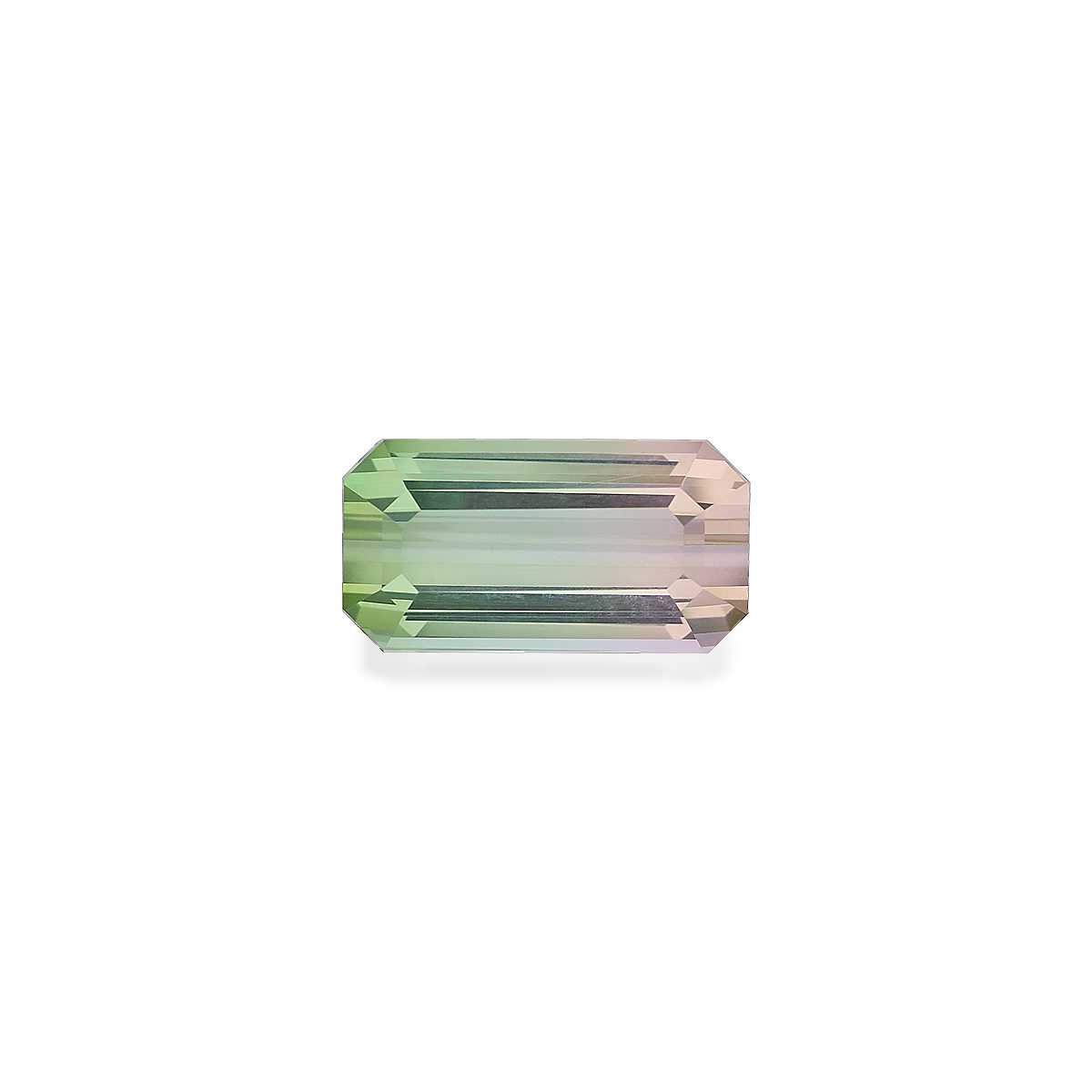
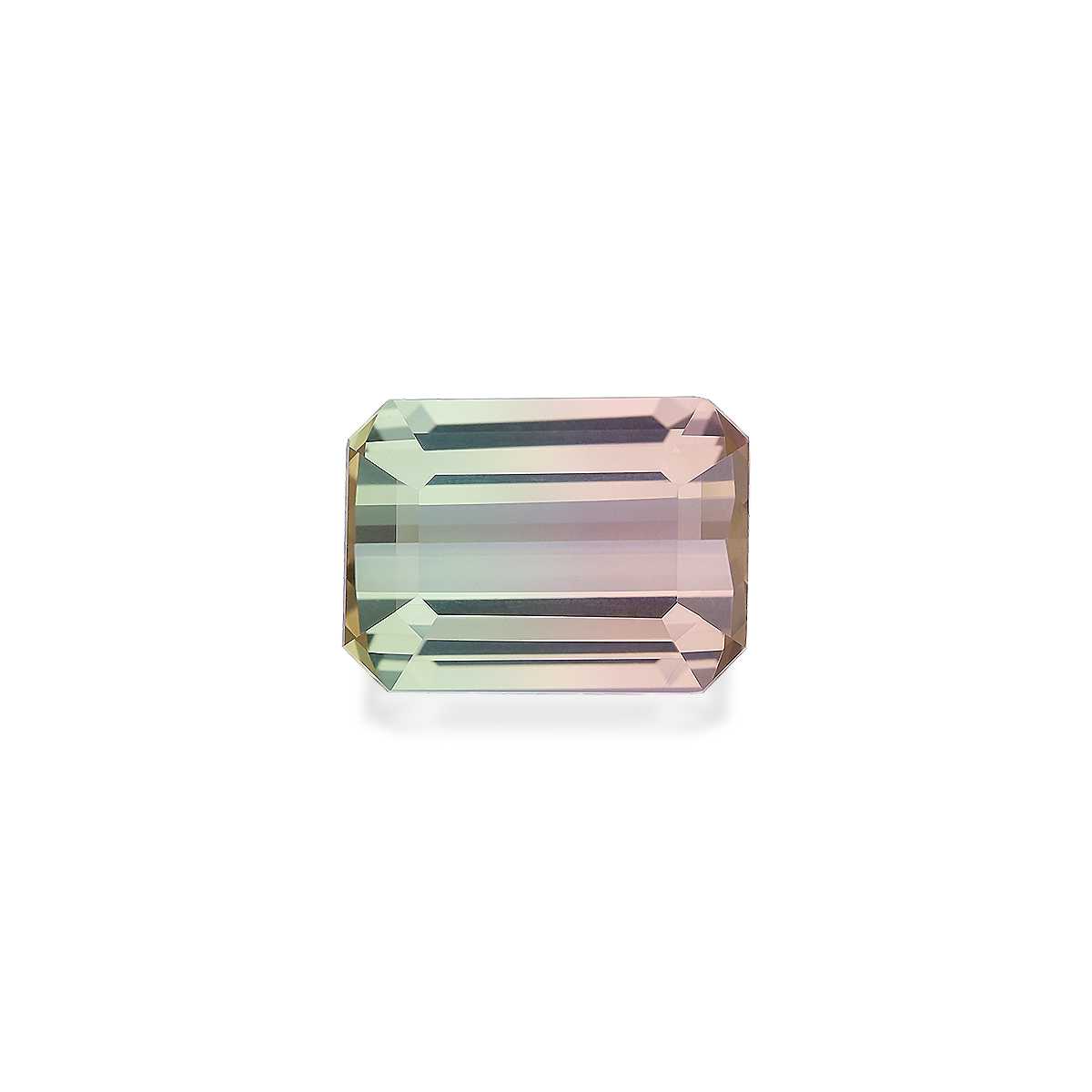
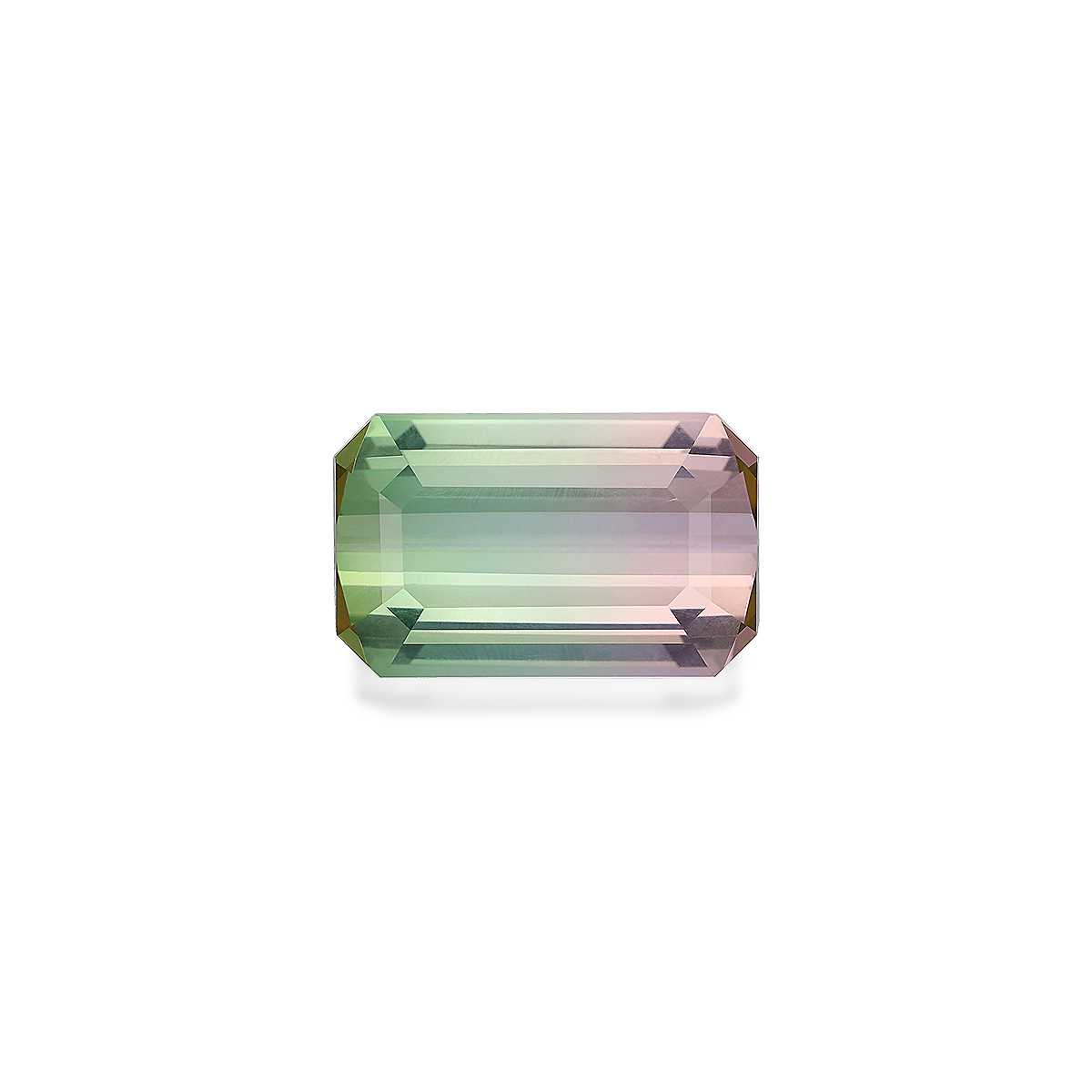
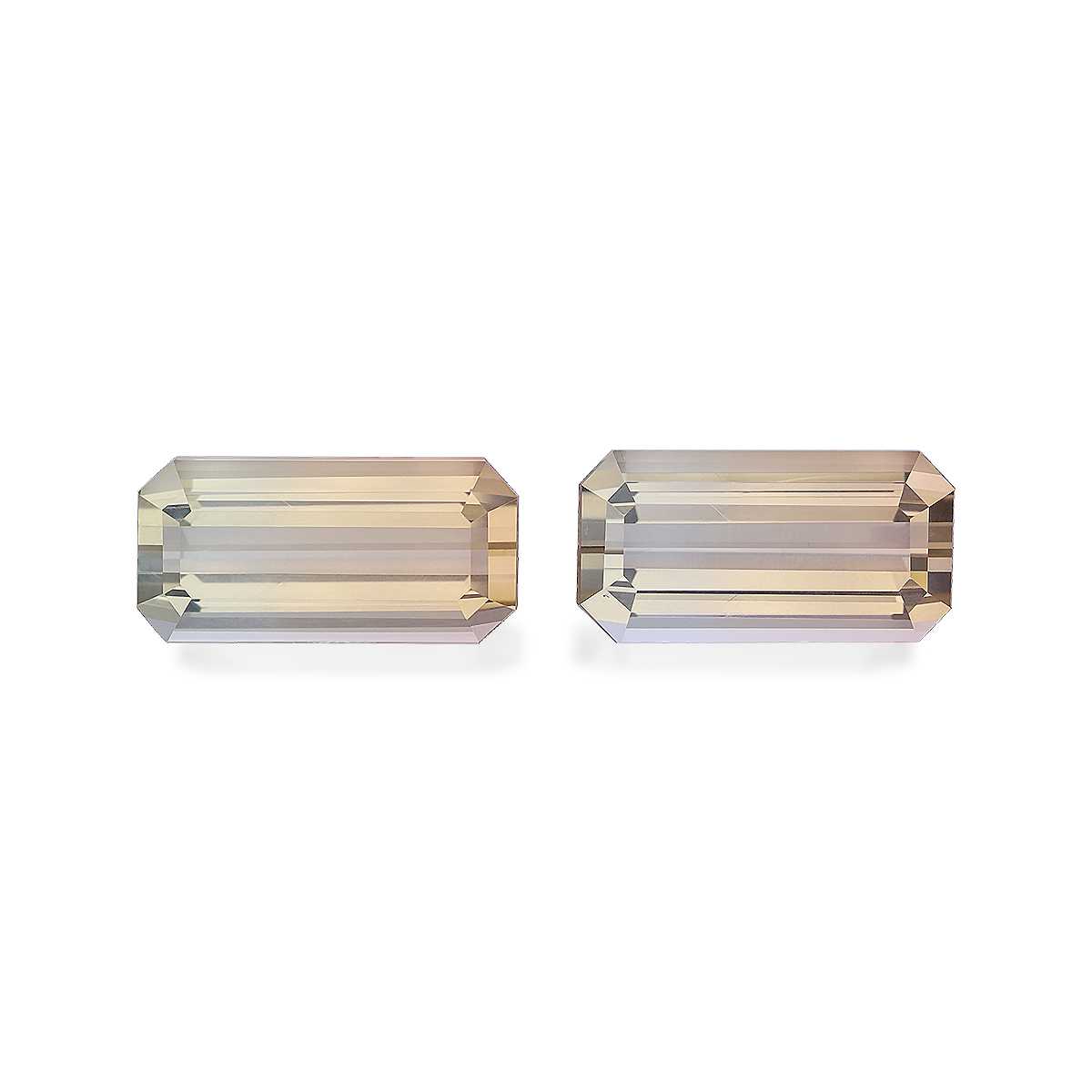
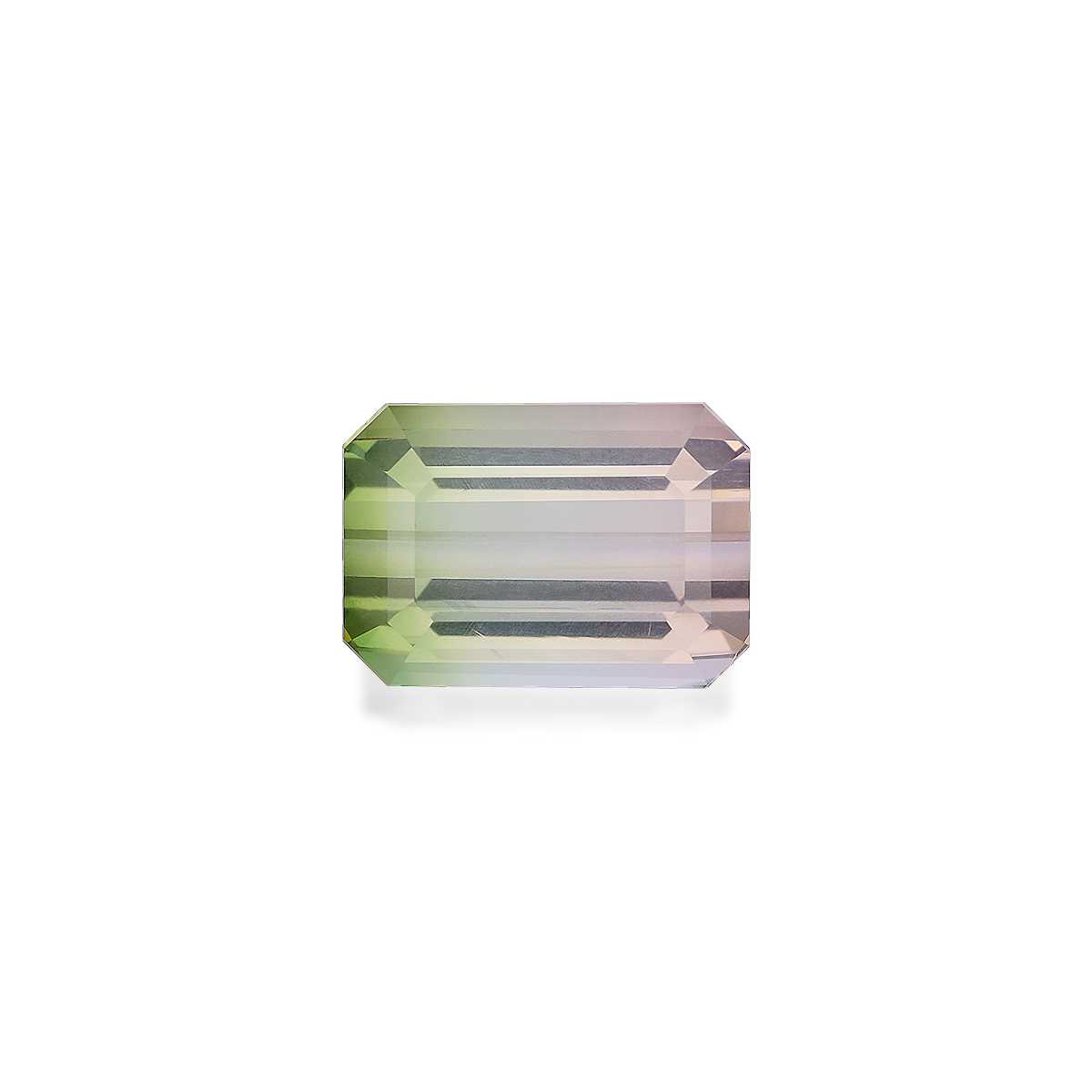
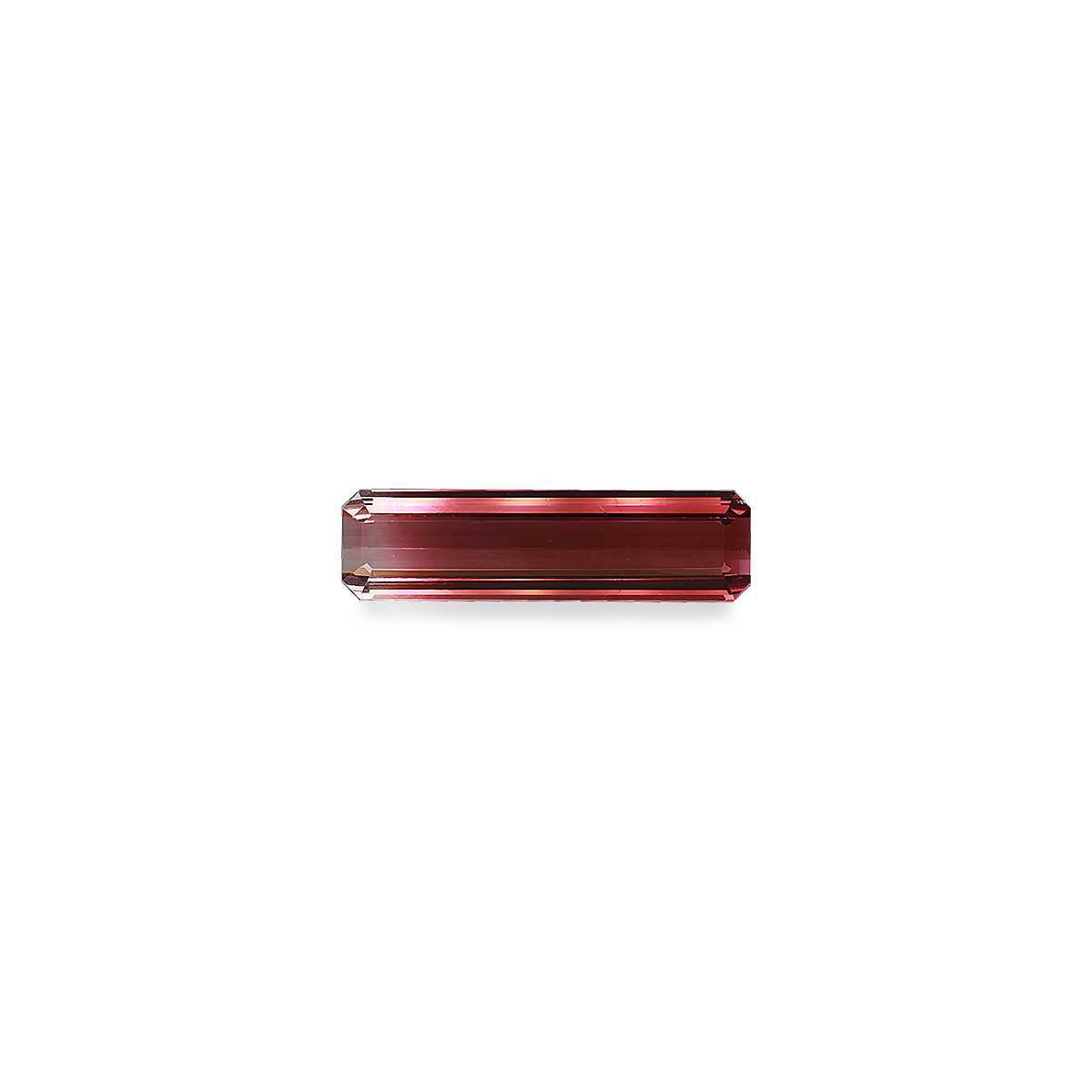
This page gathers the stones in our collection that display more than one distinct colour within a single crystal. Bi-colour material forms when the chemistry of the growth environment shifts while the crystal is still forming, so that successive zones take up different trace elements or are exposed to different conditions. The result is a stone divided by a visible boundary — sometimes crisp, sometimes softly graded.
The varieties you will find here are Bi Colour Tourmaline and Cuprian Tourmaline, both from a species famously prone to colour zoning along the length of the crystal; Ametrine, the naturally zoned purple-and-golden quartz that combines amethyst and citrine colouration; Bi-Colour Topaz; and occasional zoned Tsavorite Garnet.
When choosing, weigh three things. First, the character of the boundary — whether you prefer a sharp division or a gentle transition. Second, the cut and orientation: long step cuts and emerald cuts tend to present the zones side by side, while brilliant cuts can blend or scatter them. Third, balance — some buyers want equal halves, others favour one dominant colour with an accent. Treatment, where relevant, is disclosed on each individual stone.