Demantoid Garnet Meaning and Symbolism
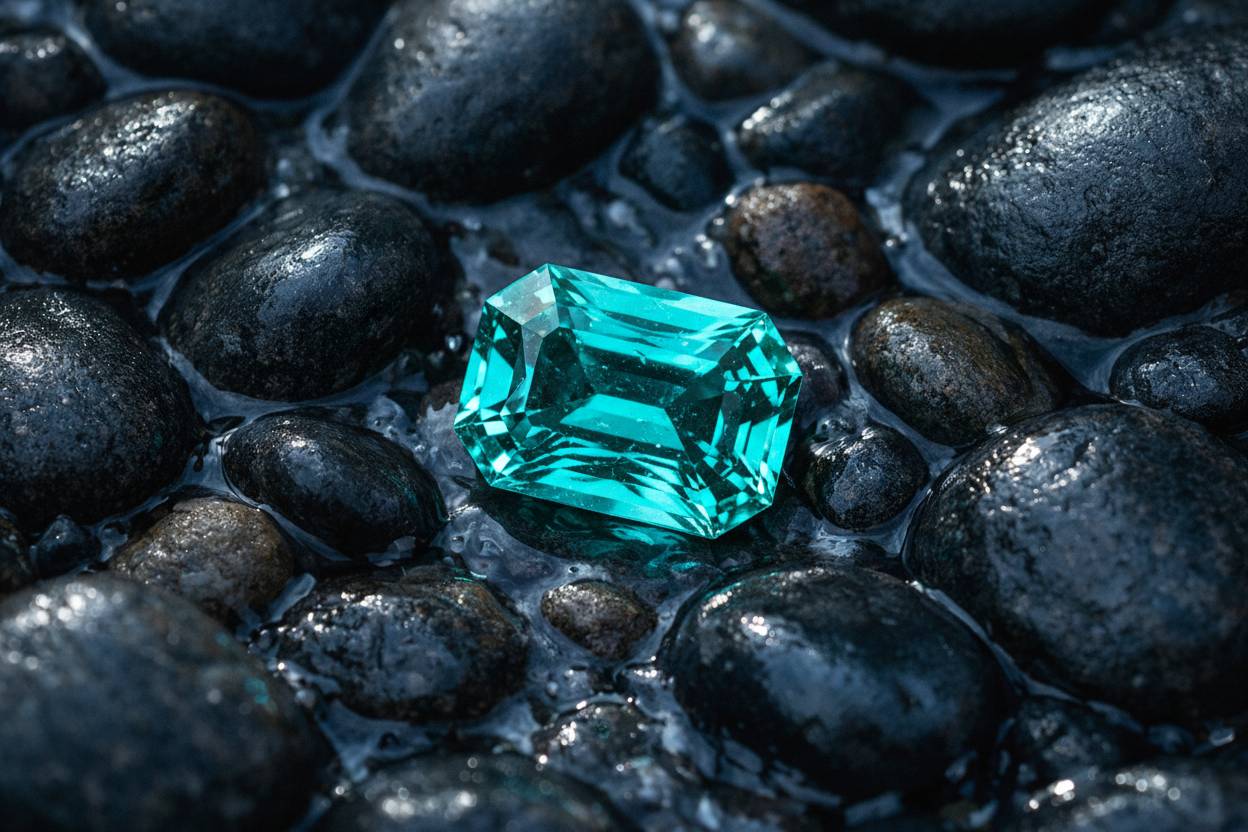
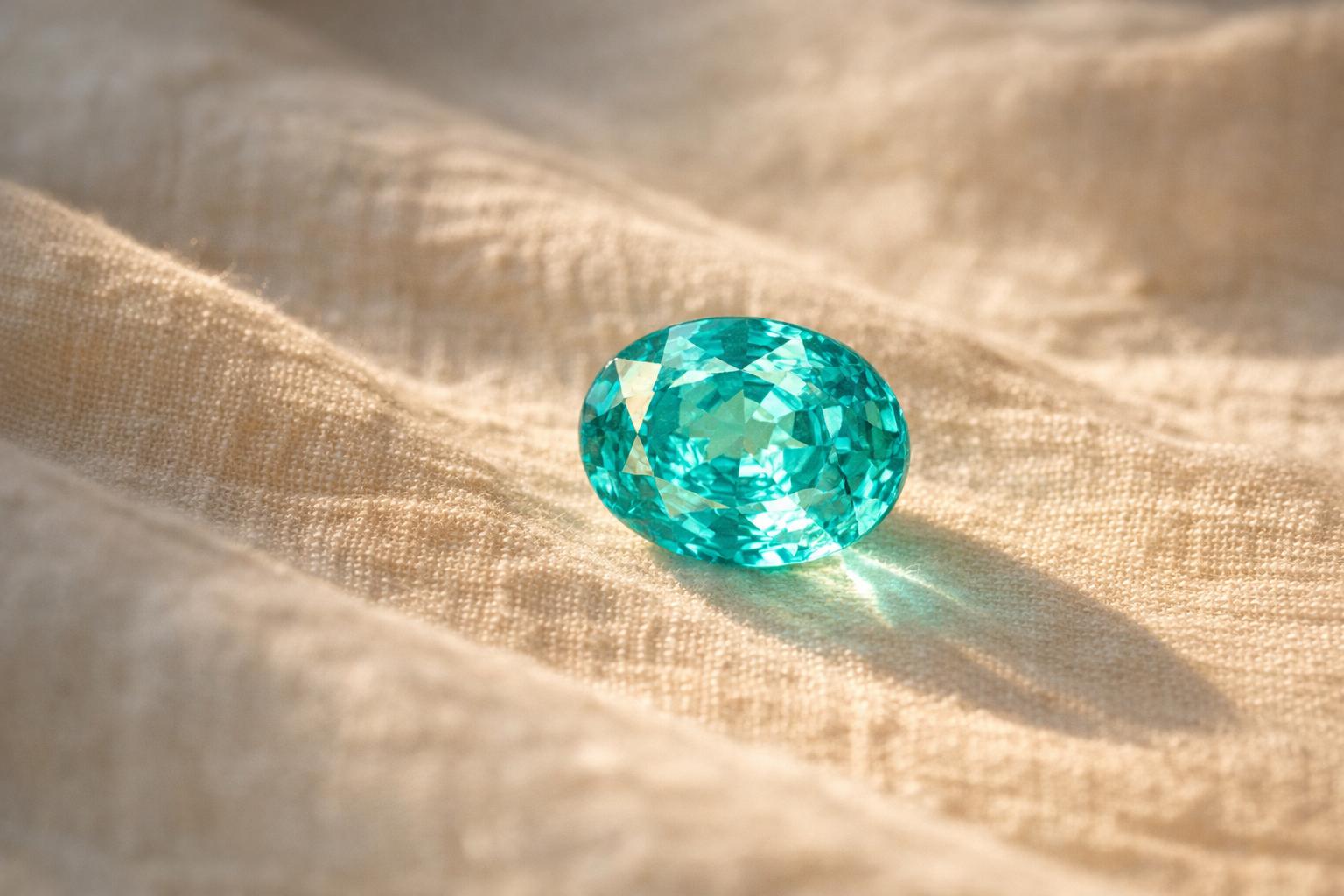
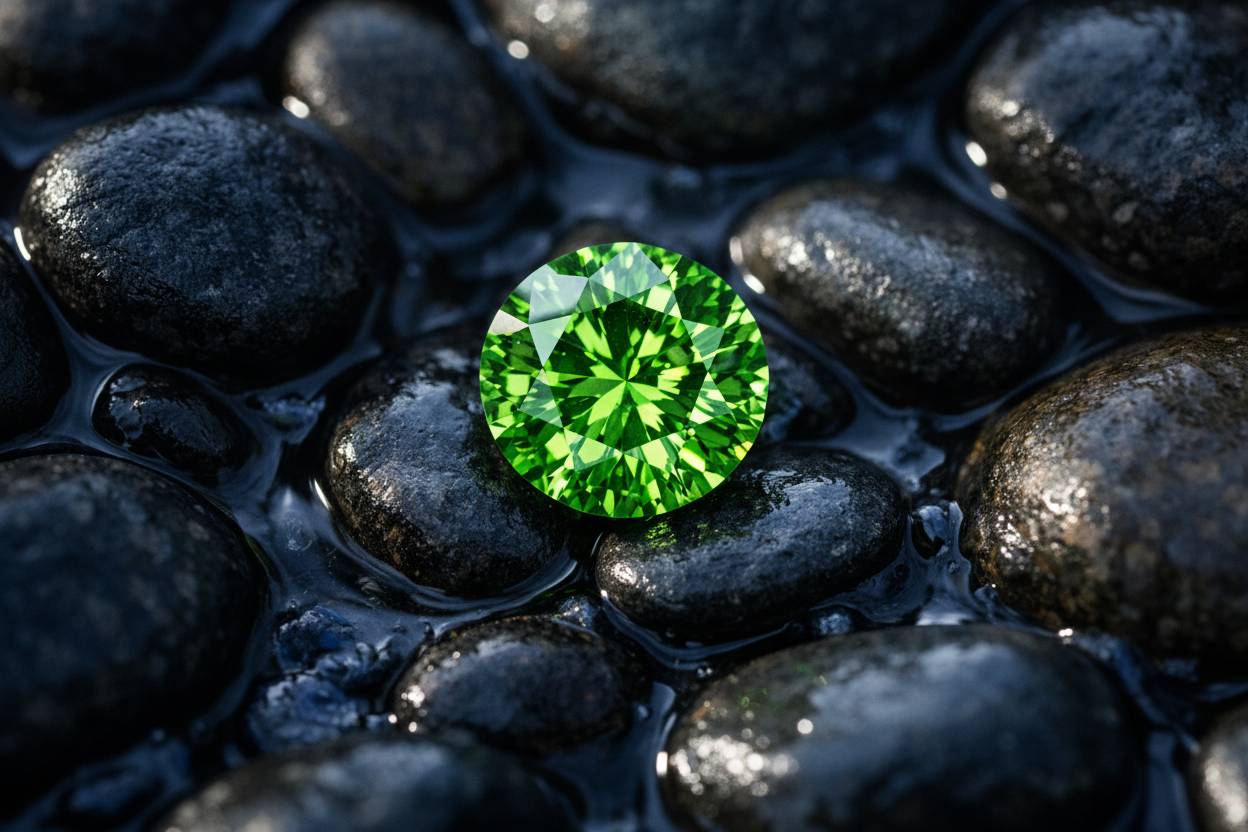
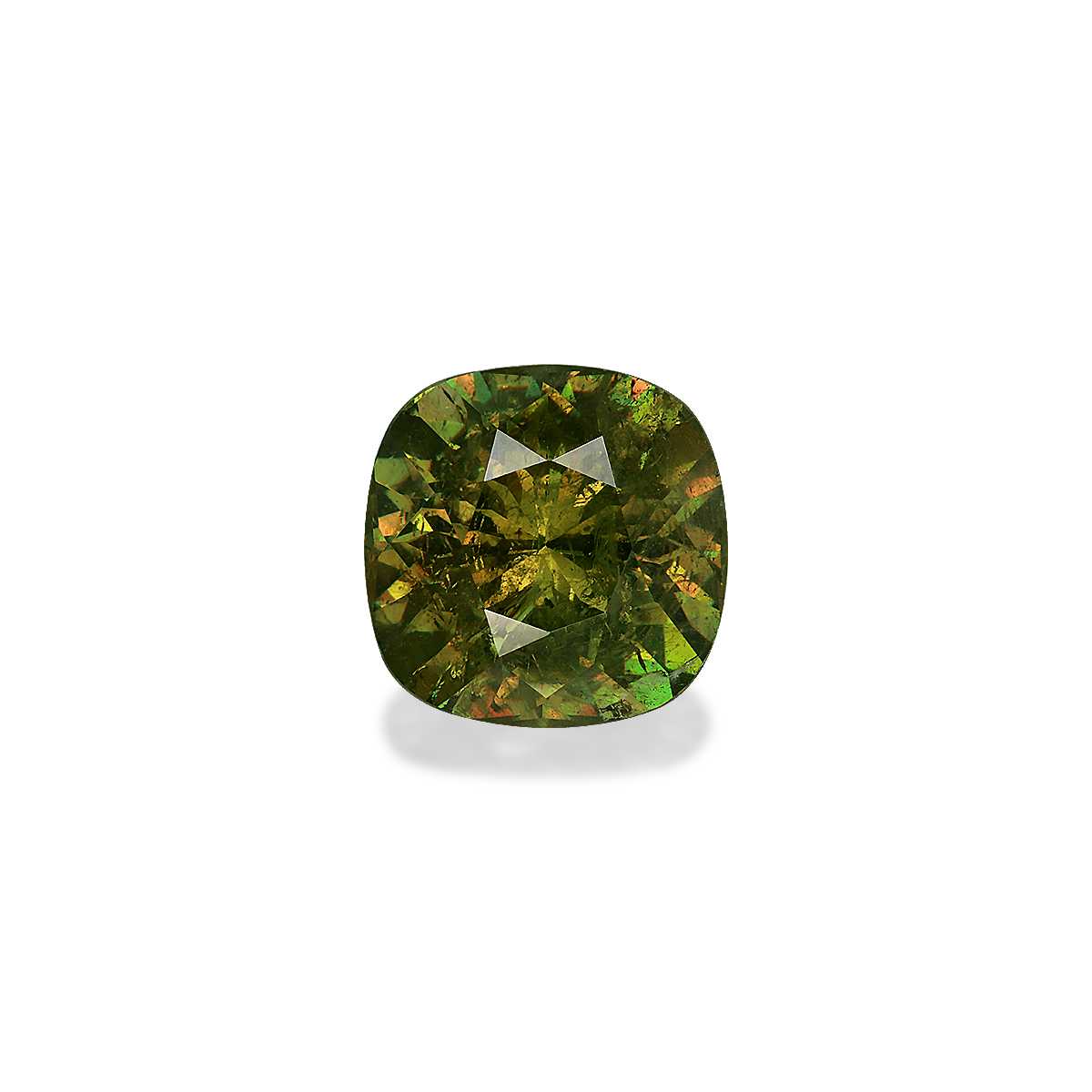
Demantoid garnet meaning and symbolism centre on vitality, renewal and clear sight — associations that grew from its chromium-driven green and its status as the prestige garnet of the late nineteenth century. Within the older garnet tradition it also inherits meanings of protection and safe passage, carried by red garnet in Roman signet rings and early medieval cloisonné jewellery. Gemmologically it is a green garnet coloured by chromium, Mohs 7, with a refractive index of about 1.74, reaching the market unheated; Namibian material is the source we work with most, and horsetail and crystal inclusions are a normal part of its identity rather than a fault to be designed away.
The name and its Russian era
The name comes from the Dutch demant, meaning diamond, a reference to the stone's very high dispersion — the fire that breaks white light into spectral colour.
Green garnet found in the Ural Mountains in the mid-nineteenth century reached the Russian court and the leading European workshops of the period, including Fabergé, which gave the stone its reputation for refinement rather than mass appeal.
That history is why demantoid still reads as a collector's gem. It was never an everyday stone, and its symbolism of distinction is historical fact rather than invented mysticism.
Garnet lore across cultures
Garnet as a species has one of the longest continuous records in jewellery. Roman and late antique workshops set garnet in signet rings; Anglo-Saxon goldsmiths cut thin garnet plates for cloisonné work, the Sutton Hoo finds being the best-known surviving example.
From that long use came the familiar associations: protection on a journey, constancy, and steadiness of purpose. Medieval and early modern lapidaries repeat these themes, usually with red garnet in mind.
Demantoid inherits the family meaning and adds its own. Green has consistently been read as growth and renewal across European and South Asian traditions, and demantoid is the garnet that carries that colour most intensely.
Garnet is also the modern birthstone for January, a convention formalised by the American National Association of Jewelers in 1912 and still followed by the trade today.
What demantoid actually is
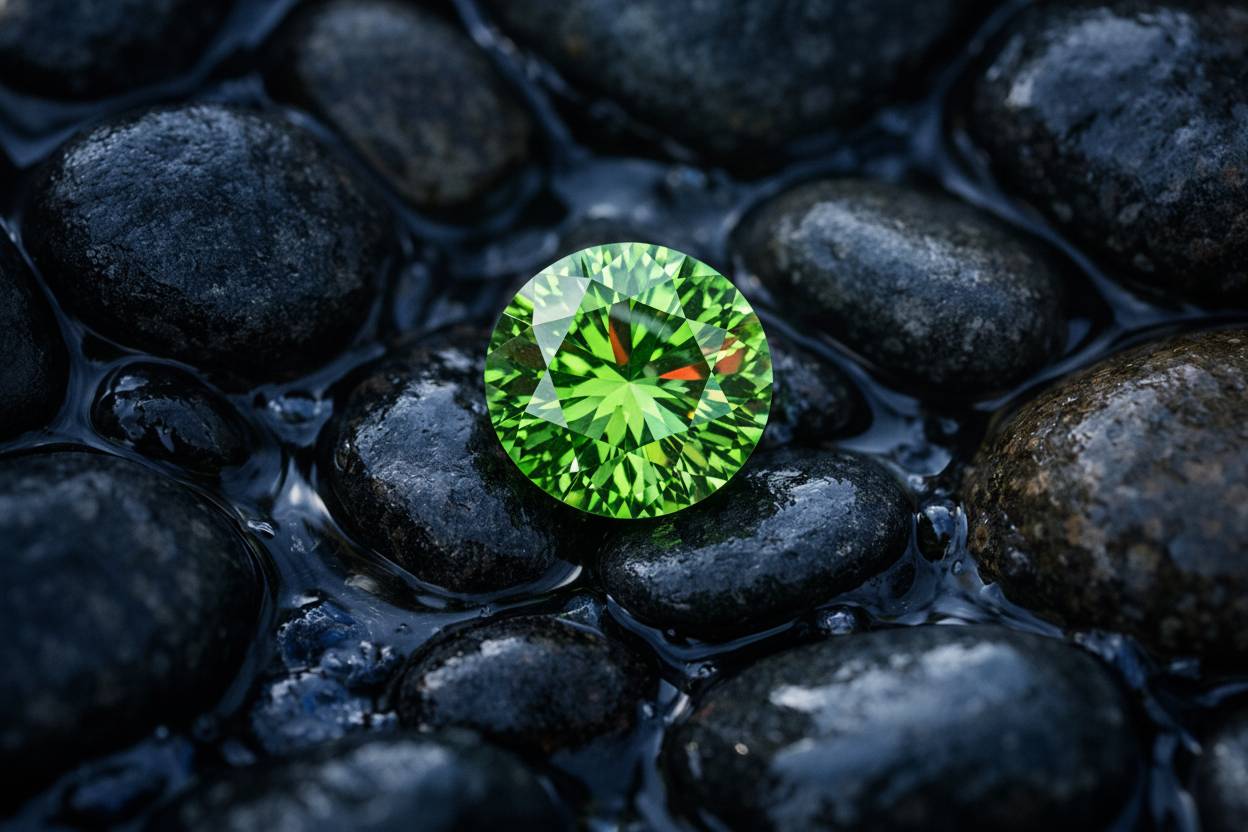
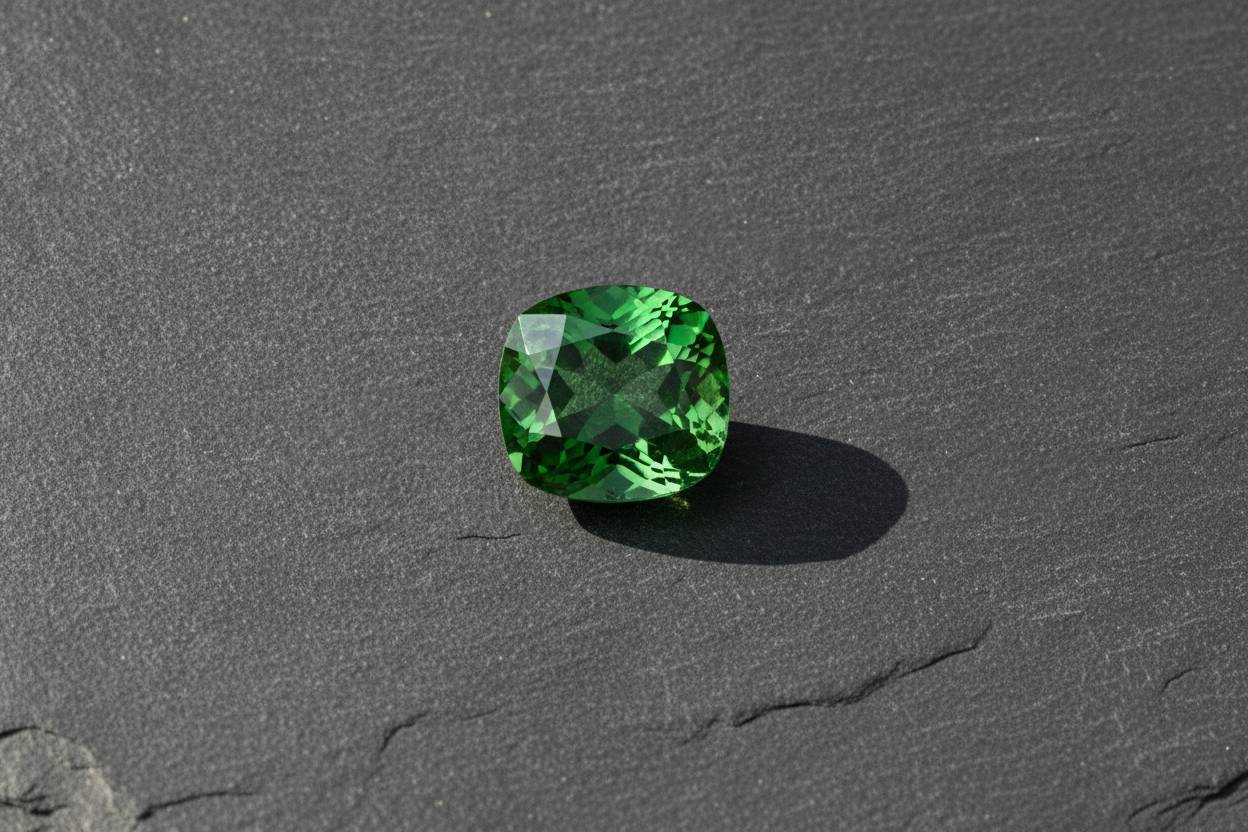
Demantoid is the green variety of garnet, and its colour is caused by chromium. The intensity of that green — vivid rather than olive or yellowish — is the single strongest driver of desirability.
It is a cubic, singly refractive material with a refractive index around 1.74. Mohs hardness is 7, which is respectable but below sapphire or spinel.
In practice that hardness governs how a stone should be worn. Demantoid suits rings worn with awareness, pendants and earrings; it is not a gem to leave on through gardening or gym work.
Why it looks the way it does
High dispersion gives demantoid flashes of orange and red fire inside a green body colour, which is unusual and part of why the nineteenth-century trade compared it to diamond.
Fine cutting is what releases that effect. A well-proportioned stone returns light evenly; a shallow or overly deep stone trades fire for weight.
Horsetails and colour change
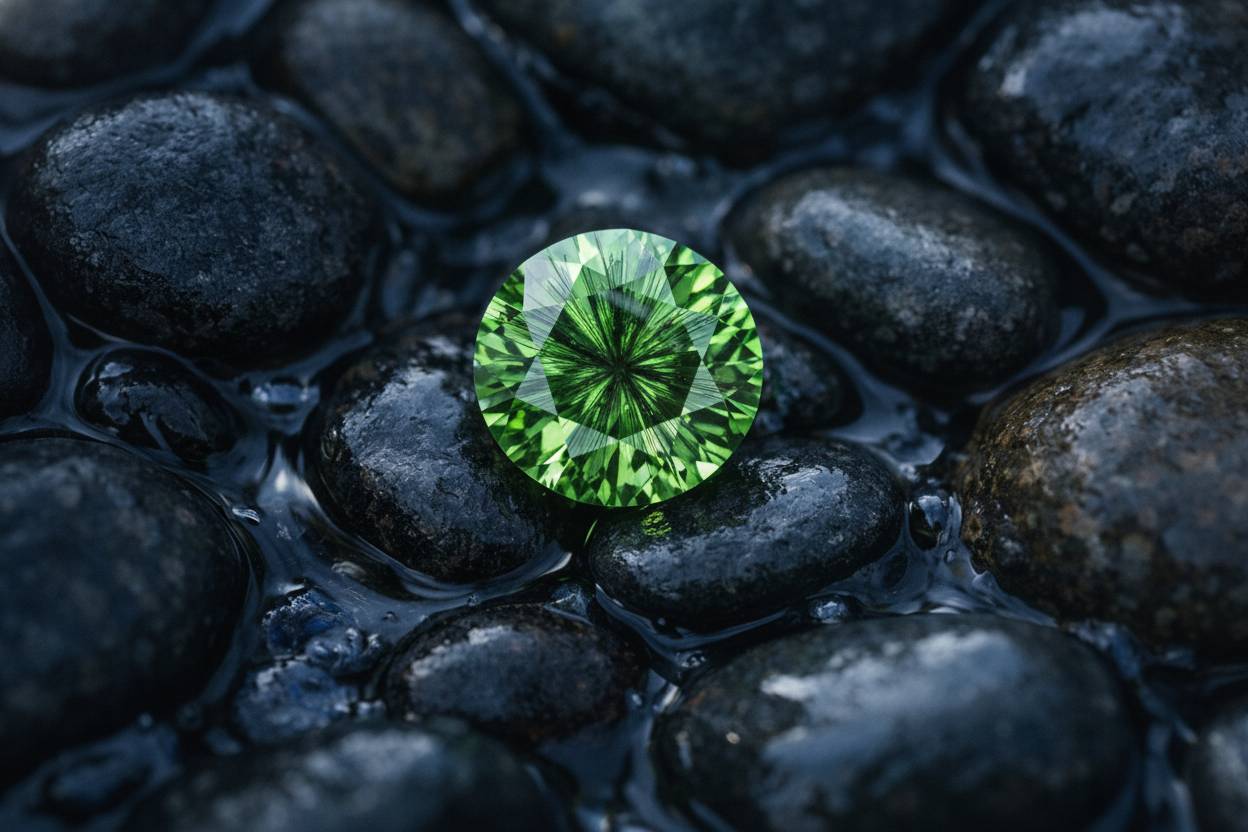
The best-known inclusion in demantoid is the horsetail: a radiating spray of fine needle-like fibres. Crystal inclusions also occur, and both are accepted as part of the stone's natural record rather than concealed.
A horsetail is not a flaw in the commercial sense. Collectors often seek a clean, well-formed horsetail, while buyers prioritising brightness look for higher clarity overall — both positions are legitimate, and they price differently.
Some demantoid is sold under the trade name colour change, shifting in appearance between daylight and incandescent light. This is a genuine phenomenon in specific material, but it is a minority characteristic.
Not all demantoid garnet changes colour. Treat any blanket claim to the contrary as a reason to ask harder questions.
What drives value
Four factors do most of the work in pricing demantoid.
- Colour. Rich, saturated green driven by chromium sits at the top; yellowish or brownish green sits well below it.
- Clarity. Eye-clean brightness carries a premium, with the horsetail exception noted above.
- Colour change. Where a genuine, visible shift exists, it adds materially to rarity.
- Size. Demantoid is scarce in larger sizes, and per-carat prices rise steeply as weight increases.
Treatment status matters too. Demantoid in our inventory is unheated, and unheated material of fine colour is the benchmark, not a lesser alternative.
More from Demantoid Garnet



Buying with the meaning intact
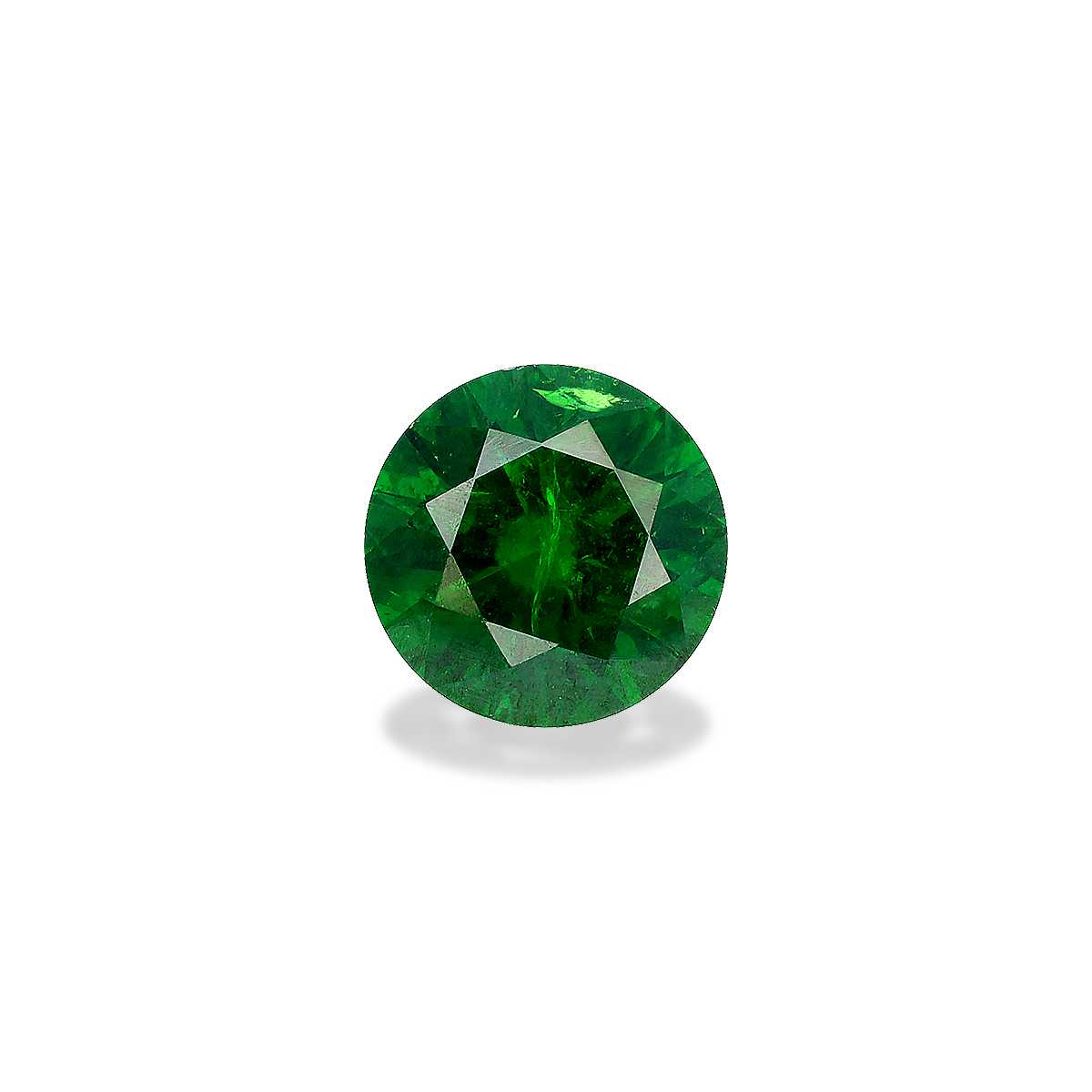
Three mistakes recur with this gem. Buyers overlook inclusions entirely, assume every demantoid is a colour-change stone, and fail to verify origin and treatment before committing.
Ask for the origin to be stated plainly — Namibian demantoid is a well-defined source — and for treatment status to appear in writing. A report from a recognised laboratory such as GIA, SSEF or Gübelin settles identity and treatment; origin opinions should be read as expert opinion, not absolute fact.
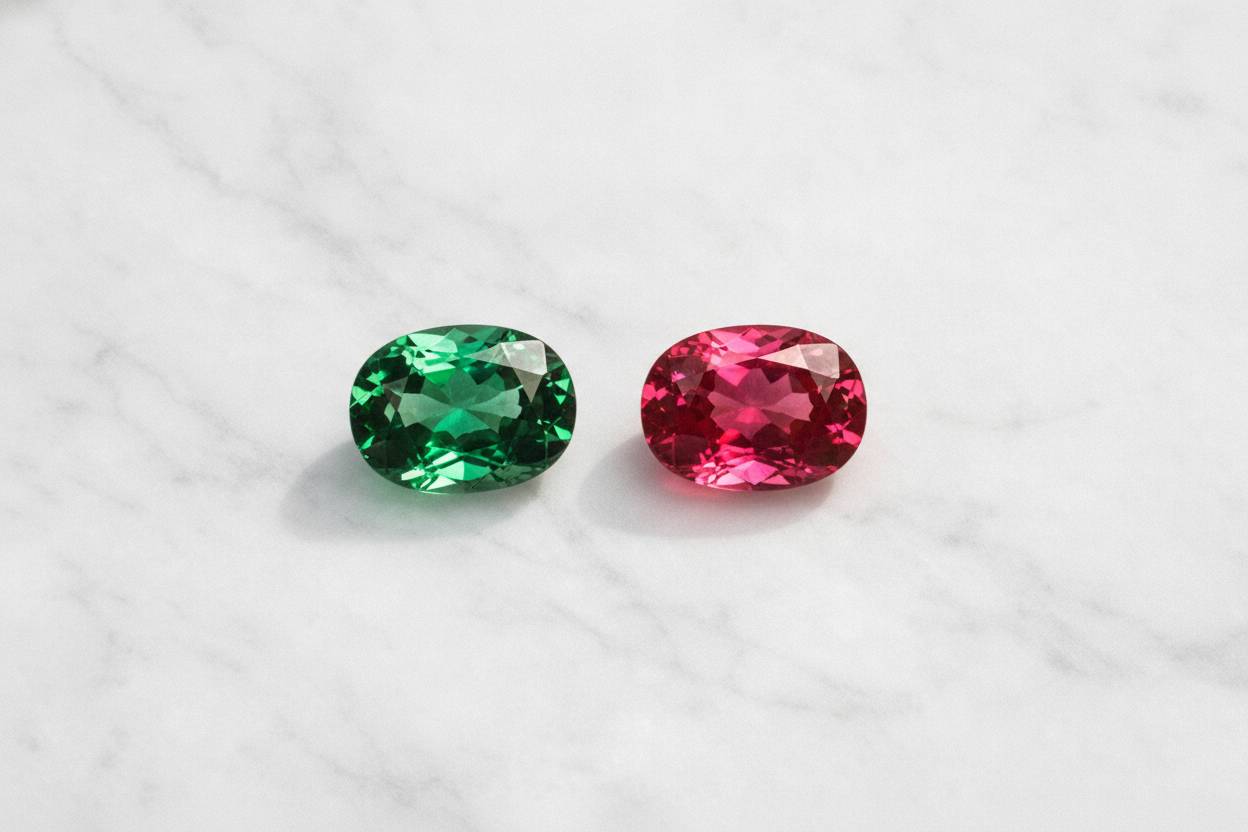
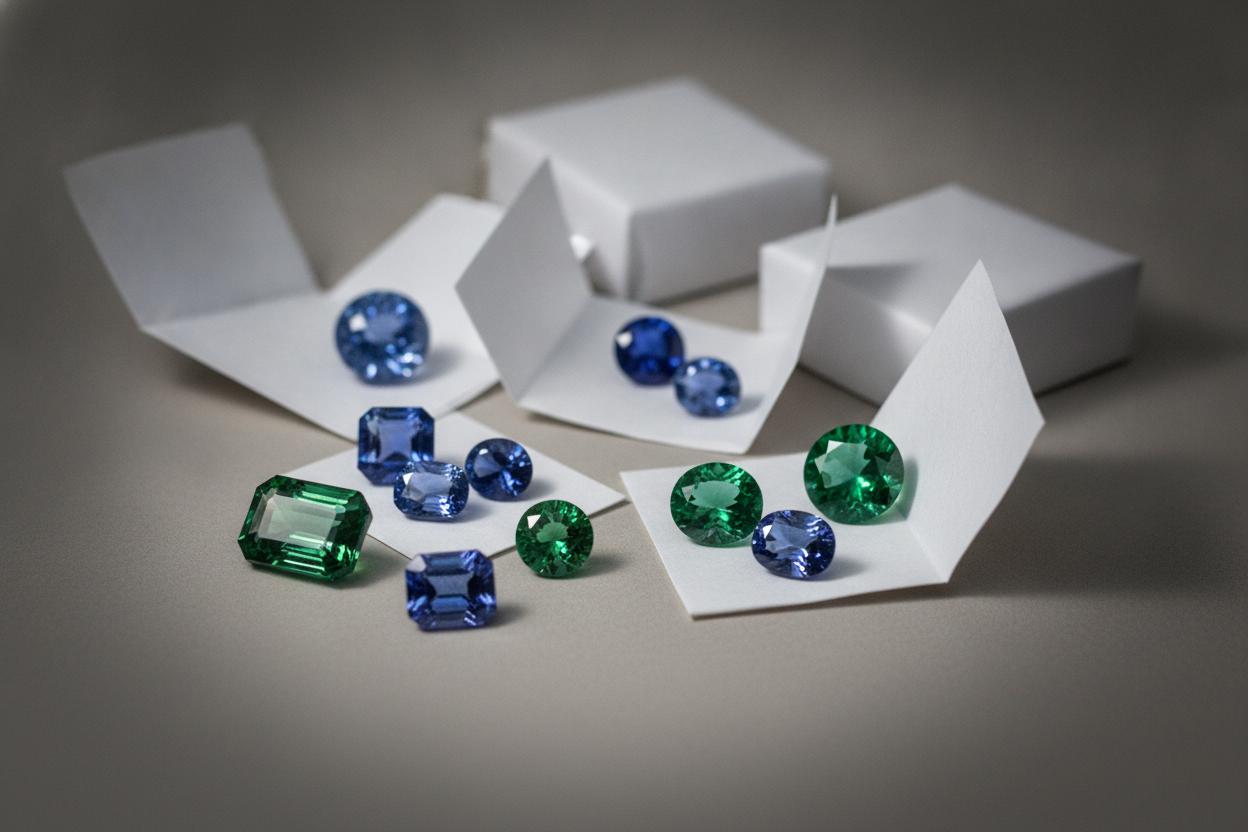
For a matched pair, inspect the two stones together under the same light. Colour, tone and cutting depth should agree closely, and any colour-change behaviour should be consistent across both.
Understood properly, the symbolism of demantoid garnet rests on things you can verify: a chromium green that is genuinely rare, a fire few coloured stones match, and a record of use that runs from imperial Russian workshops to the present. That is a sound basis for keeping a stone for a long time.
Frequently asked questions
What does demantoid garnet symbolise?+
Demantoid carries the broader garnet associations of protection, constancy and safe travel, inherited from Roman and early medieval use of the species. Its green colour adds meanings of growth and renewal, while its nineteenth-century Russian court history gave it a reputation for distinction.
Is all demantoid garnet a colour-change stone?+
No. Some demantoid is sold under the colour-change trade name and shows a genuine shift between daylight and incandescent light, but this is a minority characteristic. Any claim that all demantoid changes colour should be challenged.
Are horsetail inclusions a problem?+
Not necessarily. Horsetails are radiating needle-like fibres that many collectors actively seek as a natural signature. Buyers who prioritise brightness will prefer higher overall clarity, so the two preferences simply price differently.
Is demantoid garnet treated or heated?+
The demantoid we offer is unheated. Treatment status should always be stated in writing, and an unheated stone of fine chromium green is the benchmark for the variety rather than a compromise.
What should I check when buying a demantoid pair?+
View both stones side by side under the same lighting and compare colour, tone, saturation and cutting depth. If either stone shows colour change, the behaviour should be consistent across the pair, and both should share the same stated origin and treatment status.
How durable is demantoid for daily wear?+
Demantoid has a Mohs hardness of 7, which suits pendants, earrings and rings worn with reasonable care. It is softer than sapphire or spinel, so avoid wearing it during manual work or sport.
From our Journal
Buying guides, origin stories, and notes from the trade.