Tsavorite Garnet Meaning and Symbolism
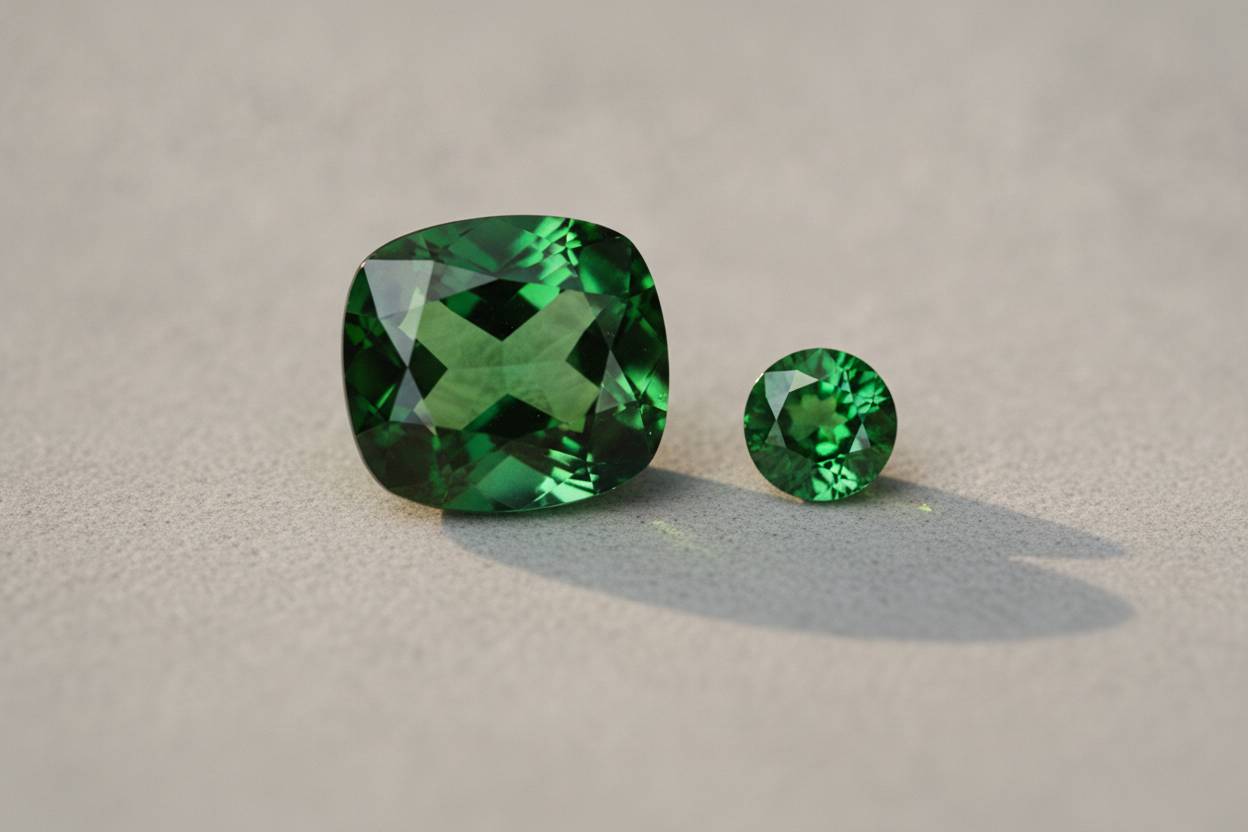
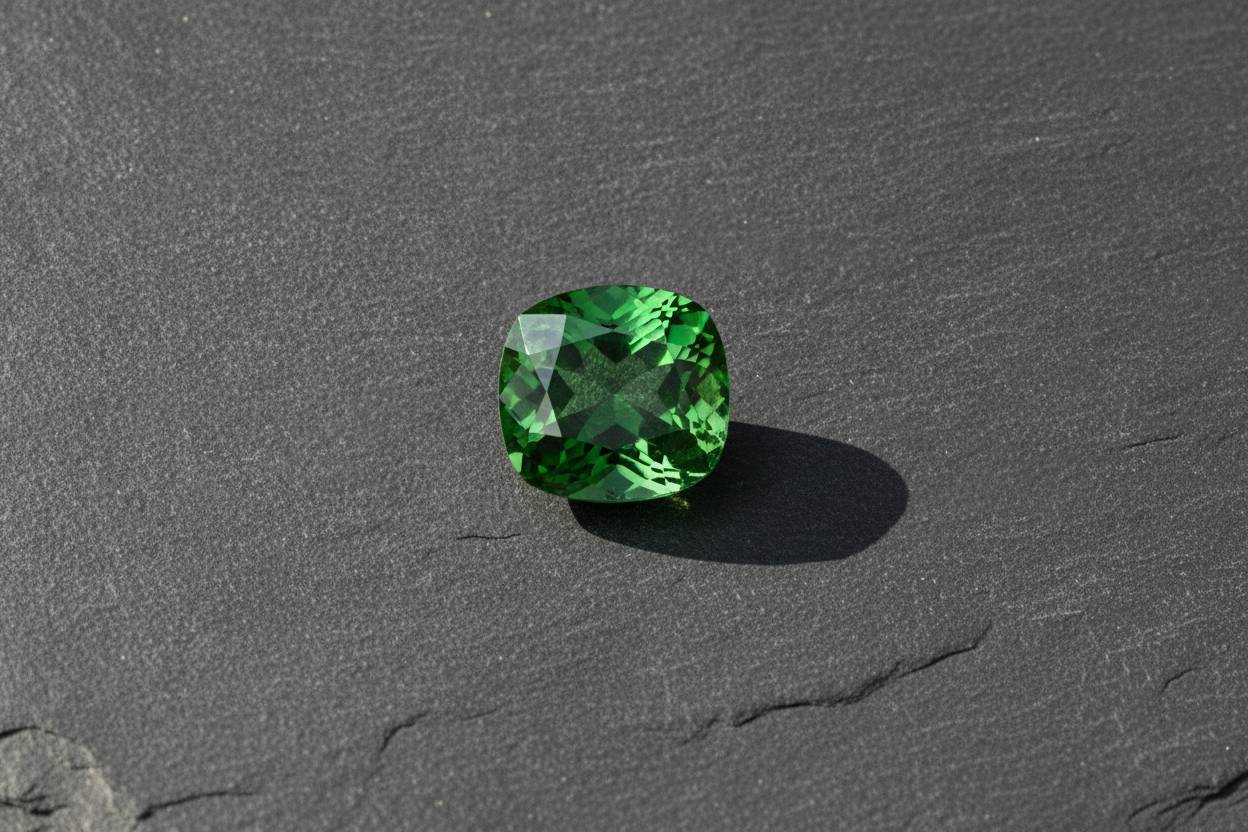
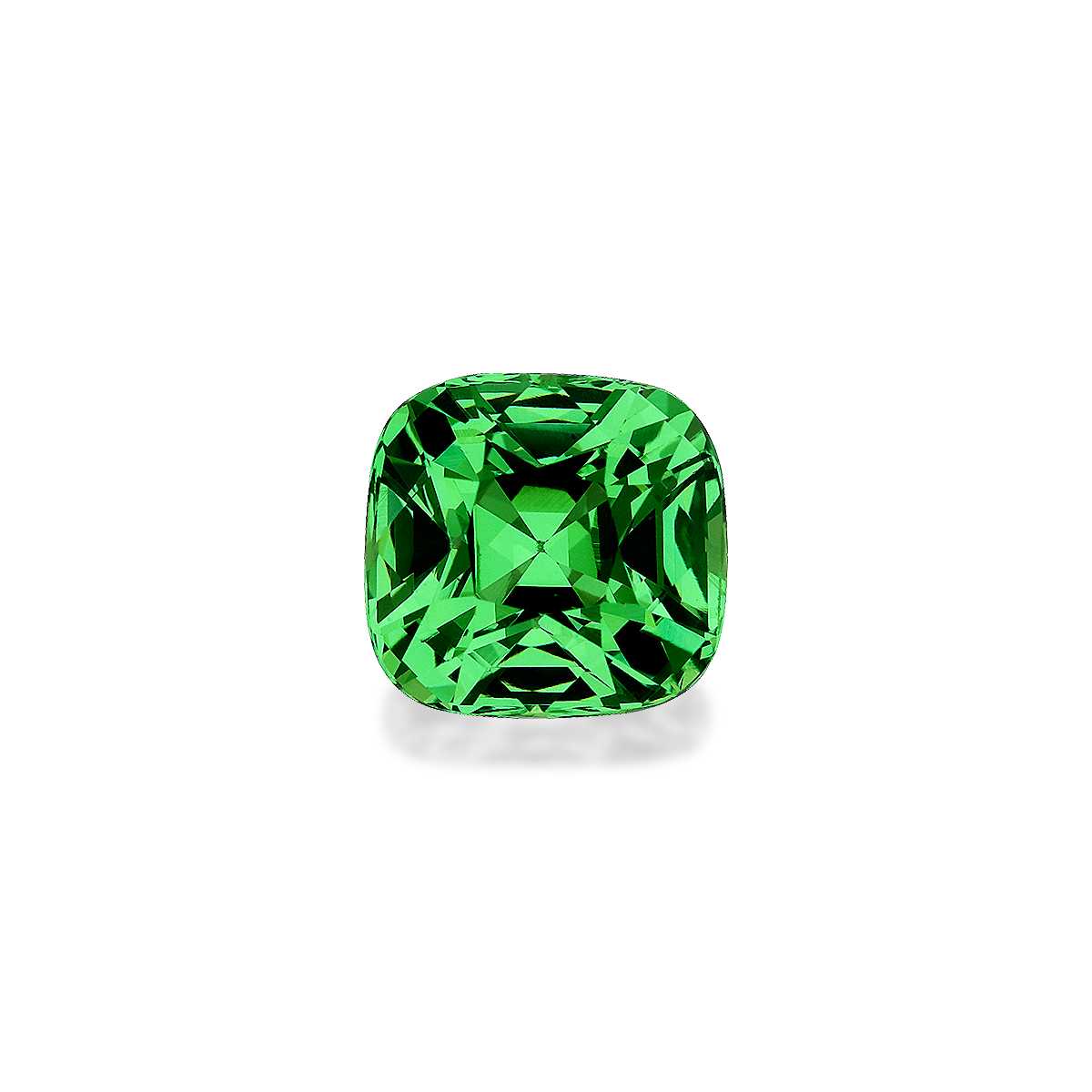
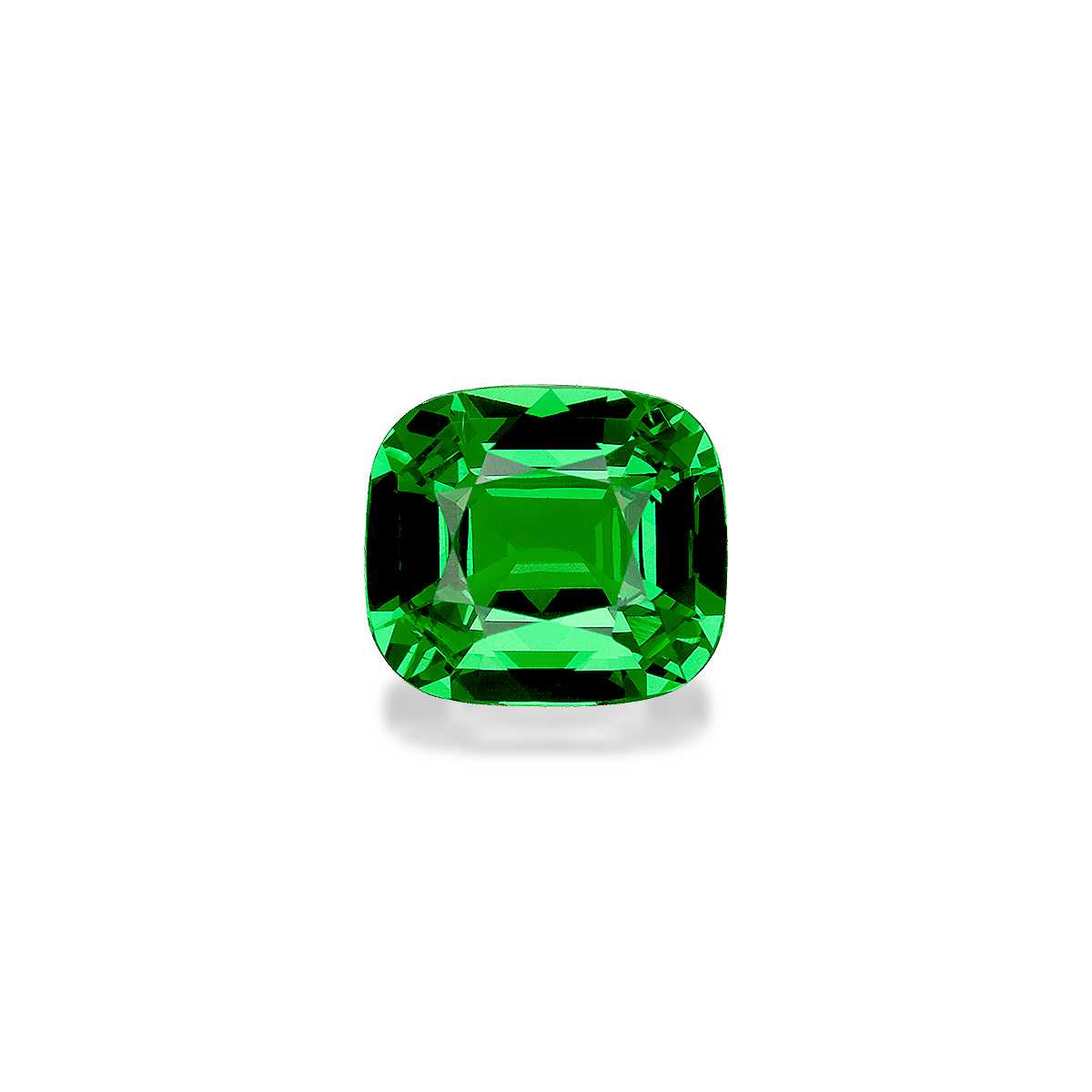
Tsavorite garnet meaning and symbolism centre on vitality, renewal and steady growth — associations drawn from its saturated green and its East African origin in Kenya and Tanzania. That symbolism only carries weight if the stone is genuinely tsavorite: a grossular garnet coloured by chromium and vanadium, singly refractive, with a refractive index of 1.74 to 1.76 and a Mohs hardness of 7.5. Most buyers who lose money on tsavorite are not sold an obvious fake; they are sold a lesser green garnet, or a poorly cut stone, under a name that sounds right. This article sets out the identification checks that settle the question, the inclusions you should expect to see, and the warning signs worth acting on before payment.
Tsavorite garnet meaning and symbolism
Green has long stood for growth, regeneration and prosperity, and tsavorite inherited that symbolism when it entered the trade from East Africa in the late 1960s. Because it is a garnet, it is often tied to the traditional garnet associations of constancy, protection and grounded energy.
Those meanings are cultural rather than gemmological, and they are worth holding lightly. Tsavorite is a distinct variety with its own chemistry and optical behaviour; it should not be treated as interchangeable with other garnet varieties, whatever meaning is attached to the family as a whole.
In practical terms, buyers who care about symbolism usually care about colour purity. The trade descriptors you will meet most often are simply green, vivid and, occasionally, bi colour.
How to verify a tsavorite
Identification of tsavorite is straightforward for any competent gemmologist, which is why vagueness from a seller is itself informative. Four properties do most of the work.
- Refractive index of 1.74 to 1.76, read on a standard refractometer.
- Single refraction — garnet is cubic, so there is no birefringence and no pleochroism. A stone that shows doubling of back facets or two colours as you rotate it is not tsavorite.
- Hardness of 7.5, durable enough for rings with a protective setting, though not equal to corundum.
- Chromium and vanadium colouration, which produces a distinctive response through a Chelsea filter and chromium lines in the spectroscope.
None of these require destructive testing, and none take long. If a dealer cannot tell you the refractive index of a stone they are describing as tsavorite, ask why.
Green stones mistaken for it
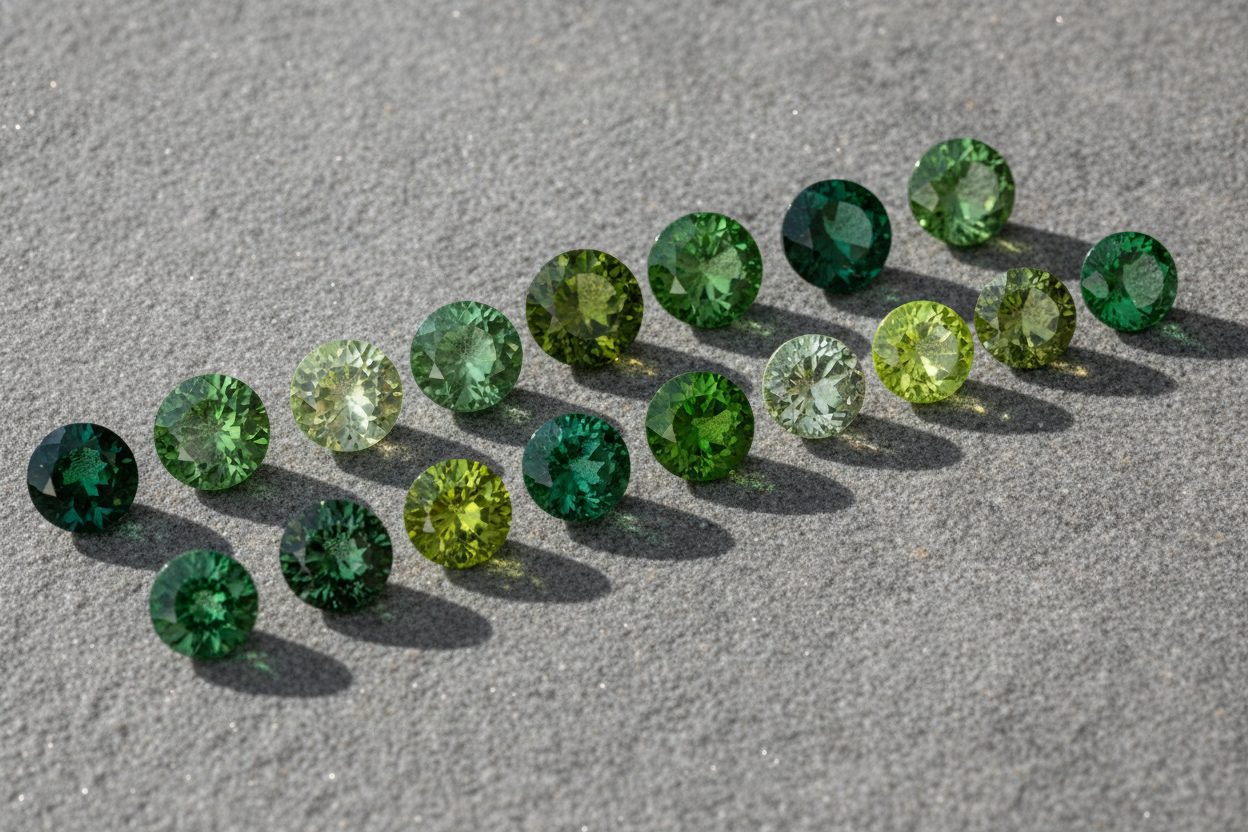
The most common substitution is not a synthetic but another green garnet. Ordinary green grossular and lighter, chromium-poor material from the same East African belt can look similar in a photograph and sell for a fraction of the price.
Other separations are easier. Chrome diopside is far softer and doubly refractive, with visible doubling under magnification. Peridot shows pronounced doubling and a lower refractive index; green tourmaline is strongly pleochroic; demantoid garnet reads well above the tsavorite range on the refractometer and often carries its characteristic fibrous inclusions.
Emerald, frequently raised in conversation, is optically unrelated — doubly refractive, softer, and with a different inclusion picture. The two are separate species and should be assessed on their own terms, never as stand-ins for one another.
Glass and cubic zirconia appear at the cheap end. Glass betrays itself with rounded gas bubbles, swirl marks and warm feel; cubic zirconia has far higher dispersion and a distinctly different heft.
More from Tsavorite Garnet


Reading inclusions under a loupe
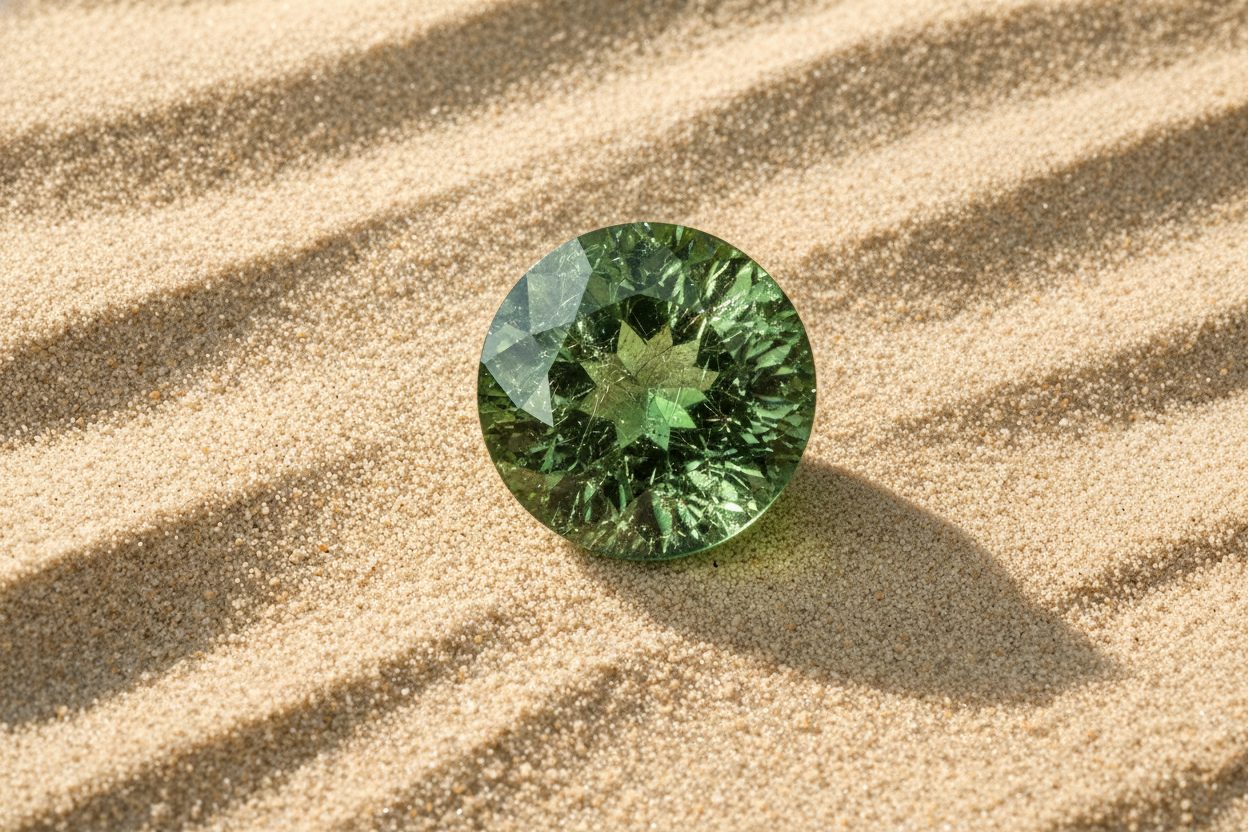
Tsavorite typically contains needle-like inclusions, small crystal inclusions and some degree of colour zoning. These are normal for the material and, in modest amounts, confirm natural origin rather than diminishing it.
Eye-clean tsavorite exists but is genuinely scarce, particularly above a few carats, and it commands a premium accordingly. A large, flawless, intensely green stone offered cheaply deserves suspicion, not excitement.
Under 10x magnification, look for what should not be there: gas bubbles, curved growth lines, a separation plane running through the girdle, or a colour concentration that follows the setting rather than the crystal. Colour zoning in tsavorite is internal and structural; colour that sits at the surface is a different matter entirely.
The treatment question
Tsavorite reaches the market unheated, and the trade treats it as an untreated stone. That is the norm — but norms are not guarantees, and one of the most common buyer errors is assuming every tsavorite is automatically unheated without asking.
The remedy is procedural rather than technical. Ask for treatment status to be stated in writing on the invoice, and for a report from a recognised laboratory — GIA, SSEF, Gübelin, AGL or GRS — on any stone where the price justifies it.
A seller who declines to put treatment status in writing has told you something useful.
Warning signs at purchase
The following should slow a transaction down:
- The stone is described only as green garnet or African green garnet, with tsavorite implied but never stated on paper.
- No refractive index is offered, and no report accompanies a stone of significant value.
- Colour is shown under a single light source, usually strong daylight-balanced LED. Ask to see it in shade and under warm indoor light.
- The face-up stone shows a pale window through the centre — a cut fault that suppresses colour and should be reflected in the price.
- The price is the same per carat across sizes. Larger tsavorite is disproportionately scarce, and honest pricing reflects that.
- Origin is claimed with certainty beyond Kenya or Tanzania, or attributed to a locality where tsavorite is not found.
Value in tsavorite follows a short list: vivid colour first, then clarity, then size, then the quality of the cut. Overpaying happens when a stone scores well on one of these and is priced as though it scored well on all four.
Buy the stone, not the story. The symbolism is yours to keep once the identification, the treatment disclosure and the cut have all held up to a calm, unhurried examination.
Frequently asked questions
What does tsavorite symbolise?+
Tsavorite is associated with vitality, renewal and prosperity, meanings drawn from its saturated green colour, and with the constancy and protection traditionally linked to garnet as a family. These associations are cultural rather than gemmological and sit alongside, not instead of, the stone's measurable properties.
How can I tell tsavorite from other green garnets?+
Tsavorite is a chromium- and vanadium-coloured grossular garnet with a refractive index of 1.74 to 1.76 and a strong, saturated green. Paler green grossulars from the same region share the garnet structure but lack the chromium and vanadium content that produces tsavorite's colour, so a laboratory report is the reliable separation for valuable stones.
Is tsavorite treated?+
Tsavorite reaches the market unheated and is traded as an untreated stone. Even so, do not assume treatment status — ask the seller to state it in writing on the invoice and obtain a report from a recognised laboratory for any significant purchase.
Where does tsavorite come from?+
Commercial tsavorite comes from Kenya and Tanzania, within the same East African geological belt. Origin claims pointing to other localities should be questioned and supported by documentation.
Is tsavorite durable enough for a ring?+
Tsavorite has a Mohs hardness of 7.5, which suits everyday rings when set protectively. Avoid hard knocks and use a bezel or well-designed prong setting for stones worn daily.
Do inclusions in tsavorite reduce its value?+
Needle-like inclusions, small crystals and some colour zoning are typical of tsavorite and normal for the material. Eye-clean stones are scarce and command a premium, but modest inclusions visible only under magnification have limited effect on value compared with colour and cut.
From our Journal
Buying guides, origin stories, and notes from the trade.