Gemstone Social Media Trends: Red Flags
Gemstone social media trends move faster than gemmology, and the same three problems keep recurring: invented trade names, undisclosed treatments, and simulants that photograph better than they test. A stone should be verified the way a laboratory verifies it — by measurable physical properties such as refractive index, specific gravity and optical character, and by an independent report from a recognised lab — not by the colour it shows on a backlit screen. Any seller who will not state species, weight, treatment and origin in writing is a red flag, whatever their follower count.
What follows is a practical filter: what the feeds amplify, what the captions omit, and the checks that protect a serious buyer.
Reading gemstone social media trends
Platforms reward saturation, motion and contrast. Gemmology rewards neutral light, a clean background and a stone held still. Those two incentives pull in opposite directions, and almost every online disappointment begins in that gap.
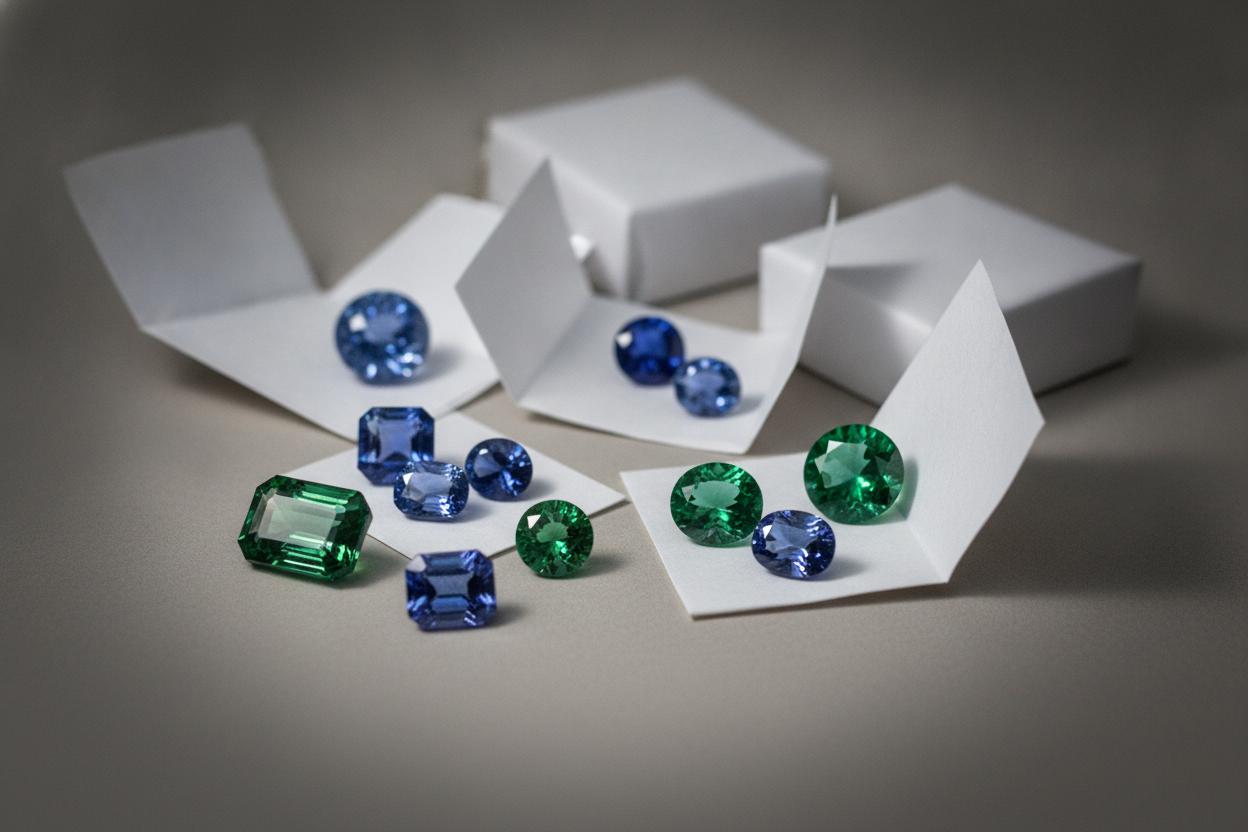
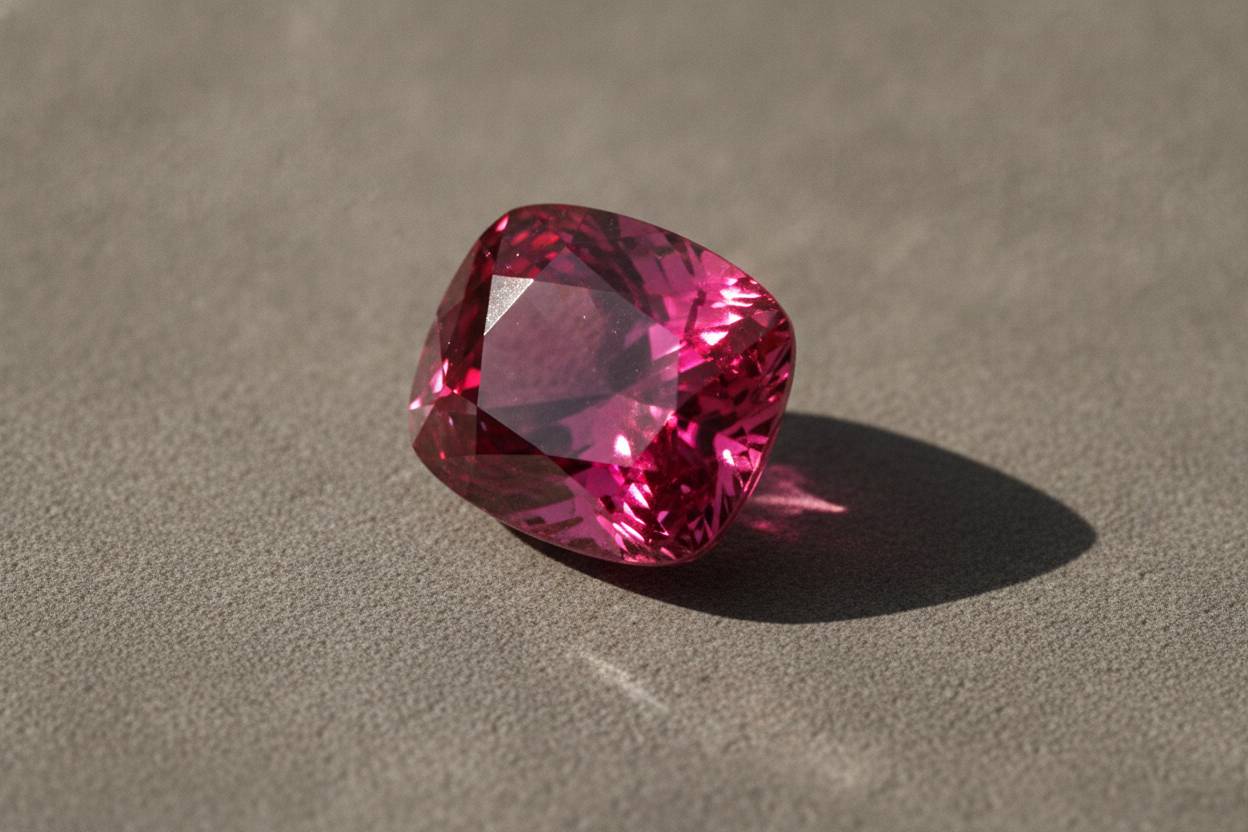
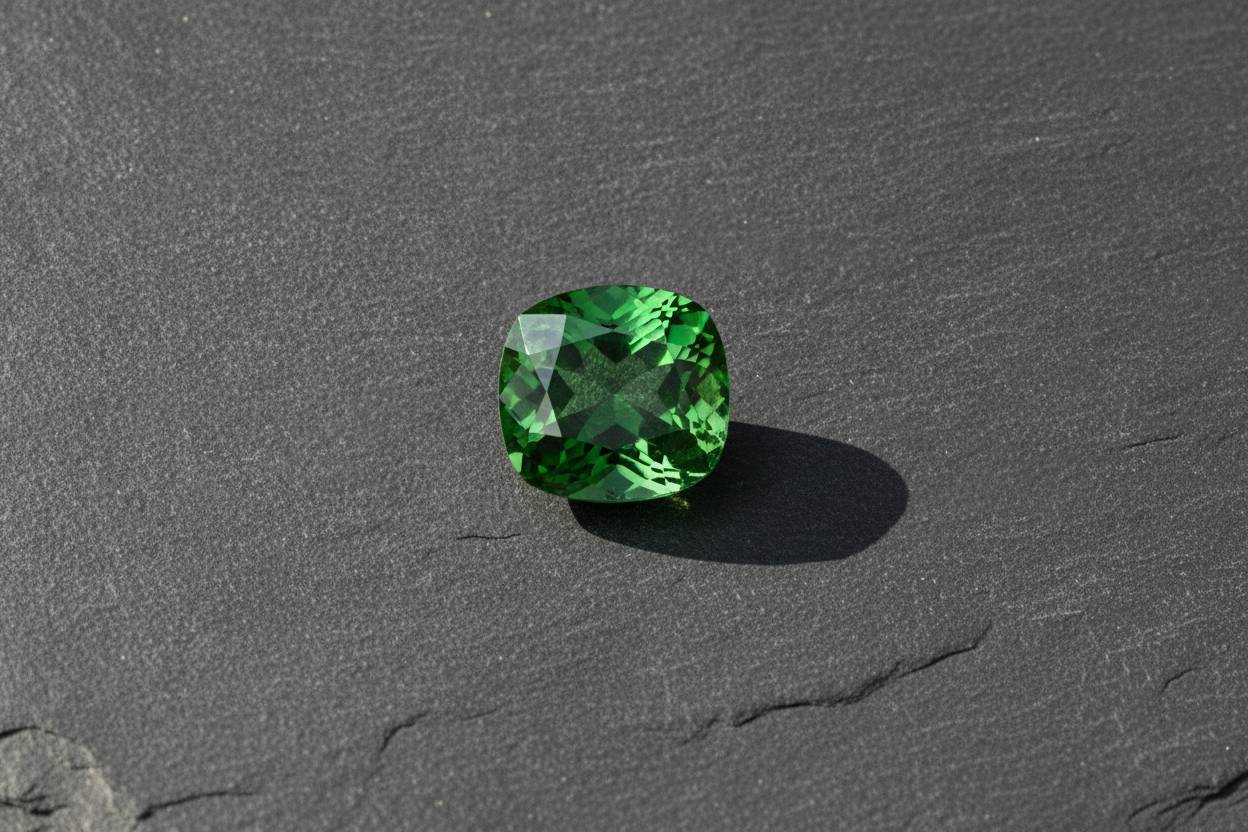
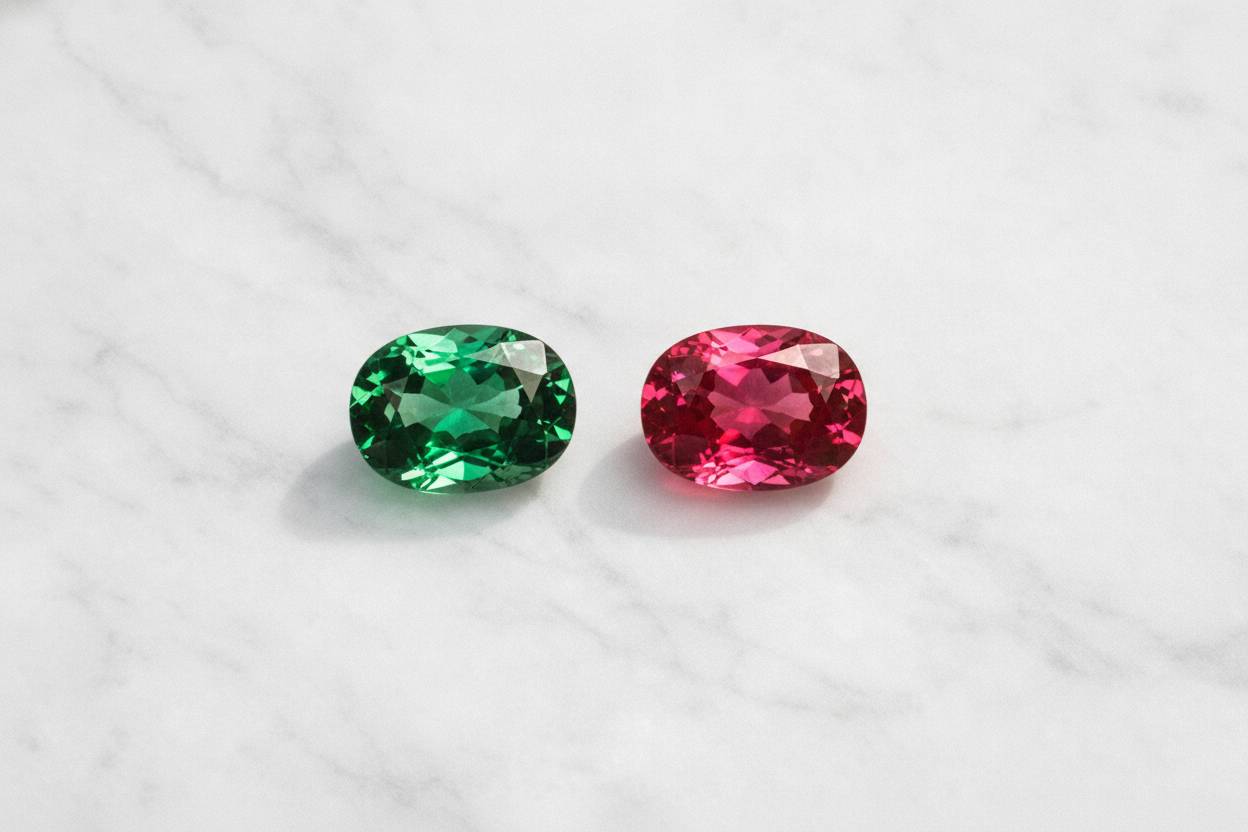
Current gemstone social media trends favour a narrow set of looks: vivid unheated Ceylon blue sapphire, padparadscha, Mozambique ruby, cobalt-toned spinel, neon tourmaline and rough-to-faceted transformation reels. None of these are problems in themselves. The problem is that they are the exact categories most worth imitating with treatment or simulation.
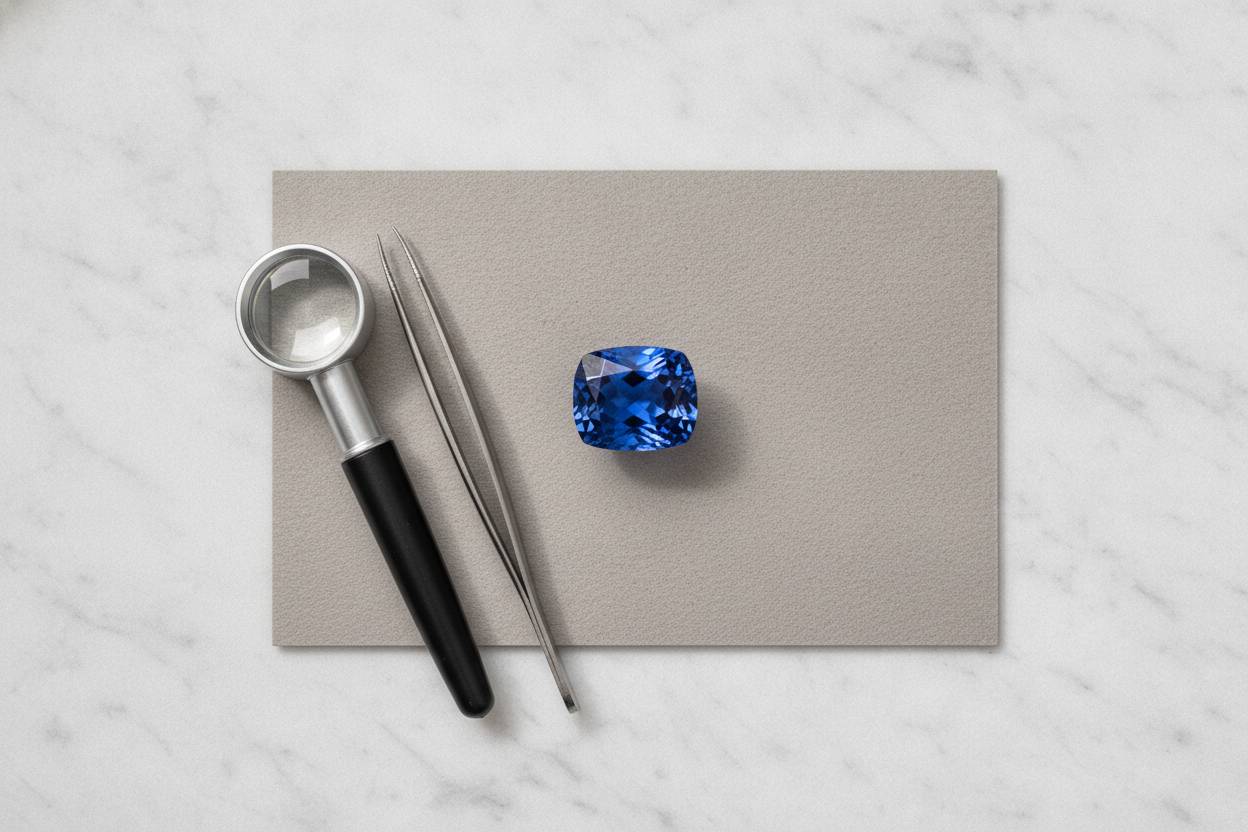
Watch the filming conditions before you watch the stone. Wet or oiled surfaces hide fractures, blue-white LED panels push sapphire toward an ideal that daylight will not repeat, and constant hand movement prevents you from assessing extinction or windowing. Ask for a still image, unmounted, on a neutral grey card, in indirect daylight.
Trade names that mean nothing
Gem trade names are largely unpoliced, and social captions use them loosely. Some are legitimate laboratory colour calls — pigeon's blood and royal blue are applied by specific labs under defined criteria, and they are not interchangeable with a seller's opinion.
Others are pure marketing. A name that pairs a place with the wrong species is the clearest warning of all.
- "Brazilian emerald" is frequently green tourmaline, not beryl.
- "Emerald quartz" or "green amethyst" describe quartz, priced as though they were not.
- "Ceylon" is an origin, not a grade; it says nothing about treatment or quality.
- "Natural" means not synthetic. It does not mean untreated.
Padparadscha deserves its own caution. It is a genuine and narrowly defined sapphire colour, but the term is applied online to stones well outside the accepted pink-orange range, and to beryllium-diffused material that acquired its colour in a furnace.
Treatments the videos leave out
Treatment is not dishonest. Non-disclosure is. Heat treatment in corundum is routine and accepted worldwide, and a heated sapphire correctly described at a heated price is a fair purchase.
The treatments that change value most and appear least in captions are these:
- Lattice diffusion (beryllium or titanium) — colour concentrated near the surface; visible as colour following facet junctions when immersed.
- Lead-glass filling in ruby — produces a blue or orange flash effect under magnification, and leaves a stone vulnerable to household acids and jeweller's heat.
- Clarity enhancement in emerald — oil or resin in fissures, graded by labs as minor, moderate or significant. The grade matters.
- Dyeing and quench-crackling — common in quartz and low-grade jade; dye concentrates in fractures.
- Polymer stabilisation — standard in much turquoise, rarely mentioned.
Treat phrases such as "only enhanced", "just a little oil" or "natural heat" as prompts to ask a direct written question. There is no such thing as natural heat in a finished gemstone offered for sale.
Simulants that film beautifully
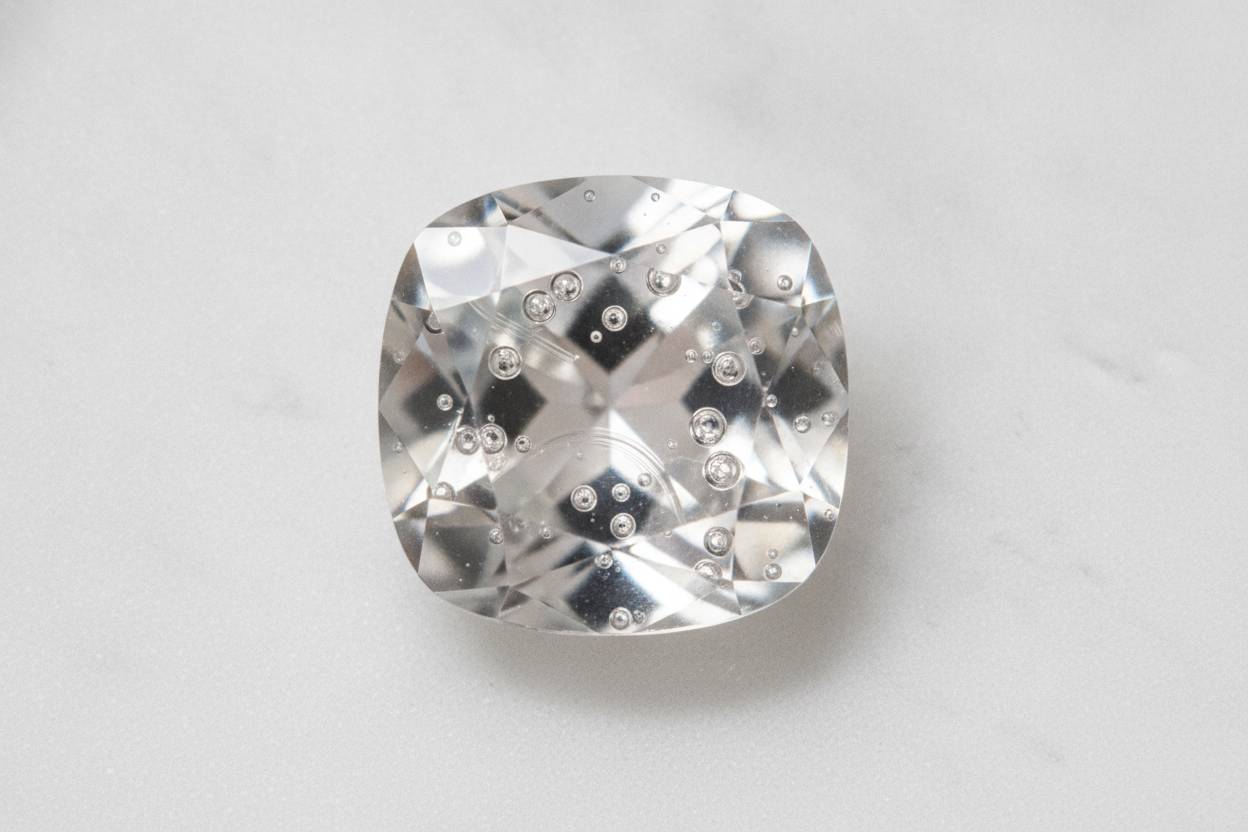
Under a ring light, glass is convincing. Under a loupe and a refractometer, it is not. Most simulants fail on properties that are fixed and textbook-established for each species.
Natural corundum sits at 9 on the Mohs scale, with a refractive index around 1.762–1.770 and a specific gravity near 4.00. Glass is singly refractive, softer, and typically carries spherical gas bubbles and swirl-like striae. Cubic zirconia is cubic and singly refractive with a far higher RI near 2.15 and a much heavier SG; moissanite shows obvious doubling of back facets through the table.
Synthetics are a separate matter. Flame-fusion corundum has the same chemistry and constants as natural corundum but shows curved growth striae and rounded gas bubbles — it is a legitimate product that must be disclosed. Composite stones are the trickiest: look for a separation plane at or near the girdle, differing lustre between crown and pavilion, and colour that appears trapped in a thin layer.
What a phone camera cannot tell you
No video can establish RI, SG, fluorescence, absorption spectrum or trace-element chemistry. Those determine species, treatment and often origin. A seller who resists independent testing is telling you something.
Red flags in live gem sales
Live auction formats compress decisions into seconds, which is the point. The following should stop a purchase outright:
- A certificate from an unnamed lab, an "in-house" certificate, or a report number that cannot be checked on the laboratory's own verification page.
- No weight, no measurements in millimetres, or a weight that cannot match the stone's apparent size.
- Stones shown only wet, only in motion, or only set.
- "No returns on live sales" attached to an unreported stone.
- Price far below any plausible level for the claimed species, origin and treatment status.
- Refusal to ship on approval or to allow independent verification.
Checks before you pay
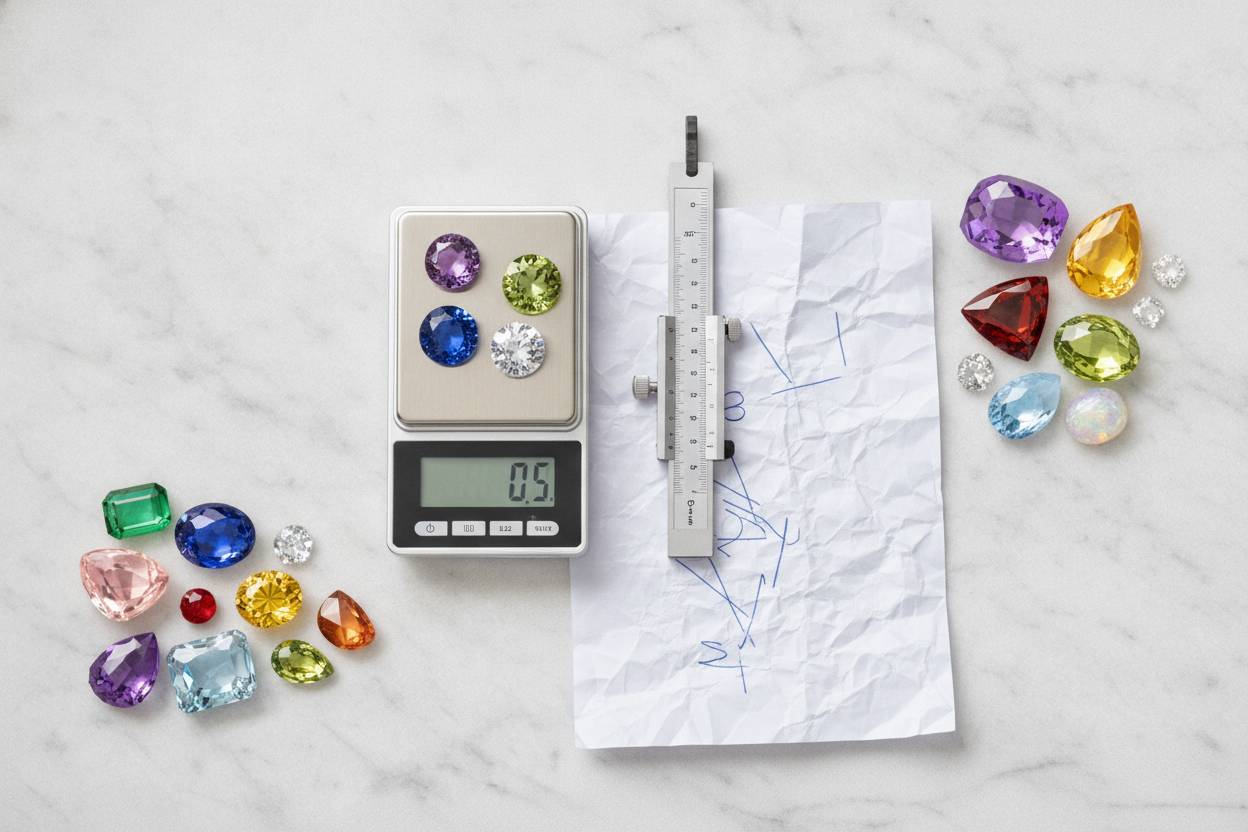
- Get species, variety, weight, dimensions, treatment and stated origin in writing before payment.
- Require a report from a named independent laboratory — GIA, SSEF, Gübelin, AGL and Lotus Gemology are among those recognised across the trade.
- Match the report to the stone: weight to two decimal places, dimensions, and the plotted or photographed inclusions.
- Inspect unmounted, in indirect daylight, against white and grey.
- Agree a written return window long enough for your own verification.
Trends are useful; they show you what the market is looking at. They are not evidence about the stone in front of you. The documentation, the loupe and the laboratory are — and they are as available to an online buyer as to anyone standing at a counter.
Frequently asked questions
Can I tell if a gemstone is real from a video?+
No. Video cannot establish refractive index, specific gravity, fluorescence or trace-element chemistry, which are what distinguish species, synthetics and treatments. Use video only to shortlist, then rely on an independent laboratory report and inspection of the unmounted stone.
Does "natural" mean the stone is untreated?+
No. "Natural" only means the stone grew in the earth rather than a laboratory. It says nothing about heating, diffusion, filling or dyeing, so ask specifically whether the stone is untreated and request that in writing.
Which laboratories should I trust for an independent report?+
GIA, SSEF, Gübelin, AGL and Lotus Gemology are widely recognised for coloured stones, and the report number should be verifiable on the laboratory's own website. Be cautious with in-house or unnamed certificates supplied by the seller.
What are the easiest simulants to spot with a loupe?+
Glass often shows spherical gas bubbles and swirl-like striae, while flame-fusion synthetic corundum shows curved growth lines. Moissanite gives obvious doubling of the back facets viewed through the table.
Is lead-glass filled ruby worth buying?+
Only at a price reflecting what it is, and with full disclosure. The glass shows a blue or orange flash effect under magnification, and the stone can be damaged by household acids, ultrasonic cleaning and a jeweller's torch during repairs.
Are live-stream gem auctions safe for serious buyers?+
They can be, provided the seller gives weight, dimensions, treatment and a verifiable laboratory report, and offers a written return window. Countdown pressure, no-return policies on unreported stones and unverifiable certificates are reasons to stop.
From our Journal
Buying guides, origin stories, and notes from the trade.