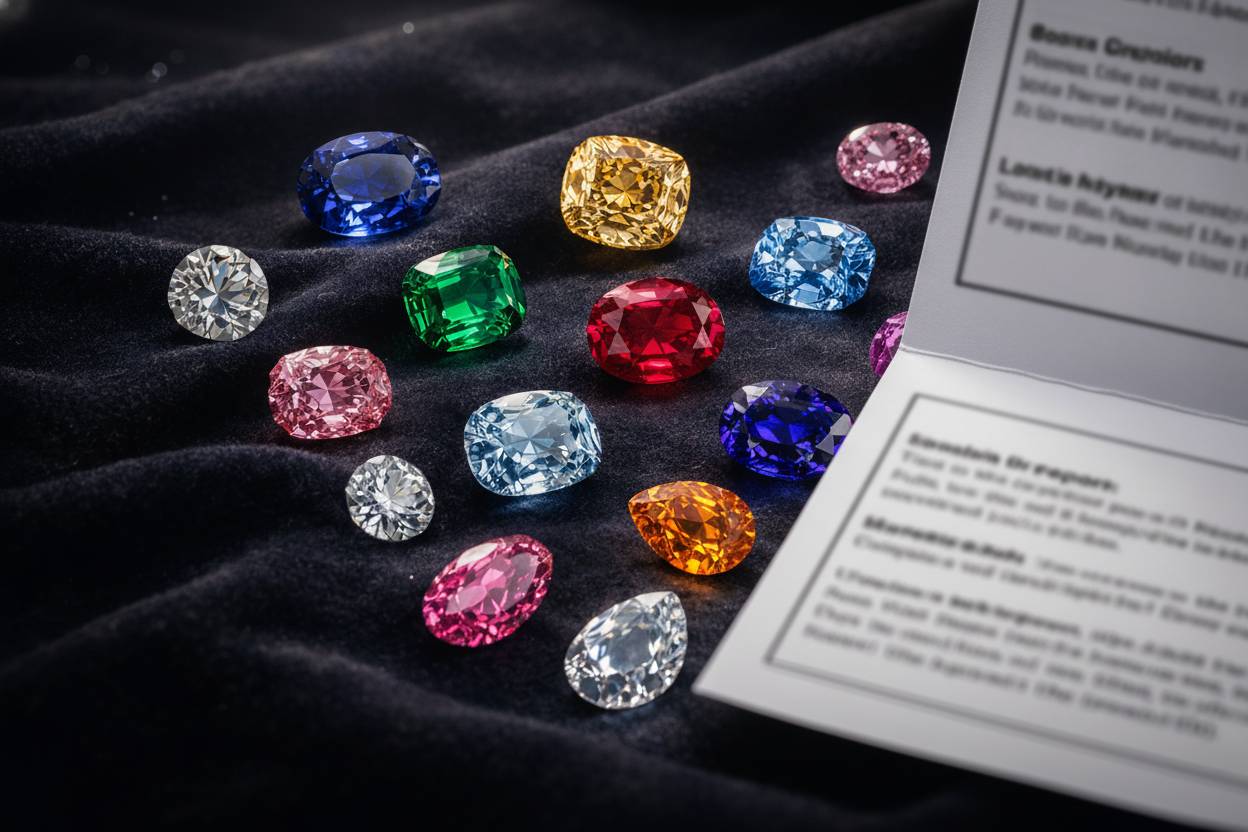
Colored Gemstones Auction Trends
Modern colored gemstones auction trends concentrate on a narrow group: unheated Burmese ruby, Kashmir and Ceylon sapphire, Colombian emerald, imperial jadeite, and a small set of rarities such as alexandrite and Paraíba tourmaline. Two things decide whether a stone reaches a Geneva, Hong Kong or New York evening sale — whether it is untreated, and whether its origin and ownership history are documented by a respected laboratory. That preference is not a recent marketing invention. It follows five centuries of cultural ranking, in which certain colours were tied to kingship, priesthood, virtue and dynasty, and the salerooms inherited those hierarchies more or less intact.
Understanding the lore, then, is not decoration. It explains why two stones of similar size and colour can sit in entirely different markets.
Which gems the salerooms favour
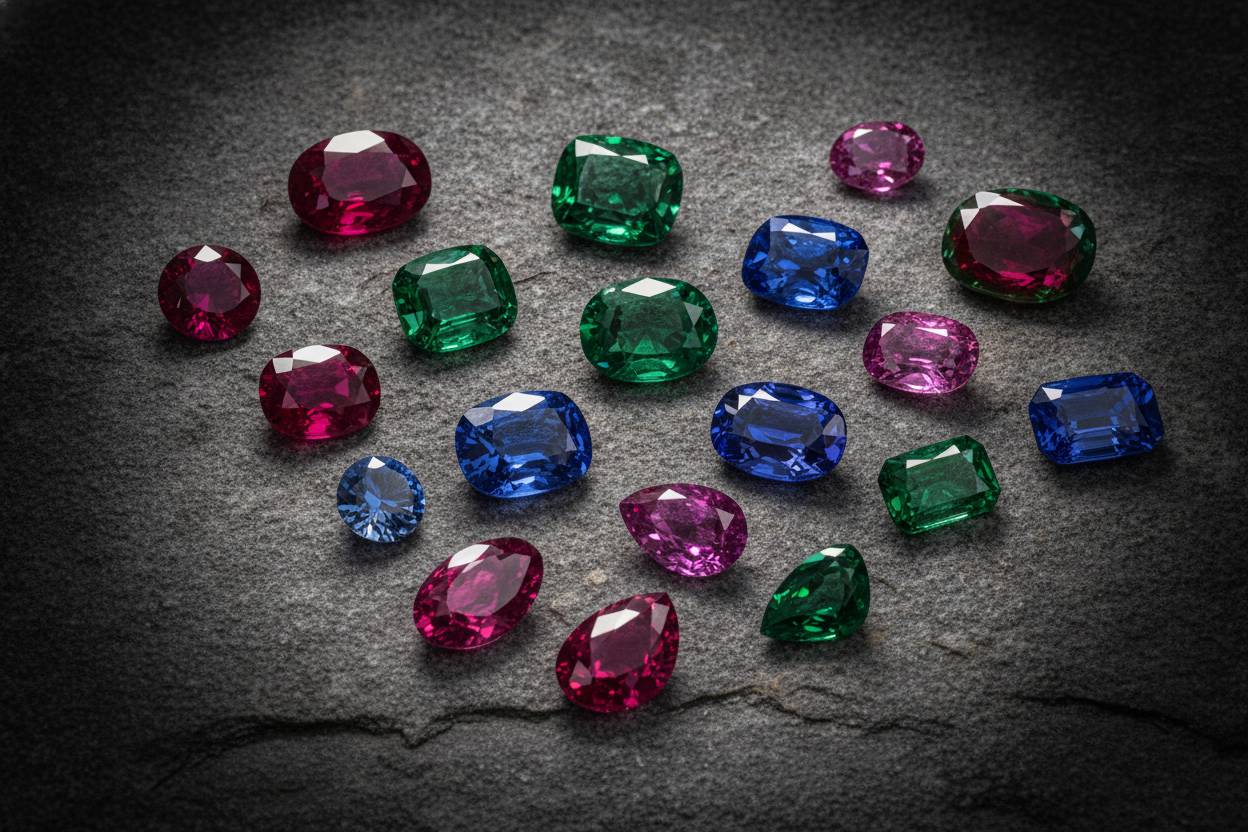
The great jewellery auctions are not a survey of the mineral kingdom. They are a short list, repeated season after season, of species that combine durability, historical prestige and genuine scarcity in fine quality.
- Corundum — ruby and sapphire. Mohs 9, refractive index roughly 1.762–1.770, specific gravity near 4.00, trigonal crystal system.
- Beryl — emerald. Mohs 7.5–8, RI about 1.577–1.583, SG near 2.72, hexagonal.
- Jadeite — Mohs 6.5–7, SG around 3.34, monoclinic, and exceptionally tough rather than merely hard.
- Chrysoberyl — alexandrite. Mohs 8.5, RI about 1.746–1.755, SG near 3.73, orthorhombic.
- Spinel — Mohs 8, RI around 1.718, SG near 3.60, cubic.
Durability matters because these objects are expected to be worn, inherited and resold. Hardness of 9 in corundum is one reason ruby and sapphire have survived six hundred years of royal re-setting while softer stones were consumed.
Corundum: king and cleric
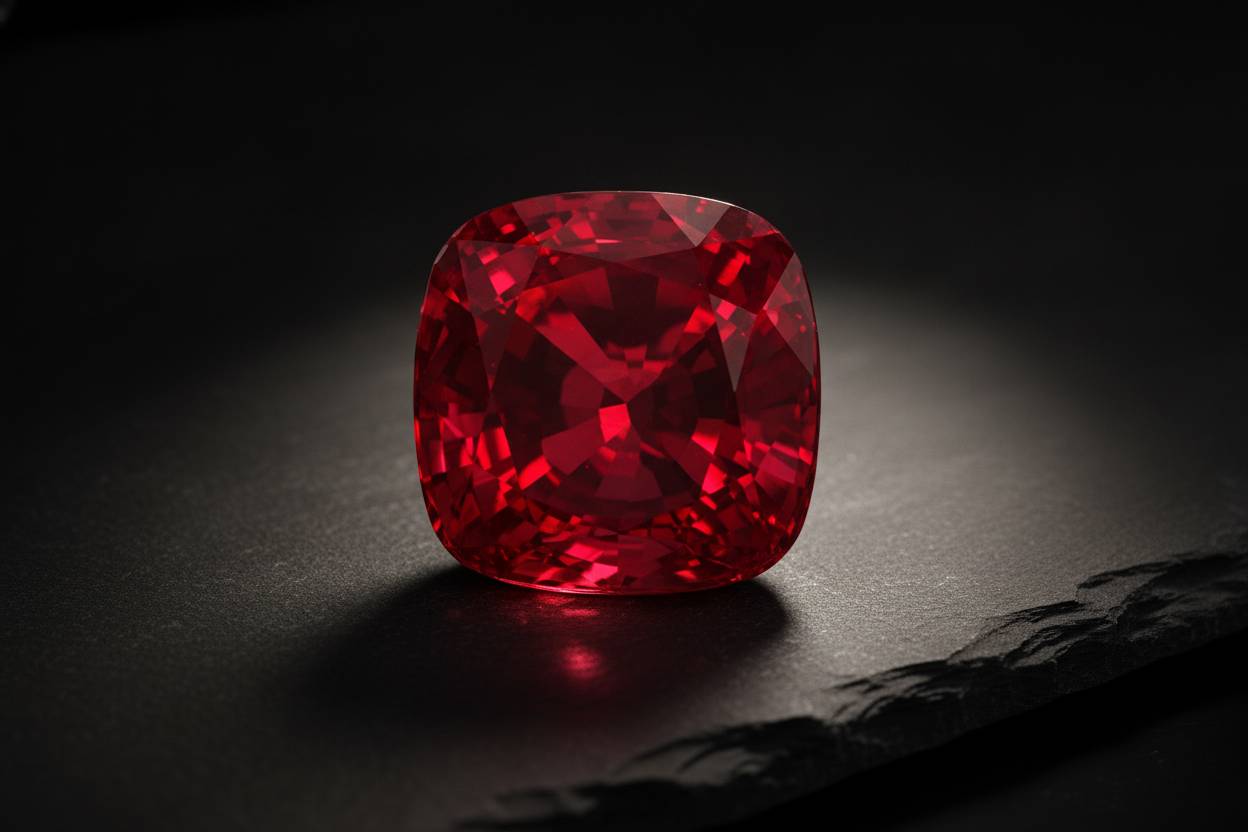
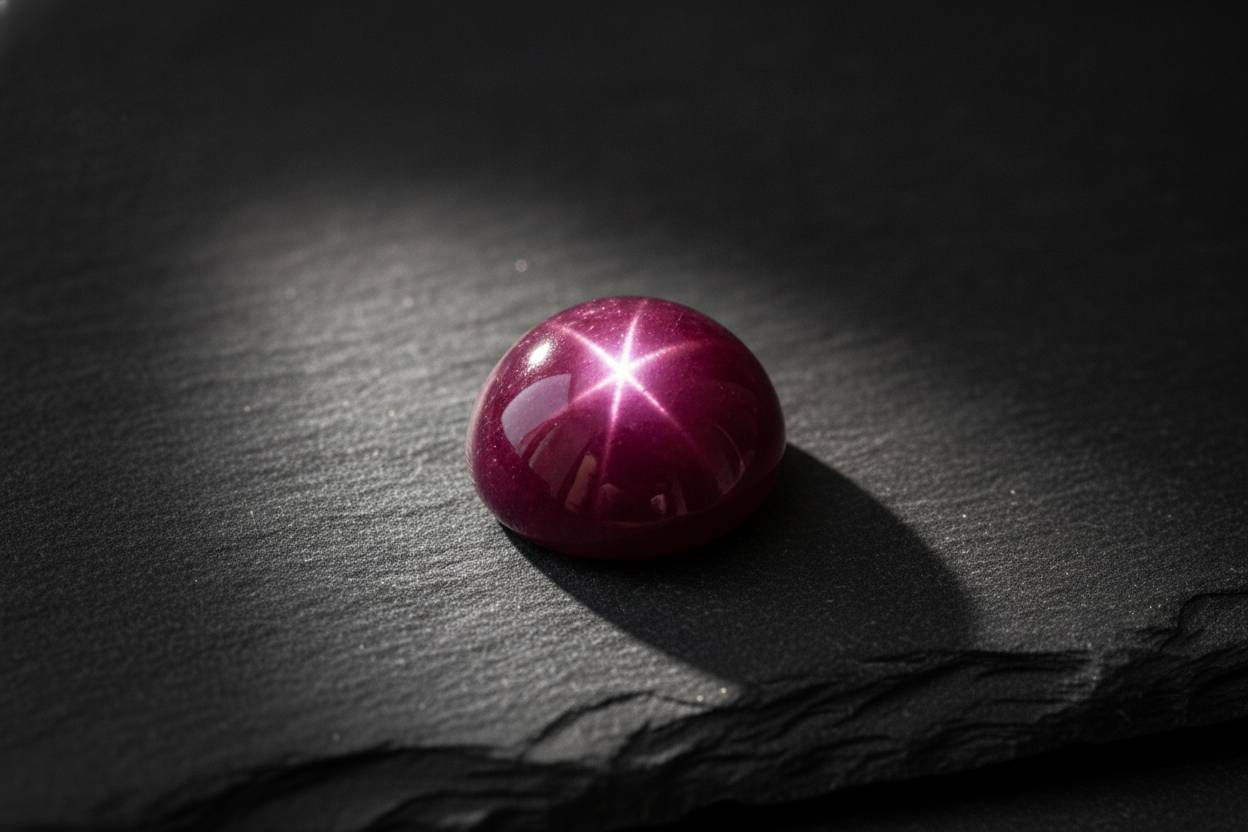
Sanskrit texts call ruby ratnaraj, the king of gems, and the Burmese trade carried that ranking into the modern era. Mogok rubies fluoresce strongly under the chromium that colours them, producing the glowing red that the trade later named pigeon's blood — a term now defined with some rigour by the Swiss laboratories SSEF and Gübelin.
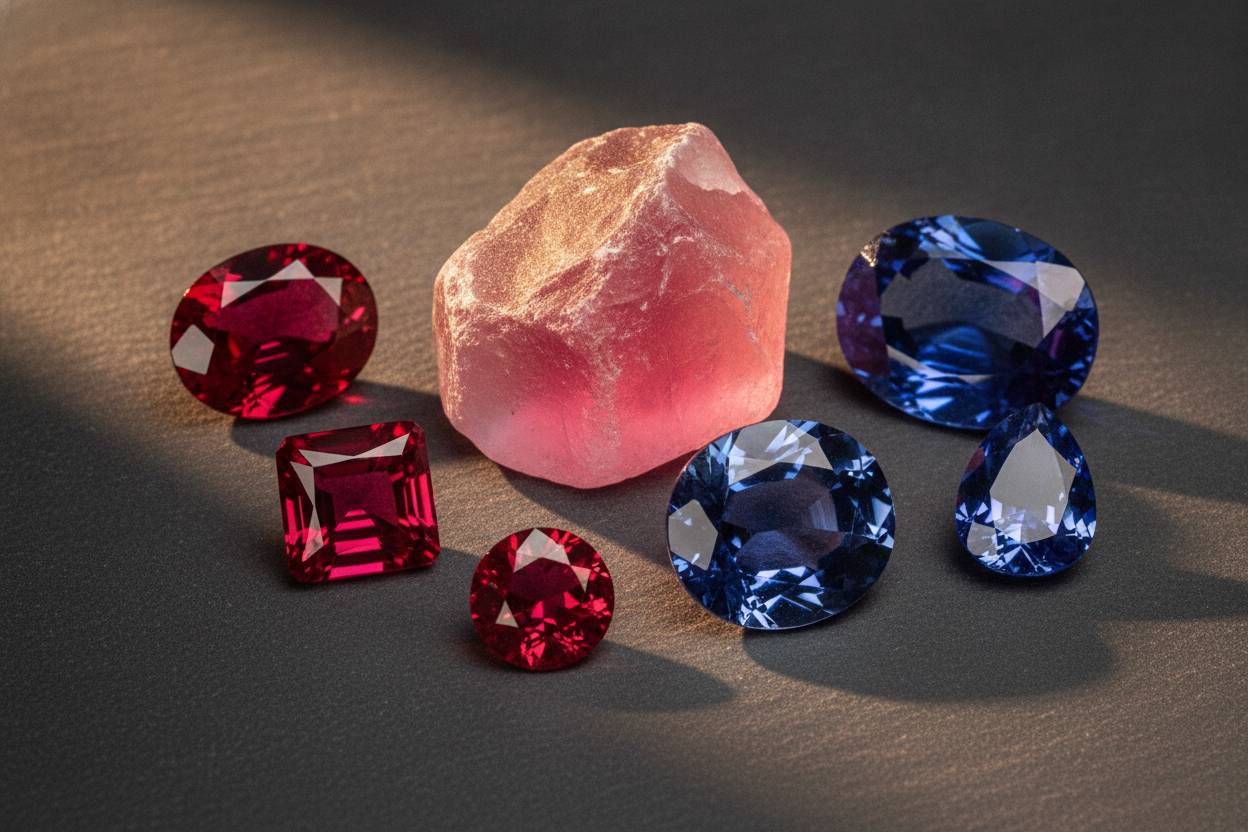
The lore has a direct market consequence. An unheated Burmese ruby with a Mogok origin report belongs to the tradition of court stones; a heated stone of the same colour does not, and the salerooms price accordingly. The Sunrise Ruby, a Burmese stone in a Cartier mount, set the benchmark for the species when Sotheby's sold it in Geneva in 2015.
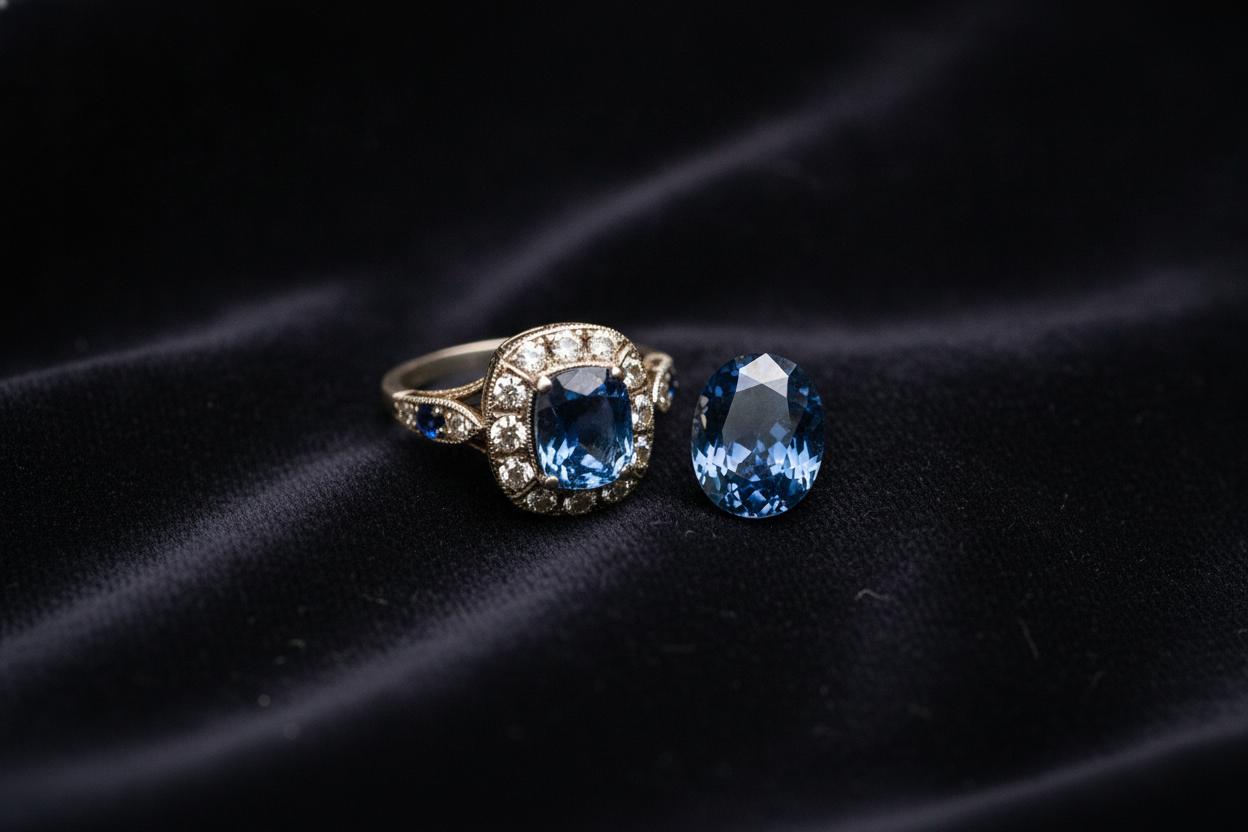
Sapphire carried the opposite symbolism — not sovereignty but heaven. Medieval European clergy favoured blue sapphire for episcopal rings, associating it with truth, constancy and the celestial vault, and that ecclesiastical habit shaped its later use in betrothal jewellery.
Kashmir and Ceylon
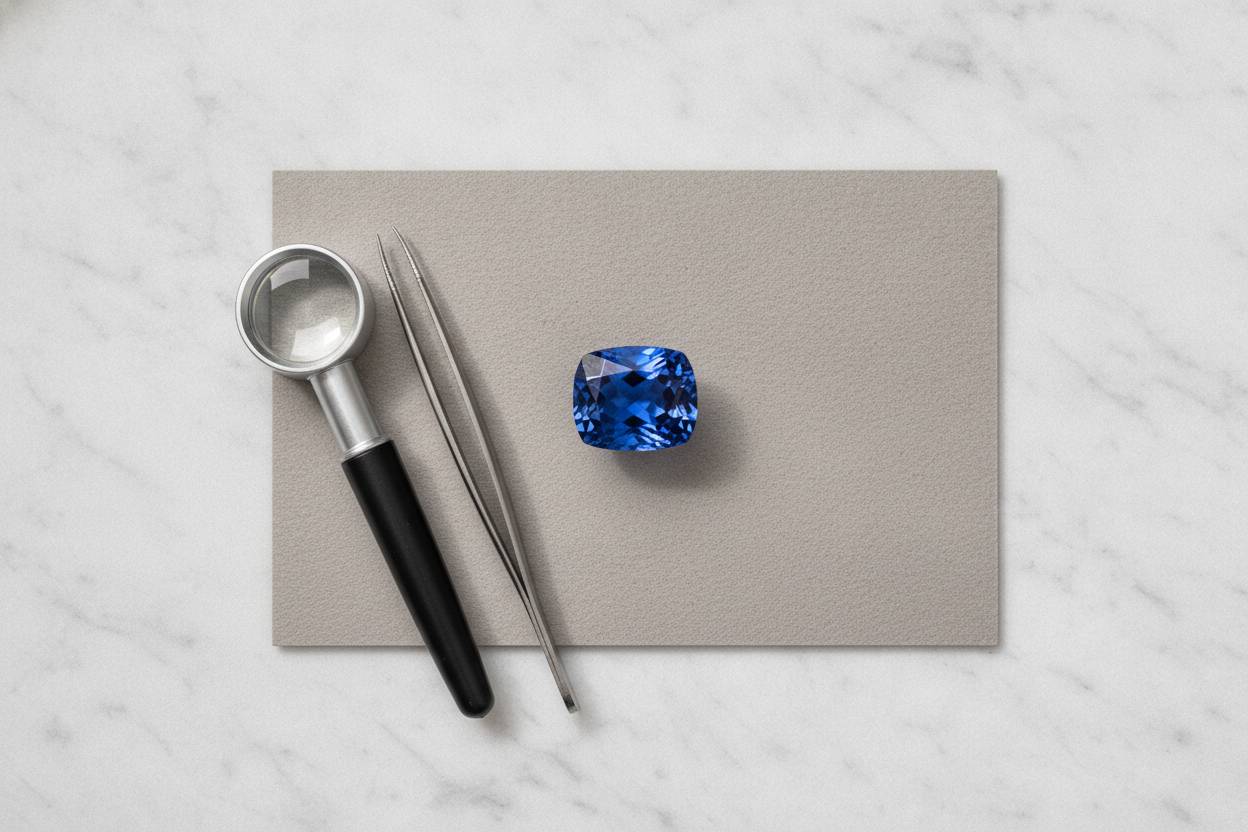
Kashmir sapphire entered the record only in the early 1880s, after a landslide in the Padar region exposed the deposit. The productive years were brief, which is why a Kashmir report — with its velvety, slightly sleepy blue — remains the single most powerful phrase in sapphire cataloguing.
Ceylon supplied the longer tradition. Sri Lankan gravels have produced blue sapphire for over two millennia and gave the trade padparadscha, from the Sinhalese for lotus blossom, a pinkish-orange corundum still judged largely by eye and consensus.
Emeralds and the Mughal court
Egypt mined beryl at Wadi Sikait in the Eastern Desert long before Rome called the district Mons Smaragdus. Those stones were pale and heavily included; the Colombian deposits worked from the sixteenth century changed what emerald could mean.
Colombian rough travelled east through Portuguese and Spanish trade routes to India, where Mughal lapidaries carved tablets and inscribed them with Qur'anic verses and invocations. These inscribed emeralds appear periodically at auction and are catalogued as much for their epigraphy as their colour.
Emerald's gemmological reality also shapes its lore. Growth in hydrothermal veins leaves fissures, so minor traditional oiling is accepted; the modern saleroom simply requires that the degree of clarity enhancement be stated by a laboratory such as SSEF, Gübelin or AGL.
More from Sapphire



Jadeite, virtue and empire
Chinese culture assigned jade the moral qualities of the Confucian gentleman — integrity, restraint, resonance. For most of that history the stone in question was nephrite; jadeite from the Kachin mines of upper Burma only reached the Qing court in quantity from the late eighteenth century.
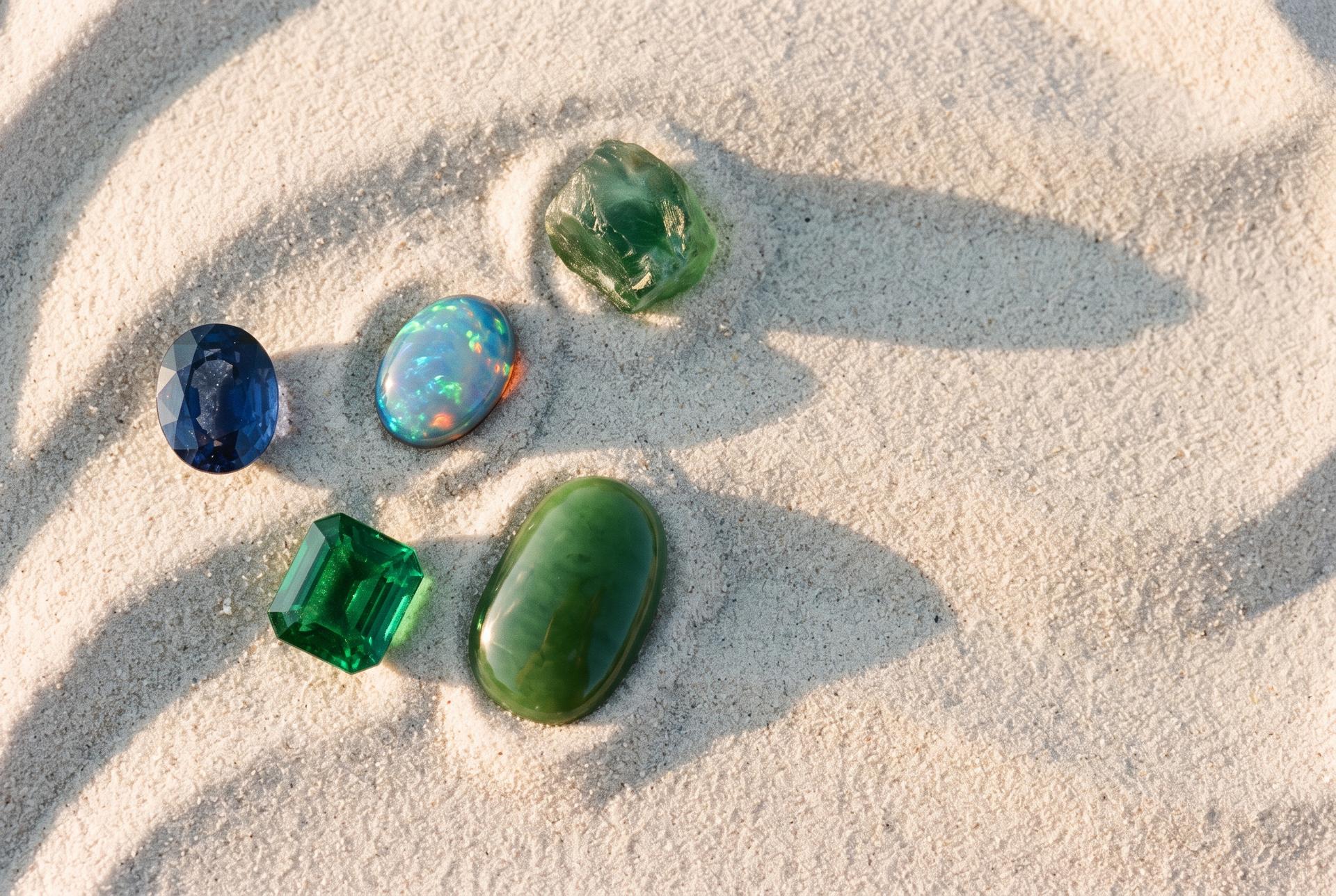
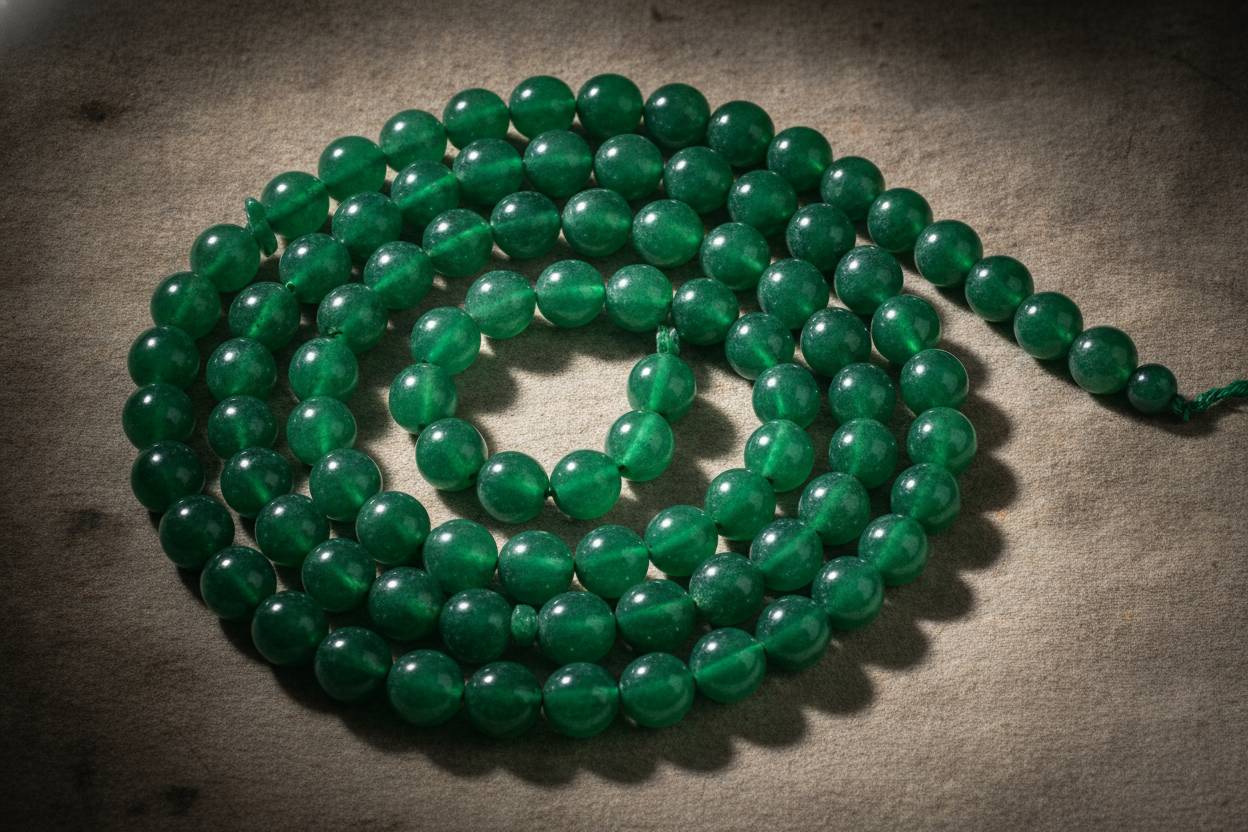
Imperial green jadeite — translucent, evenly saturated, untreated — became the connoisseur's category, and Hong Kong is where it is most reliably sold. The Hutton–Mdivani necklace of jadeite beads, mounted by Cartier and once owned by Barbara Hutton, set the species record at Sotheby's Hong Kong in 2014.
Buyers of jadeite ask a different question than buyers of corundum. The issue is not heat but polymer impregnation and dyeing, so untreated material is certified as A-jade.
Spinel and other misnamed gems
For centuries Europe's most celebrated rubies were not rubies. The Black Prince's Ruby and the Timur Ruby in the British royal collection are both red spinel, misidentified until mineralogy caught up in the nineteenth century.
Alexandrite arrived with a ready-made story: found in the Urals in the 1830s and named for Tsar Alexander II, its red-to-green colour change said to echo the imperial colours. Paraíba tourmaline has no antiquity at all, having been found in Brazil's Mina da Batalha only in the late 1980s, yet its copper-bearing neon blue moved into evening sales within a generation.
The lesson for buyers is that saleroom prestige is not fixed. It can be earned by a species within decades, and it can be lost when a traditional name turns out to describe the wrong mineral.
Reading colored gemstones auction trends
Three signals do most of the work in a catalogue entry: species and variety, origin, and treatment status. A fourth — provenance — can lift a stone above its gemmological grade entirely.
The Duke and Duchess of Windsor sale at Sotheby's Geneva in 1987 and the Elizabeth Taylor collection at Christie's New York in 2011 both demonstrated how documented ownership changes what a buyer is paying for. You are buying a named object, not only a mineral.
For a private buyer the practical reading is simpler. Prioritise untreated material with a current report from a laboratory the salerooms themselves cite, insist that origin be stated rather than implied, and treat a romantic trade name as a starting point for enquiry.
The hierarchy the auction rooms observe was built by courts, temples and dynasties long before it was priced. Knowing which part of that history a stone belongs to is the most useful thing a buyer can bring to the table.
Frequently asked questions
Which colored gemstones sell best at major auctions?+
Unheated Burmese ruby, Kashmir and fine Ceylon sapphire, Colombian emerald and imperial green jadeite form the core of the evening sales. Alexandrite, red spinel and Paraíba tourmaline appear as rarities when the quality is exceptional.
Why does 'unheated' matter so much for ruby and sapphire?+
Heat treatment is common and permanent, so stones that reached fine colour without it are genuinely scarce and are priced as a separate category. Auction catalogues rely on laboratories such as SSEF and Gübelin to state that no indications of heating were found.
Is oiling acceptable in an emerald sold at auction?+
Yes. Emerald forms with fissures, so minor traditional oiling is an accepted trade practice and is disclosed on the report. What buyers should avoid is significant clarity enhancement or polymer filling, which materially affects value.
What does A-jade mean for jadeite?+
A-jade describes jadeite that has not been bleached, polymer-impregnated or dyed — only cut and polished. Because B- and C-grade treated jadeite is widespread, a current certificate confirming untreated status is essential before purchase.
Were the Black Prince's Ruby and Timur Ruby really rubies?+
No. Both are red spinel, a separate mineral species that was not reliably distinguished from ruby until nineteenth-century mineralogy provided the tools. The historic names have simply survived the correction.
Does provenance really add value, or is it sentiment?+
Documented provenance is measurable in the saleroom, as the Windsor and Elizabeth Taylor sales showed. It works best when the ownership is verifiable and the gemmology is also strong; provenance rarely rescues a mediocre stone.
From our Journal
Buying guides, origin stories, and notes from the trade.