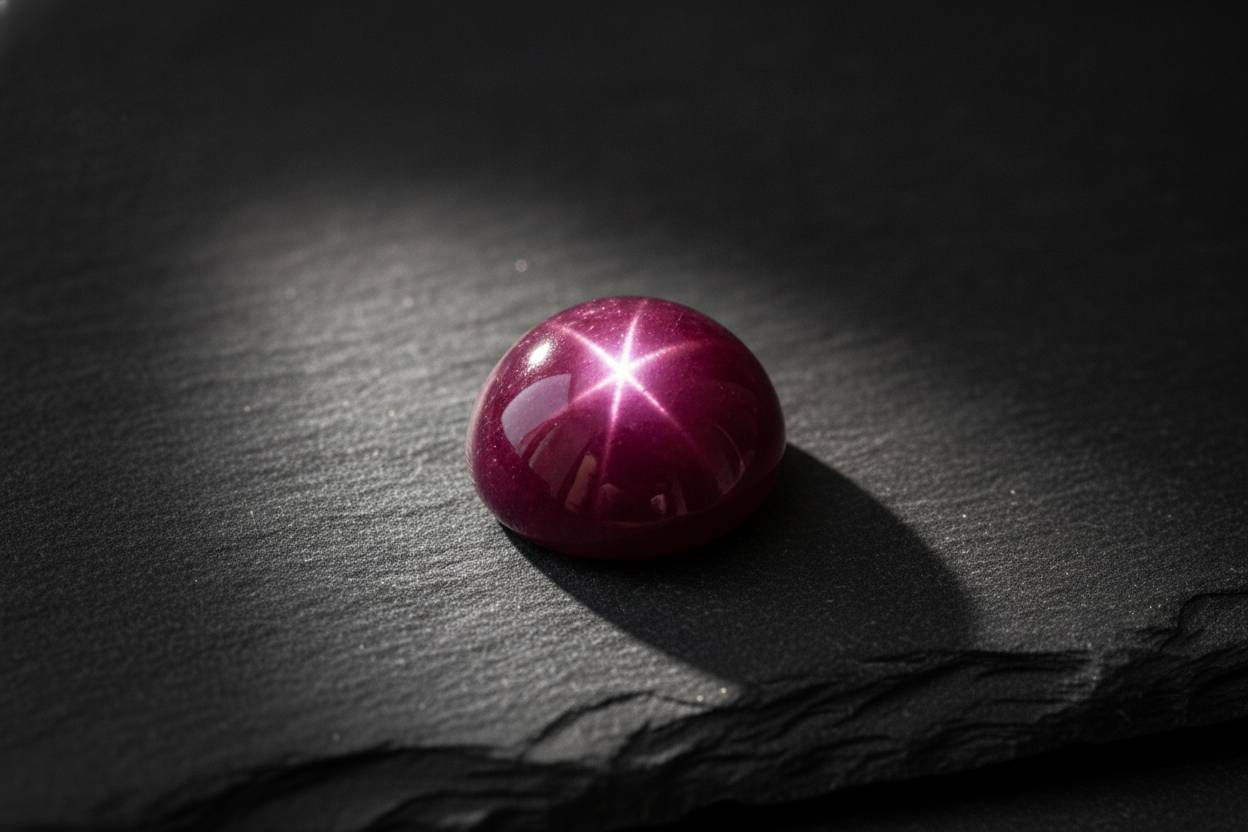
Star Ruby Meaning and Symbolism
Star ruby meaning and symbolism centres on the six-rayed star, long read as a sign of protection, guidance and vitality, with the three crossing rays often tied to faith, hope and destiny. Gemmologically the star is no omen: it is light reflecting from fine rutile needles inside chromium-coloured corundum, and its sharpness, centring and mobility are what a buyer should judge. Symbolism is easy to sell; the stone is not. Before price enters the conversation, confirm species, the quality of the asterism, the origin, and what any report actually says about treatment.
Star ruby meaning and symbolism
Across Burmese and Sri Lankan tradition, the star ruby was treated as a guardian stone — carried for courage, clarity of purpose and safe passage. The three intersecting rays were commonly interpreted as faith, hope and destiny, a reading that persists in modern jewellery writing.
Red corundum has also carried associations with vitality and life force in many cultures, owing to its colour. Chromium is the element responsible for that colour in ruby, whether the stone shows a star or not.
Meaning, however, attaches to the stone only if the stone is genuine. The sections below are the practical half of the subject.
How a genuine star forms
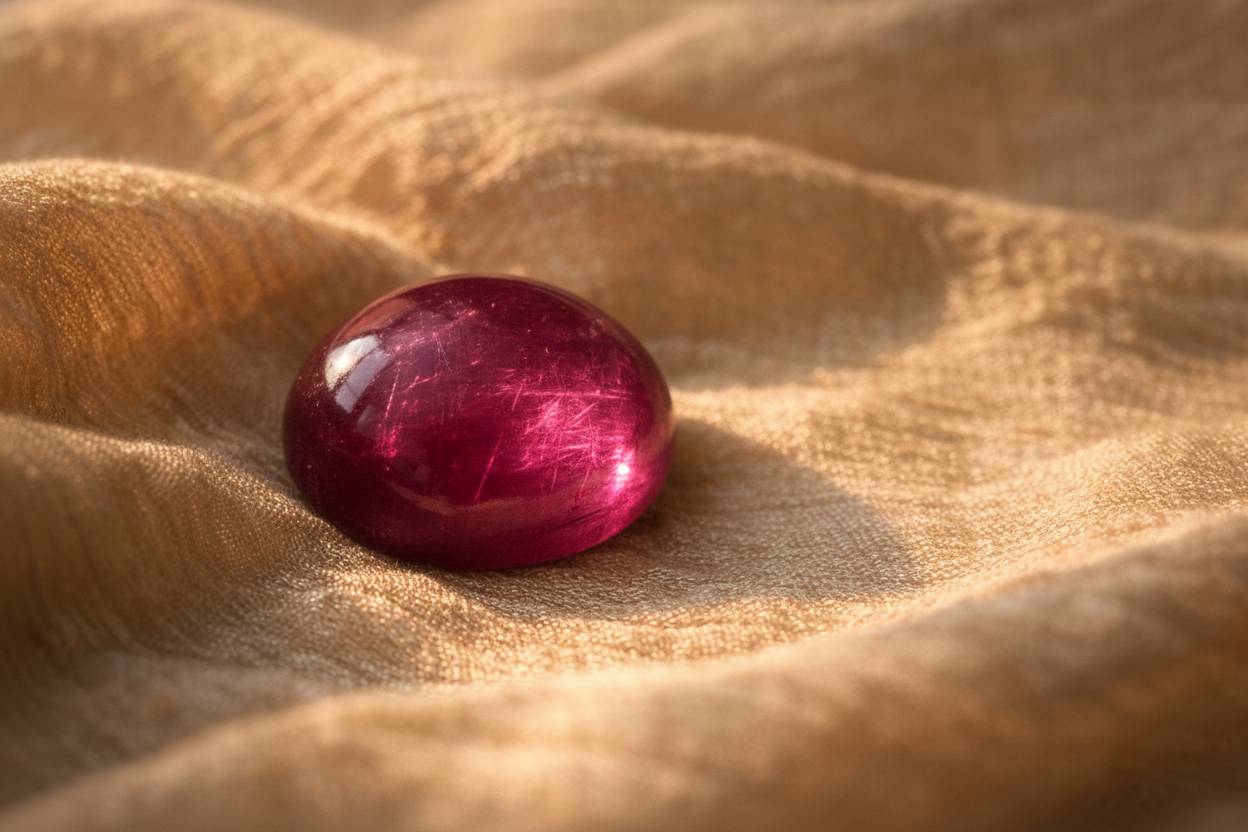
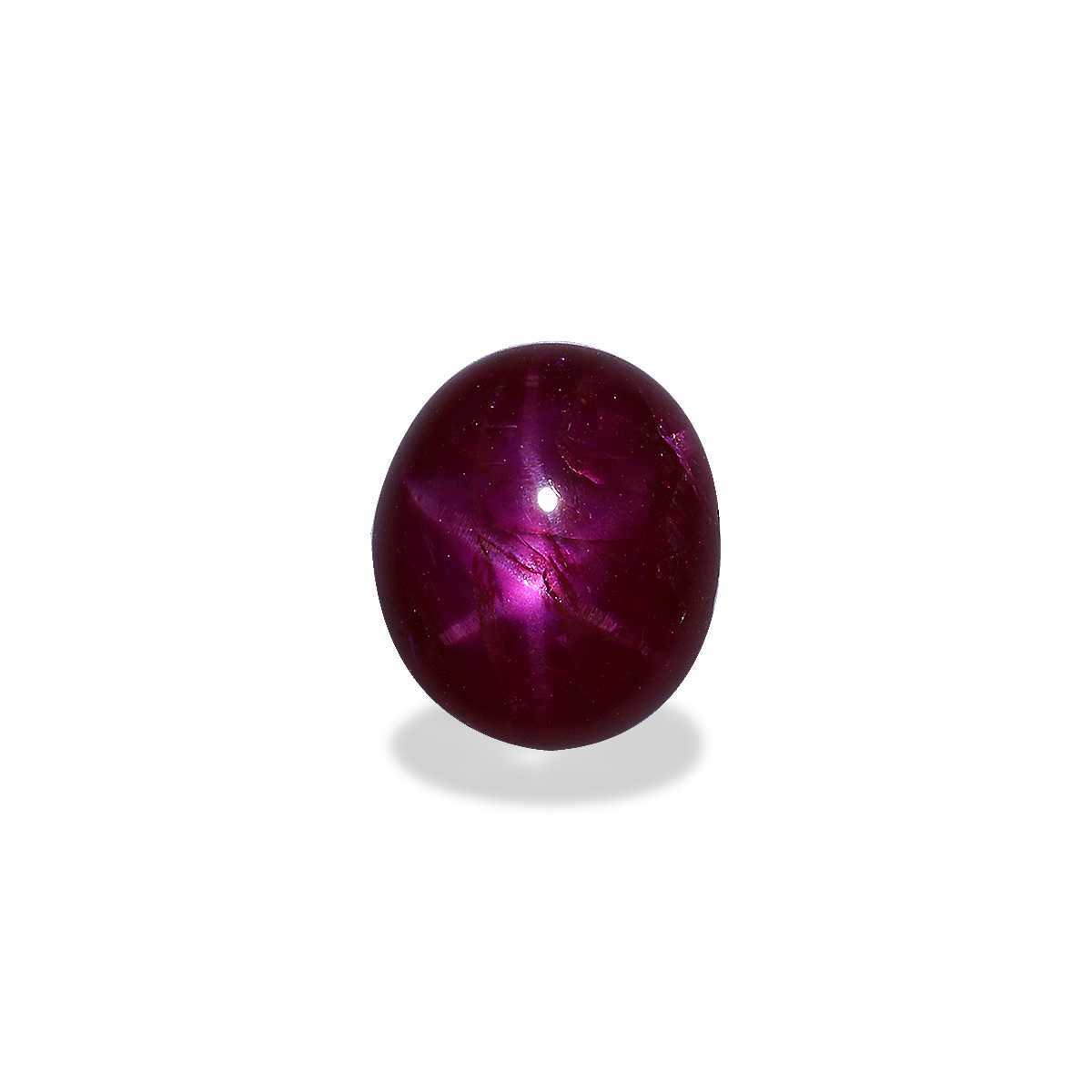
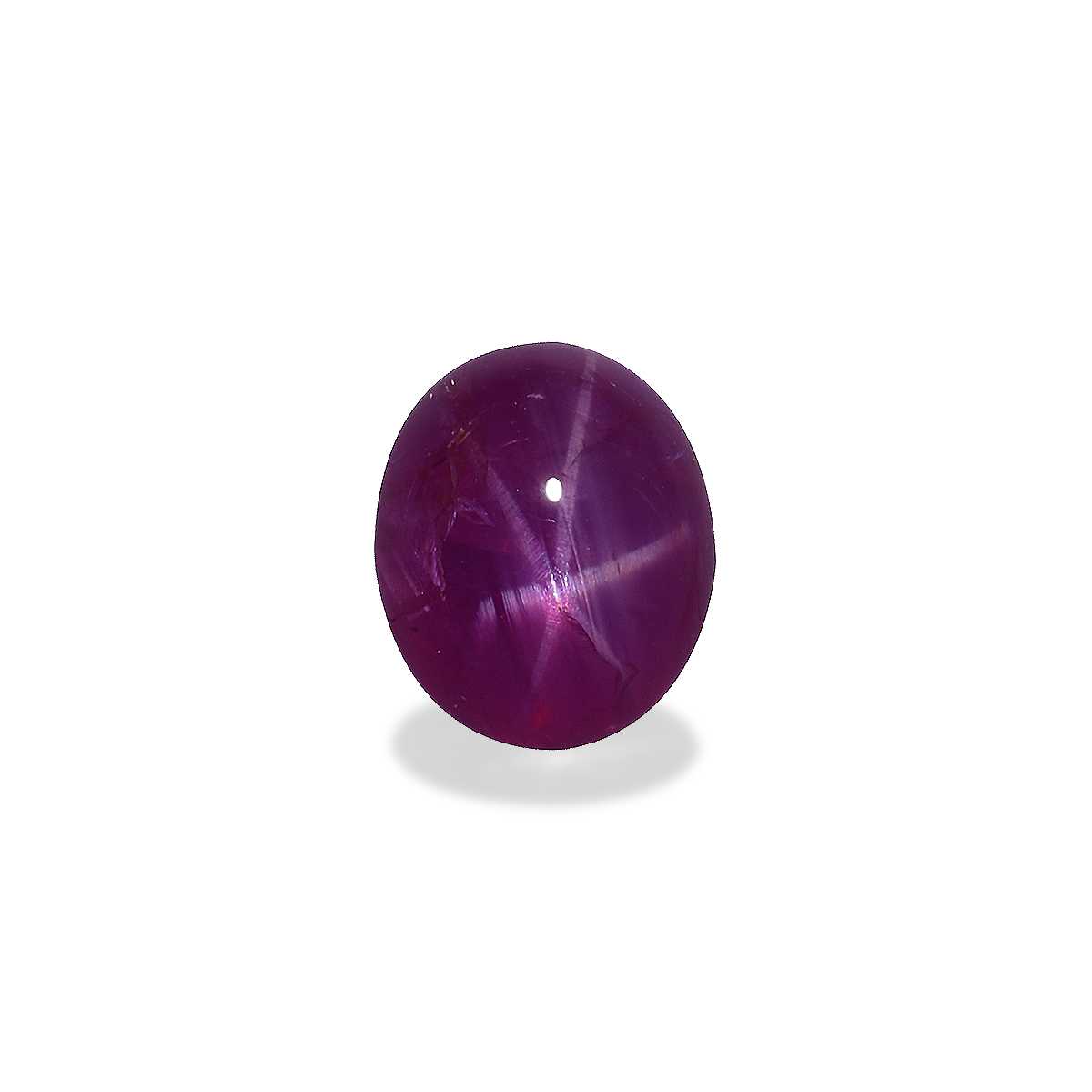
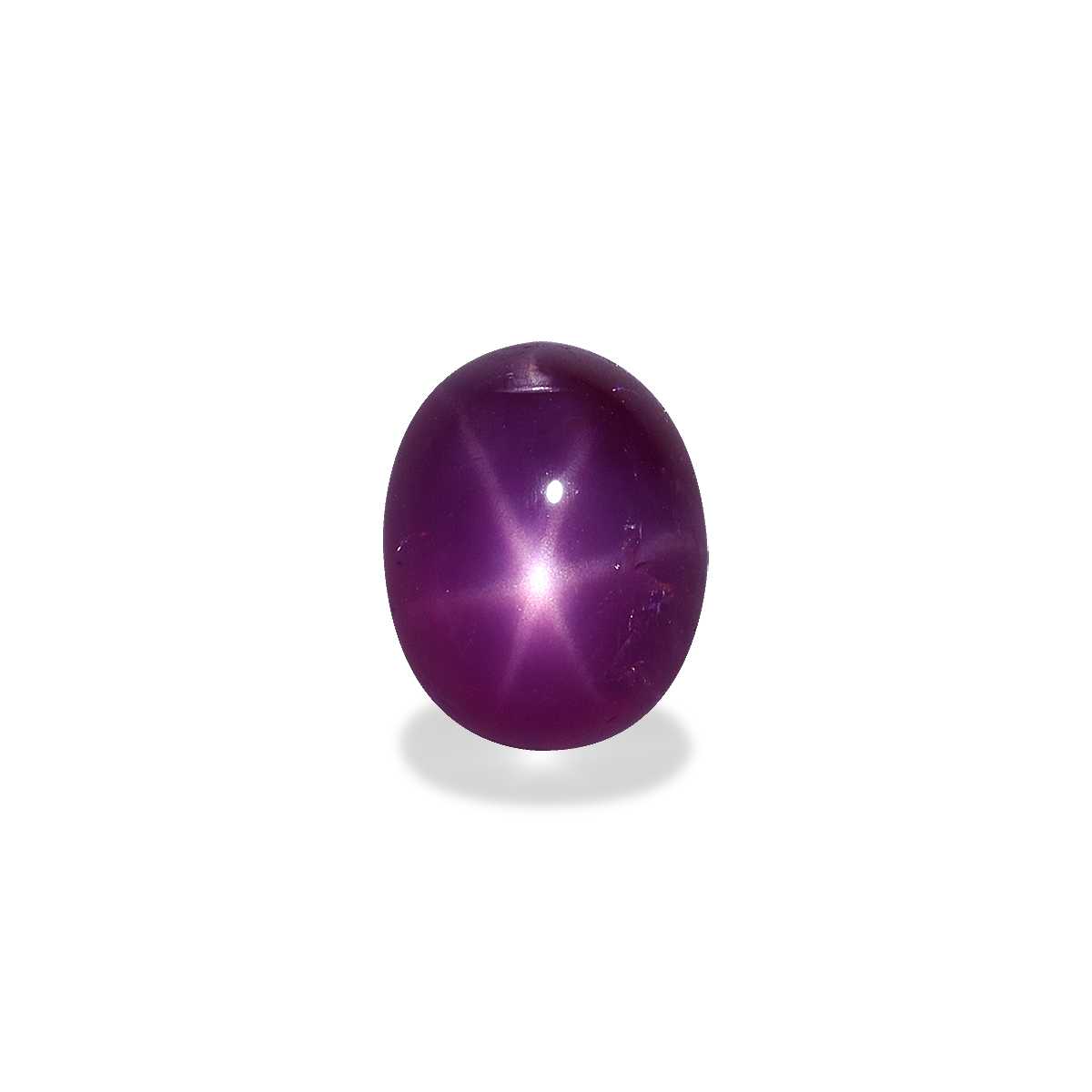
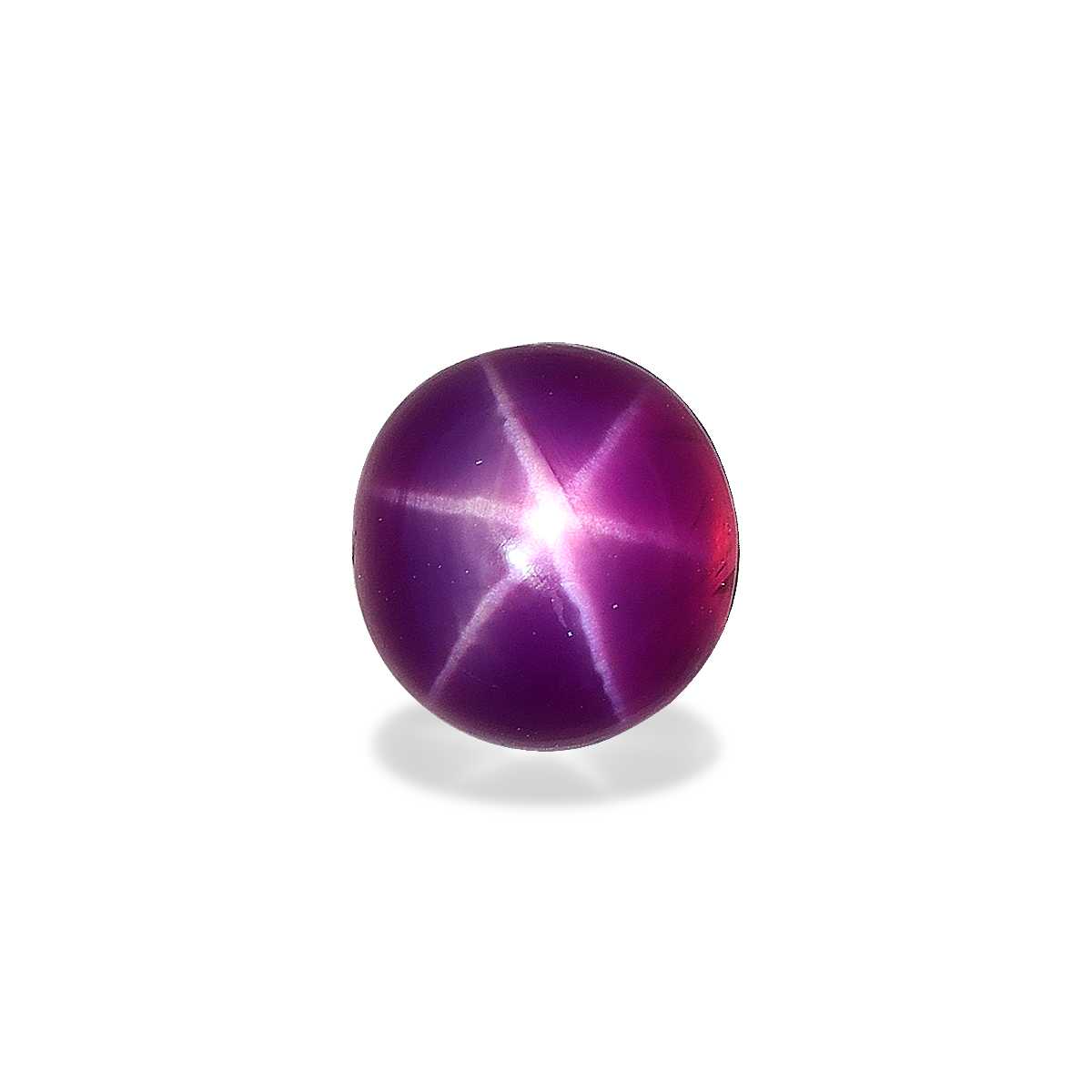
Asterism in ruby comes from needle-like rutile inclusions — the trade calls them silk — arranged in three directions at sixty degrees to each other within the crystal. When the rough is oriented correctly and cut as a cabochon, light reflecting off those needle sets converges into a six-rayed star.
This has two consequences a buyer can test. First, a real star moves: it glides across the dome as you tilt the stone or move the light. Second, a real star usually coexists with visible silk, because the same inclusions that make the star reduce transparency.
A sleepy, slightly translucent body is therefore normal in star ruby. A glassy, inclusion-free stone with a razor-sharp star is the combination that should slow you down.
Checks that confirm corundum
Ruby is corundum, and corundum has fixed physical properties that no amount of trade language can change. A refractometer spot reading on the cabochon dome should fall at roughly 1.76 to 1.77; specific gravity sits near 4.00; hardness is 9 on the Mohs scale, second only to diamond.
Chromium gives a further clue. Chromium-coloured ruby typically shows a red response under longwave ultraviolet light, and reads red through a Chelsea filter — neither test is conclusive alone, but both are useful triage.
Under a loupe, look at the base of the cabochon as well as the dome. Natural silk appears as fine, directional needles within the stone; you should be able to focus through the surface into the inclusion planes.
What a laboratory adds
An independent report from a recognised laboratory — GIA, SSEF, Gübelin, AGL, GRS or AIGS among them — should state species and variety, whether the material is natural or laboratory-grown, treatment status, and, where offered, geographic origin. For star ruby, origin and treatment opinions carry real weight in price, so a report that omits them is only doing half the job.
More from Star Ruby
Simulants and synthetic stars
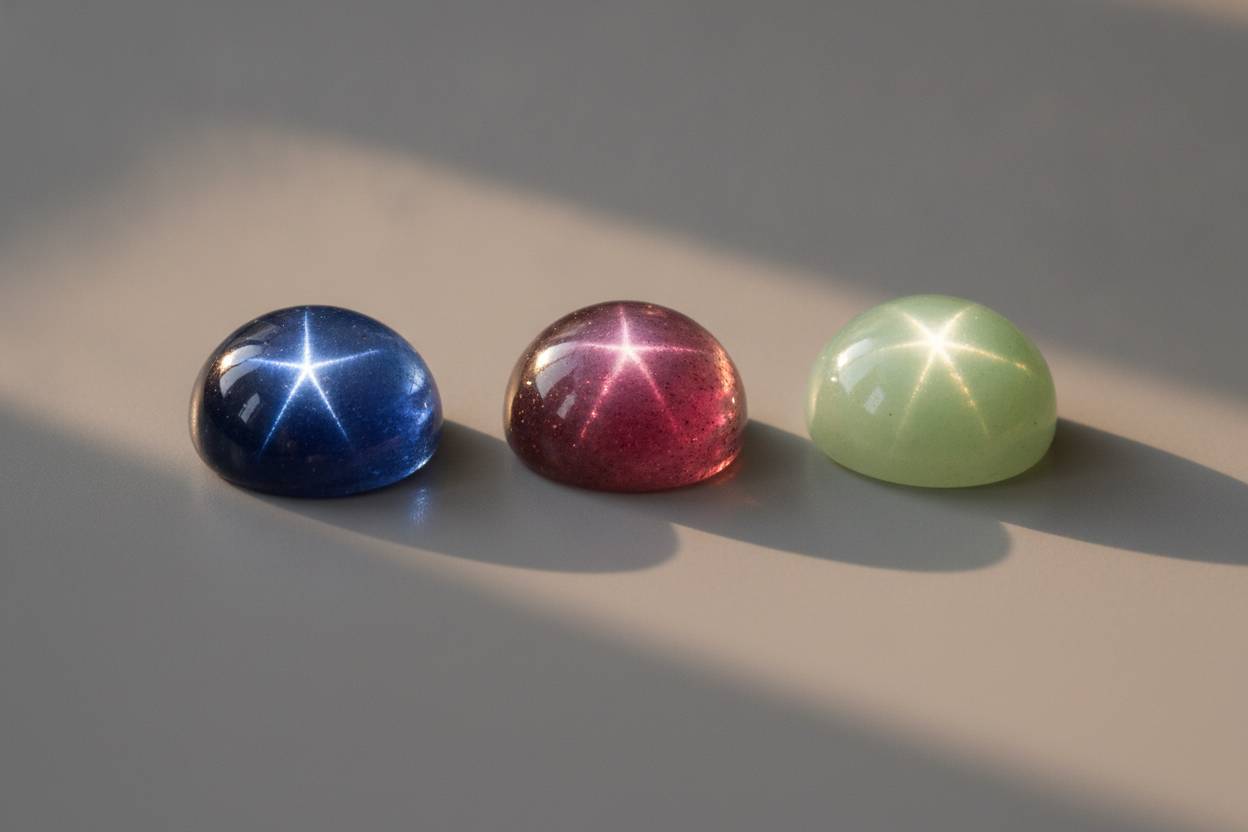
Laboratory-grown star corundum has been produced commercially since the mid-twentieth century, and it is convincing in a photograph. Tell-tales include curved growth striae, gas bubbles, an unnaturally clean body colour, and a star that is perfectly straight, perfectly centred and unnaturally bright from every angle.
Assembled stones are the other recurring problem. Doublets pair a thin natural or synthetic top with a cheaper base, while some glass imitations carry a star moulded or engraved into the flat back — that star will not travel with the light because it is not made of inclusions.
Other species are also sold under loose language:
- Star garnet — usually four rays, higher refractive index, no red fluorescence.
- Black star diopside — four rays, far softer, and frequently mislabelled as black star sapphire.
- Star sapphire — the same species as ruby, but not ruby; only red corundum qualifies for the name.
- Star spinel and star quartz — different species entirely, with different readings on a refractometer.
Note the boundary between red and pink. Trade practice recognises both red and pink in this material, and where a stone sits on that line affects what it may legitimately be called.
Origin: Burma and Sri Lanka
The star rubies that matter commercially come principally from Burma and Sri Lanka. Burmese material is associated with saturated red and a pronounced chromium glow; Sri Lankan stones often run lighter, from pink through to red, and can show fine, well-defined silk.
Origin is a genuine value driver, and it is also the claim most often made casually. Treat any unsupported "Burmese" attribution as marketing until a laboratory opinion supports it.
Red flags before you buy
- A star that stays fixed when the light moves — likely moulded, printed or assembled.
- A star visible on the flat base as well as the dome.
- Flawless transparency combined with a knife-sharp star; natural asterism comes with silk.
- Gas bubbles or curved striae under magnification.
- Verbal-only claims about treatment. Do not assume every star ruby is unheated — ask for a report that states it.
- Origin asserted without laboratory support.
- A weak, wandering or off-centre star described as "rare character". Strength and visibility of the asterism are central to value, alongside colour intensity and clarity.
- A seller who resists independent verification, or who will not accept a return conditional on a laboratory result.
The most common loss is not fraud but inattention: a buyer pays for the idea of a star and overlooks how well that star actually performs. Judge the ray under a single point light, from several angles, before you judge anything else.
Star ruby rewards a slow examination. Confirm it is corundum, confirm the star lives inside the stone, confirm what the report says about origin and treatment — and only then let the symbolism do its work.
Frequently asked questions
What does a star ruby symbolise?+
The six-rayed star has traditionally been read as a symbol of protection and guidance, with the three crossing rays often interpreted as faith, hope and destiny. In Burmese and Sri Lankan tradition the stone was also linked to courage and vitality. Physically, the star is simply light reflecting from rutile silk inside the ruby.
What is the difference between a star ruby and a star sapphire?+
Both are corundum with the same rutile silk that produces asterism. Red corundum is called ruby; every other colour of corundum, including blue and black, is sapphire. So a star sapphire and a star ruby differ in colour and name, not in species.
How can I tell if a star ruby is real?+
A genuine star moves across the dome as you tilt the stone or shift the light, and the body shows some silk rather than perfect clarity. Corundum reads about 1.76 to 1.77 on a refractometer and has a hardness of 9. A moulded star on the flat base, gas bubbles or curved growth lines point to a synthetic or imitation.
Are all star rubies unheated?+
No — that assumption is one of the most common buyer errors. Treatment status should be confirmed by an independent laboratory report rather than taken on a seller's word. Unheated star ruby is not something to presume; it is something to verify in writing.
Is black star sapphire the same as black star diopside?+
They are different species. Black star sapphire is corundum, while black star diopside is a much softer mineral that typically shows four rays rather than six. The two are frequently confused in online listings, so check the stated species and hardness.
What makes one star ruby worth more than another?+
Colour intensity, clarity and the strength and visibility of the star are the principal drivers, together with verified origin. A sharp, well-centred star that travels cleanly across the dome commands a premium over a weak or off-centre one.
From our Journal
Buying guides, origin stories, and notes from the trade.