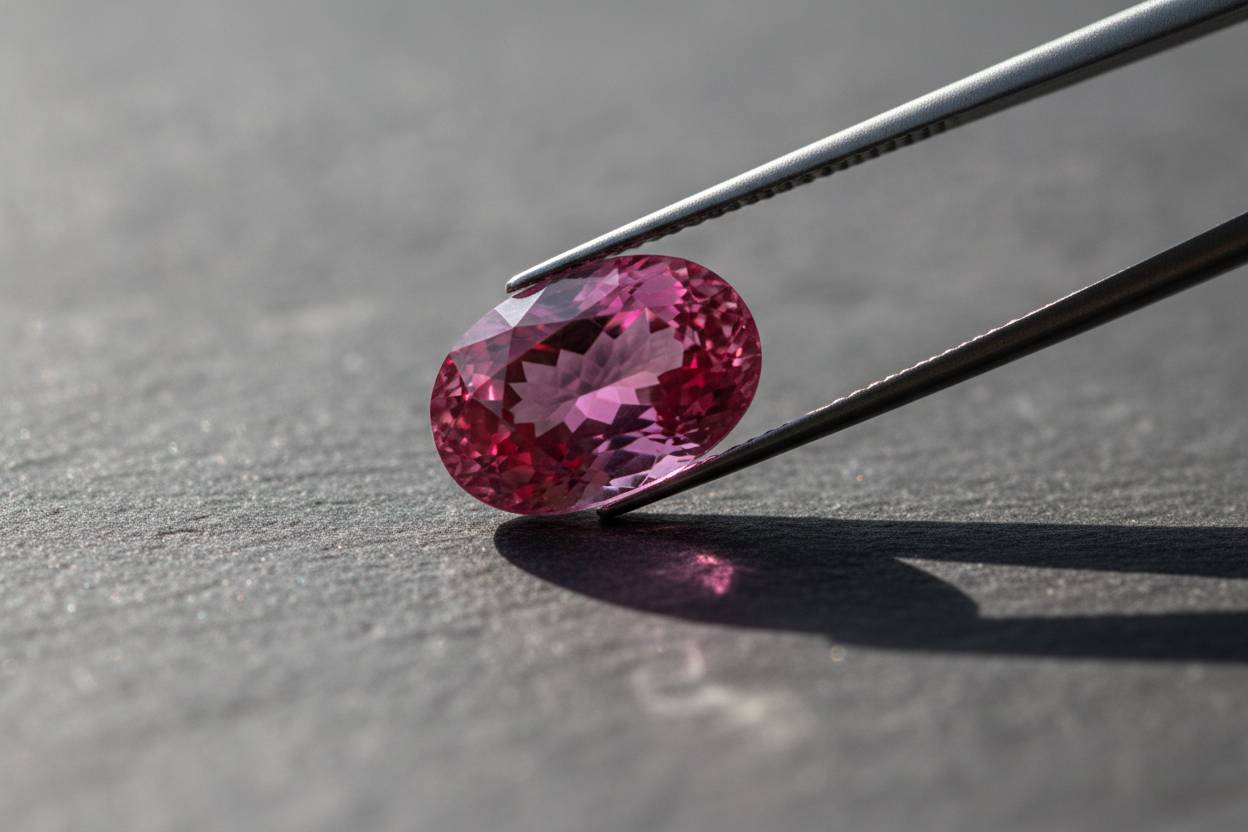
Pink Sapphire Meaning and Symbolism
Pink sapphire meaning and symbolism centre on affection, compassion and emotional steadiness — the language of quiet devotion rather than grand declaration. Historically the stone has been worn as a token of loyalty and gentle strength; today it is chosen for engagement rings by buyers who want sapphire durability with warmth instead of blue formality. Symbolism, however, sets no part of the price. Value in pink sapphire comes from colour intensity, clarity and verified origin, in roughly that order.
The physical facts behind the sentiment are simple. Pink sapphire is corundum, Mohs 9, with a refractive index of 1.76 to 1.77, and its colour comes from trace elements — primarily chromium, with iron shifting the balance. It is a stone built to outlast whatever meaning is attached to it.
What pink sapphire symbolises
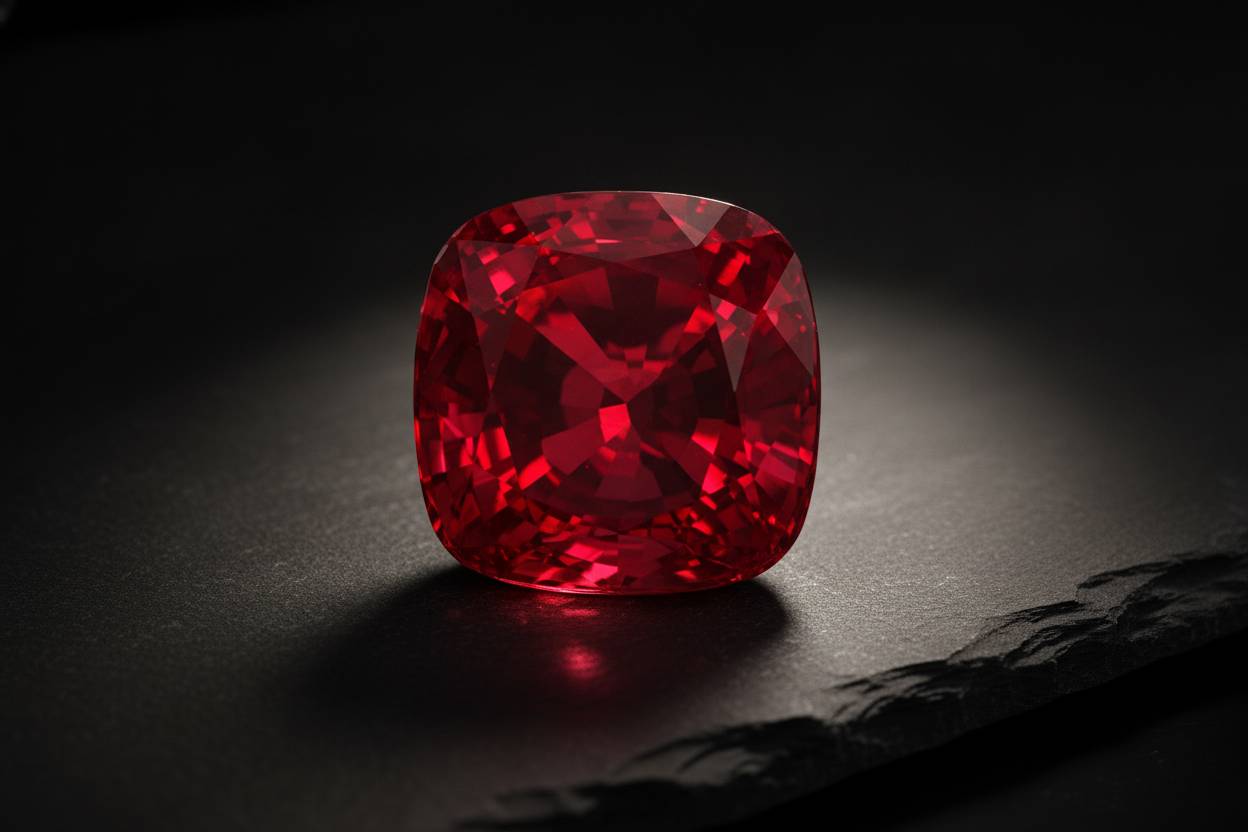
In the trade, pink sapphire sits beside ruby as the same species wearing a softer voice. Chromium is what colours both, which is why the symbolic readings overlap: ruby for passion and courage, pink sapphire for tenderness, care and composure.
Victorian and later sentimental jewellery used pink stones to signal affection without drama, and that reading has held. Buyers today most often describe it as a gem of emotional resilience — love that is maintained rather than announced.
Useful symbolism is honest symbolism. No gemstone has a documented effect on health or fortune, and a reputable seller will not imply one. Treat meaning as a reason to choose pink sapphire over another colour, never as a reason to accept a weaker stone.
Colour intensity comes first
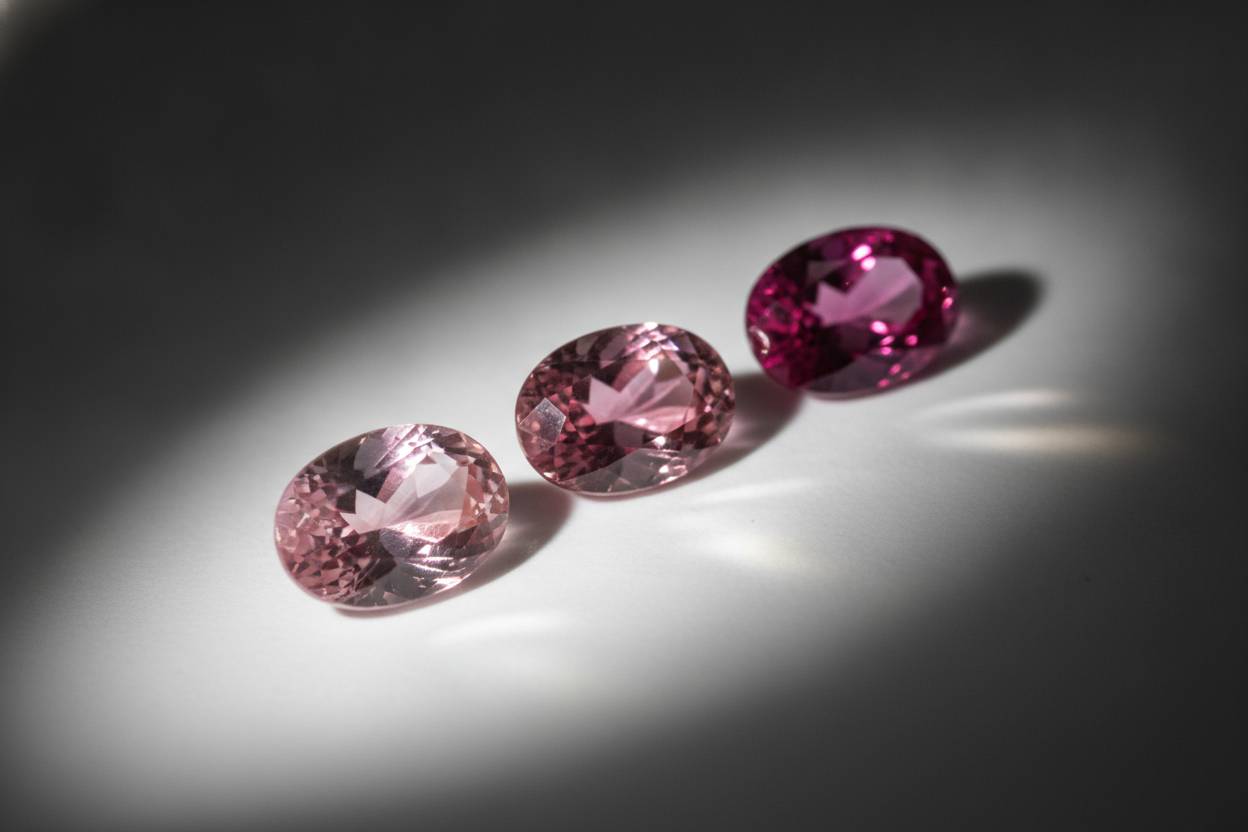
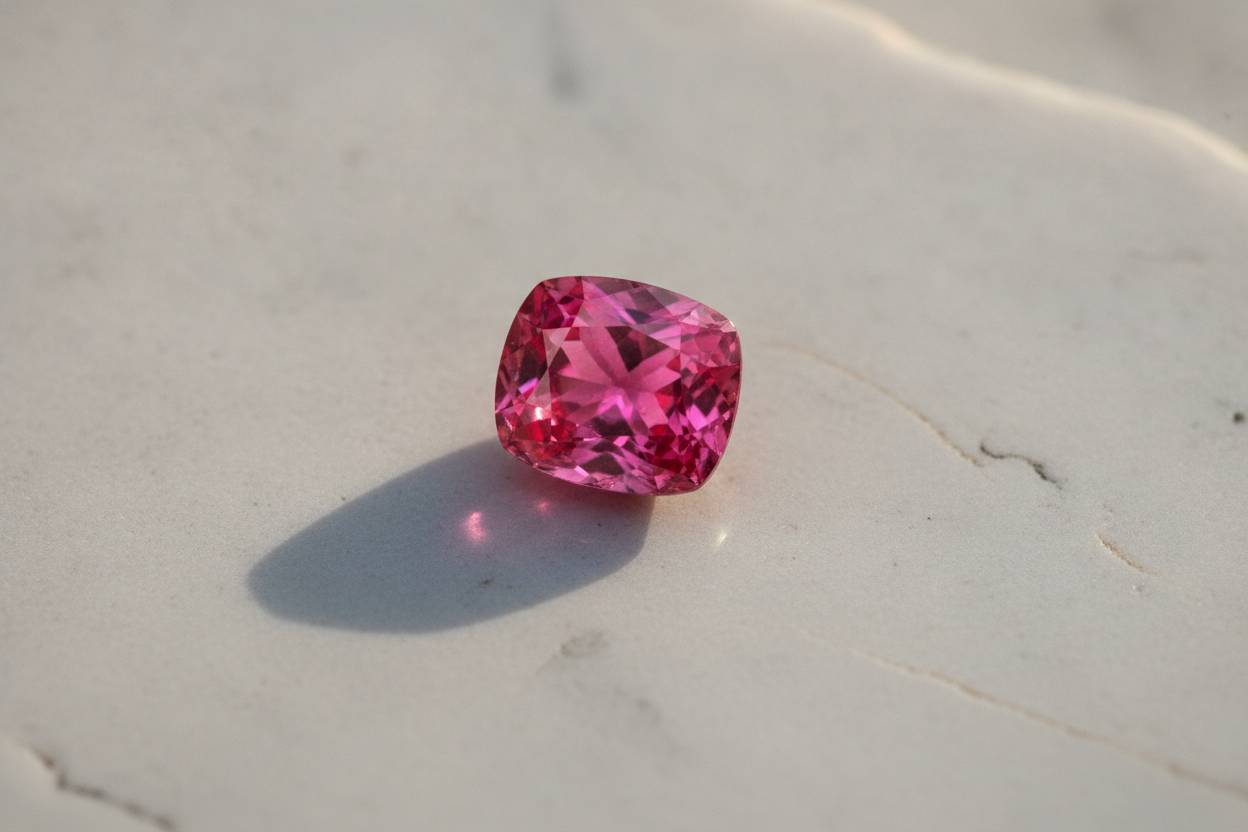
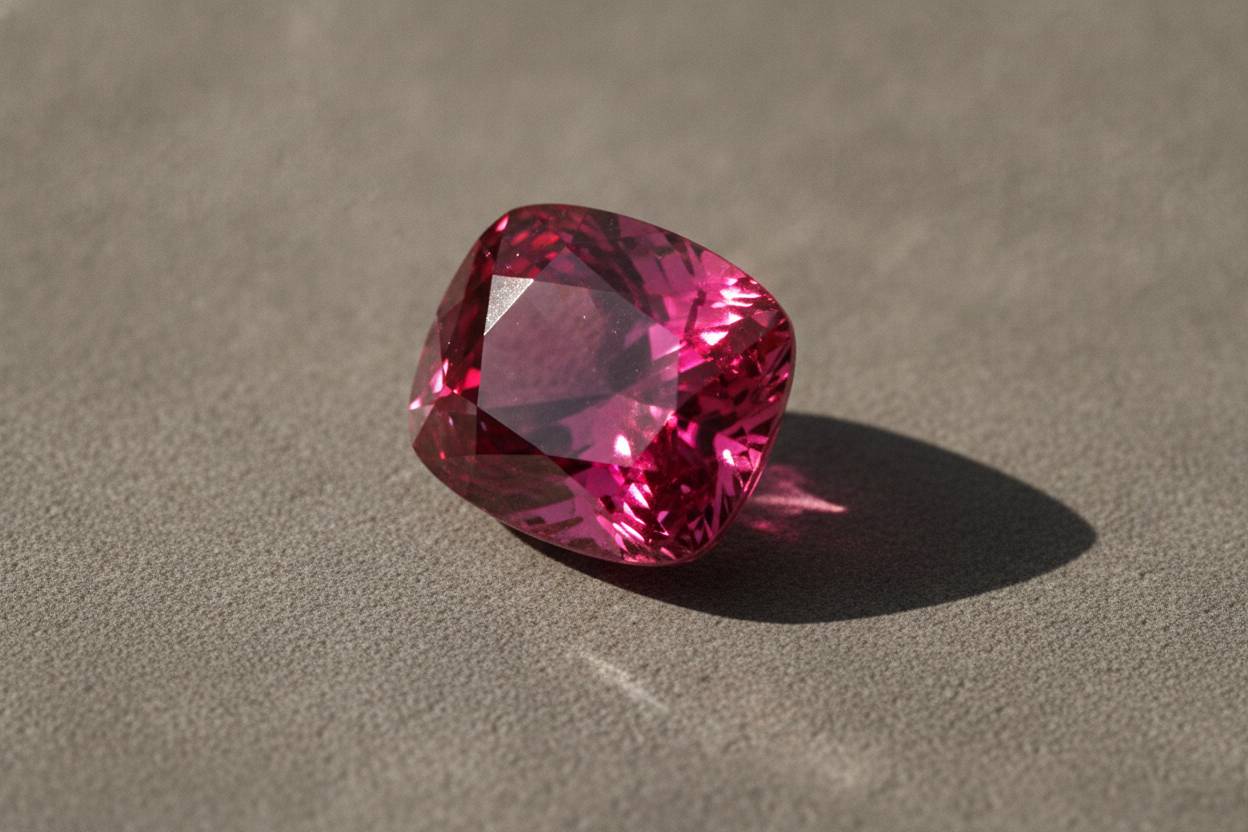
Colour intensity is the dominant value driver. Strong, even saturation in a medium tone — clearly pink, neither pale nor sliding into brown or grey — carries the most weight in the market.
Very light material reads closer to a tinted stone than a coloured one, and very dark material loses life in the shadows. Judge the stone face-up, in daylight and under warm indoor light, and ask to see it away from the intense spotlights used in showrooms.
Look for colour zoning: bands or patches of stronger and weaker pink are common in corundum and can leave one part of the stone visibly empty. A well-oriented cut hides mild zoning; a rushed cut advertises it.
Cut affects the colour you see
Windowing, where a shallow pavilion lets light pass straight through, drains apparent saturation. Bulging pavilions, added to keep carat weight, do the opposite and darken the centre. Neither is a treatment issue — it is workmanship, and it is priced accordingly.
Clarity: needles and silk
Pink sapphire is typically found with needles, silk and feather-like inclusions. Fine silk is normal for the species and, in modest amounts, can soften the face-up colour pleasantly.
The practical question is visibility and position. A haze dense enough to dull brilliance costs value; a feather reaching the surface near a girdle or corner is a durability concern worth raising with your setter.
Eye-clean stones exist and are worth seeking, but do not chase loupe-clean perfection at the expense of colour. In coloured stones, colour almost always buys more beauty per pound than clarity does.
Origin and what it tells you
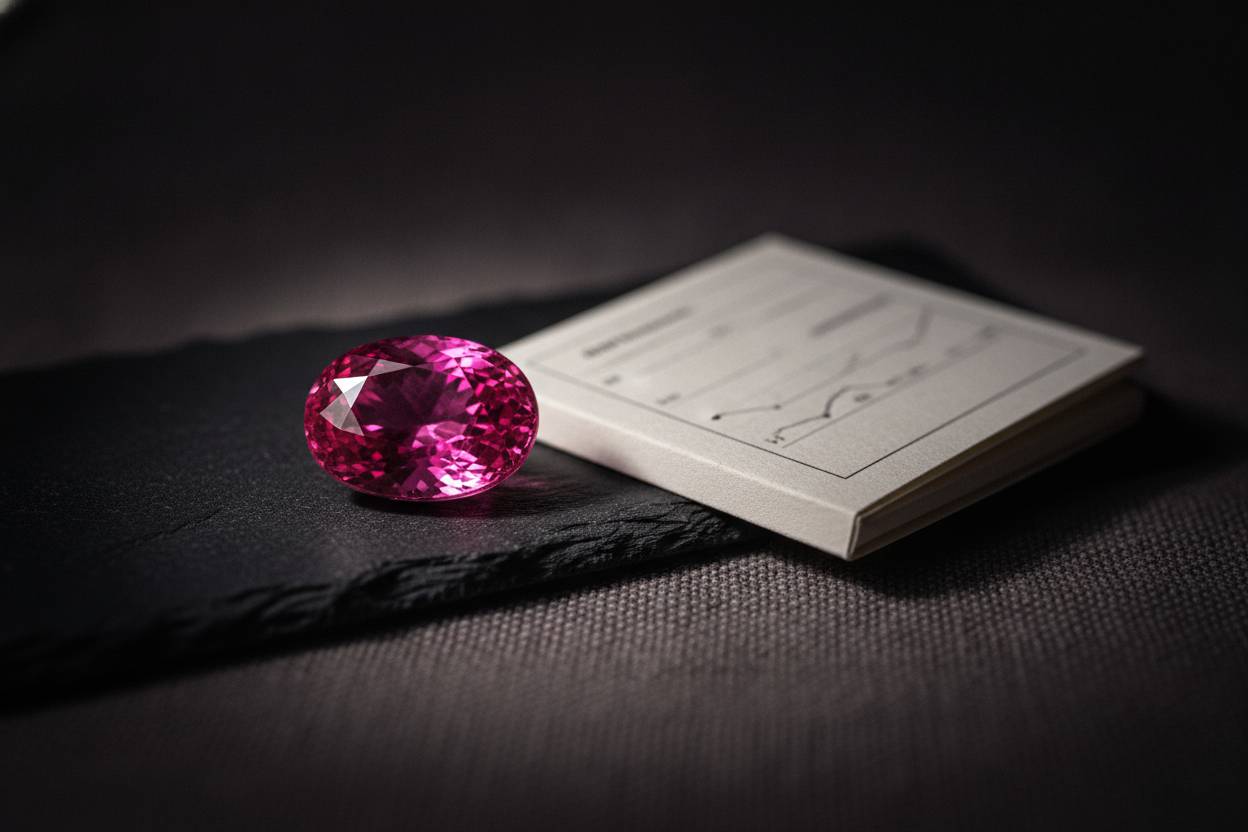
Commercially, most fine pink sapphire reaching the market comes from Madagascar, Sri Lanka and Mozambique. Origin is a genuine value driver, and it is also the claim most often made casually and least often checked.
Sri Lankan material has a long-established reputation and often shows a slightly lighter, luminous pink. Madagascar produces a wide range, including strongly saturated stones, and Mozambique has become a significant source of good corundum. These are tendencies, not guarantees — the stone in front of you decides.
Origin determination is a laboratory task involving trace-element chemistry and inclusion study. If origin matters to your budget, it must come from a report, not from conversation.
Pink sapphire value guide
Price in pink sapphire follows a clear hierarchy: colour intensity first, then clarity and cut, then documented origin, with size acting as a multiplier throughout. Larger stones in strong, even colour are scarce, and prices rise disproportionately as size increases.
Ask for the three measurements that matter — carat weight, millimetre dimensions and depth percentage — before you compare quotes. Two stones of identical weight can face up a full size apart.
More from Pink Sapphire


Where buyers go wrong
- Making assumptions about treatment. Do not assume any pink sapphire has been treated — the assumption is as unhelpful as the opposite one. Ask what the stone's status is, and get the answer in writing. Our pink sapphires are offered unheated, and that disclosure belongs on the invoice.
- Skipping disclosure entirely. A vague description is not a disclosure. A report from a recognised laboratory — GIA, SSEF, Gübelin, AGL or Lotus — is the document that settles the question.
- Not verifying origin. Paying an origin premium on a seller's word is the most avoidable mistake in this market. Origin either appears on a laboratory report or it does not exist for pricing purposes.
- Confusing species. Pink topaz and pink spinel are different minerals, not grades of sapphire. Topaz is Mohs 8 with basal cleavage and a noticeably lower refractive index; it is a fine gem in its own right, but it is not corundum and should not be priced as such.
- Buying the adjective. "Hot pink", "baby pink" and similar trade language describe nothing measurable. The formal trade colour name here is simply pink; everything beyond that needs to be seen.
Pink sapphire rewards a buyer who separates sentiment from specification. Choose the stone for its colour, clarity and paperwork, then let the meaning and symbolism be the reason it stays on a hand for decades.
Frequently asked questions
What does a pink sapphire symbolise?+
Pink sapphire is traditionally associated with affection, compassion and emotional steadiness — devotion expressed quietly rather than dramatically. Because it is the same species as ruby and also coloured by chromium, the readings overlap, with pink taking the gentler side. No gemstone has any documented effect on health or fortune.
What makes one pink sapphire more valuable than another?+
Colour intensity leads: strong, even saturation in a medium tone commands the most. Clarity and cut follow, then documented origin, with size magnifying every other factor because large stones in fine colour are scarce.
Are pink sapphires treated?+
Do not assume either way — treatment status is a question of disclosure, not guesswork. Ask the seller directly and ask for it in writing; a report from a laboratory such as GIA, SSEF, Gübelin or Lotus is the document that settles it. Our pink sapphires are offered unheated.
Is pink topaz the same as pink sapphire?+
No. Pink topaz is a separate mineral species, Mohs 8 with basal cleavage and a lower refractive index, while pink sapphire is corundum at Mohs 9 with a refractive index of 1.76 to 1.77. Topaz should never be priced or sold as sapphire.
Which origins produce pink sapphire?+
Madagascar, Sri Lanka and Mozambique are the sources most relevant to today's market. Each shows broad tendencies in colour and character, but the individual stone matters more than the country, and origin should be confirmed by a laboratory report if you are paying for it.
What inclusions are normal in pink sapphire?+
Needles, silk and feather-like inclusions are typical for the species. Fine silk in modest amounts can soften the colour attractively; dense haze that dulls brilliance costs value, and a feather reaching the surface should be discussed with your setter before mounting.
Is pink sapphire durable enough for an engagement ring?+
Yes. At Mohs 9, corundum is among the hardest gem materials used in jewellery and handles daily wear well. Protect the girdle and any surface-reaching feathers with a secure setting.
From our Journal
Buying guides, origin stories, and notes from the trade.