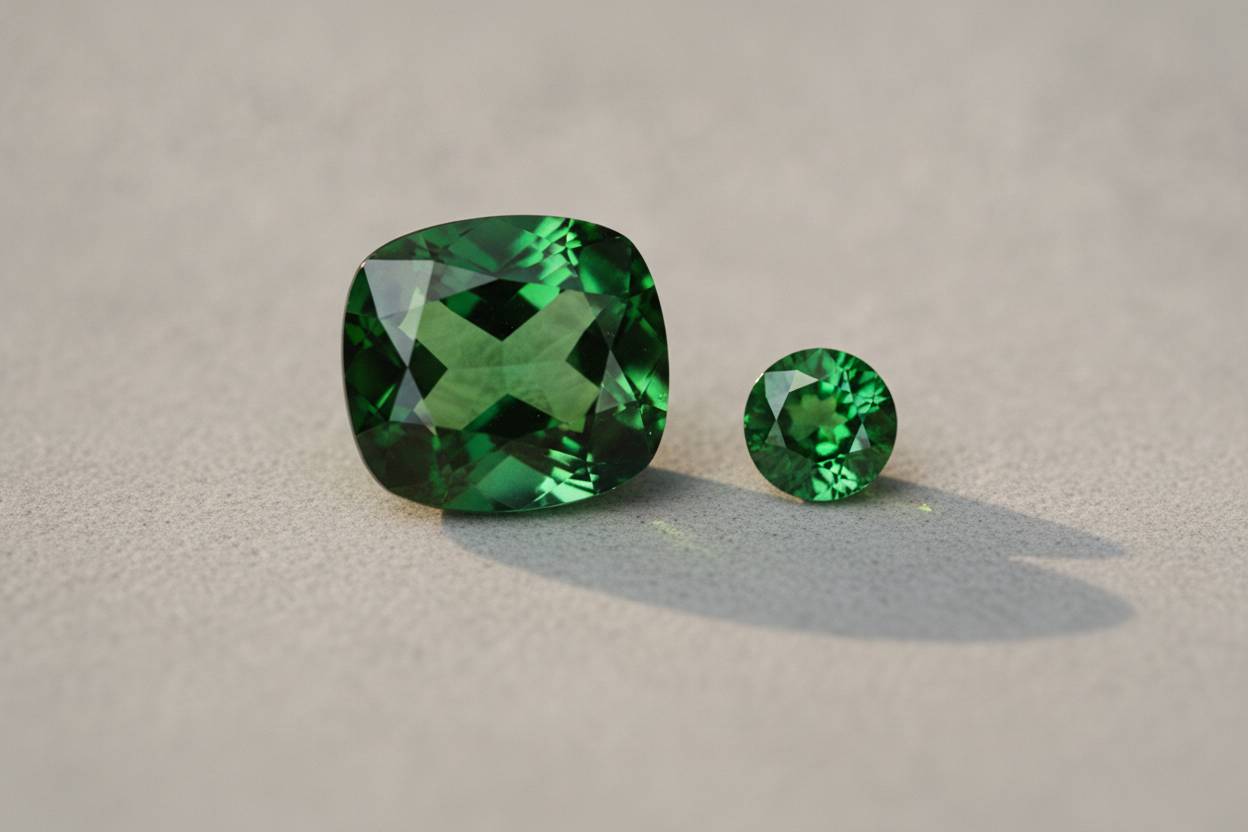
Chrome Tourmaline Value Guide vs Tsavorite
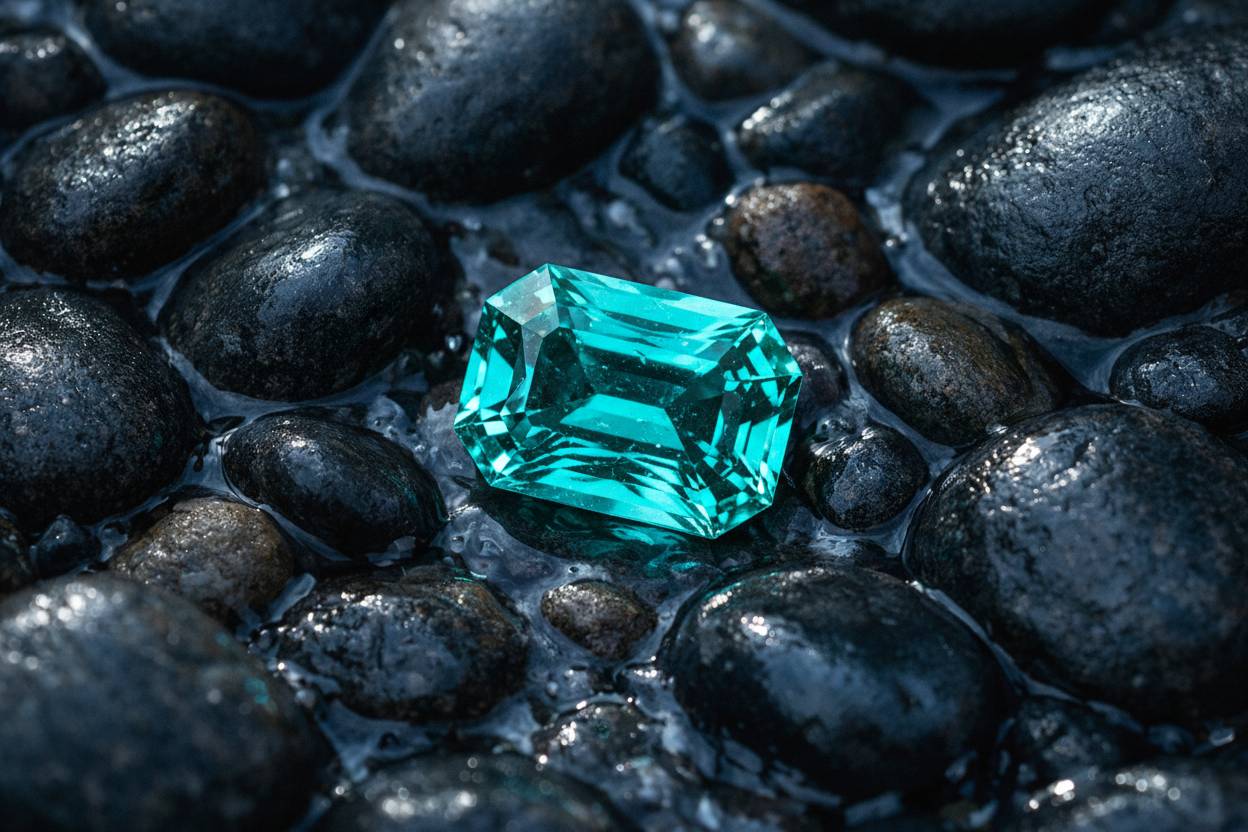
A practical chrome tourmaline value guide rests on three factors: vivid green colour, clarity in the VS to VVS range, and carat weight — the last being the hardest of the three to find. Its closest rival, tsavorite garnet, looks similar across a tray but is a different species, and fine tsavorite carries a clear premium per carat over comparable chrome tourmaline. Chrome tourmaline gives you the same chromium-driven green for less outlay, comes to market unheated, and is more attainable in larger, cleaner sizes. Tsavorite returns light more brightly and holds colour better in small stones. Which you should buy depends on the size you want and how much you care about the last degree of brilliance.
Two species, one green
Chrome tourmaline is a variety of tourmaline coloured by chromium. Tsavorite is a variety of grossular garnet, also coloured by chromium (with vanadium often contributing). The shared colouring element is exactly why they confuse buyers.
The overlap extends to geography. Chrome tourmaline is a Tanzanian and Zambian stone — East African material from the same broad belt that produces tsavorite in Tanzania and Kenya. Parcels from the region can contain both, and dealers do not always separate them carefully.
Hardness offers no help in telling them apart. Tourmaline sits at 7 to 7.5 on the Mohs scale, and grossular garnet occupies much the same band. Both are sound choices for rings with a protective setting.
Tests that tell them apart
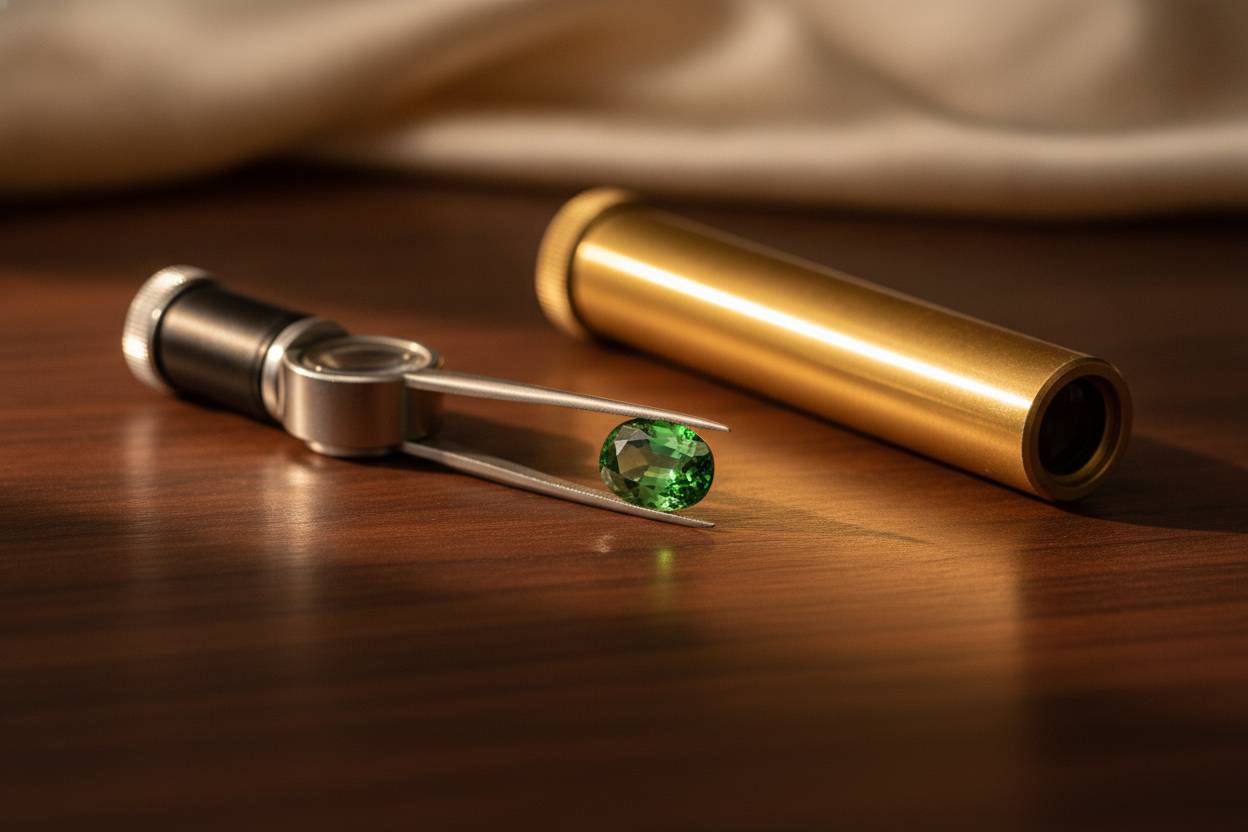
Separation is straightforward with basic gemmological equipment. The two stones differ in optical class, not just chemistry, so the tests are decisive rather than suggestive.
Refractive index
Chrome tourmaline reads 1.62 to 1.64 on a refractometer. Grossular garnet reads well above 1.70. That gap is wide, unambiguous, and the single fastest check available.
Double refraction
Tourmaline is doubly refractive and shows two shadow edges on the refractometer scale. Garnet is singly refractive and gives one. Under a loupe, tourmaline's birefringence often produces visible doubling of back facet edges in larger stones — garnet never does.
Pleochroism and specific gravity
Chrome tourmaline is noticeably pleochroic: rock the stone and the green shifts in depth, usually darkest down the c-axis. Tsavorite shows no pleochroism at all. Tourmaline is also markedly lighter in the hand, with a specific gravity around 3.0 to 3.2 against garnet's 3.6 to 3.7.
One caution: because both owe their colour to chromium, both may glow reddish through a Chelsea colour filter. That reaction is not diagnostic and should never be used alone.
More from Chrome Tourmaline
How the colour differs
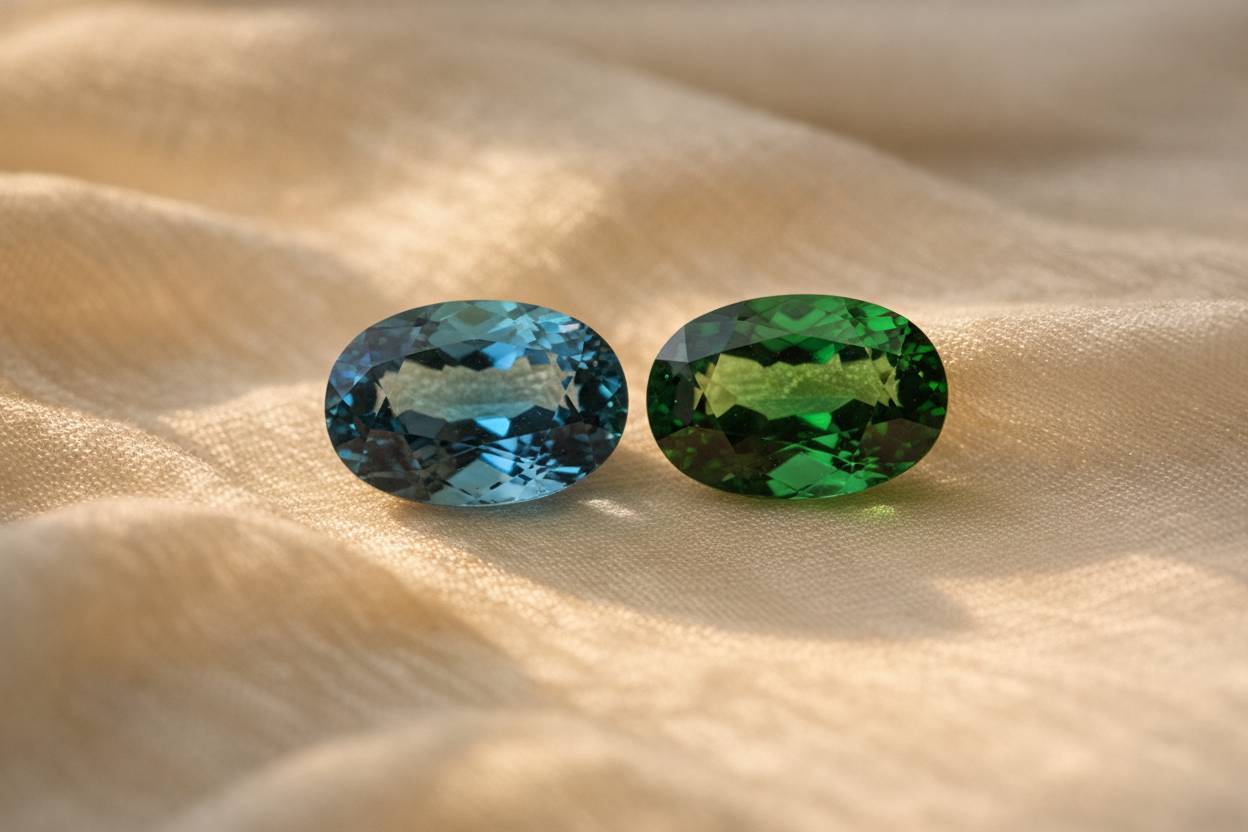
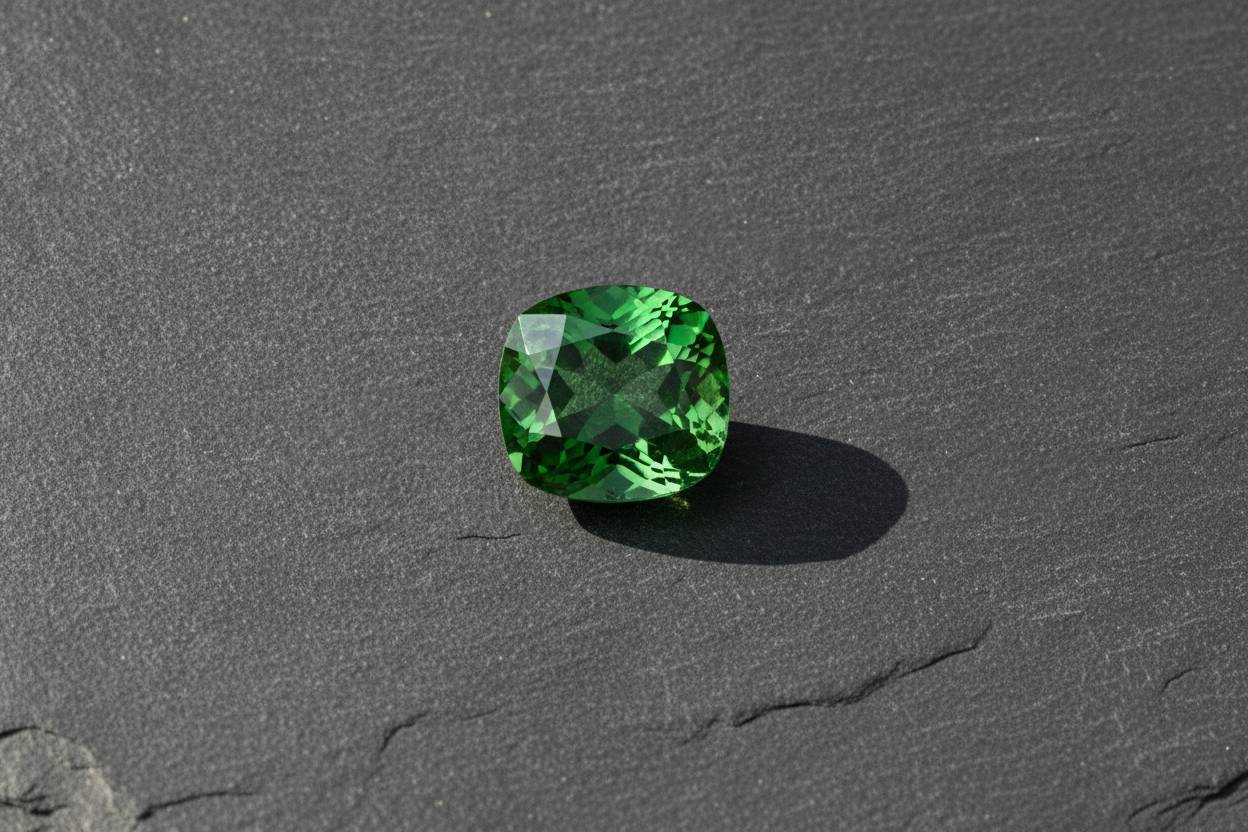
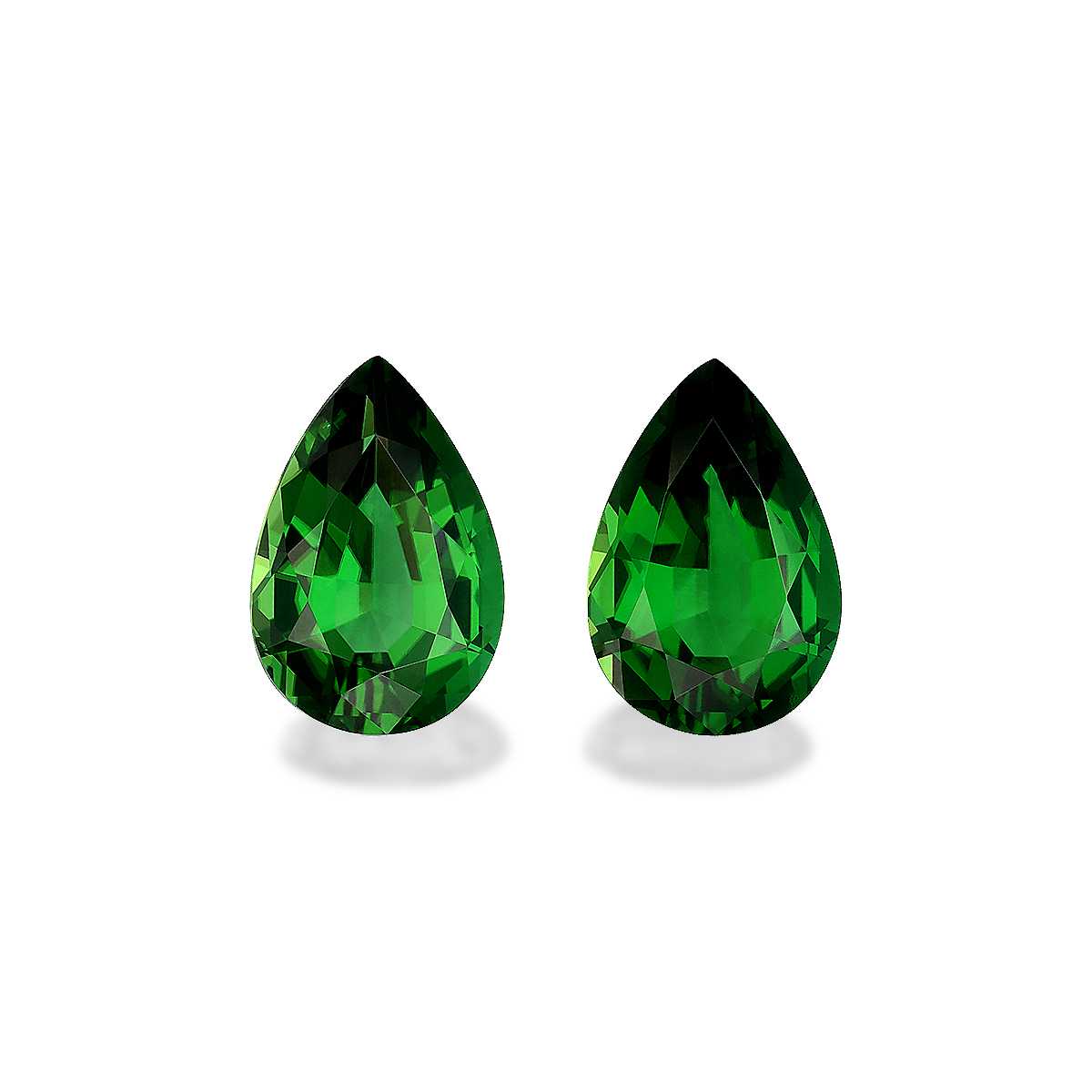
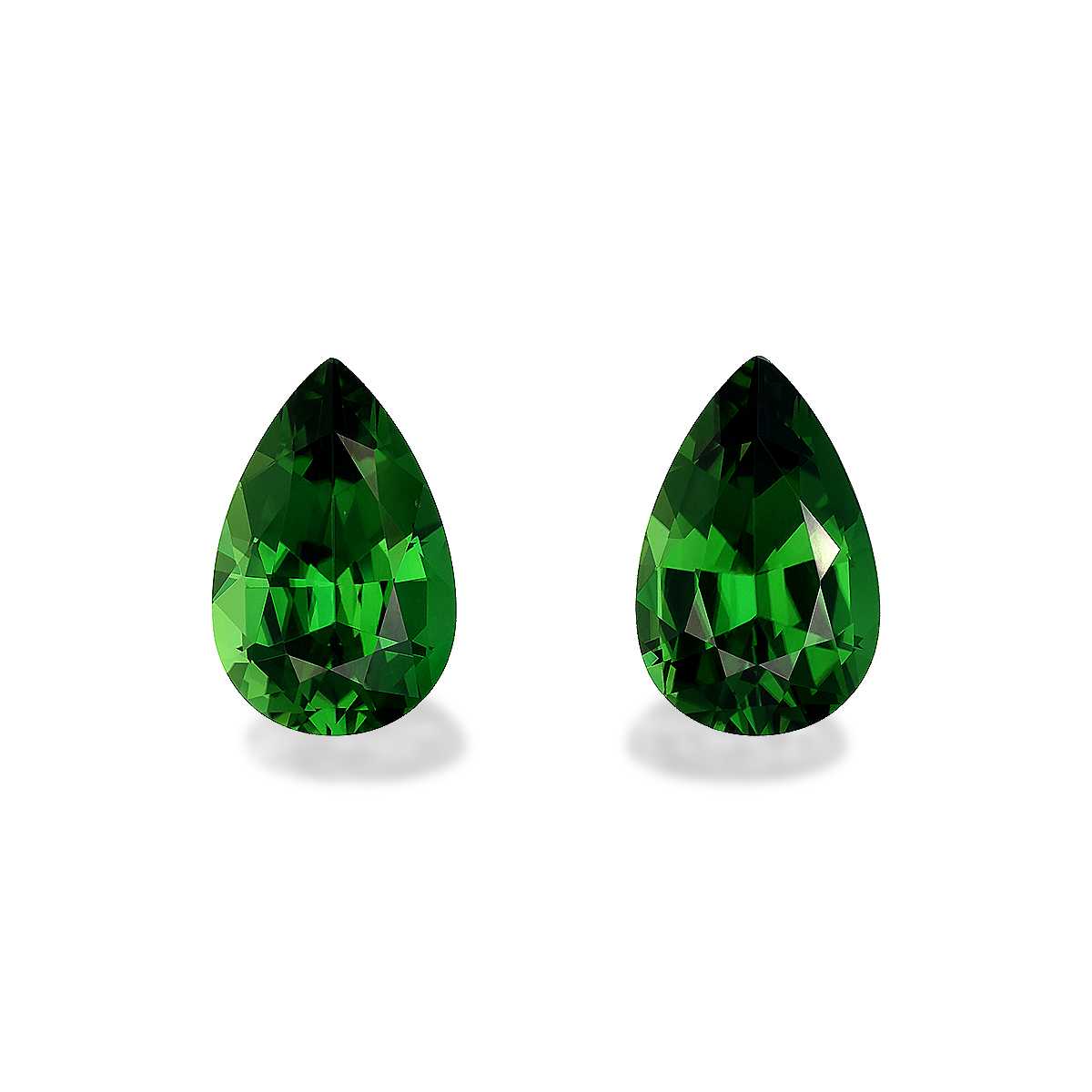
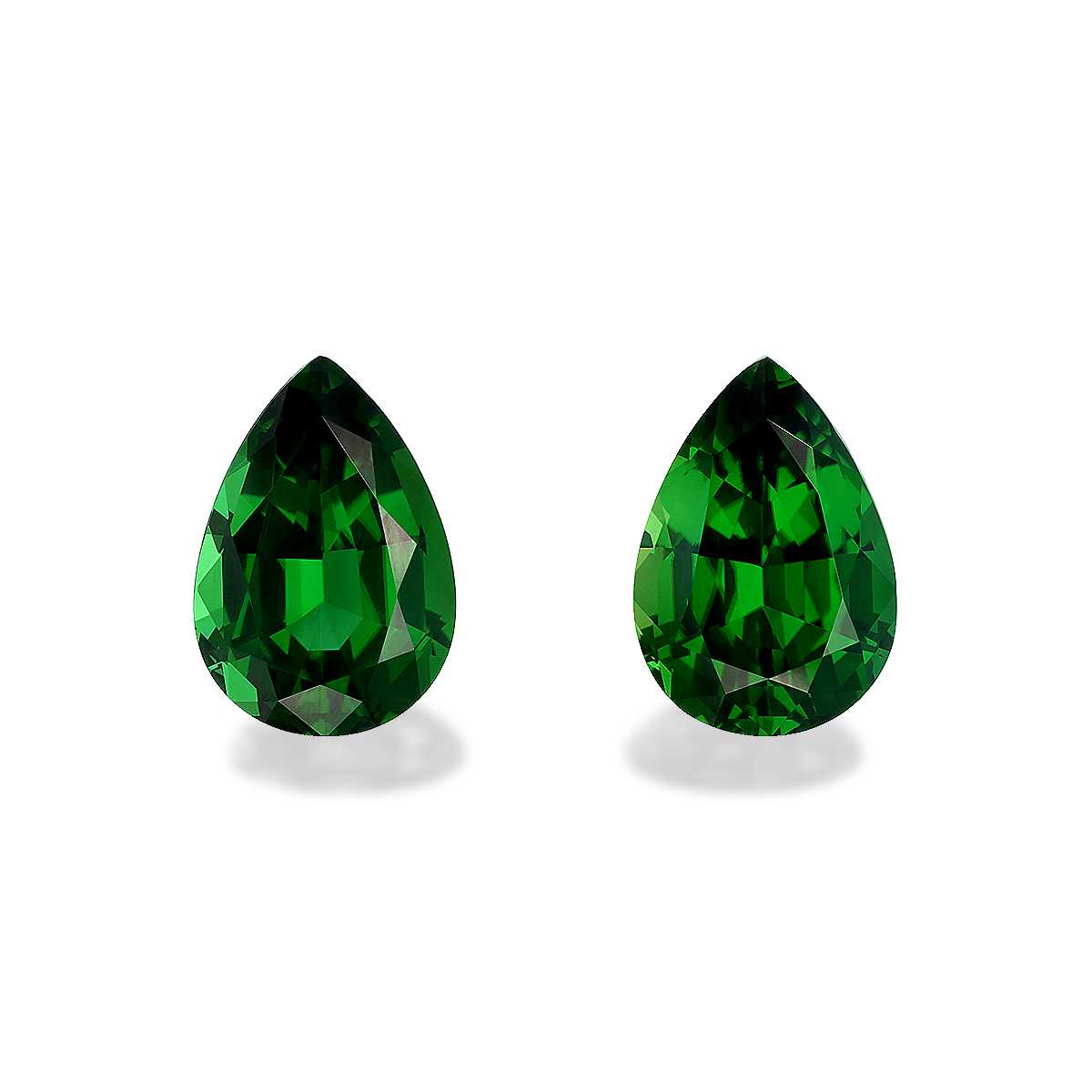
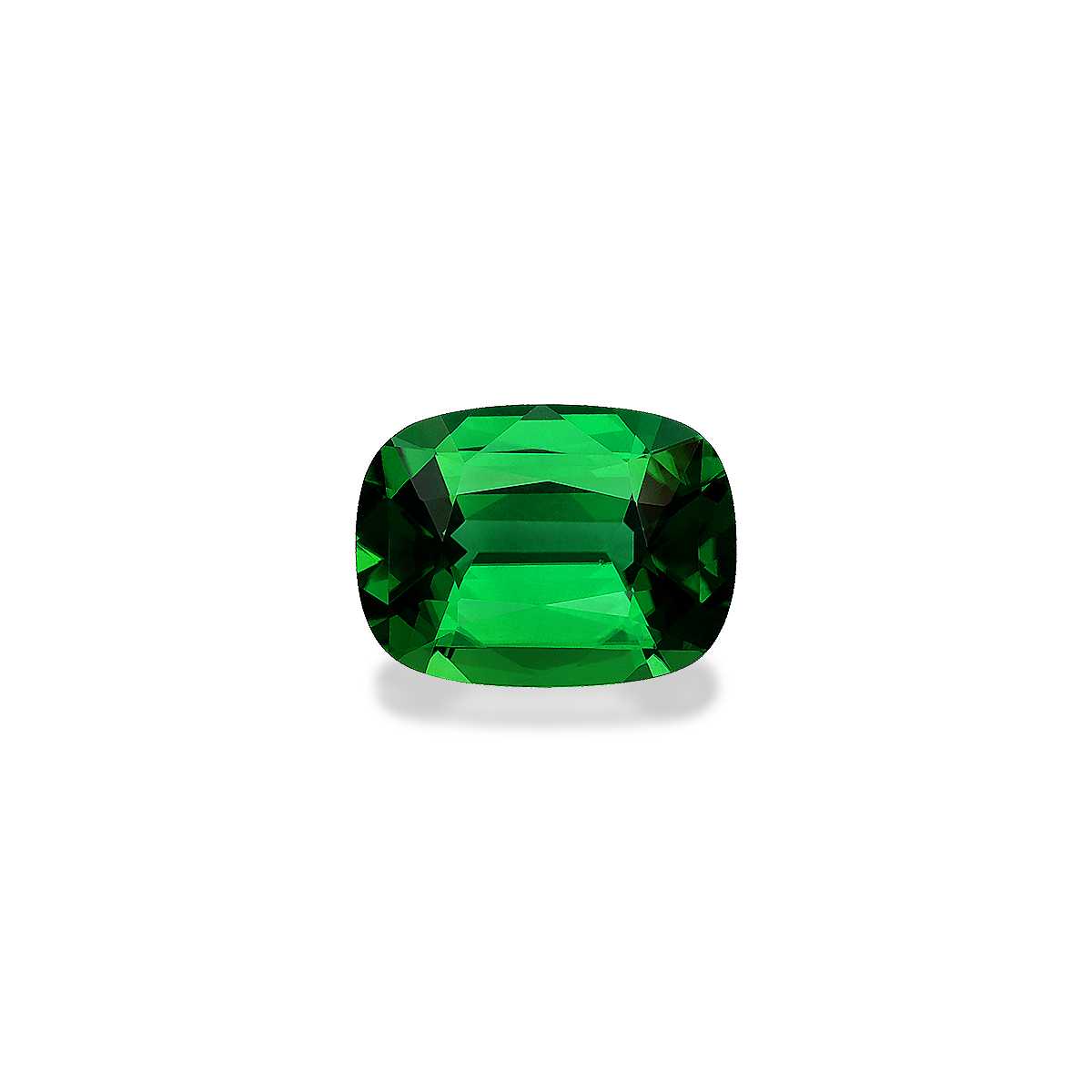
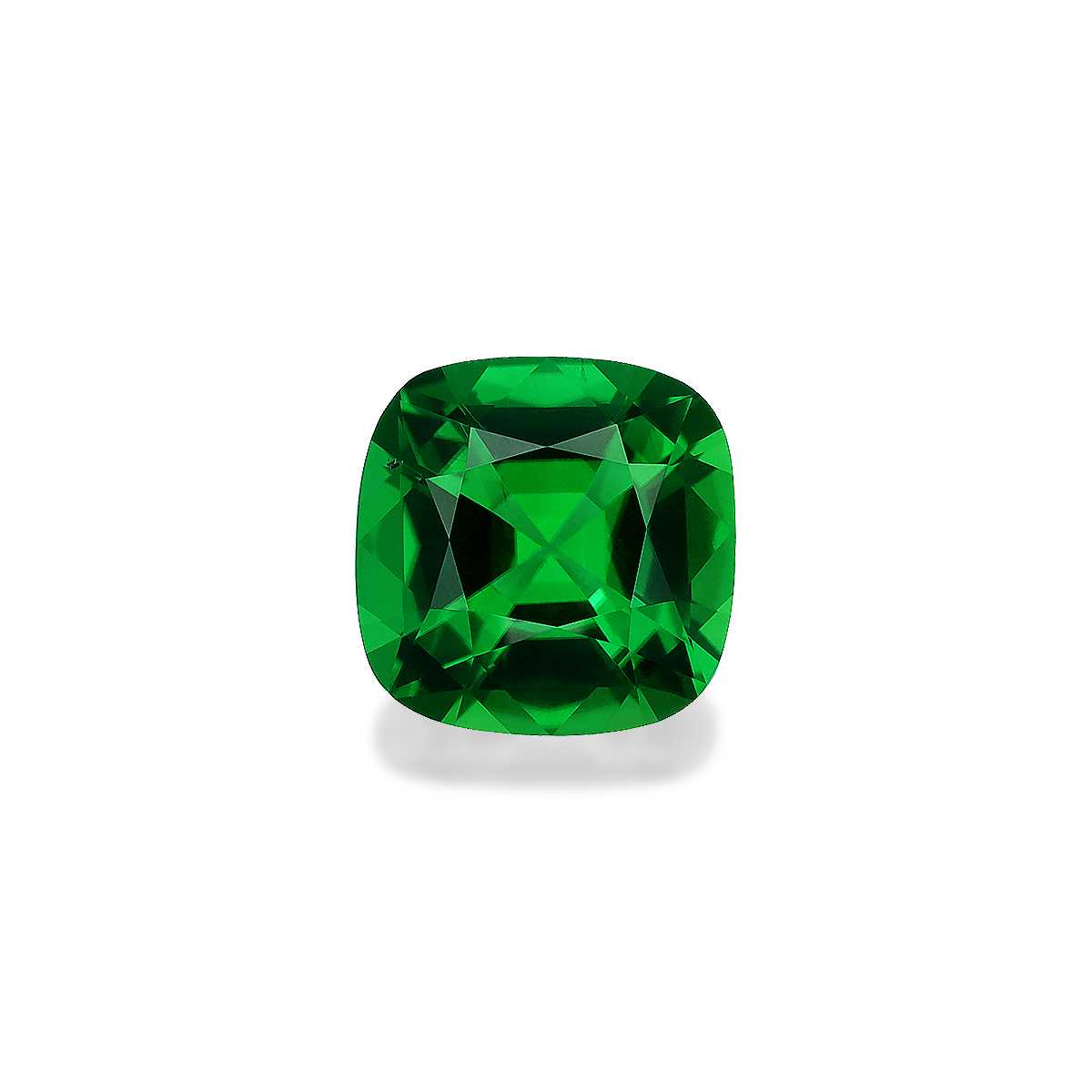
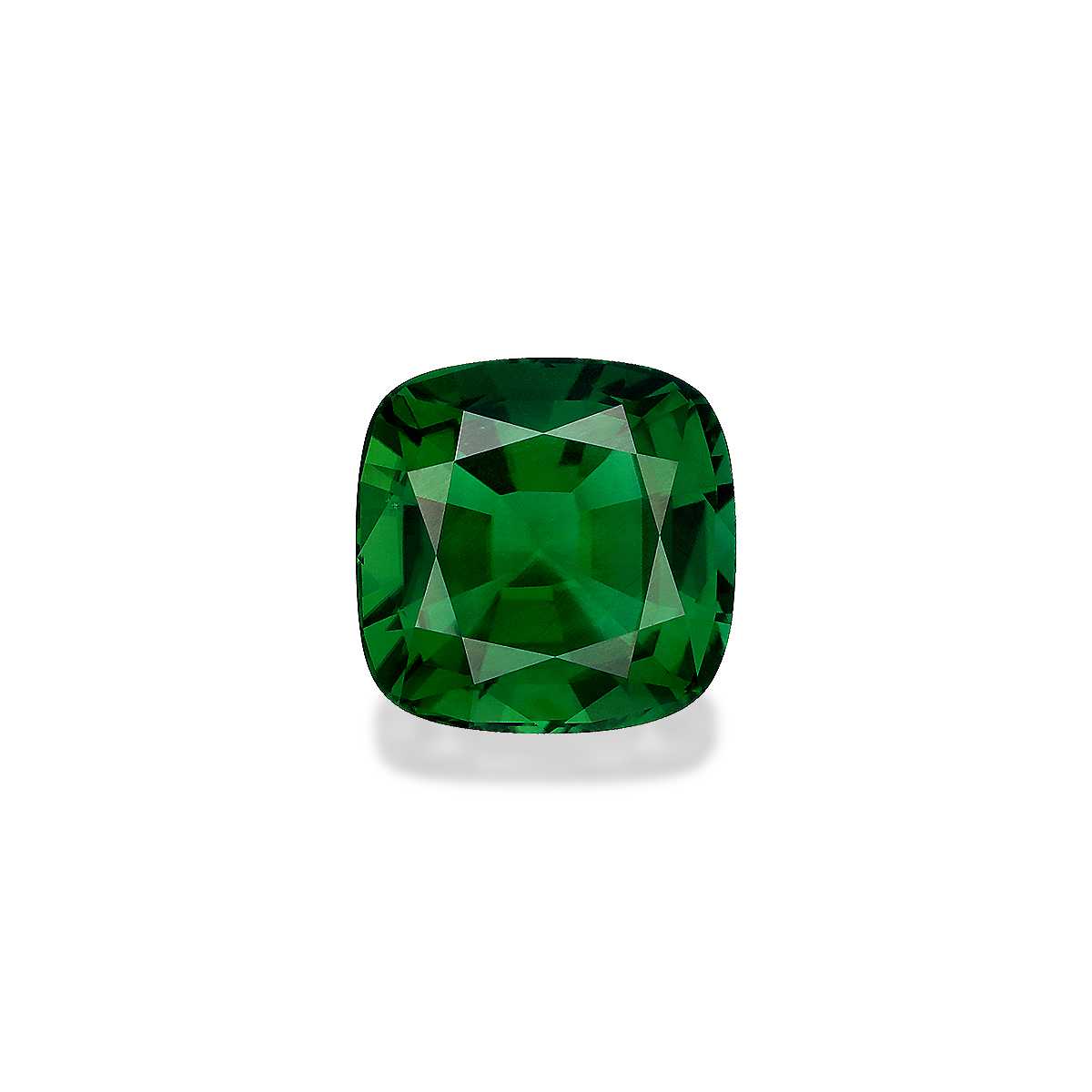
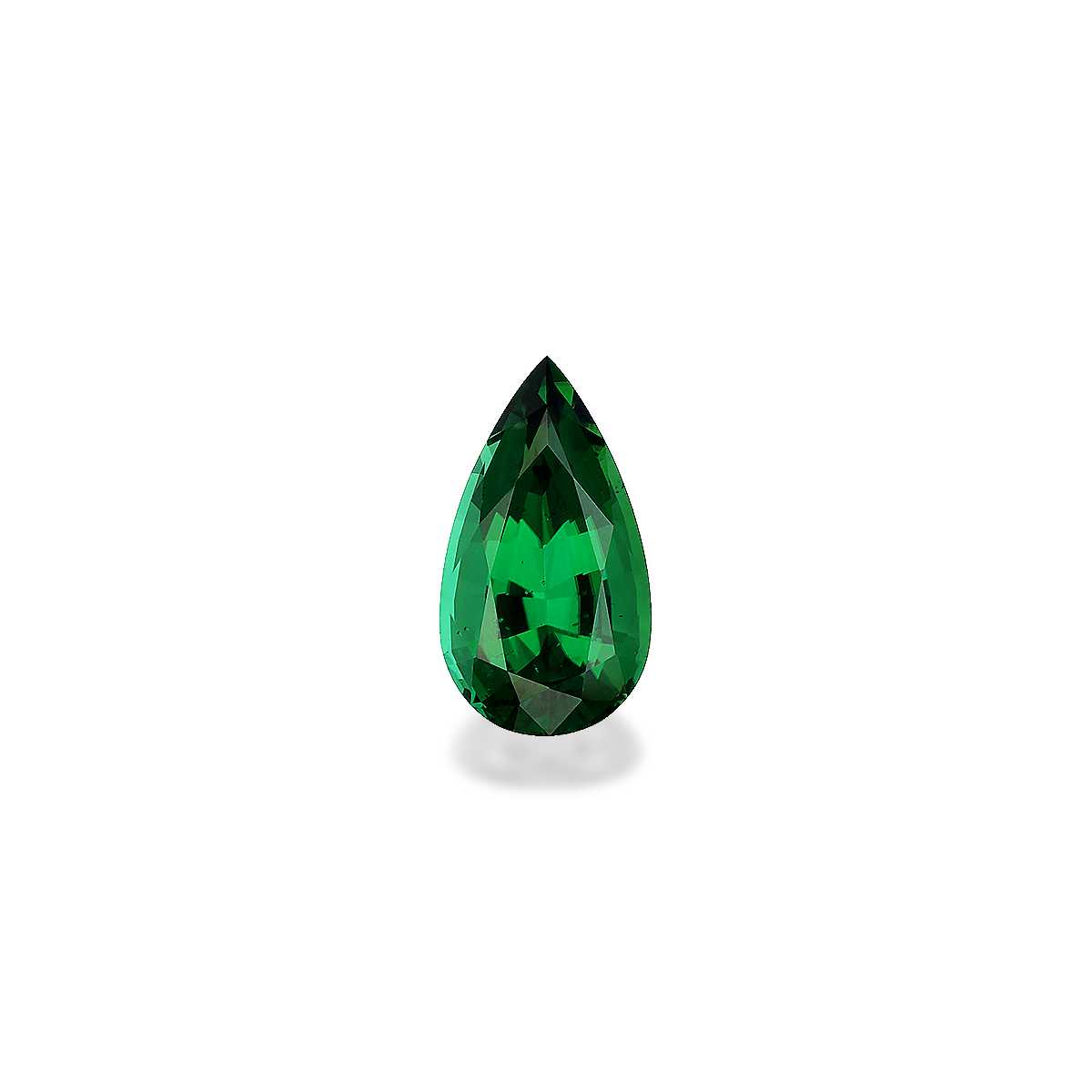
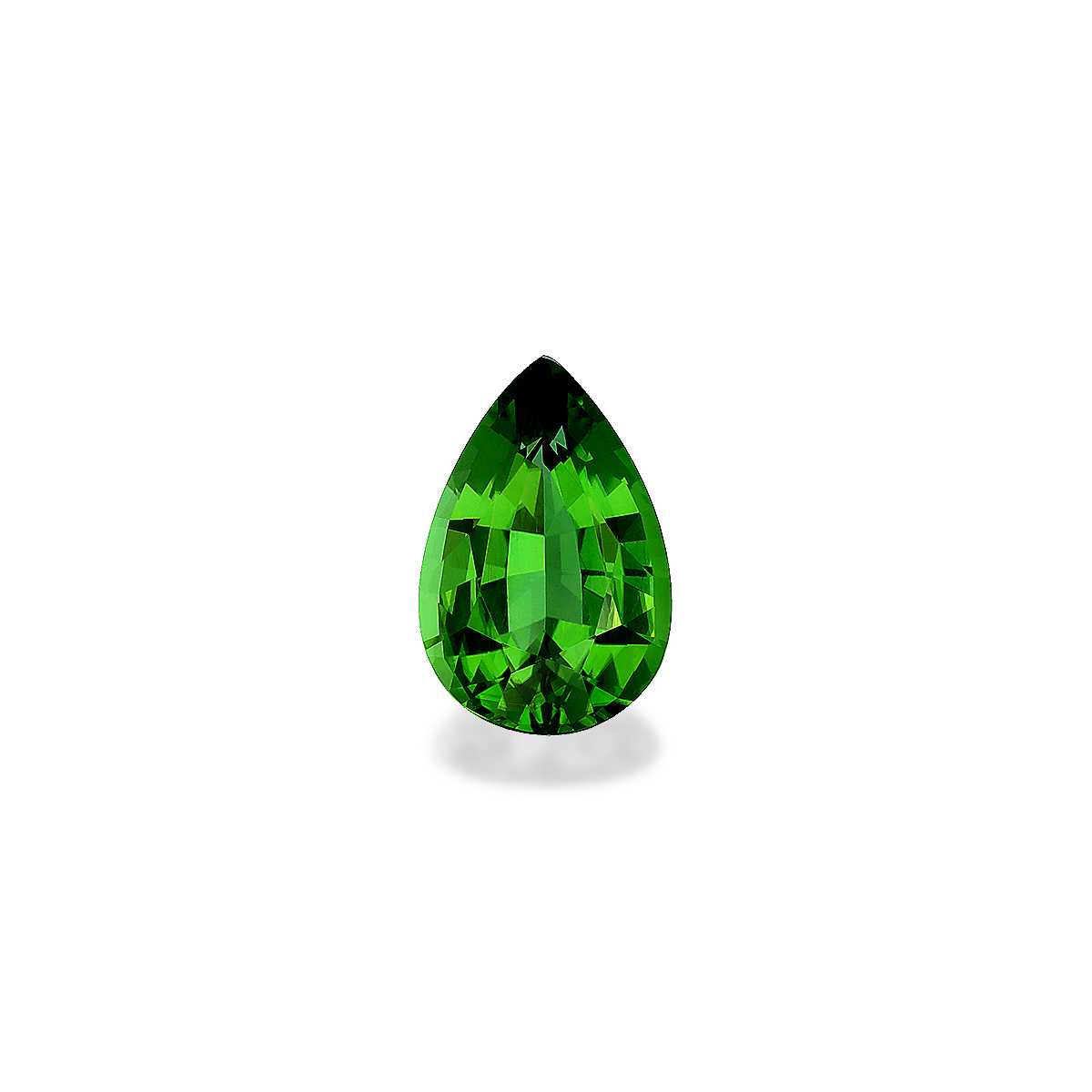
Chrome tourmaline tends toward a deep, slightly blue-leaning green with a velvety quality. Tsavorite more often runs toward a warmer, grass or leaf green, sometimes with a yellowish cast in lower grades.
The bigger visual difference is light return. Garnet's higher refractive index and stronger dispersion make tsavorite read brighter and livelier, especially under 1 carat. Chrome tourmaline's lower RI means more of the beauty comes from body colour than from sparkle.
Cutting follows from this. Chrome tourmaline is usually cut to manage depth of colour — shallower for dark rough, and oriented to avoid the darkest pleochroic direction. A well-cut chrome tourmaline in a vivid grade reads evenly saturated across the table, without a dark core or a window.
Chrome tourmaline value guide
Colour leads. Vivid green, evenly distributed and free of grey or brown modifiers, is what separates a fine stone from an ordinary one, and the market prices that difference sharply.
Size follows closely. Clean chrome tourmaline in vivid colour becomes scarce as weight climbs, and per-carat prices rise in steps rather than smoothly. Clarity in the VS to VVS range earns a further premium, since eye-visible inclusions are common in tourmaline generally.
Treatment status matters to the record more than to the price here: chrome tourmaline is sold unheated, and a report confirming no treatment is the normal expectation rather than a bonus. Set against tsavorite, chrome tourmaline is the value proposition — comparable chromium green, greater availability in larger sizes, lower cost per carat in equivalent grades.
Chrome Tourmaline price guide
Chrome Tourmaline price guide (per carat, USD)
Based on 140 chrome tourmaline in stock, updated October 19, 2026.
Choosing between the two
Choose tsavorite if the stone is small — under roughly a carat — and you want maximum brightness from a melee or accent size. Its higher dispersion does more work at that scale, and the premium buys real visual difference.
Choose chrome tourmaline if you want presence. For a statement ring or pendant centre, it delivers saturated green in a larger, cleaner stone for meaningfully less than tsavorite of the same dimensions. It is also the easier stone to source in matched pairs.
- Budget priority, larger size: chrome tourmaline.
- Maximum brilliance, small size: tsavorite.
- Deep, velvety green body colour: chrome tourmaline.
- Bright leaf green with high light return: tsavorite.
Neither requires unusual care. Both benefit from bezel or protected settings in daily-wear rings, and neither should be exposed to ultrasonic cleaning if inclusions reach the surface.
Pitfalls with green tourmaline
The first trap is assuming every green tourmaline is chrome tourmaline. Most green tourmaline owes its colour to iron, not chromium, and reads greyer or more olive. Only chromium-coloured material earns the name and the premium, and a laboratory report should state the colour cause.
The second is paying a clarity premium for undisclosed enhancement. Clarity treatments such as fissure filling are not part of the accepted chrome tourmaline trade, and any stone offered as VVS should be backed by a report from a recognised laboratory — GIA, GRS, AGL or an equivalent — rather than a seller's own grading card.
Ask directly what the colour cause is, what the refractive index reads, and whether the stone has been examined under immersion for filling. A dealer who cannot answer is not the dealer to buy from.
Used carefully, this chrome tourmaline value guide reduces to one habit: verify the species before you negotiate the price. Chromium green is worth paying for — iron green is not, and tsavorite is a different purchase altogether.
Frequently asked questions
How can I tell chrome tourmaline from tsavorite garnet?+
A refractometer settles it immediately: chrome tourmaline reads 1.62 to 1.64 with two shadow edges, while tsavorite reads above 1.70 with one. Chrome tourmaline is also pleochroic and noticeably lighter in weight for its size.
Is chrome tourmaline cheaper than tsavorite?+
Yes. In comparable vivid grades, chrome tourmaline costs less per carat than tsavorite and is easier to find in larger, cleaner sizes. Tsavorite holds its premium mainly for its higher brilliance in small stones.
Is chrome tourmaline heated or treated?+
Chrome tourmaline reaches the market unheated, and no treatment is needed to produce its colour, which comes from chromium. Be wary of undisclosed clarity enhancement and ask for a report from a recognised laboratory.
Where does chrome tourmaline come from?+
The main sources are Tanzania and Zambia, with East Africa supplying the trade generally. Any claim that all chrome tourmaline comes from a single deposit should be treated with caution.
Is all green tourmaline chrome tourmaline?+
No. Most green tourmaline is coloured by iron and reads greyer or more olive; only chromium-coloured material is properly called chrome tourmaline. A laboratory report stating the colour cause is the reliable check.
Is chrome tourmaline durable enough for a ring?+
Tourmaline sits at 7 to 7.5 on the Mohs scale, which is suitable for rings when the stone is set with some protection. Avoid hard knocks and ultrasonic cleaning where inclusions reach the surface.
From our Journal
Buying guides, origin stories, and notes from the trade.