Green Tourmaline Buying Guide: Price Factors
Price per carat for green tourmaline is driven, in order, by colour intensity, clarity and cut quality — size then multiplies whatever those three deliver. A vivid, evenly saturated green that stays bright under low light will outrun a sleepy olive or grey-green of identical weight many times over, and visible needles or strong colour zoning pull a stone down a tier regardless of how good the hue looks in a photograph. This green tourmaline buying guide sets out how each driver is weighed in the trade, how price behaves as stones climb through size tiers, and the two mistakes that cost buyers most: underestimating inclusions, and paying emerald or green sapphire money for tourmaline because the seller blurred the line between them.
What sets the per-carat price
Green tourmaline is elbaite, coloured by iron and manganese, with a Mohs hardness of 7 to 7.5 and a refractive index of 1.61 to 1.64. Those constants matter commercially because they define both wearability and identity — the two things a buyer is really paying for alongside beauty.
Within that species, the market prices on three variables. Colour intensity carries the most weight, clarity sets the ceiling on what a good colour can earn, and cut quality decides how much of the stone's potential actually reaches the eye.
Origin plays a supporting role rather than a leading one. Most fine material on the market today comes from Africa — Mozambique, Nigeria and Congo are the names you will see most often — and a specific locality rarely commands the kind of premium that origin carries in sapphire or ruby.
Reading colour intensity
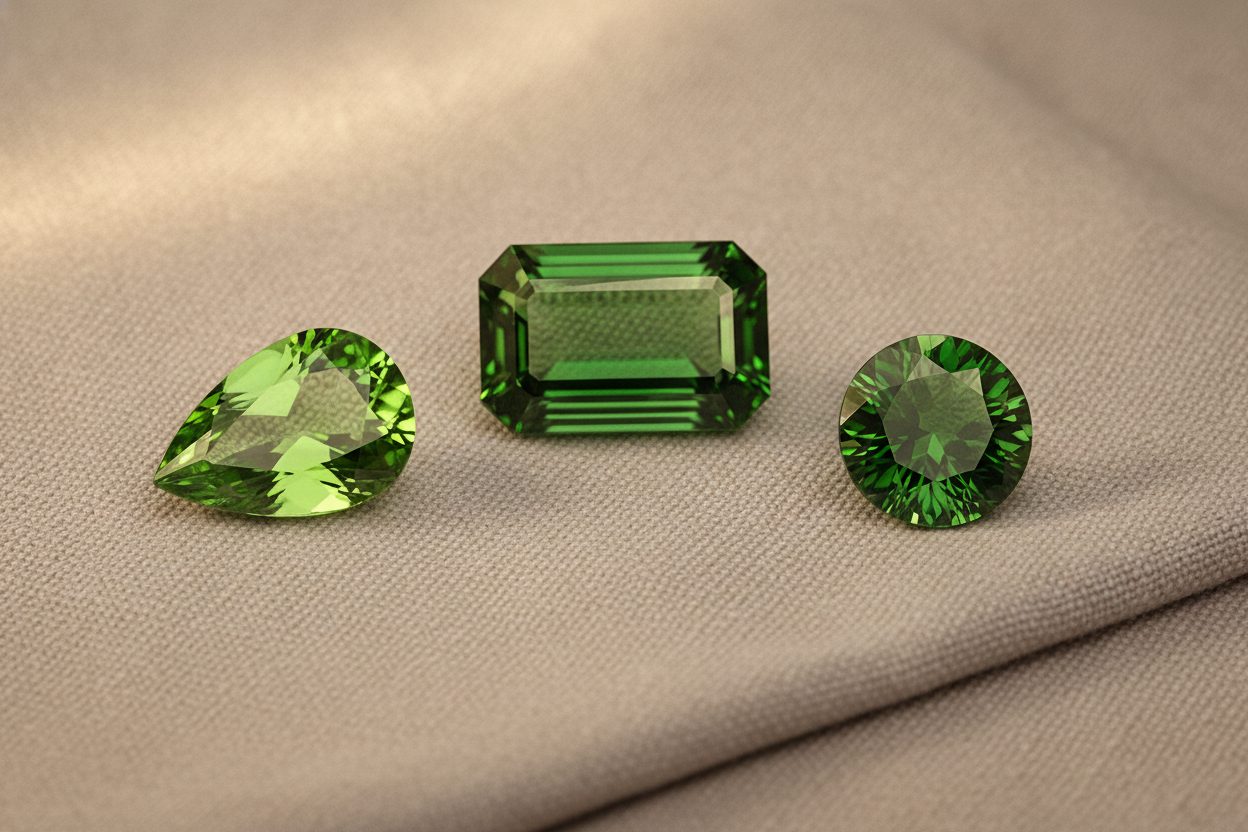
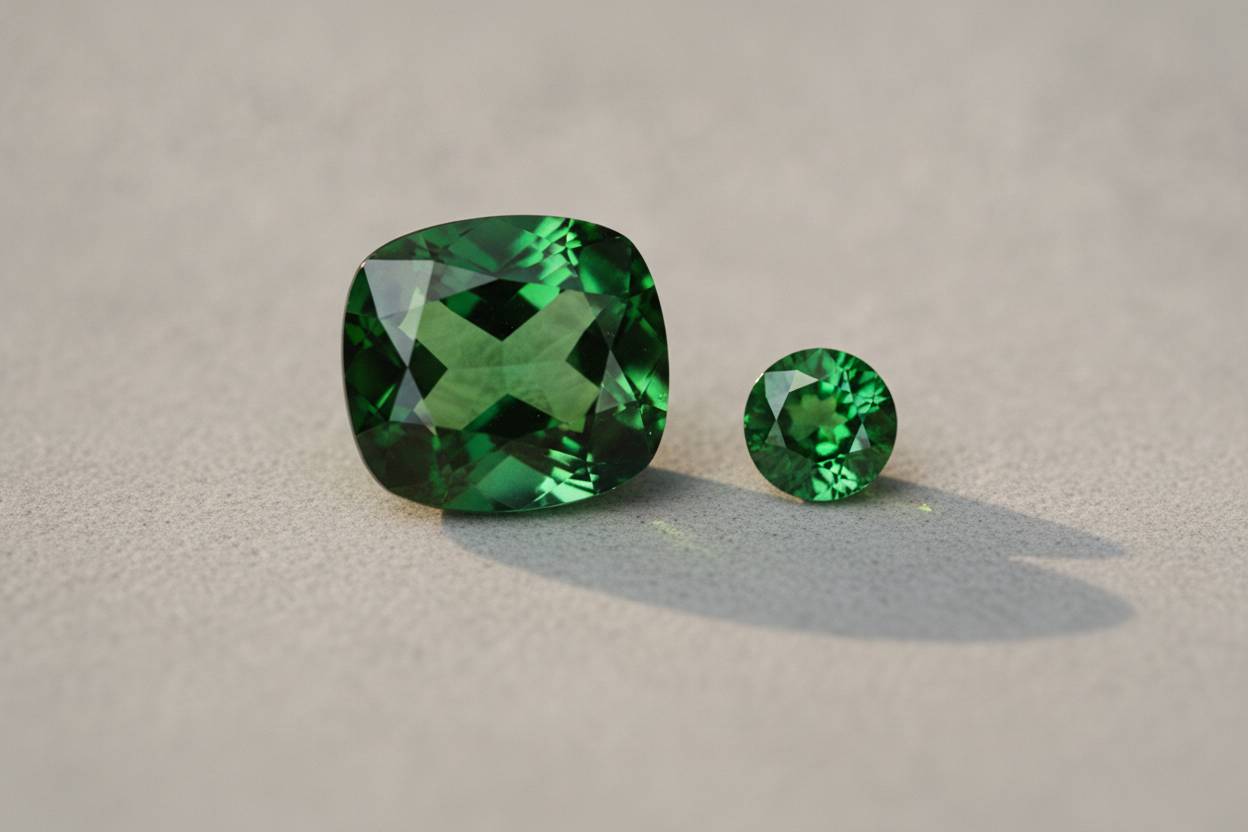
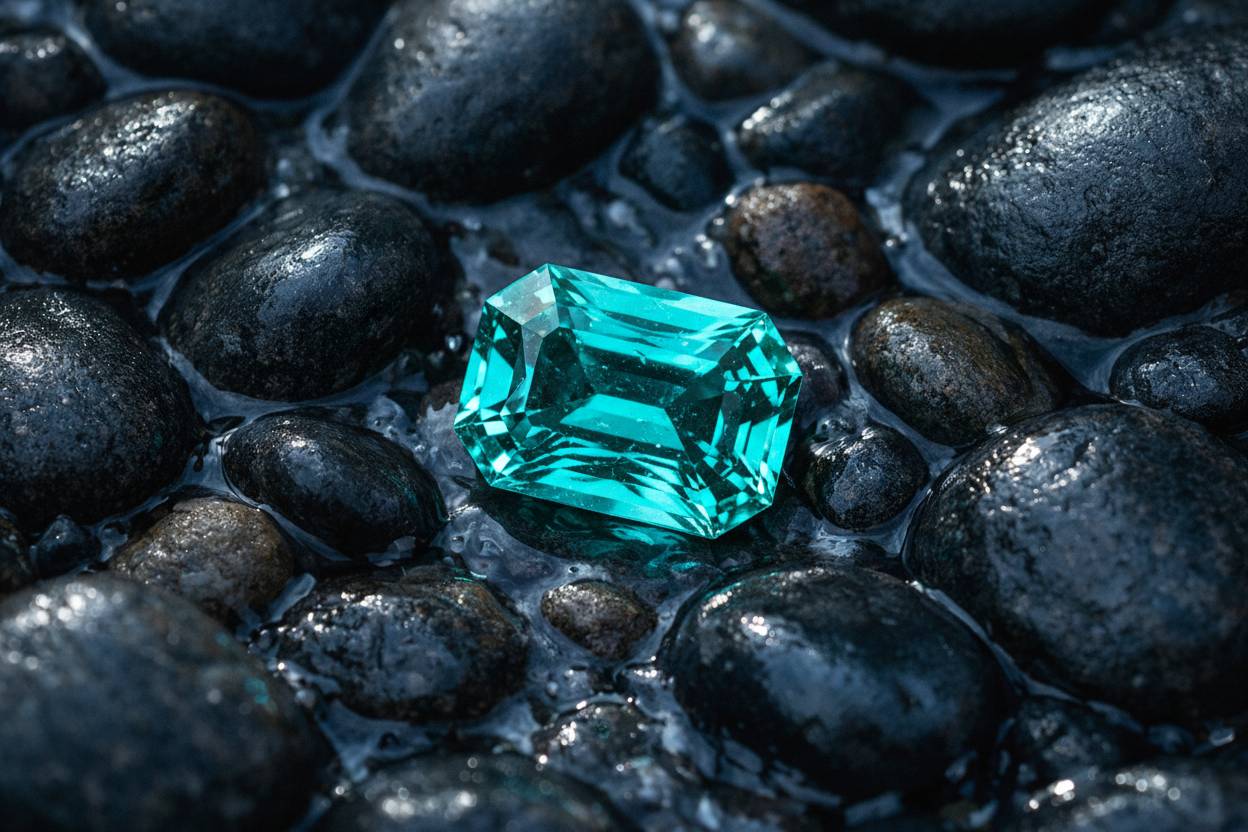
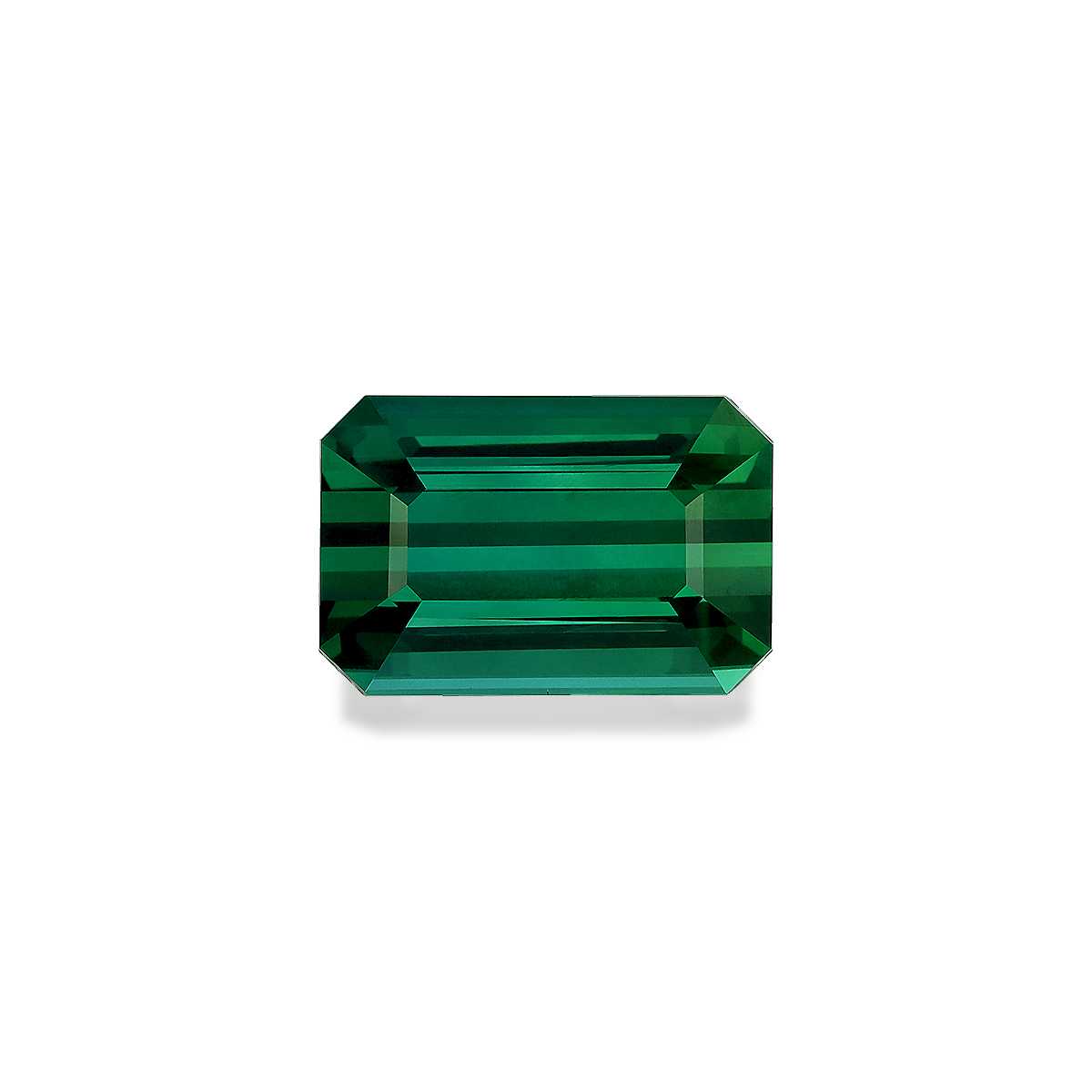
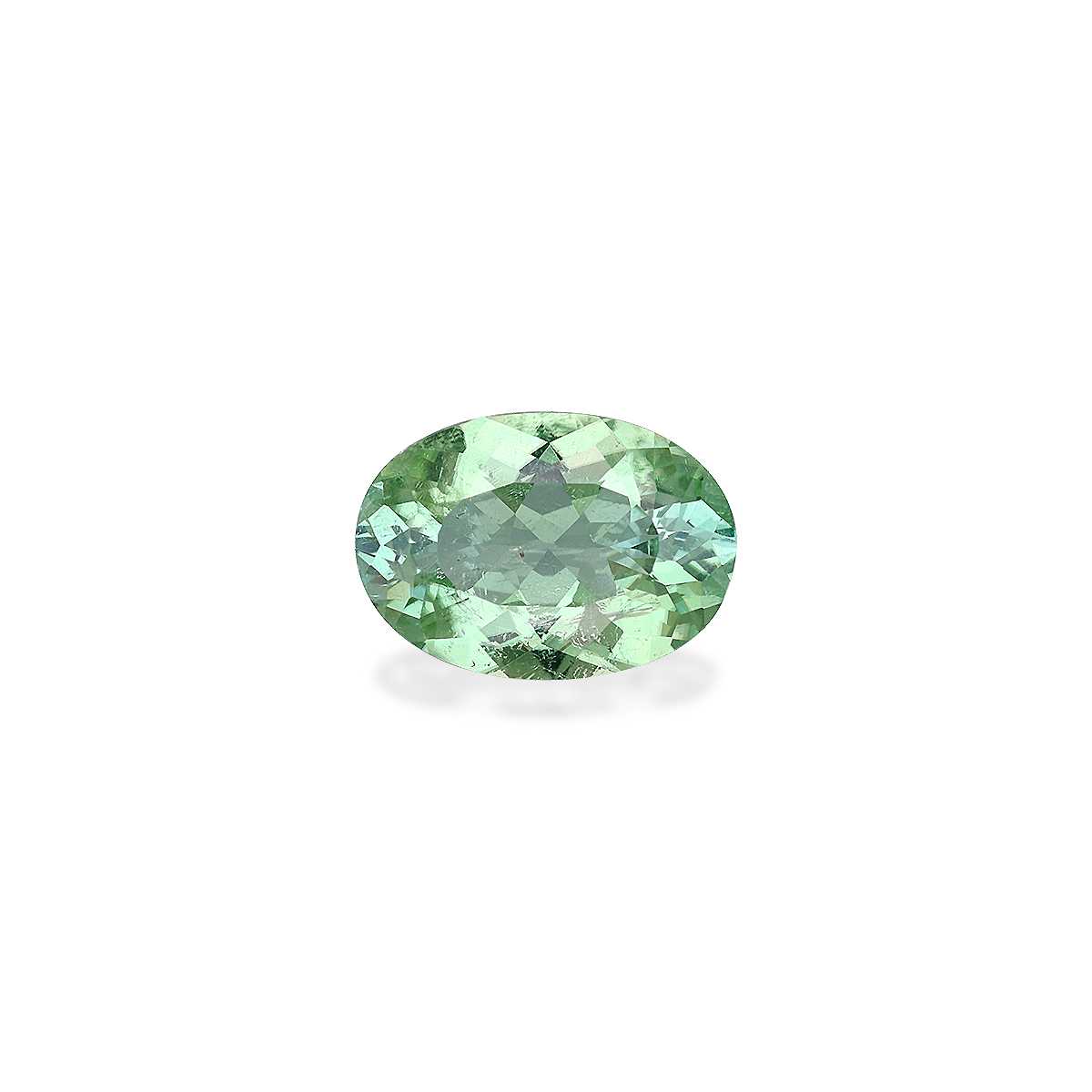
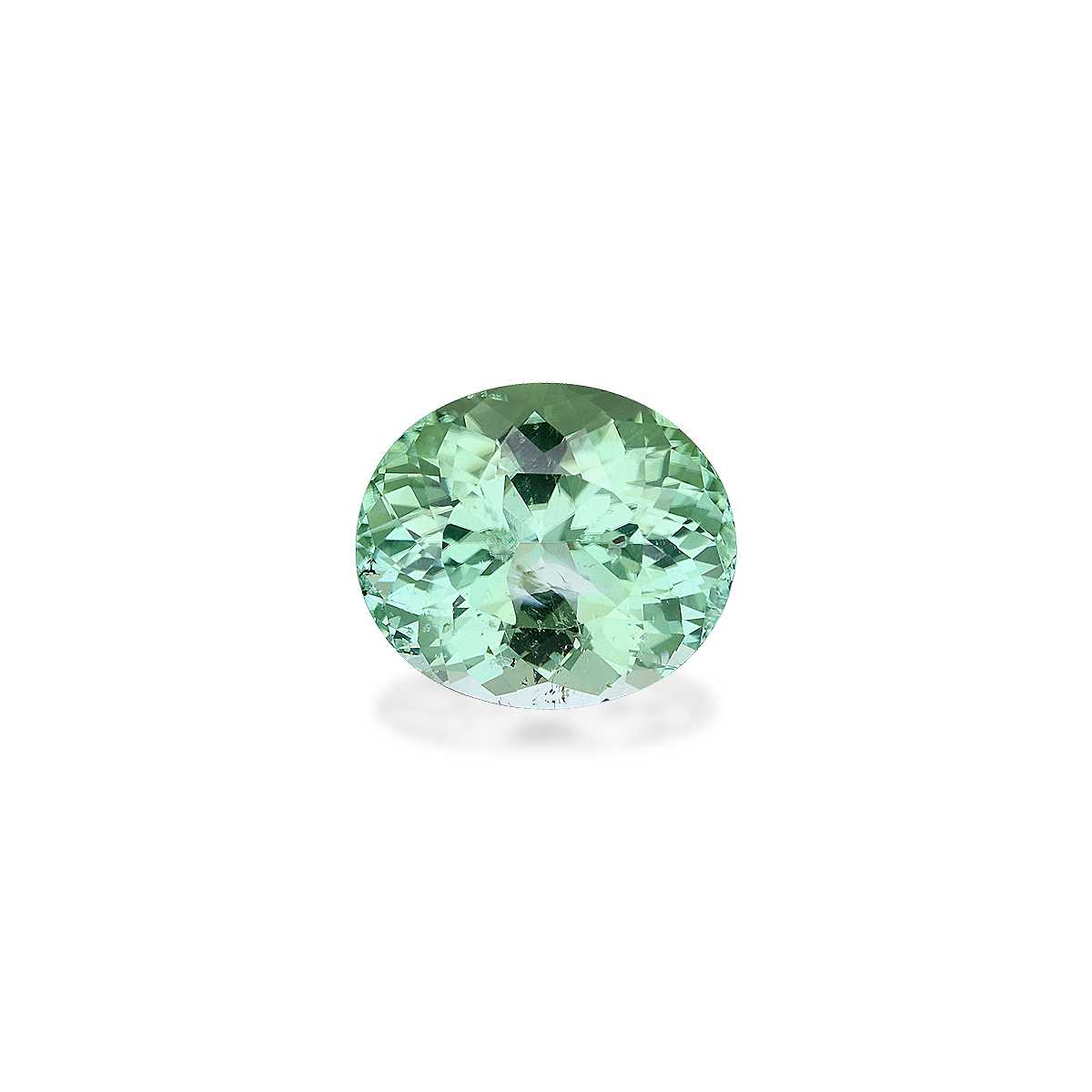
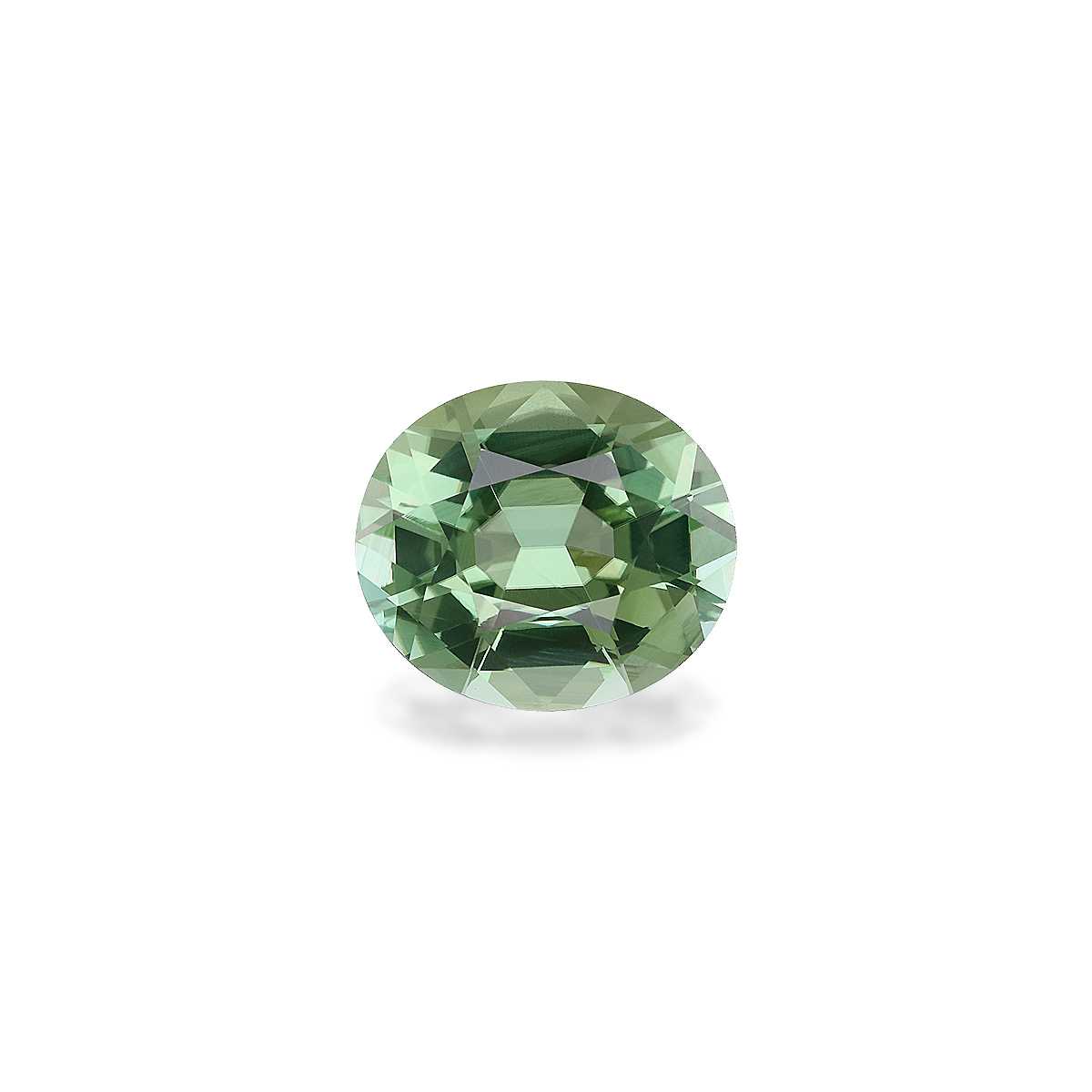
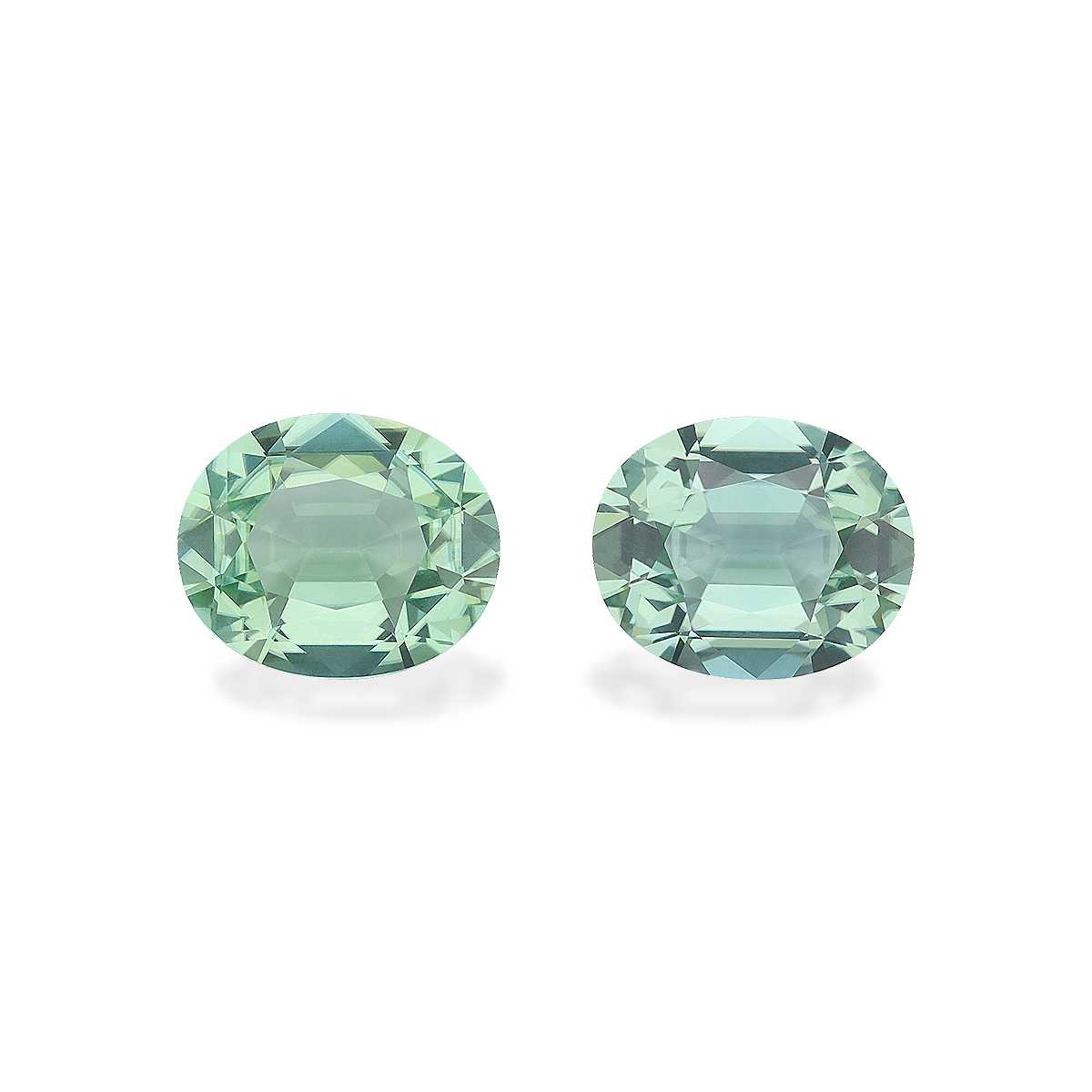
Green tourmaline spans a wide range, from pale seafoam and lime through grass green to deep forest tones, with blue-green material sitting at the boundary of indicolite territory. The trade reserves its strongest language — vivid — for stones with high saturation and medium tone that hold colour rather than darkening into black-green under indoor light.
Two faults suppress price quietly. The first is excess tone: a stone that looks rich in sunlight but closes up in a restaurant is worth materially less than one that stays open. The second is a grey or brownish modifier, which flattens saturation even when the hue reads correctly as green.
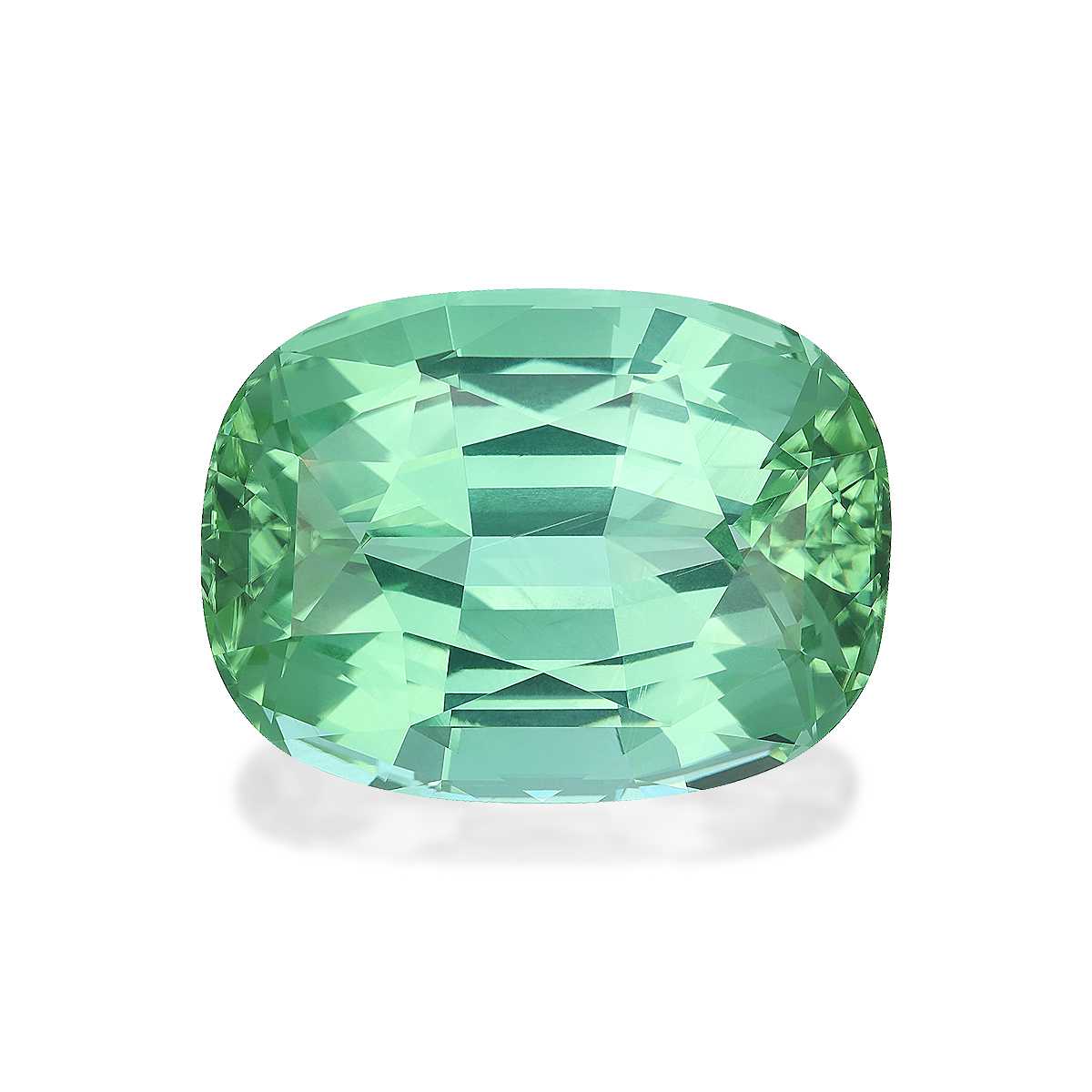
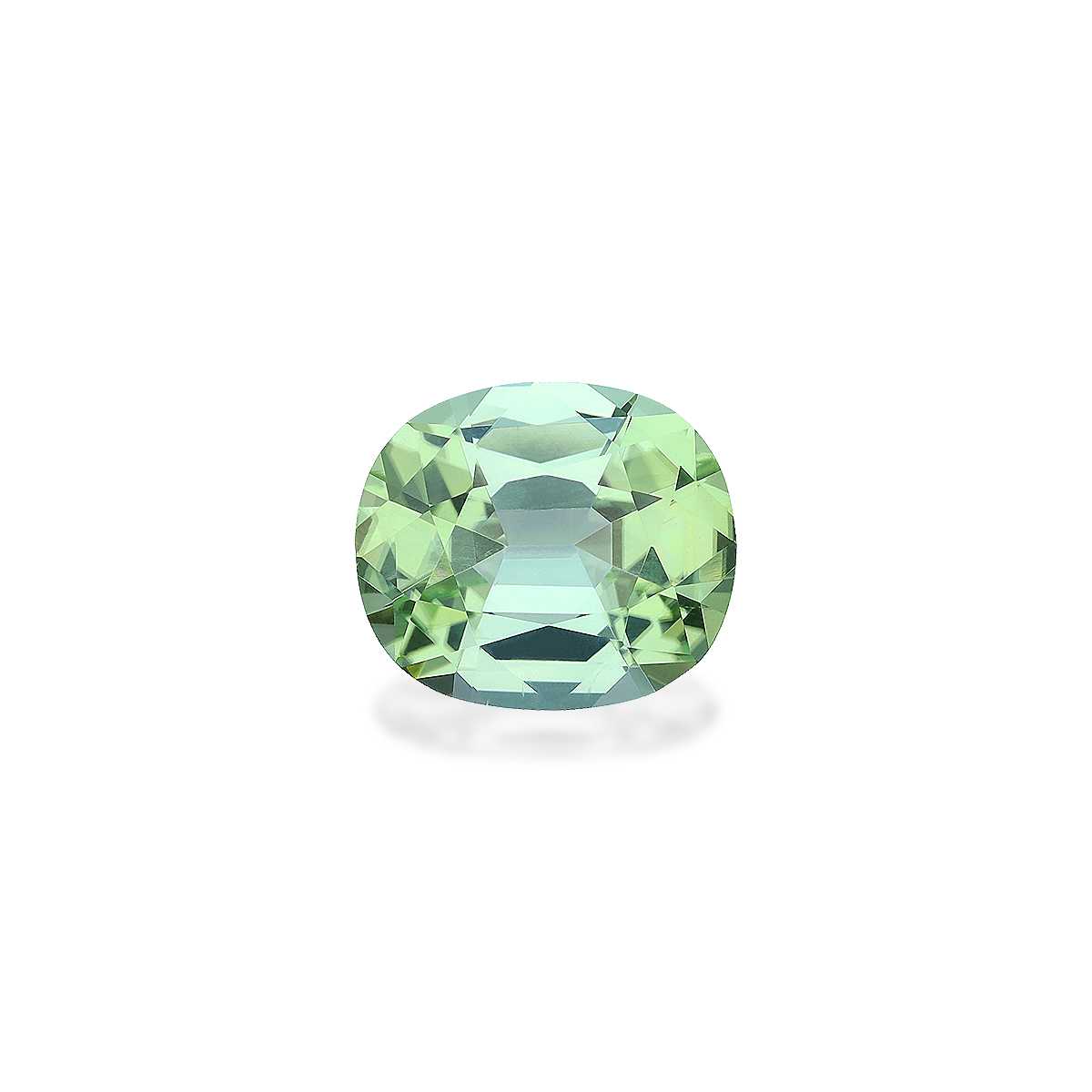
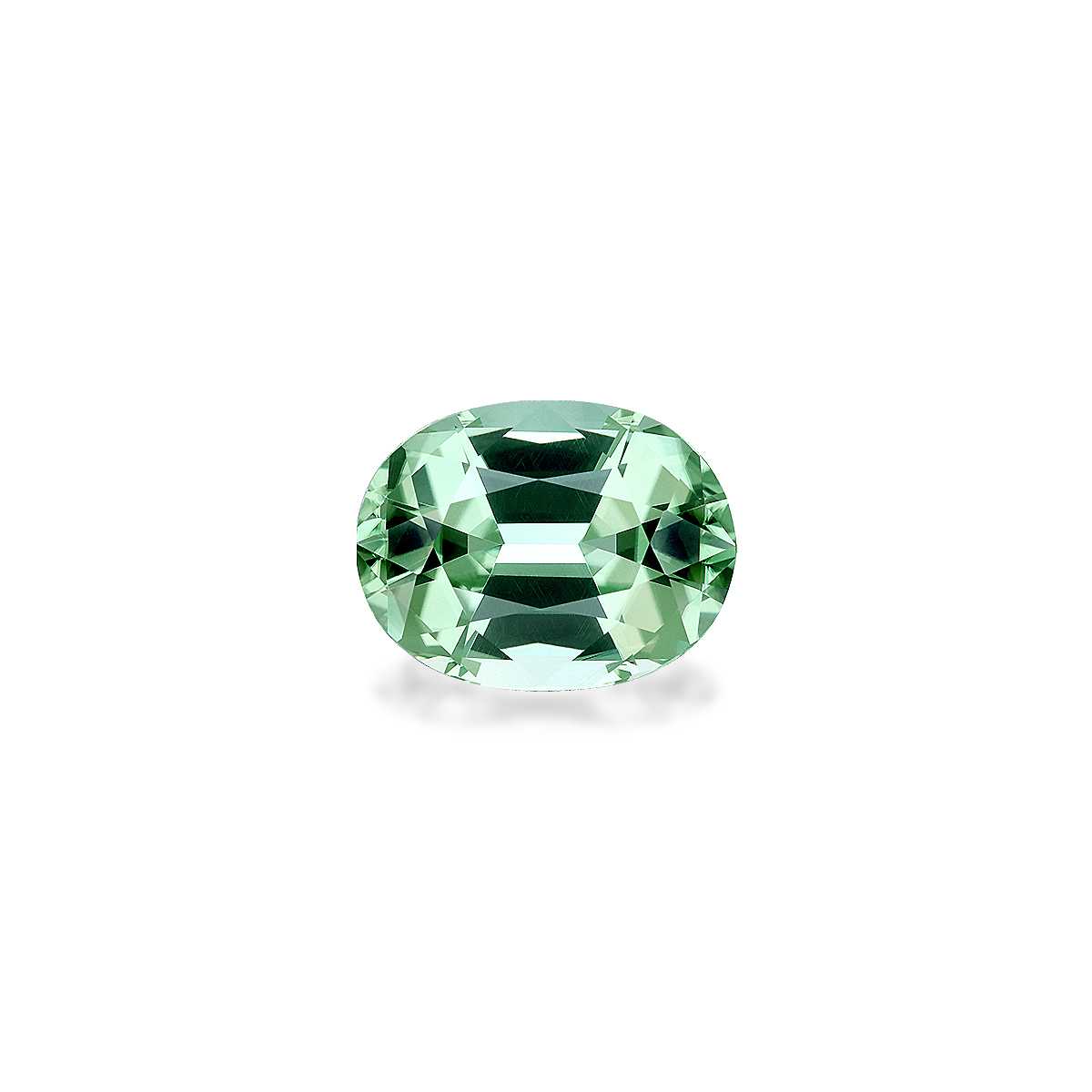
Lime and seafoam greens behave differently. They are priced for freshness and evenness rather than depth, and a clean, lively pastel can outperform a dull, darker stone of the same weight.
Window and extinction
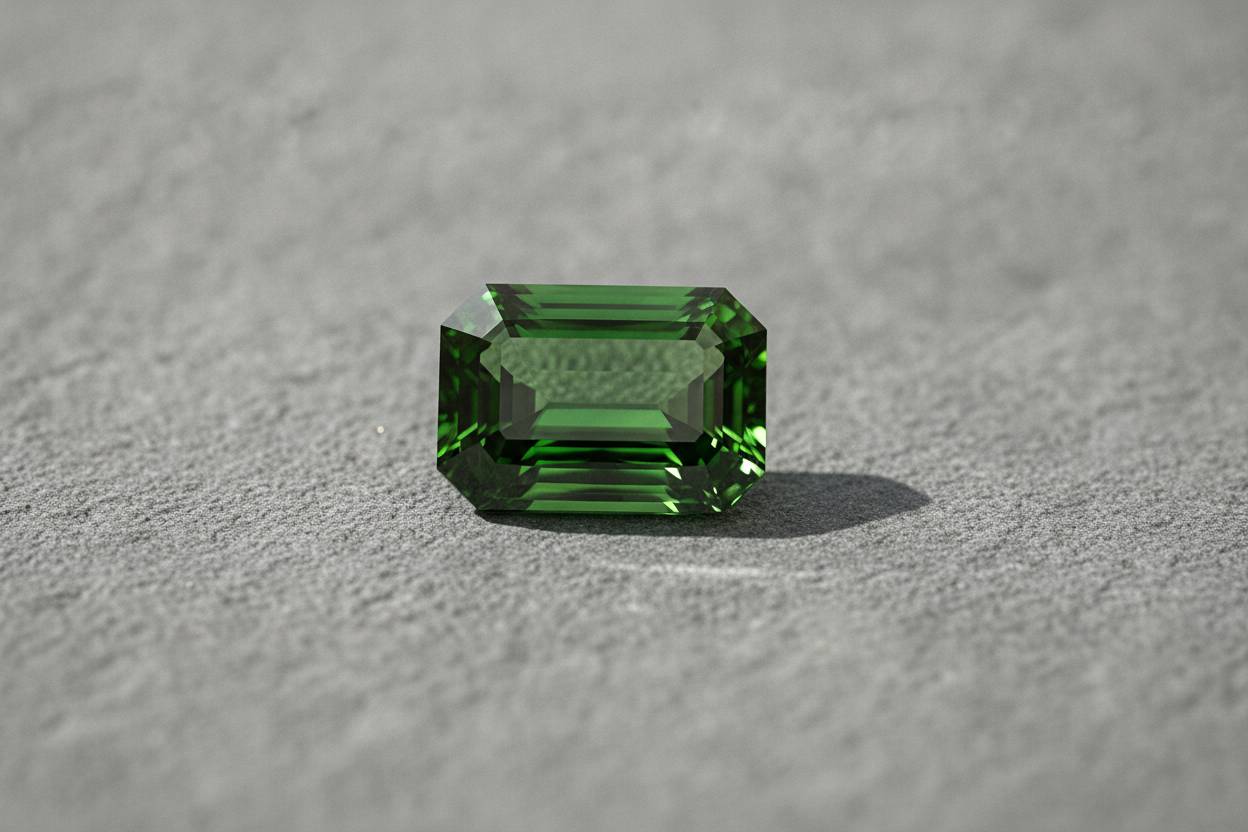
Tourmaline is strongly pleochroic and absorbs light along the length of the crystal, so colour depends heavily on orientation. A cutter who prioritises weight over orientation produces stones with dark extinction zones or a washed-out window — both are colour faults in practice, even though they originate in the cutting.
How clarity moves the price
Natural inclusions in green tourmaline typically take the form of fine needles, growth tubes and colour zoning. Their effect on value is not binary; it is a sliding scale running from eye-clean, to faintly visible at arm's length, to obvious at a glance.
The most common buyer error is treating any tourmaline as "included by nature" and discounting clarity as a factor. It is a genuine price driver: eye-clean material in strong colour is the scarce combination, and that scarcity is where the premium sits.
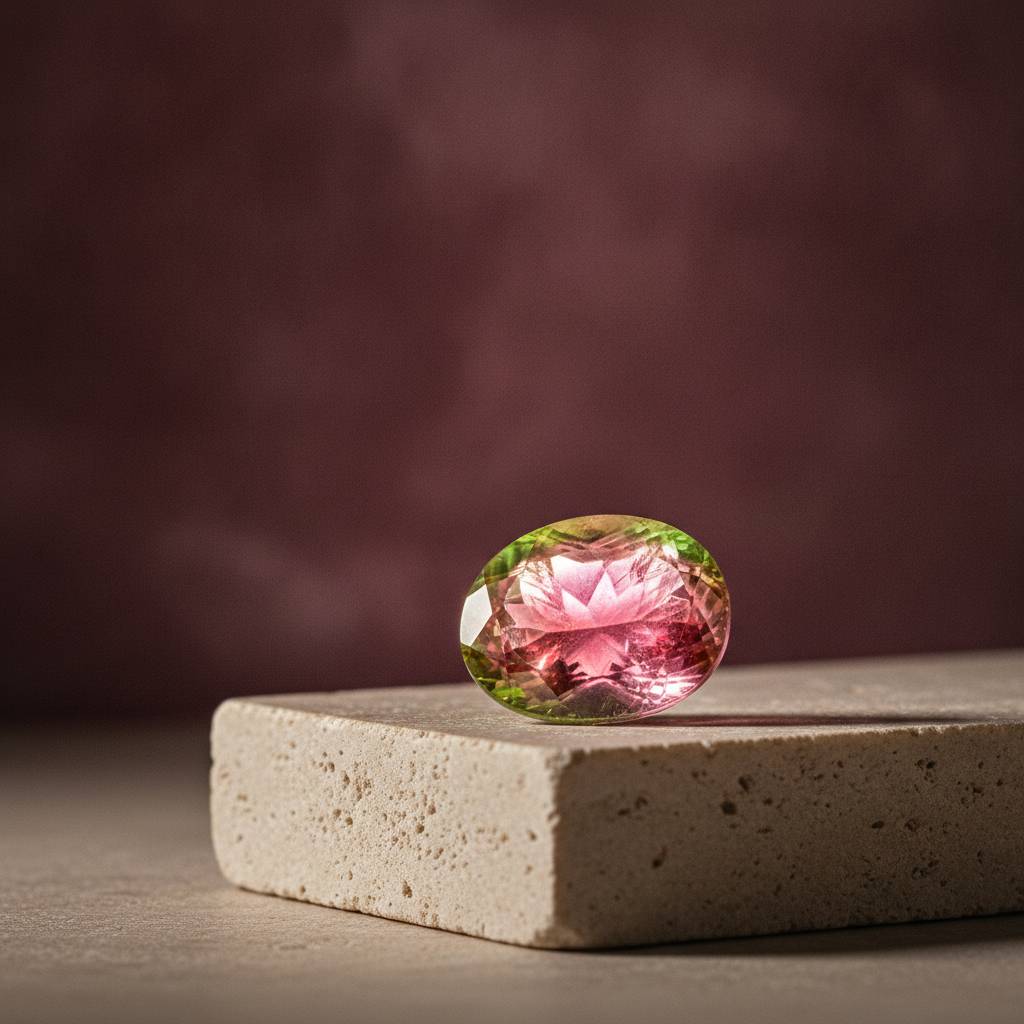
Colour zoning deserves separate attention. Bands of lighter or bluer green across the table are harder to forgive than needles, because they disrupt the single most valuable attribute the stone has.
More from Green Tourmaline
Cut quality and weight retention
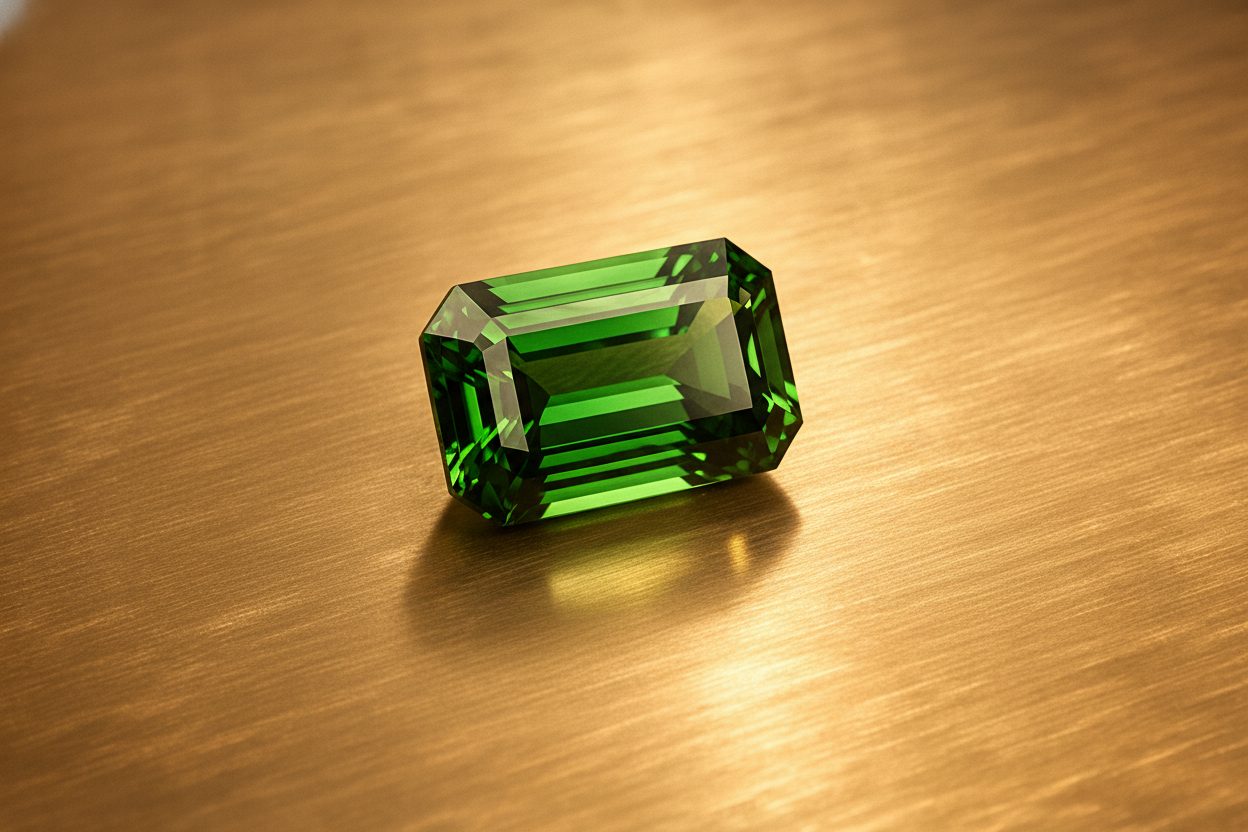
Rough tourmaline forms in elongated prisms, which pushes cutters toward emerald cuts, elongated cushions and rectangles. A well-proportioned stone with a closed culet and even brilliance across the table will always be priced above a deep, lumpy stone cut to save weight.
Square and near-square green tourmalines are less common than elongated shapes for this reason, and a well-cut square in good colour can carry a shape premium.
Look at the stone face-up in two lighting conditions before discussing price. Brightness, even colour distribution and absence of a large window are what separate the top of a tier from the bottom.
Size tiers and scarcity
Green tourmaline is more available in larger sizes than most coloured stones, which is why per-carat prices rise more gently through the small and medium tiers than they do in sapphire or spinel. The step changes appear where colour and clarity have to hold together at size.
Below roughly a carat, material is plentiful and price is driven almost entirely by colour. In the mid sizes, clarity starts to govern. In larger sizes, the combination of vivid colour, eye-clean clarity and precise cutting becomes genuinely scarce, and prices accelerate accordingly.
Green tourmaline buying guide: ranges
Treat any published range as a map of tiers rather than a quote. Where a specific stone lands depends on how it scores on the three drivers above, and a single weak attribute can move it a full tier.
The material we offer is unheated, and the disclosure that matters most to a buyer is a clear, written statement of species and treatment status from the seller or an independent laboratory.
Green Tourmaline price guide
Green Tourmaline price guide (per carat, USD)
Based on 261 green tourmaline in stock, updated October 19, 2026.
Where buyers overpay
- Mistaking it for another green gem. Emerald, green sapphire, chrome diopside and demantoid all occupy the same colour space at different price levels. Tourmaline's refractive index of 1.61 to 1.64 separates it from emerald below and sapphire well above — a refractometer reading settles it in seconds.
- Paying vivid prices for a dark stone. Photographs taken in bright directional light flatter over-dark material. Ask for video under ordinary indoor lighting.
- Ignoring the window. A shallow stone shows more carat weight on the finger but less colour in the face. You are paying per carat for colour you cannot see.
- Loose terminology. "Olive green paraíba" and similar hybrid descriptions blur distinct categories. Copper-bearing cuprian tourmaline is a separate, separately priced material; ask what the stone actually is.
Judge the stone first, the paperwork second, and the price last. If colour holds under indoor light, the face is clean to the unaided eye, and the cut returns light across the whole table, you are looking at the part of the market worth paying for.
Frequently asked questions
What makes one green tourmaline more expensive than another?+
Colour intensity leads, followed by clarity and cut quality, with size multiplying all three. A vivid, evenly saturated green that stays bright under indoor light and is clean to the unaided eye sits at the top of the market; grey or over-dark tones and visible needles or zoning move a stone down a tier.
Is green tourmaline the same as emerald?+
No. Emerald is a beryl and green tourmaline is elbaite, a different species with a refractive index of 1.61 to 1.64 and a Mohs hardness of 7 to 7.5. A refractometer reading distinguishes them immediately, and the two trade at very different price levels.
Do inclusions really affect green tourmaline value?+
Yes, and this is the most common oversight among buyers. Natural needles, growth tubes and colour zoning are typical in the species, but eye-clean material in strong colour is genuinely scarce and is priced accordingly.
Is green tourmaline treated?+
The green tourmaline we offer is unheated. Treatment status should always be disclosed in writing by the seller or confirmed by an independent gemmological laboratory such as GIA, SSEF or Gübelin.
Where does green tourmaline come from?+
Most fine material reaching the market today is African, with Mozambique, Nigeria and Congo among the principal sources. Unlike sapphire or ruby, specific origin has only a modest effect on price; colour, clarity and cut dominate.
Is lime green or seafoam tourmaline worth less than deep green?+
Not automatically. Pastel greens are judged on freshness, evenness and brightness rather than depth, and a lively, clean lime or seafoam stone can outprice a dull or over-dark deeper green of the same weight.
From our Journal
Buying guides, origin stories, and notes from the trade.