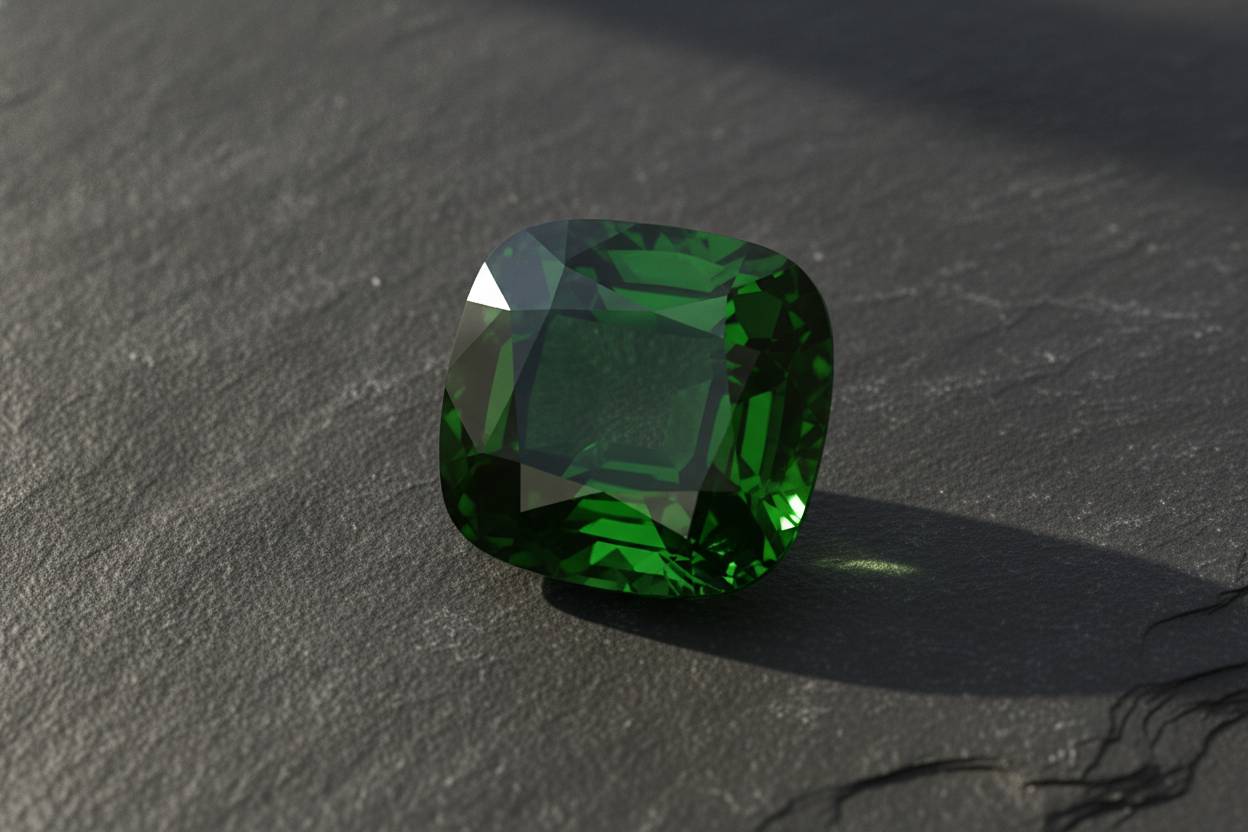
Green Garnet: What It Is and Why It Matters
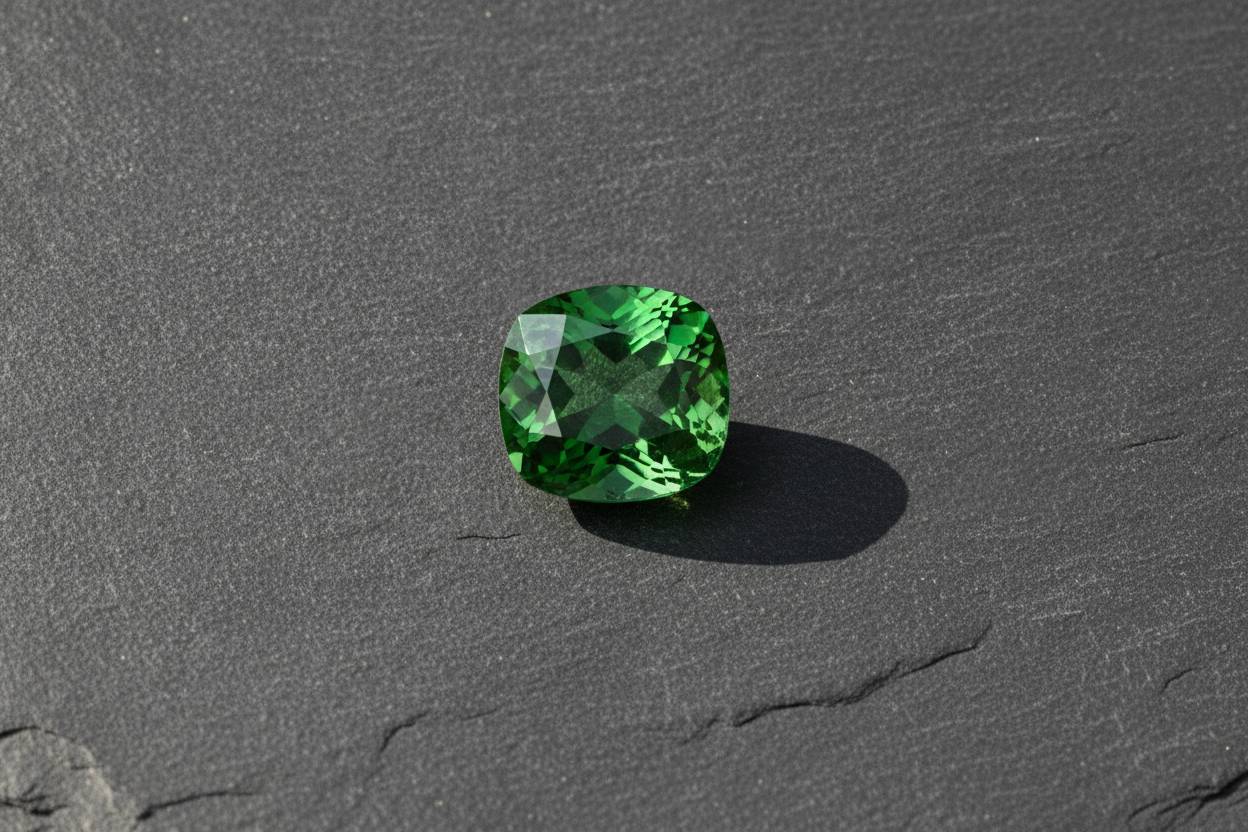
Green garnet is not a single stone but a handful of members of the garnet group that happen to occur green: tsavorite and mint grossular (grossular species), demantoid (andradite species), the yellowish-green Mali garnets that sit between the two, and the rare chrome garnet uvarovite. All are cubic, singly refractive silicates coloured chiefly by chromium, vanadium or iron, and nearly all reach the market untreated — a genuine rarity among coloured stones. What makes green garnet special is that combination: saturated colour without heat or oil, high refractive index and, in tsavorite and demantoid, real scarcity in sizes above a few carats.
The lore is more interesting than the usual mystic shorthand suggests. Garnet carries thousands of years of recorded symbolism — but almost none of it was originally green.
Which garnets are green
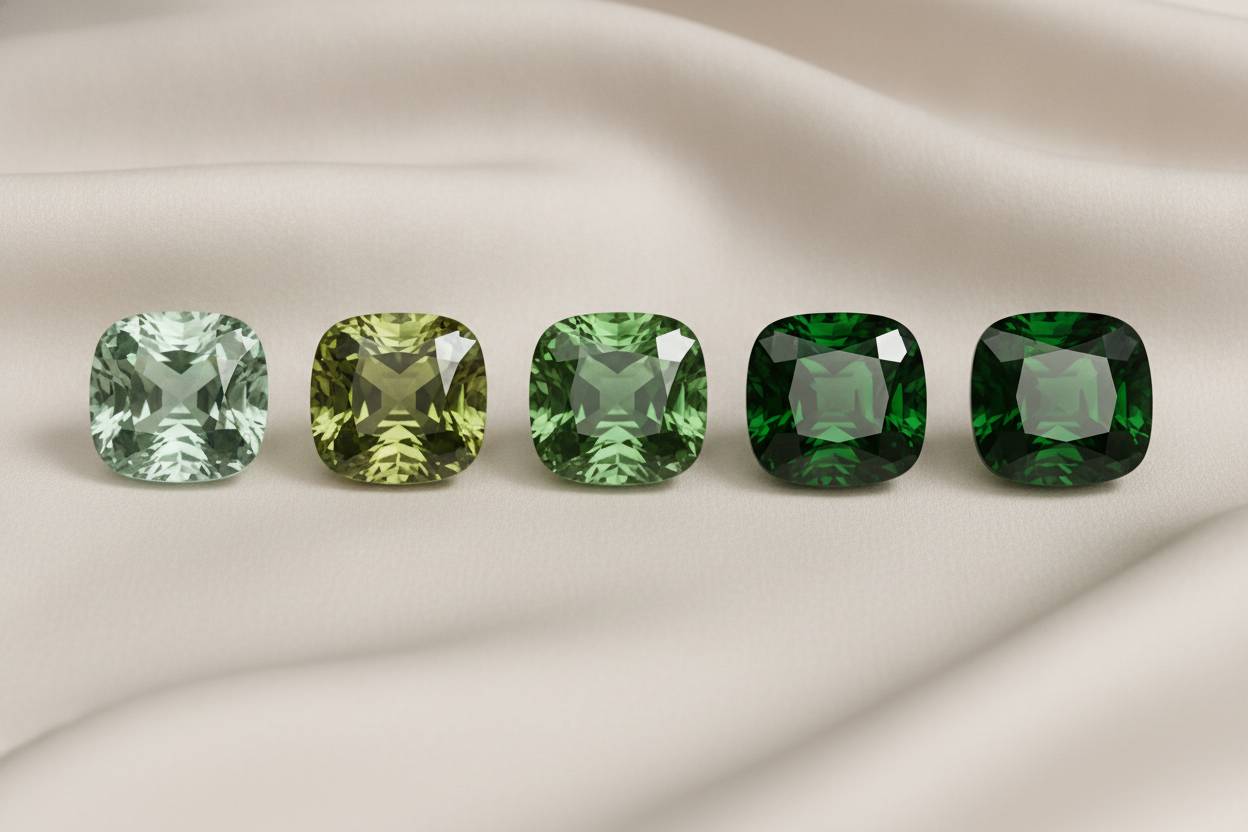
The garnet group is a family of related silicates sharing one crystal structure and differing in chemistry. Colour follows that chemistry, which is why green appears in several branches of the family at once.
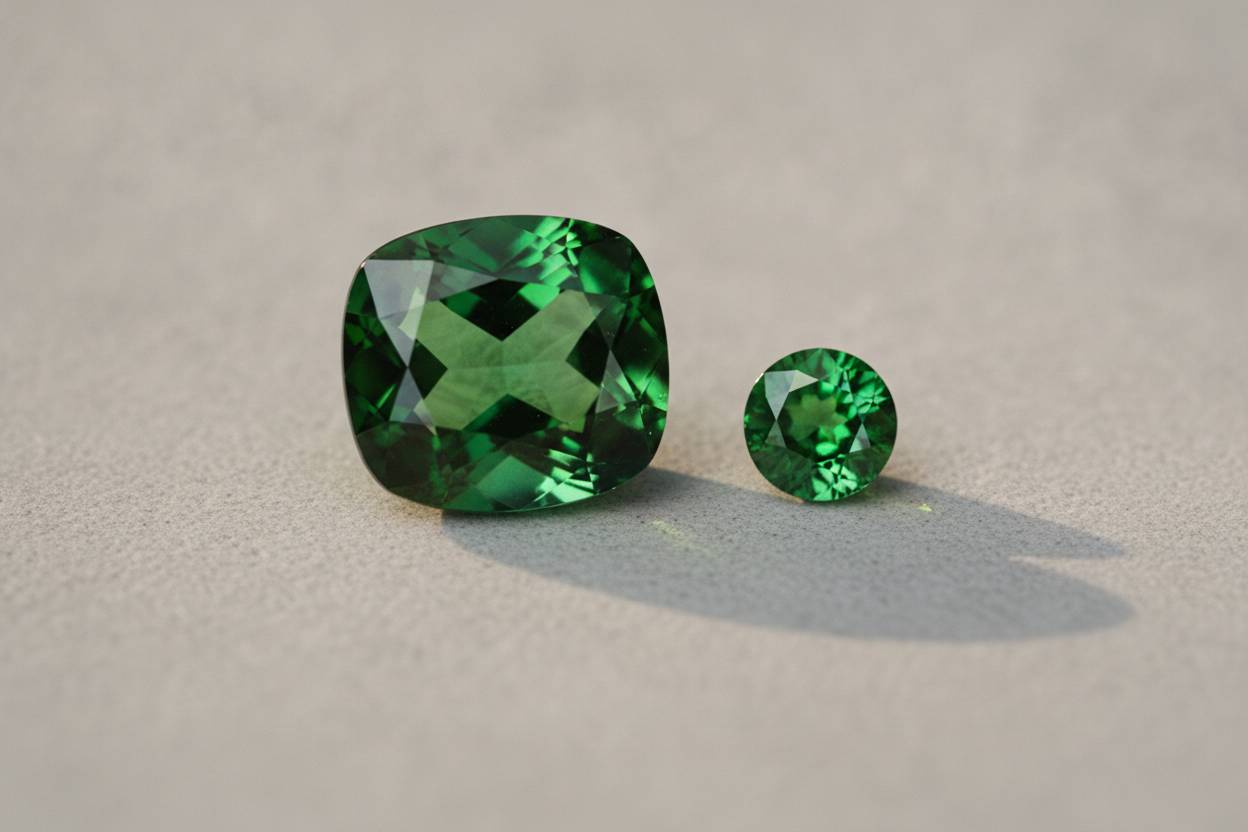
- Tsavorite — chromium- and vanadium-bearing grossular, from Kenya and Tanzania. The deepest, most emerald-adjacent green in the group.
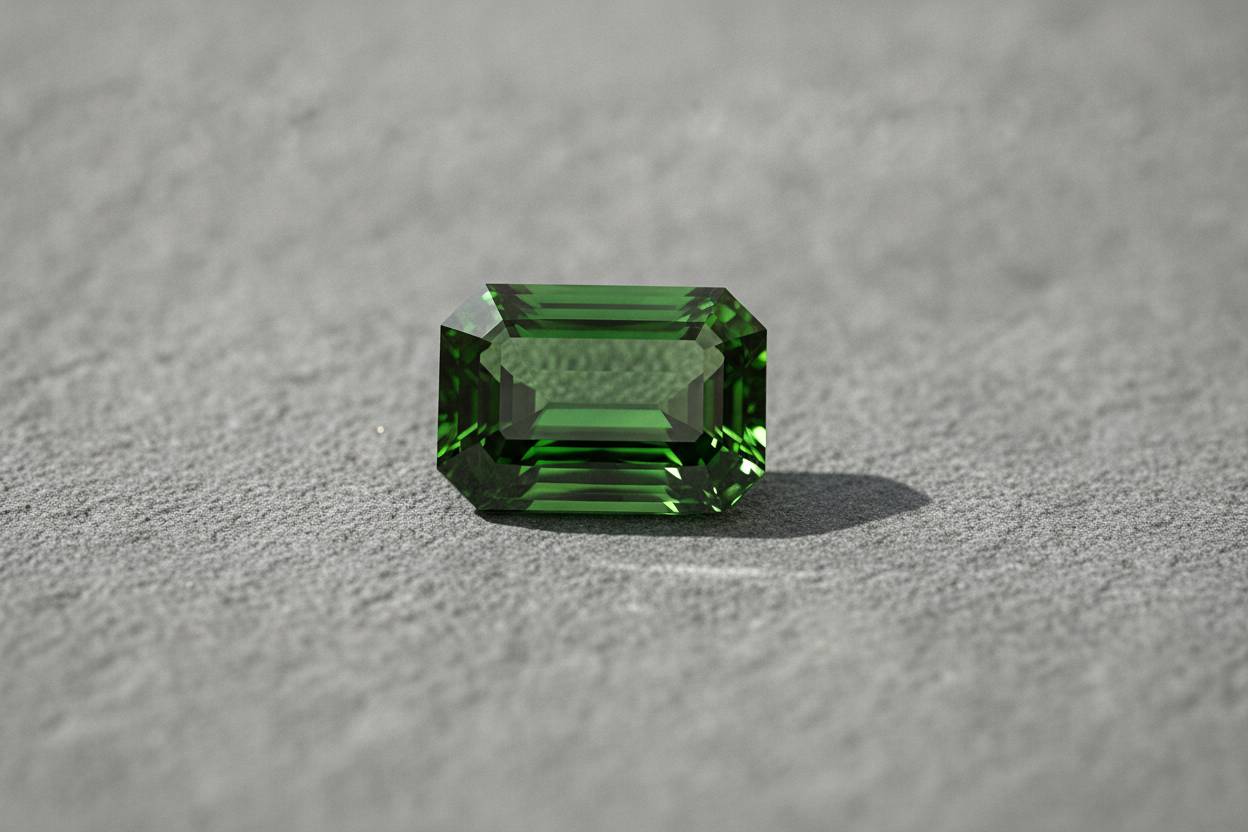
- Demantoid — andradite, coloured by chromium or iron. Russian, Namibian, Madagascan and Iranian material all occur.
- Mint grossular — pale, cool, slightly bluish-green grossular, much of it from the Merelani area of Tanzania.
- Mali garnet — a grossular-andradite blend, usually yellowish-green to olive, with notably high brilliance.
- Uvarovite — chromium garnet, almost always microcrystalline drusy rather than facetable crystals.
These are not interchangeable. Their optical properties, price behaviour and availability differ sharply, so a certificate naming the species matters.
The pomegranate in the name
Garnet takes its name from the Latin granatum, the pomegranate, whose packed red seeds the ancients saw in rough garnet crystals. Grossular comes from grossularia, the gooseberry, after pale green grossular found in Siberia. The names record what people actually saw, not what they believed.
Classical and medieval writers mostly meant red stone when they wrote of garnet — the word carbuncle covered red garnet and spinel alike. Green garnets scarcely entered the record because they had barely been found. Their lore is therefore short, recent and traceable, which is an advantage rather than a loss.
Symbolism from Rome to the Urals
Red garnet was cut into Roman signet intaglios and set by the thousand into Anglo-Saxon and Merovingian cloisonné work — the Sutton Hoo regalia is the best-known survival. The stone was associated with blood, vitality and safe return from journeys, and that association carried into later European folk belief. Modern birthstone lists keep garnet as the stone of January.
Green garnet enters this story in the mid-nineteenth century, when demantoid was found in the gold-bearing gravels of the Ural Mountains. Russian jewellers of the late imperial period, including the Fabergé workshops, used it as a brilliant green accent. Its name comes from the Dutch for diamond-like, a reference to its fire rather than any attributed power.
Tsavorite's history is shorter still. The geologist Campbell Bridges identified the material in Tanzania in 1967 and later traced it into Kenya; Tiffany & Co. introduced it to the market in the mid-1970s under a name drawn from Tsavo National Park. Where meaning attaches to tsavorite today — renewal, growth, the colour of the East African bush — it is modern and honestly so.
More from Garnet
What the gemmology shows
Garnets crystallise in the cubic system and are singly refractive, which distinguishes them immediately from emerald, tourmaline and sapphire under a refractometer or polariscope. There is no cleavage, which helps durability.
Grossular garnets, including tsavorite, read around 1.73–1.75 RI with a specific gravity near 3.6 and a hardness of roughly 7 to 7.5 on the Mohs scale. Andradite, including demantoid, is higher still in RI — about 1.88–1.89 — with SG near 3.8 and hardness around 6.5 to 7.
Demantoid's dispersion of roughly 0.057 exceeds diamond's, which is why a well-cut stone throws visible flashes of spectral colour through its green. Russian demantoid often contains radiating fibrous inclusions known as horsetails, a feature collectors read as an origin indicator rather than a flaw.
Why green garnet is special
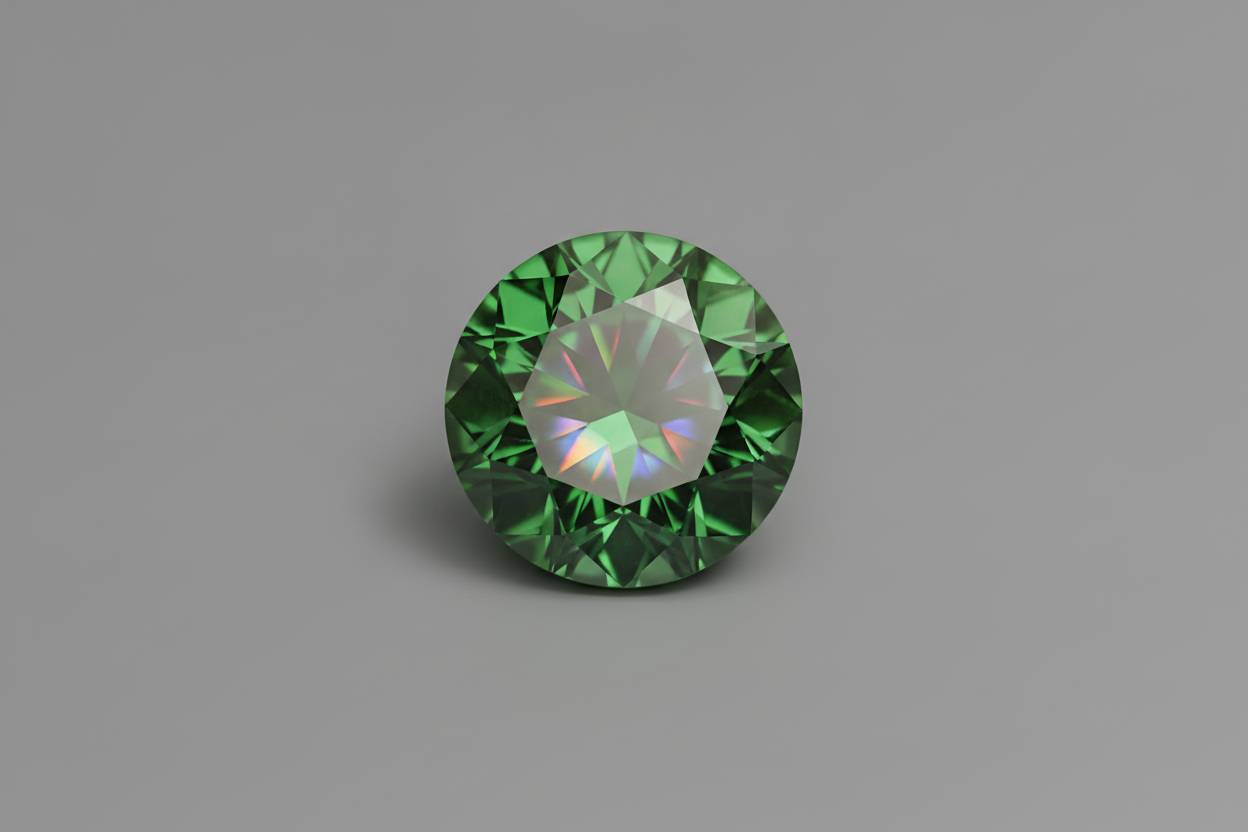
The first reason is the absence of treatment. Emerald is routinely clarity-enhanced with oils or resins, and green sapphire is commonly heated; green garnet is almost always sold exactly as it came out of the ground, cut and polished only.
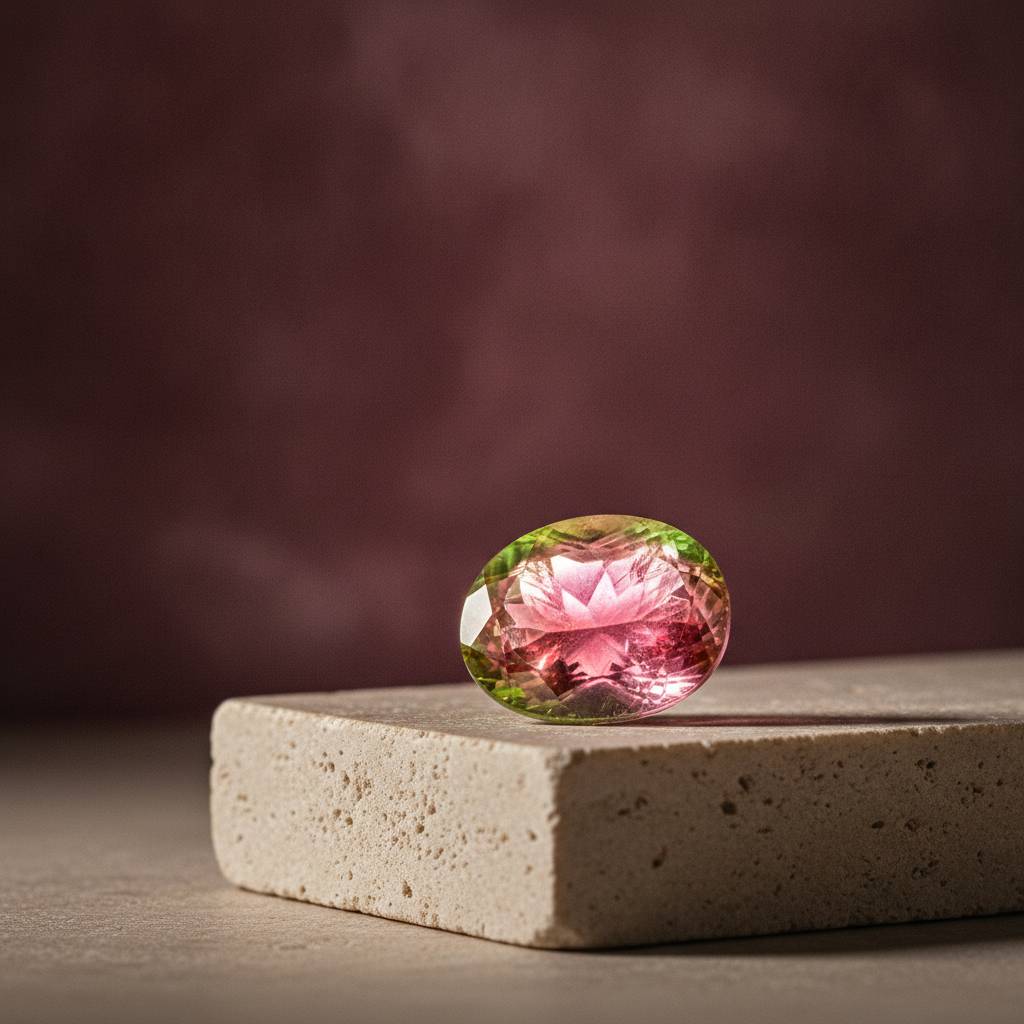
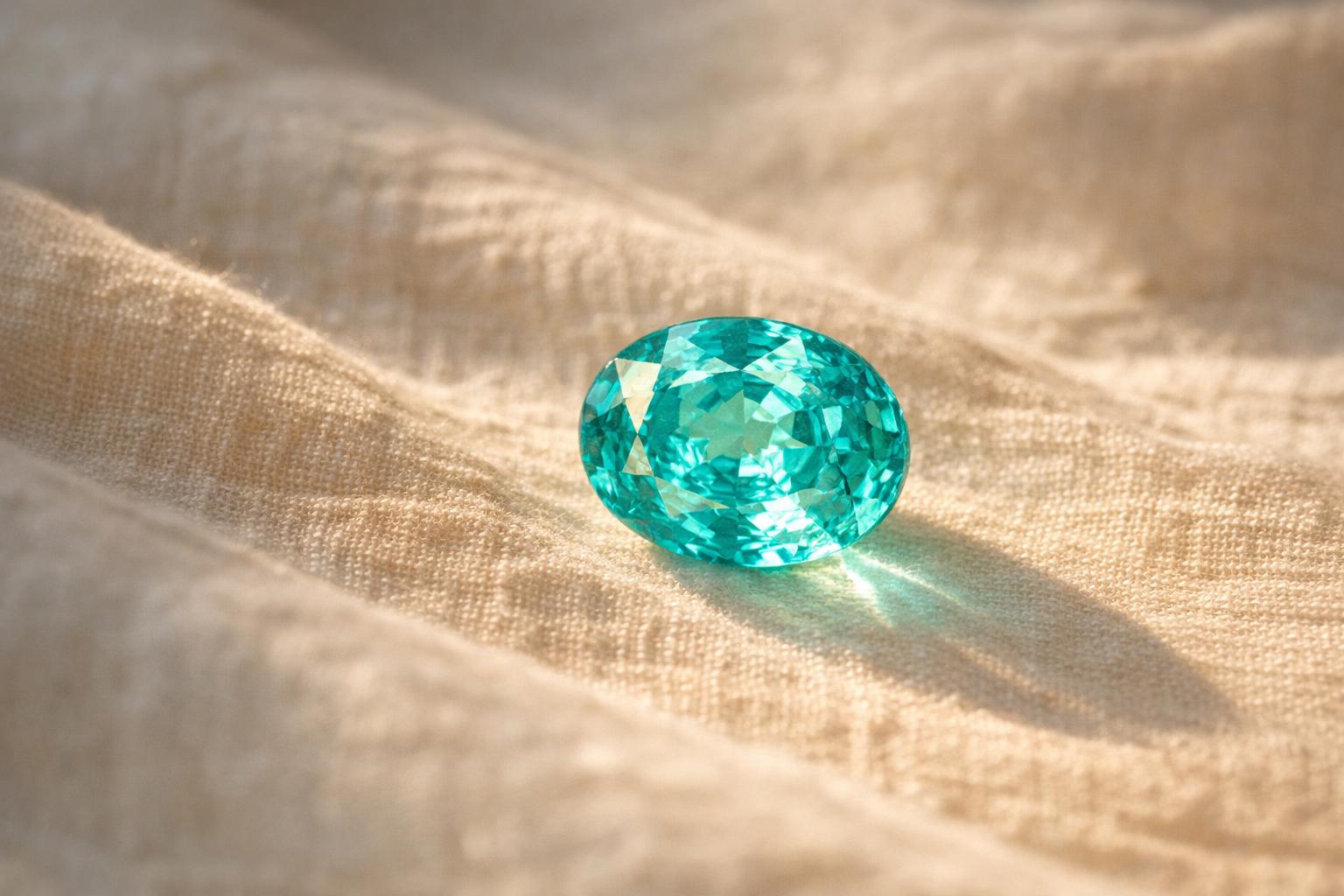
The second is colour at high refractive index. Tsavorite reaches a chromium green close to fine emerald but with greater brilliance and no cleavage planes, while green tourmaline — including lime green and seafoam tones — sits lower in RI and generally shows a cooler, less saturated face-up colour.
The third is scarcity above small sizes. Tsavorite and demantoid rough rarely yields large clean stones, so a five-carat example is a different proposition entirely from a one-carat one. Buyers comparing green garnet with green tourmaline or green sapphire should weigh that against tourmaline's relative availability in larger, cleaner material.
Choosing one that lasts
Judge colour face-up in daylight and in warm light; vanadium-rich stones can shift noticeably between the two. Demantoid should be bought for its fire as much as its hue, which means cut quality carries more weight than it does in a darker stone.
For everyday rings, grossular garnets are the safer structural choice; demantoid is softer and better suited to pendants, earrings and protected settings. Avoid ultrasonic cleaning on heavily included stones and clean with warm water, mild soap and a soft brush.
Ask for a report from a recognised laboratory that states the species, not simply "garnet" — the difference between grossular and andradite is the difference between two quite separate markets. A stone with a documented identity, an untreated status and a clear colour will carry its meaning, and its value, without needing embellishment.
Frequently asked questions
Is green garnet the same as emerald?+
No. Emerald is beryl, hexagonal and doubly refractive, while green garnet is cubic and singly refractive, and the two separate instantly on a refractometer. Green garnet also reaches the market untreated, whereas most emerald is clarity-enhanced with oil or resin.
What is the difference between tsavorite and demantoid?+
Tsavorite is a chromium- and vanadium-coloured grossular garnet with an RI near 1.73–1.75 and hardness around 7 to 7.5. Demantoid is an andradite garnet with a much higher RI near 1.88–1.89, exceptional dispersion of roughly 0.057, and a slightly lower hardness of about 6.5 to 7.
Is green garnet treated?+
Green garnet is almost never treated. Tsavorite, demantoid and mint grossular are typically sold exactly as mined, cut and polished only, which is unusual among saturated coloured gemstones.
Is green garnet durable enough for a ring?+
Grossular garnets such as tsavorite and mint grossular are reasonable ring stones, with hardness around 7 to 7.5 and no cleavage. Demantoid is softer and more easily abraded, so it is better placed in pendants, earrings or protective settings.
How does green garnet compare with green tourmaline or green sapphire?+
Green garnet generally shows higher brilliance than green tourmaline and arrives untreated, while green sapphire is harder but commonly heated. Tourmaline is the easiest of the three to find clean and large, which is why green garnet above a few carats carries a premium.
What does green garnet symbolise?+
Garnet's historic symbolism of vitality and safe travel attaches to the red varieties documented in Roman and early medieval jewellery. Green garnets were found only in the nineteenth and twentieth centuries, so their associations with renewal and growth are modern and openly so.
From our Journal
Buying guides, origin stories, and notes from the trade.