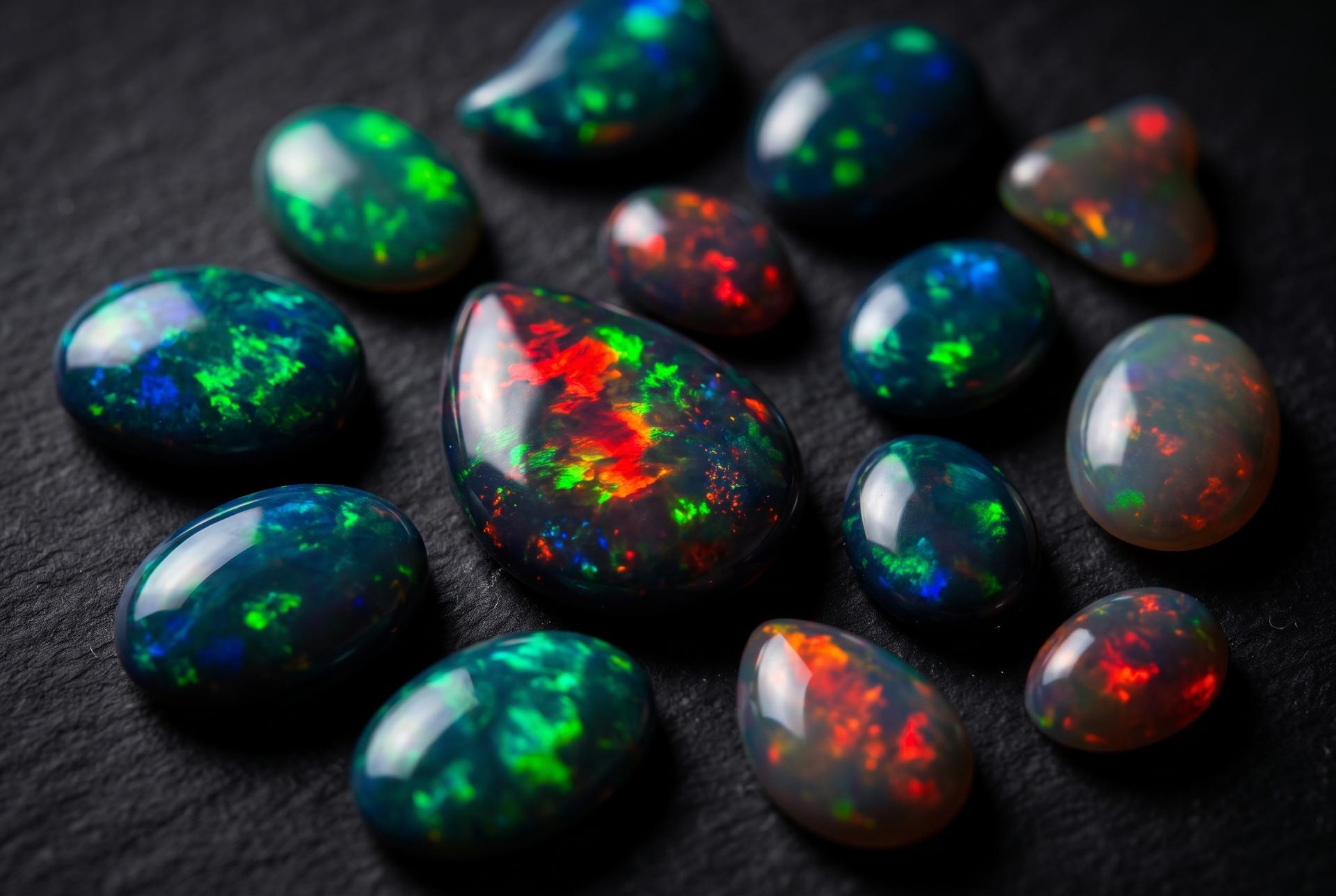
Australian Opal: Spotting the Real Thing
Genuine Australian opal is a solid, untreated piece of natural hydrated silica whose colour is structural: microscopic silica spheres diffract light, so the flashes shift and change as the stone moves. The fastest checks are physical — examine the side profile and back for the straight glue line of a doublet or triplet, confirm the play of colour behaves differently from every angle rather than sitting flat like printed foil, and expect a refractive index of 1.37–1.47 and a hardness of 5.5–6.5. Natural opal also shows honest character: surface pitting, sand or matrix traces, and occasionally fine crazing. Anything perfectly uniform, suspiciously bright under every light, and cheap for its size deserves closer attention before money changes hands.
What makes an opal Australian
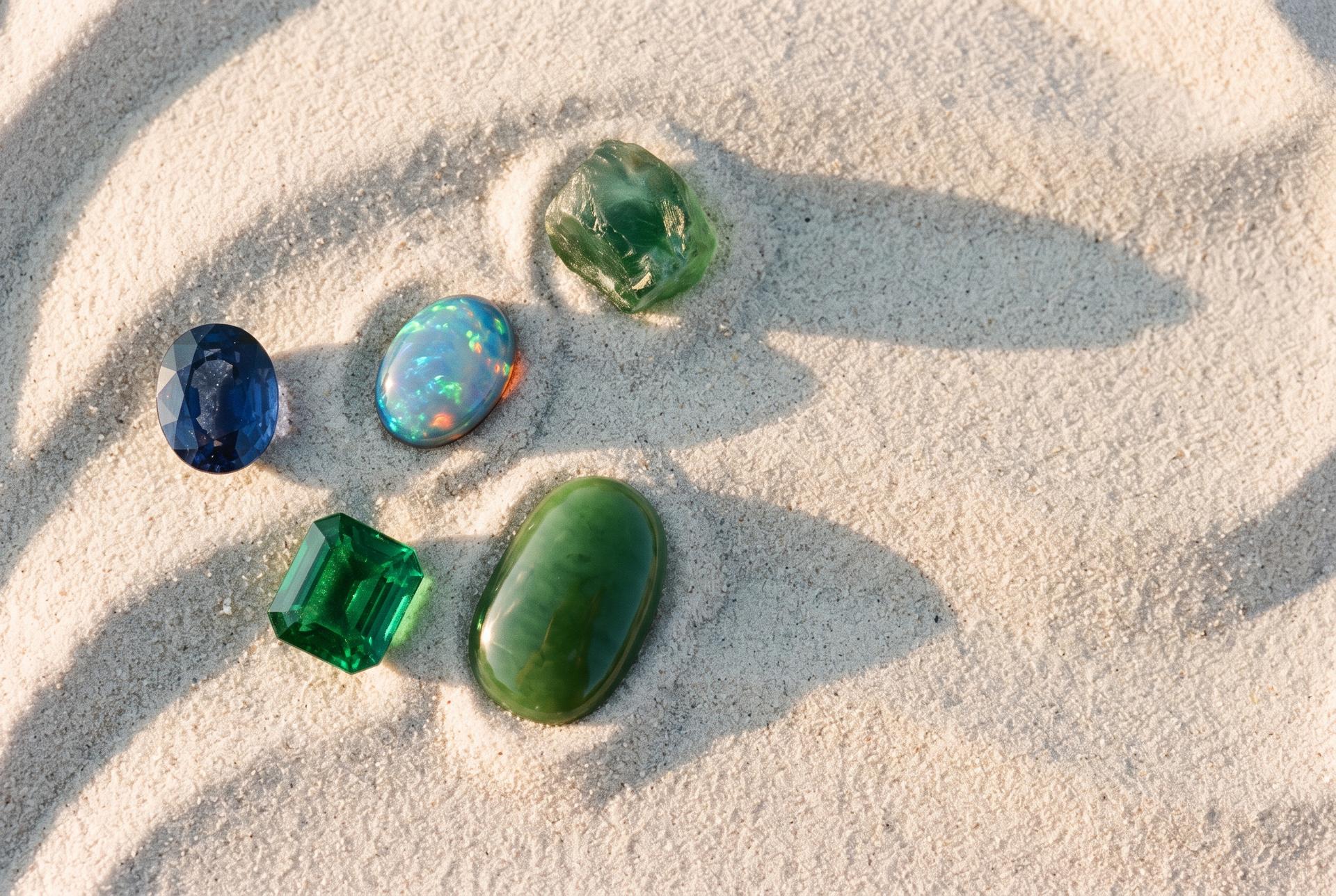
Australian opal is mined principally in New South Wales, South Australia and Queensland — Lightning Ridge, Coober Pedy and the Queensland boulder fields being the names most often quoted in the trade. The material is typically sold as solid opal, cut from the seam or nobby with its natural body tone intact.
Body tone matters because it is the backdrop against which the play of colour reads. Dark-bodied stones make colour appear more saturated; light and white material reads softer and cooler. Boulder opal is a special case: the ironstone host is left attached as a natural backing, which is legitimate and should be described as such.
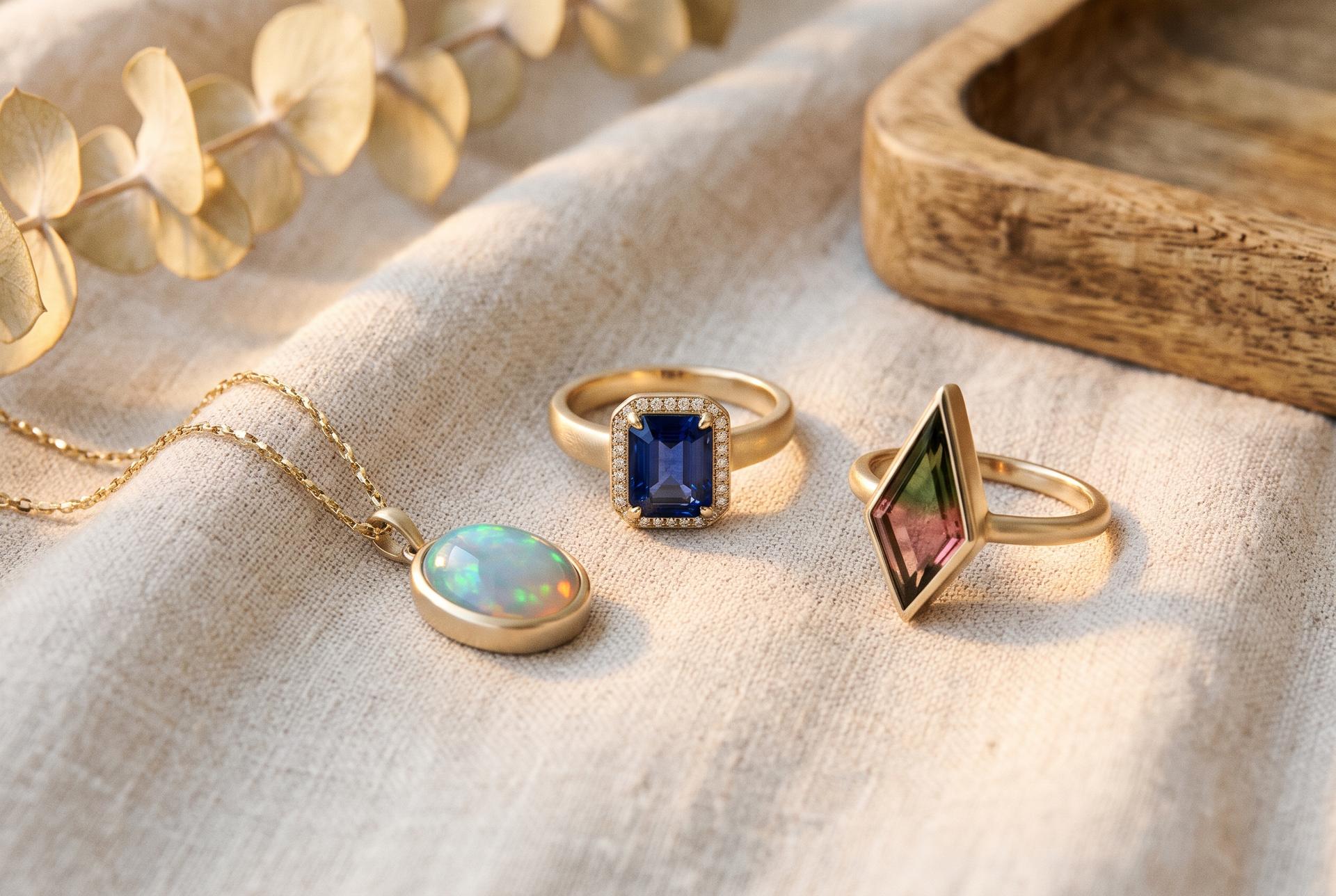
Note that opal is a broad species with several commercial sources. Ethiopian opal, for example, is its own material from Ethiopia and Mozambique, frequently hydrophane and traded in white and mixed colour descriptions. It is not the same material as Australian opal, and the two should never be sold interchangeably.
Reading the play of colour
Play of colour is the single largest value driver, and it is also where buyers misjudge most often. Assess it under diffused daylight first, then under a point source, then tilt the stone through a full rotation.
What you want to see is intensity, broad coverage across the face, and colour that stays alive as the angle changes. What you do not want is a stone that fires only in one narrow position and goes grey everywhere else.
- Directionality — many genuine stones have a preferred viewing angle; total deadness through half the rotation is a weakness, not a quirk.
- Pattern — broad, organised patterns generally outrank fine, scattered pinfire of the same brightness.
- Colour range — red and orange flashes are scarcer than blue and green and are priced accordingly.
- Dead spots — areas of plain potch on the face reduce value even when the rest is brilliant.
Photograph the stone yourself if you can, or ask for video rather than stills. A single well-lit photograph can flatter a mediocre stone beyond recognition.
Solids, doublets and triplets
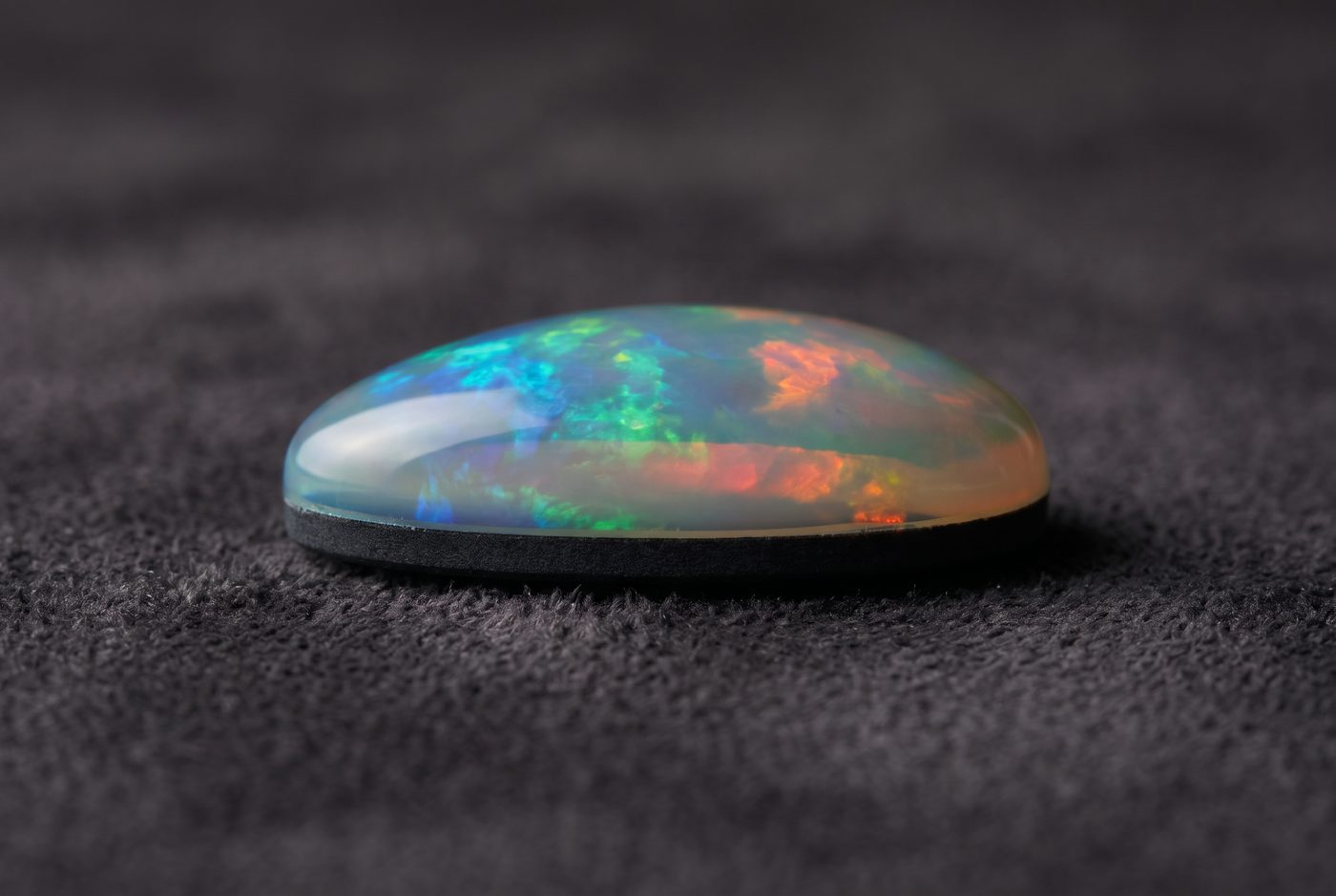
A solid is one continuous piece of opal. A doublet is a thin slice of opal cemented to a dark backing; a triplet adds a clear cap of quartz, glass or plastic on top. Both are legitimate products when disclosed — and seriously misleading when they are not.
Check the girdle and the back under 10x magnification. A doublet or triplet usually shows a perfectly straight, flat junction line, sometimes with trapped bubbles in the adhesive. Triplets also betray themselves by a domed, glassy cap that feels harder and colder than the opal beneath.
Setting style is a clue. Opal that is bezel-set with the edges fully hidden, or mounted so the side profile cannot be seen, warrants a direct question: is this a solid stone? A straight answer in writing is reasonable to expect.
Simulants and lab-grown opal
Manufactured and imitation opal circulates widely, particularly in commercial jewellery and online marketplaces. The common categories are worth knowing by sight.
Laboratory-grown opal
Lab-grown opal shows an unnaturally regular pattern — columnar or snakeskin cells of near-identical size, often with a repeating lizard-skin structure visible from the side. Natural play of colour is irregular because nature does not stack silica spheres that tidily.
Glass, plastic and resin imitations
Glass simulants with suspended flakes (opalite and similar products) usually read a refractive index above the 1.37–1.47 opal range, feel heavier in the hand, and show flakes that look layered rather than diffracted. Plastic imitations are warm to the touch and often scratch far too easily, even against opal's modest 5.5–6.5 hardness.
A gemmological laboratory settles these questions in minutes. For stones of significant value, a report from a recognised lab — GIA, or a member laboratory of the Gemmological Association of Australia — is money well spent.
Surface flaws and crazing
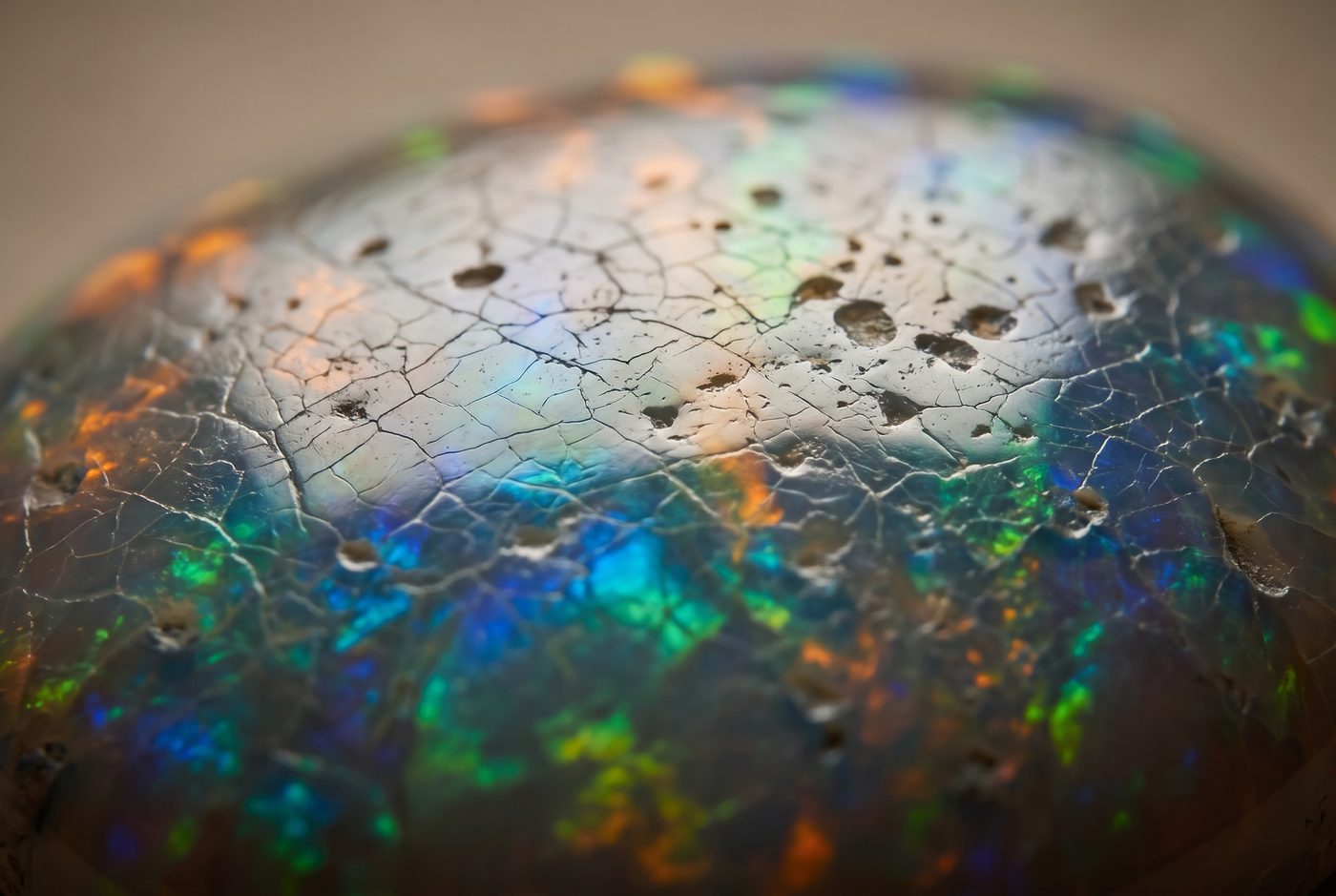
Opal's typical inclusions are part of its identity: play of colour itself, surface pitting, sand and matrix inclusions, and crazing. Crazing is a network of fine surface or internal cracks, and it is the condition issue buyers overlook most.
Examine the stone dry, under strong light, tilting to catch reflections off the surface. Fine craze lines flash as thin bright threads. Pits and chips along the girdle are easy to miss once a stone is set.
Clarity and size both drive price, so a large, clean stone with strong colour sits at the top of the market. A large stone with weak colour and visible crazing does not, regardless of carat weight.
Red flags before you buy
Assume nothing and ask plainly. These are the warning signs that repeatedly cost buyers money.
- No side or back view. Refusal to show the profile usually means a doublet, triplet or backed stone.
- One perfect photograph only. Single-angle imagery hides dead zones in the play of colour.
- Vague origin language. “Opal” is not a locality; ask which field or country, and expect a specific answer.
- Assuming every opal is treated. This is a common misconception — much opal, including Ethiopian material, reaches the market unheated and untreated. Ask what has been done rather than presuming.
- Price well below comparable stones. Strong play of colour in a clean solid of good size is scarce; a bargain is usually a different product.
Buy with your eyes on the stone and your questions in writing. A seller who welcomes both is the one worth returning to.
Frequently asked questions
How can I tell if an Australian opal is solid or a doublet?+
Look at the stone from the side and the back under magnification. A doublet or triplet shows a straight, flat cement line between the opal and its backing, sometimes with trapped bubbles, while a solid has continuous natural material throughout.
Is Ethiopian opal the same as Australian opal?+
No. They are different materials from different deposits: Ethiopian opal comes from Ethiopia and Mozambique and is often hydrophane, meaning it can absorb water and temporarily change appearance. They should always be described and priced separately.
Are opals usually treated?+
Assuming all opals are treated is a common buyer error. Much opal on the market, including Ethiopian material, is sold unheated and untreated, with its colour arising from structural diffraction rather than any added colouring agent. Ask the seller for a written disclosure rather than presuming.
What is crazing and does it make an opal worthless?+
Crazing is a network of fine cracks at or near the surface, and it is a genuine condition issue that affects value and durability. Light surface pitting is normal in opal, but visible craze lines should be disclosed and reflected in the price.
How do I spot lab-grown opal?+
Lab-grown opal usually shows an unnaturally regular colour pattern, with uniform columnar or snakeskin cells and a repeating structure visible from the side. Natural play of colour is irregular; where there is doubt, a gemmological laboratory report resolves it.
How hard is opal and how should I set it?+
Opal sits at 5.5 to 6.5 on the Mohs scale, which is softer than quartz and vulnerable to knocks and abrasion. Protective settings such as bezels, and pendants or earrings rather than daily-wear rings, extend the life of the stone.
From our Journal
Buying guides, origin stories, and notes from the trade.