Gemstone Appraisal: Care and Condition
A gemstone appraisal is a condition report as much as a value opinion: the appraiser identifies the species, records weight and measurements, notes treatments, then judges the stone's physical state and prices it accordingly. Abraded facet junctions, a chipped girdle, worn prongs or a cloudy surface all reduce the figure, because restoring them costs weight, money or both. The practical conclusion for owners is simple — value is preserved by durability-appropriate wear, correct cleaning and a protective mounting, not by locking the piece away. Everything below explains how an appraiser reads condition, and how to keep that reading favourable.
What an appraisal measures
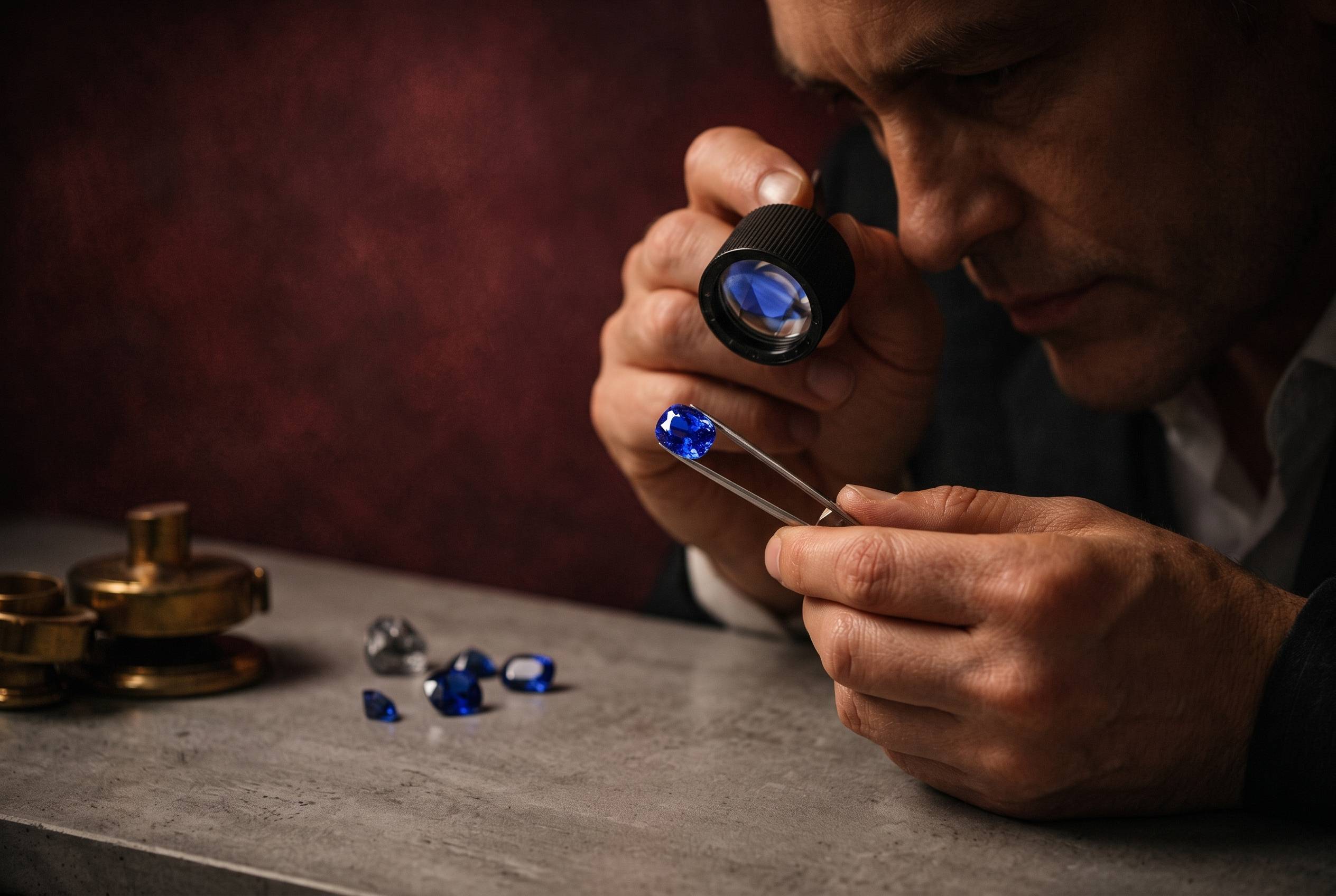
A competent appraisal separates three tasks: identification, description and valuation. Identification establishes species and variety, and whether the stone is natural, synthetic or an imitation. Description records carat weight, millimetre dimensions, cutting style, proportions, colour, clarity characteristics and any detectable treatment.
Valuation then applies a defined purpose — insurance replacement, fair market value for estate purposes, or liquidation — and these produce different numbers for the same stone. Condition sits inside the description, and it is the part owners can actually influence.
Credentials matter. Gemmological training from GIA or Gem-A establishes identification competence; appraisal methodology is taught separately by bodies such as the National Association of Jewelry Appraisers and the American Society of Appraisers. Ask which qualification the appraiser holds for each half of the job.
Why toughness outranks hardness
Hardness is resistance to scratching, measured on the Mohs scale. Toughness is resistance to chipping, cracking and cleaving. They are independent properties, and jewellery damage is more often a toughness failure than a scratch.
Corundum — ruby and sapphire — sits at Mohs 9 with no cleavage and excellent toughness, which is why it survives daily rings so well. Topaz reaches Mohs 8 yet has perfect basal cleavage and can split from a knock that would leave a sapphire unmarked. Emerald, at roughly 7.5 to 8, is compromised by the fissures that define its character.
Stability is the third axis: resistance to heat, light and chemicals. Opal, at about 5.5 to 6.5, can craze with rapid drying or heat. Pearl, far softer and organic, dulls on contact with acids, perfume and perspiration.
One number is worth remembering: ordinary household dust contains quartz at Mohs 7. Any stone at 7 or below will lose polish simply from being wiped with a dry cloth.
Wear that lowers the value
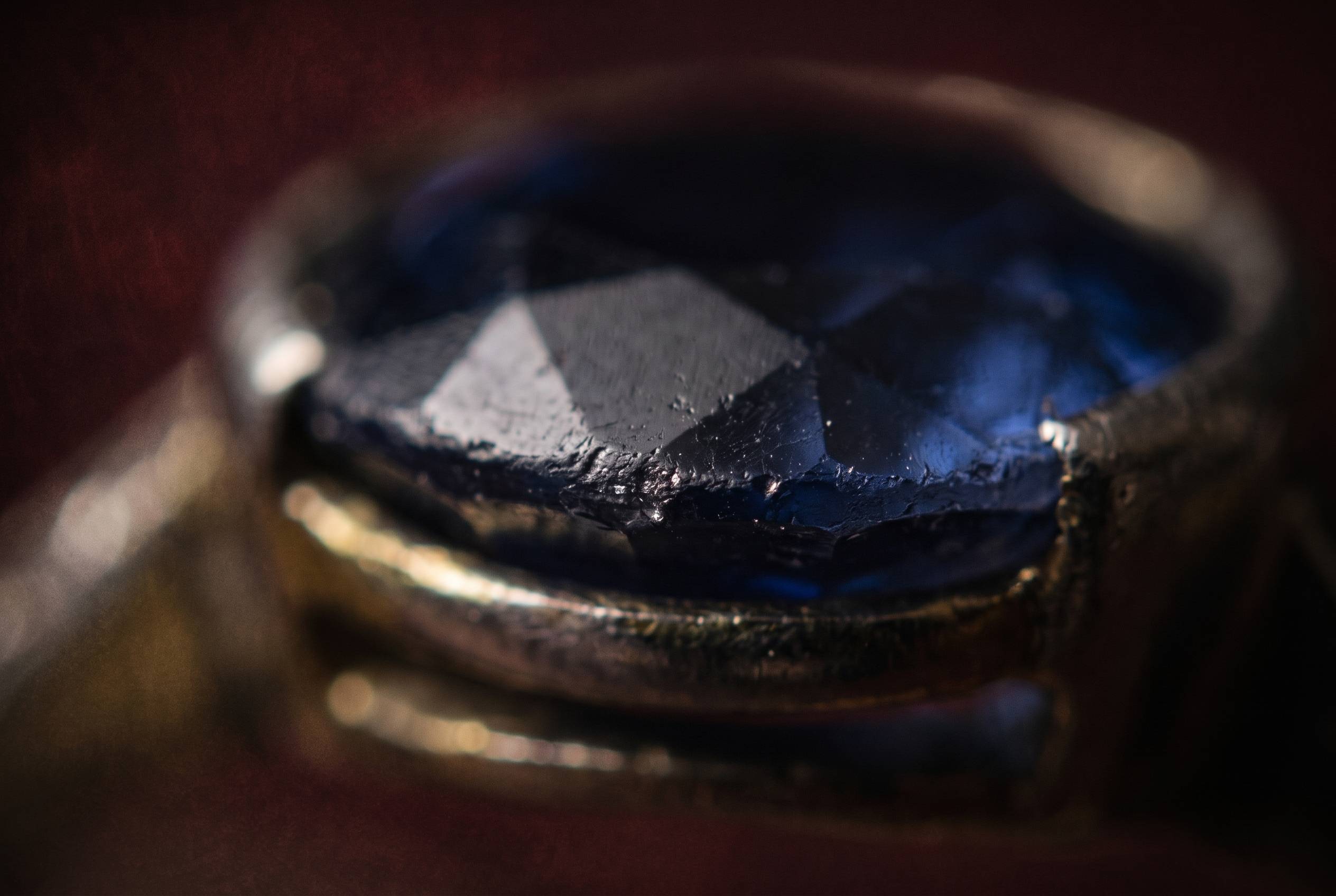
Appraisers examine the stone under magnification out of the mounting where possible, and the first place they look is the girdle and facet junctions. Fine chipping along the girdle, common on faceted stones worn in rings, reads immediately as wear. So does rounding of crisp facet edges on the crown, which scatters light and dulls brilliance.
This is where buyers who ask about how gemstones cut performance holds up get their answer. Precision cutting is only as valuable as its edges; once junctions blur, the stone returns less light and the cut grade effectively falls. Recutting restores the optics but removes weight, and weight loss is irreversible value loss.
Less obvious damage matters too. Repeated heat from a jeweller's torch during unrelated repairs can alter some treated and heat-sensitive stones. Surface residues — soap film, skin oils, hand cream — flatten the apparent colour and are often mistaken for a quality problem rather than a cleaning one.
Cleaning without causing damage
For the great majority of untreated, unfractured faceted stones, the correct method is unglamorous and effective.
- Warm water with a drop of plain washing-up liquid.
- A soft toothbrush worked behind the stone, where light-blocking grime collects.
- Rinse in clean water and dry with a lint-free cloth.
What to avoid is more specific. Ultrasonic cleaners transmit vibration into existing fractures and can extend them; they are unsuitable for emerald, any fracture-filled or fissured stone, included zircon, opal, pearl, turquoise and tanzanite. Steam cleaners add thermal shock to the same list.
Chlorine bleach attacks the alloys in gold solder joints and can cause a prong to fail without warning. Acetone and strong solvents can remove or cloud polymer and oil fillings in treated emerald. Perfume, hairspray and sunscreen should go on before jewellery, not after.
Mountings that protect condition
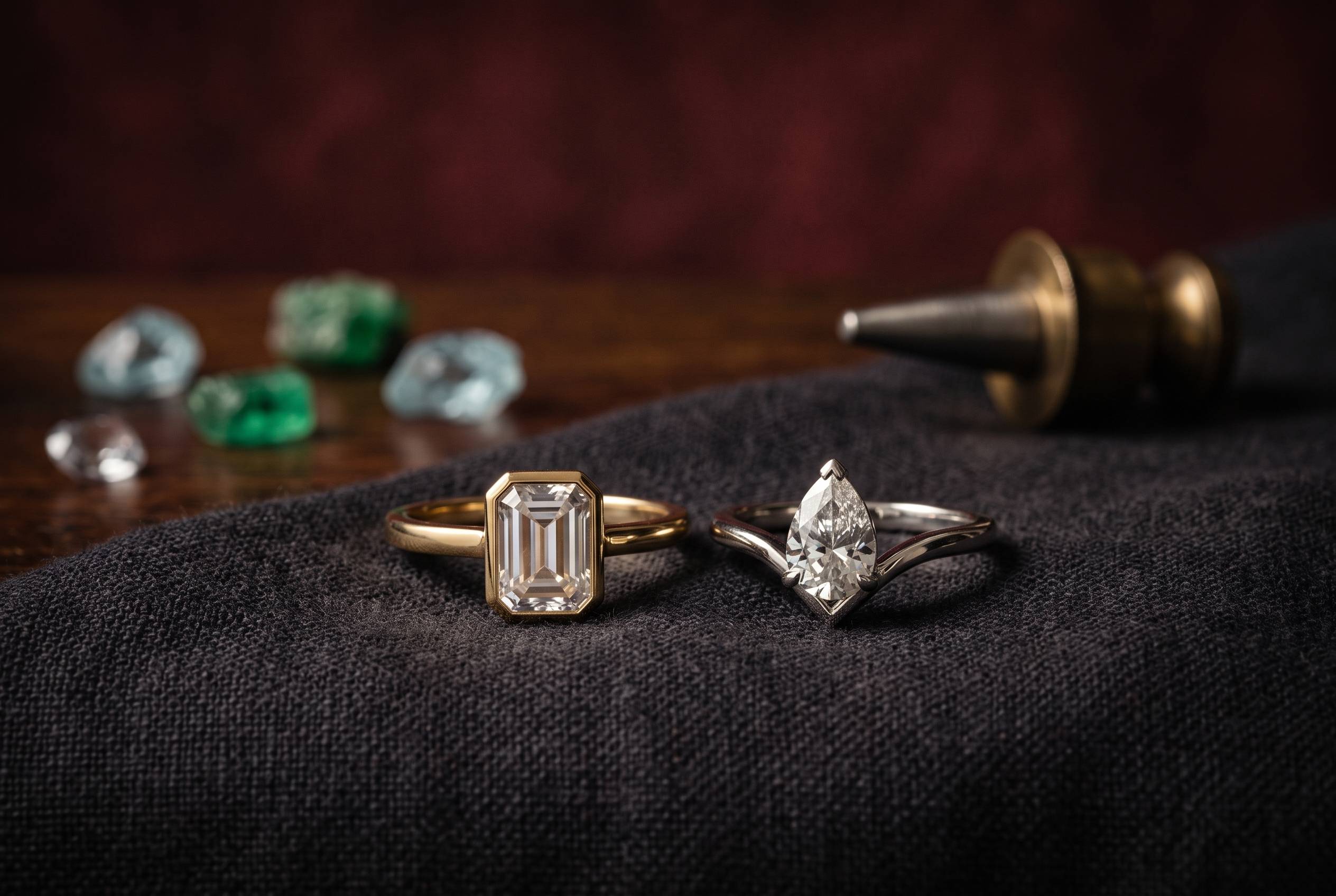
A setting is a mechanical decision before it is an aesthetic one. Bezels and half-bezels shield the girdle — the most vulnerable zone on a faceted stone — and are the sensible choice for anything below Mohs 8 worn daily. A lower profile reduces leverage and the frequency of knocks.
Pointed outlines need targeted protection. V-prongs over the corners of an emerald cut, or the tips of a pear or marquise, cover the thinnest material in the stone. Four-prong settings expose more girdle than six; channel and flush settings protect well but make inspection harder.
Platinum prongs deform rather than snap and wear slowly; 18k gold is softer and wears faster at the tips. Whatever the metal, have prongs and bezel edges checked annually by a bench jeweller — tightening a loose prong costs little, replacing a lost stone does not.
Keeping the appraisal current
Store pieces separately in soft pouches or a lined box with dividers, so a sapphire never shares a compartment with an opal. Remove rings for gardening, gym work, cleaning and swimming; chlorinated water is a chemical exposure, not just a wetting.
Insurance appraisals should be refreshed every few years, because replacement cost moves with the market and because condition changes. Keep the appraisal, any independent laboratory report and dated photographs together, and update the file after any repair, recut or resetting.
A gemstone appraisal describes a stone at one moment. Sensible wear, correct cleaning and a mounting matched to the material keep that description true for decades.
Frequently asked questions
Is a laboratory report the same as a gemstone appraisal?+
No. A laboratory report from an organisation such as GIA identifies the stone and documents its characteristics and treatments, but states no value. An appraisal uses that information and adds a value conclusion tied to a stated purpose, such as insurance replacement or fair market value.
Does the quality of a gemstone's cut affect its appraised value?+
Yes, substantially. Precision cutting controls how much light the stone returns, and appraisers note proportions, symmetry and polish. Worn or rounded facet junctions from years of wear reduce brilliance and can be corrected only by recutting, which removes carat weight.
Can I clean my gemstone jewellery in an ultrasonic cleaner?+
Only for stones with no fractures, fillings or heat sensitivity — sapphire, ruby and diamond are usually safe. Avoid ultrasonics for emerald, opal, pearl, turquoise, tanzanite and any fracture-filled stone, as vibration can extend existing fissures. Warm soapy water and a soft brush are safe for nearly everything.
How often should jewellery be re-appraised?+
Every three to five years is a reasonable interval for insurance purposes, since replacement costs change and condition may have altered. Re-appraise immediately after any recut, resetting or significant repair, because weight and description will have changed.
Does a small chip on the girdle really lower value?+
It does. A chip must be polished out or the stone recut, both of which remove weight and may alter proportions. Appraisers record girdle and facet damage specifically, and the deduction usually exceeds the cost of the repair itself.
Which setting best protects a softer gemstone?+
A bezel or half-bezel, because it covers the girdle where chipping begins and lowers the stone's profile against knocks. For pointed outlines such as pear, marquise and emerald cuts, V-prongs over the corners protect the thinnest material.
From our Journal
Buying guides, origin stories, and notes from the trade.