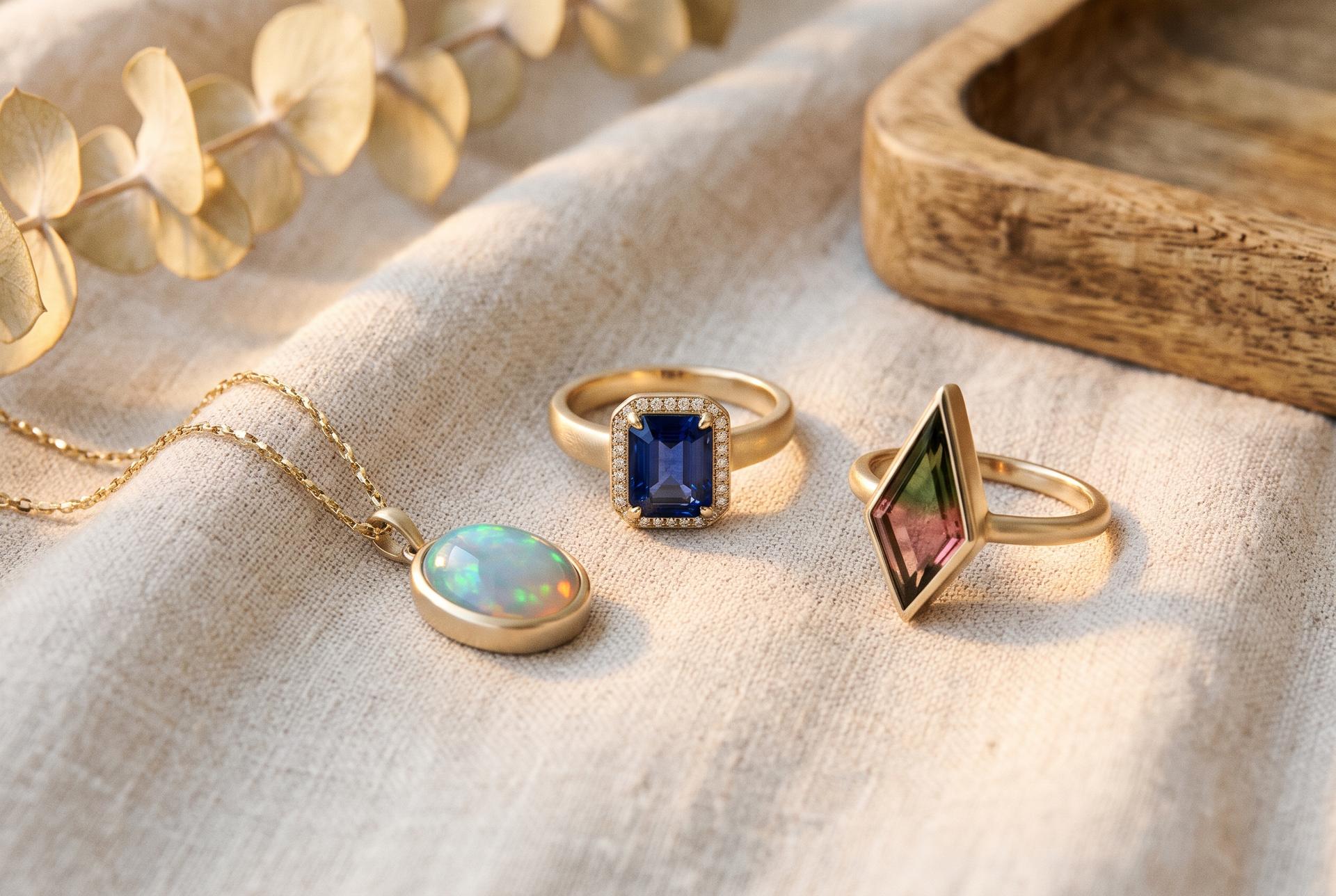
Gemstone Aesthetics Trends & Wear
Most of the gemstone aesthetics trends circulating on social media — milky opals, slice and portrait cuts, moonstone halos, oversized unprotected cabochons — are composed for a camera, not for a decade of daily wear. Hardness (the Mohs scale) tells you how well a stone resists scratching; toughness tells you how it resists chipping and breaking, and the two are independent properties. Before you commit to a trend piece, check three things: the species' Mohs number, whether it has cleavage or has been fracture-filled, and whether the mount shields the girdle and corners. A stone at Mohs 7 or above with no cleavage will take everyday wear in a protective setting. Opal, moonstone, tanzanite and emerald are occasional-wear stones that reward gentle handling.
Gemstone aesthetics trends, tested
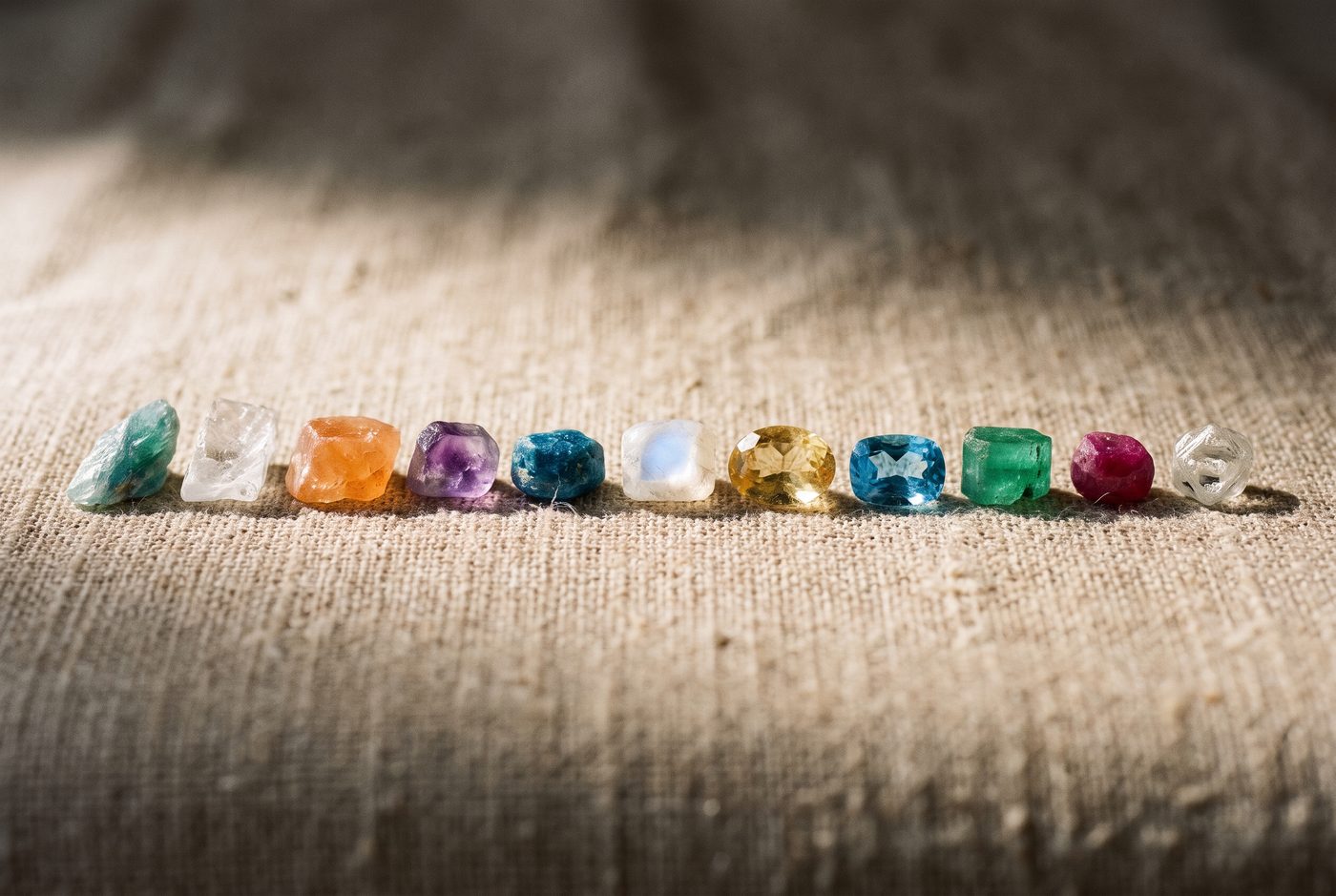
Trend cycles rarely sort stones by durability, so it helps to do it yourself. The hardness figures below are textbook constants for each species and do not change with fashion.
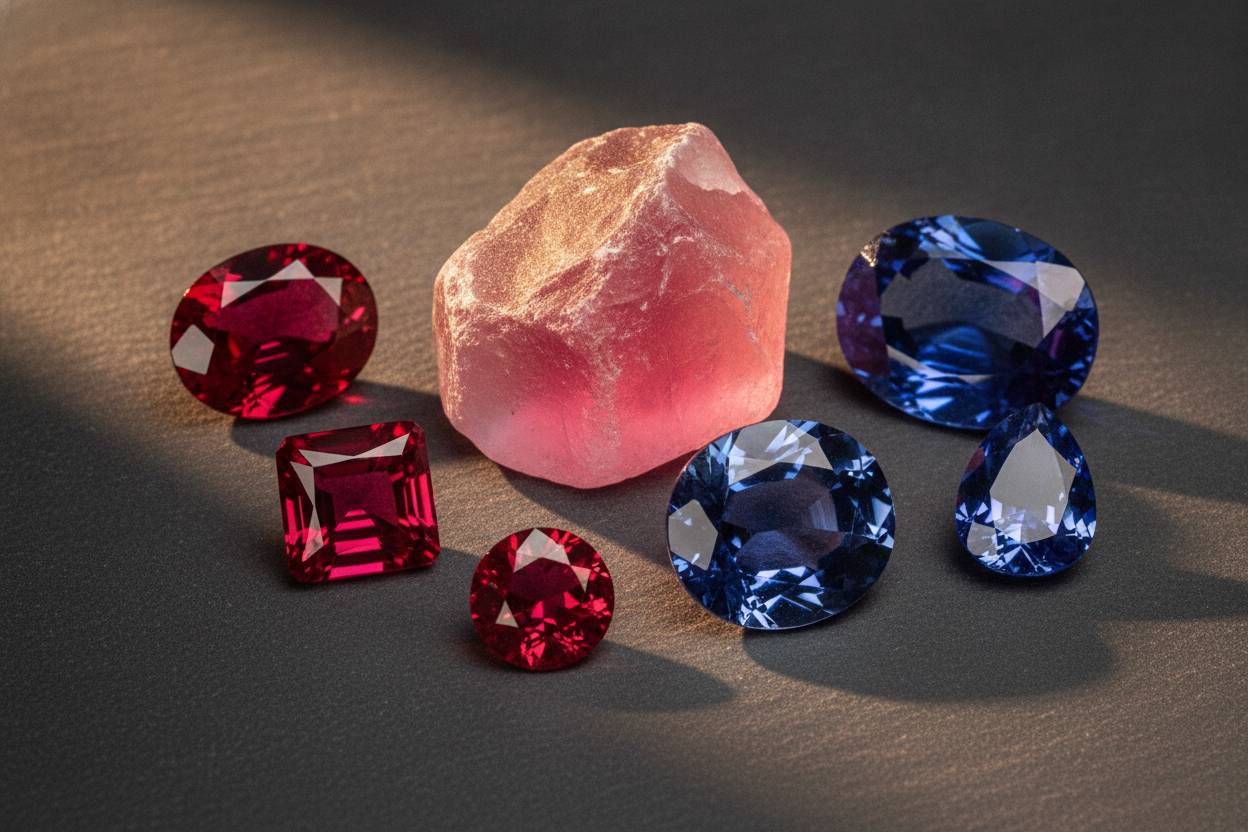
- Daily-wear reliable: sapphire and ruby (Mohs 9), spinel (8), aquamarine and other beryls (7.5–8), tourmaline (7–7.5), quartz including amethyst and citrine (7).
- Wearable with care: garnet (6.5–7.5), peridot (6.5–7), zircon (6–7.5), kunzite (6.5–7), tanzanite (6–7).
- Occasional wear only: moonstone (6–6.5), opal (5.5–6.5), turquoise (5–6), pearl (roughly 2.5–4.5).
Emerald sits at 7.5–8 yet belongs in the careful column for a different reason: nearly all commercial emerald is fissured and filled with oil or resin. Hardness protects the polish; it does nothing for a stone already threaded with fractures.
Toughness, cleavage and chipping
Cleavage is the direction along which a crystal splits cleanly, and it is the most underestimated risk in fashionable jewellery. Kunzite and topaz have perfect cleavage; tanzanite has one distinct cleavage direction; moonstone, being a feldspar, cleaves in two.
A sharp knock against a door frame can part such a stone even though the metal is unmarked. Sapphire, ruby, spinel and tourmaline have no cleavage to exploit, which is why they survive decades of ordinary carelessness.
Opal carries a separate vulnerability. Its structure holds water, and sudden temperature change or prolonged dry heat can cause crazing — a network of fine surface fractures that cannot be reversed.
Fashionable cuts, fragile edges
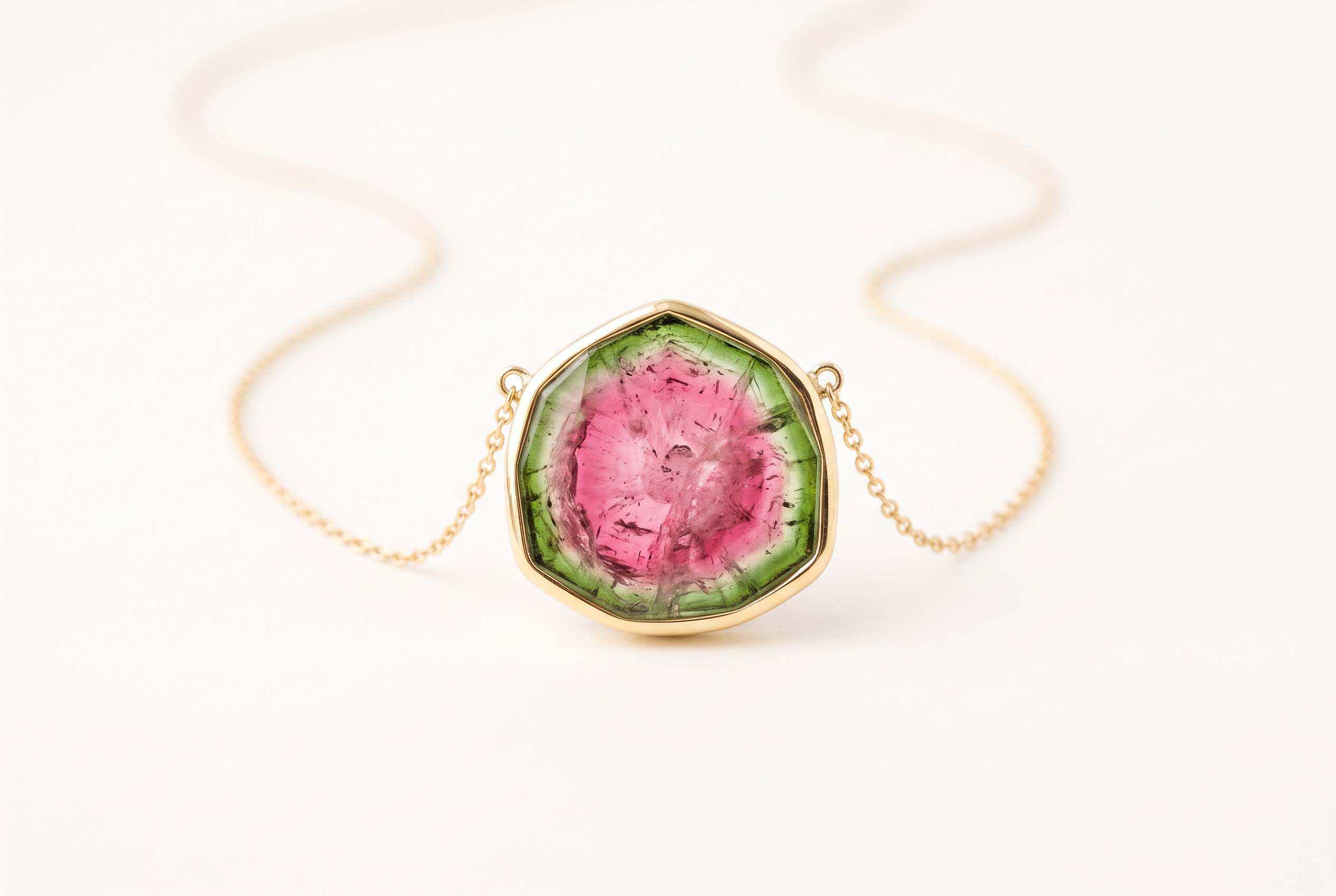
Cut shapes the risk profile as much as species does. The silhouettes currently favoured in editorial jewellery — kite, shield, hexagon, elongated marquise, portrait and slice cuts — all concentrate stress at thin points and corners.
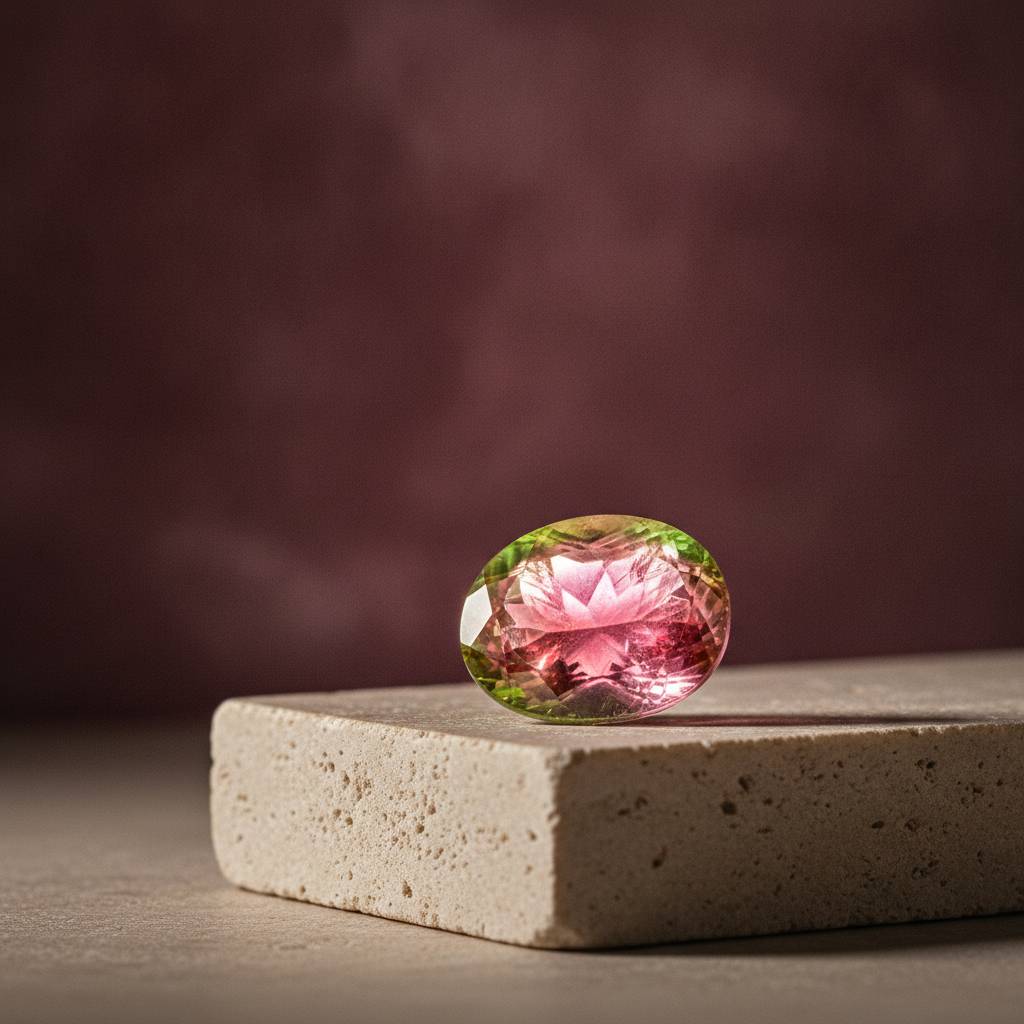
A marquise tip or a kite's acute corner is only a fraction of a millimetre thick at the girdle. In a tourmaline that is survivable with a V-prong; in a tanzanite it is an open invitation to a chip.
Step cuts such as emerald and Asscher have broad, flat facets that show abrasion sooner than brilliant cuts, which scatter light across many small facets and disguise minor wear. Cabochons and slices present large unfaceted areas that scuff visibly on softer species.
Thin girdles and bare settings
Knife-edge girdles, tension mounts and minimal bezels photograph beautifully and protect very little. If you want a trend silhouette in a soft or cleavable stone, ask the cutter or dealer about girdle thickness before the stone is set.
Settings that protect the stone
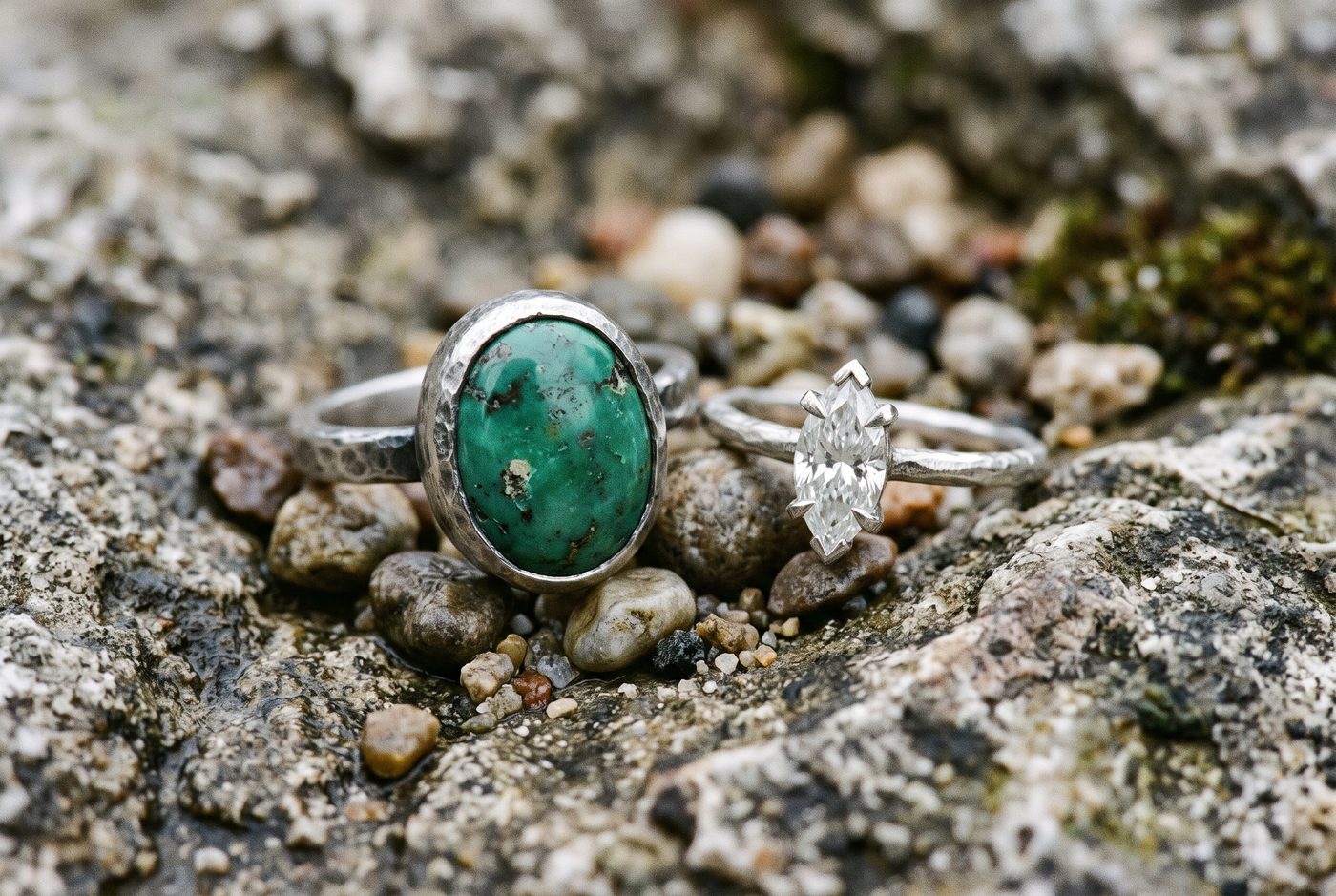
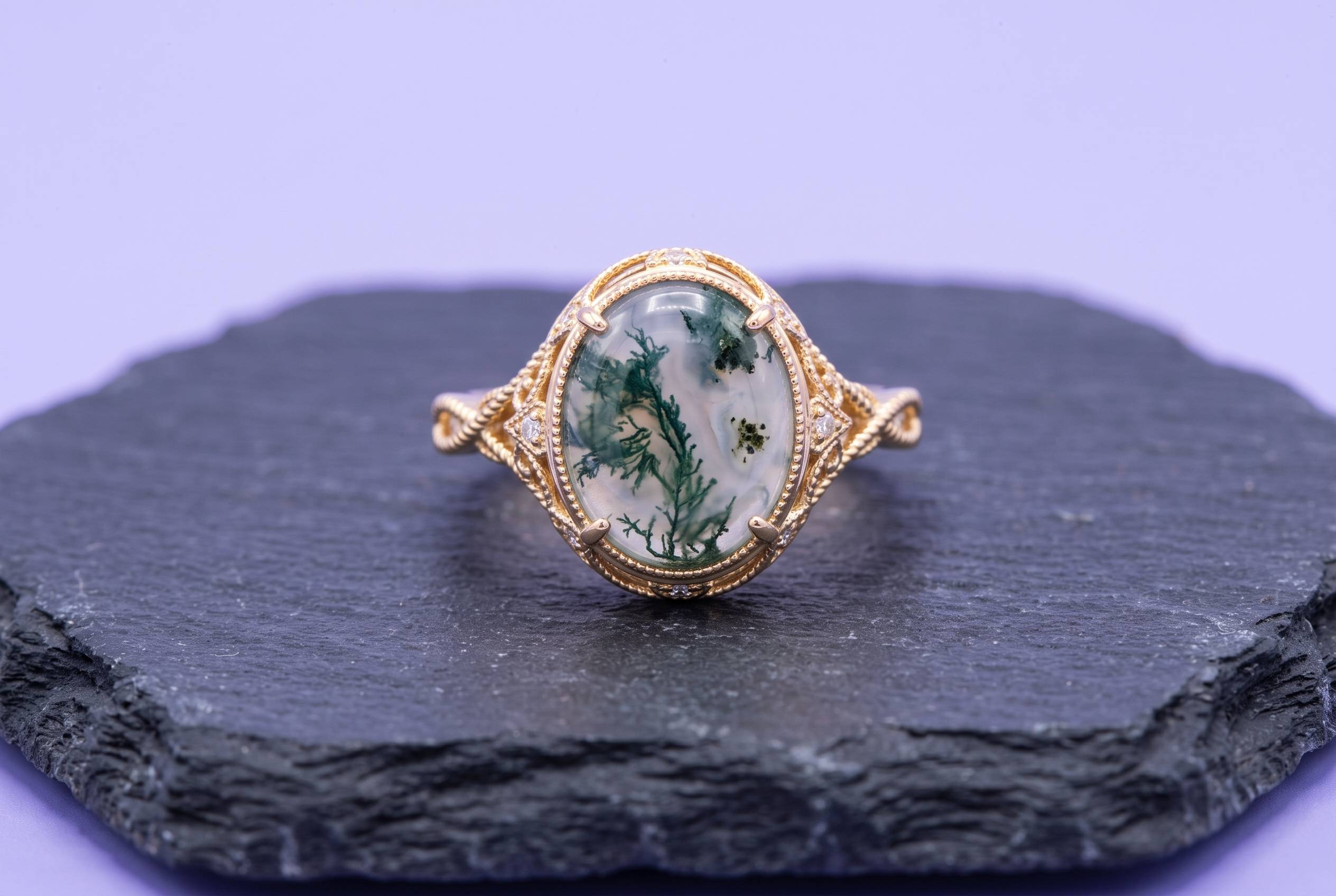
A full bezel is the most protective mount in common use: the metal wall covers the girdle, the most exposed and most easily chipped part of any gem. It suits cabochons, opals, moonstones and any stone you intend to wear daily.
Half-bezels and V-prongs are the sensible compromise for pointed cuts, shielding corners while leaving the pavilion open to light. Standard four- and six-prong heads are fine for sapphire, spinel and tourmaline, provided the prongs sit low and are checked periodically.
Rings take more punishment than any other category; earrings and pendants take the least. A soft stone that would be unwise in a ring is entirely reasonable in a pendant — the same opal, the same setting, a different life.
Safe cleaning at home
For hard, untreated, unfractured stones — sapphire, ruby, spinel, tourmaline, garnet, quartz — warm water, a drop of mild dish soap and a soft toothbrush are sufficient. Brush behind the pavilion where films of lotion and soap dull the return of light, then rinse and pat dry with a lint-free cloth.
Do not use ultrasonic or steam cleaners on emerald, opal, pearl, turquoise, tanzanite, kunzite, moonstone, or any stone described as fracture-filled, dyed, impregnated or coated. Ultrasonic vibration propagates existing fractures; steam strips oils and resins and can shock an opal.
Avoid chlorine bleach, acetone, abrasive pastes and jewellery dips of unknown composition. Remove rings before swimming, gardening, applying sunscreen and any household cleaning. The Gemological Institute of America and the American Gem Trade Association both publish care guidance by species, and dealers should disclose treatments that restrict cleaning.
Storage, light and checkups
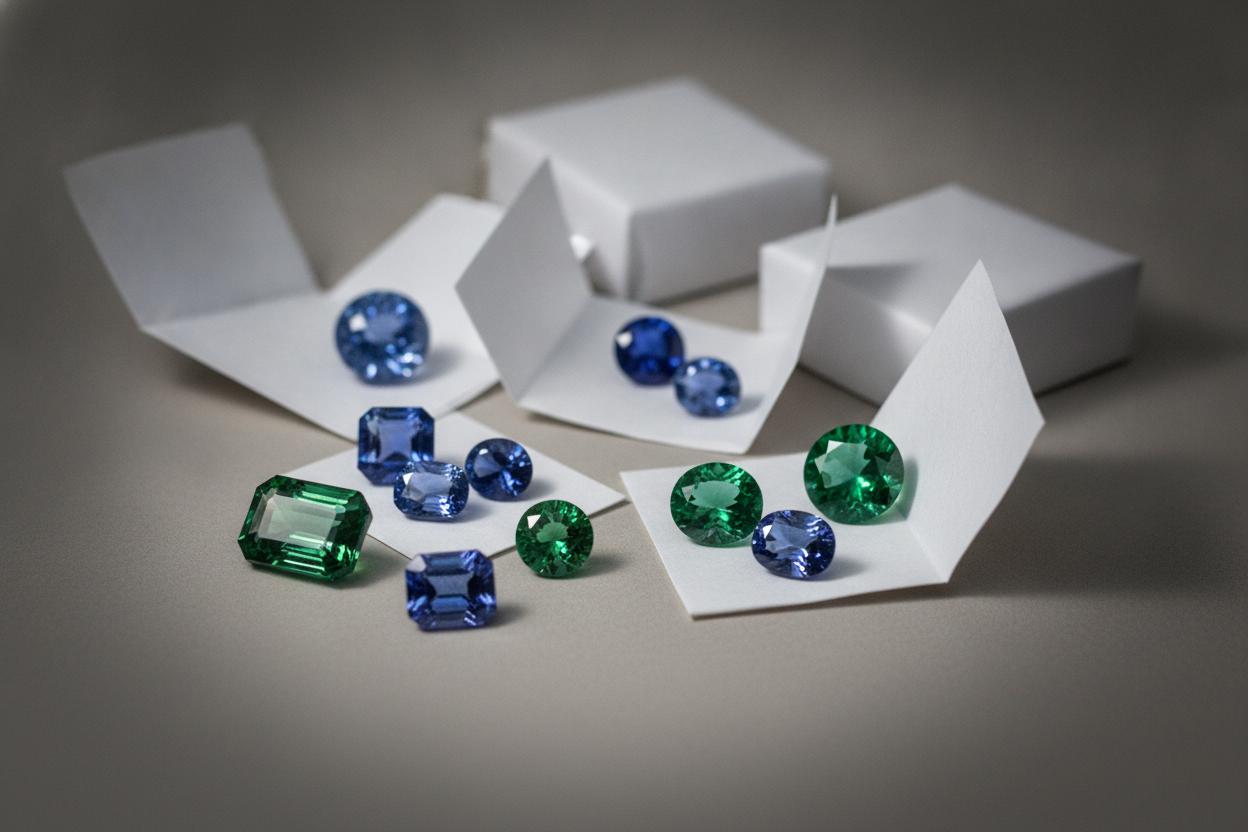
Store pieces separately in soft pouches or a lined box with compartments. Loose in a travel case, a sapphire will scratch every softer stone it touches — hardness differences do real damage in a handbag.
Keep opal, pearl and turquoise away from dry heat, direct sun and safe-deposit boxes for long periods; some benefit from ambient humidity. Kunzite and certain amethysts and topazes can fade under prolonged strong light, so display them sparingly.
Have prongs, bezels and settings inspected once a year by a bench jeweller, and before any long trip. Most stone loss is not breakage but a worn prong nobody looked at.
A trend is a reason to look at a stone, not a reason to ignore what it is made of. Match the species and the cut to how you actually live, mount it so the girdle is covered, and clean it in the way that particular gem tolerates — the piece will still look as good in twenty years as it did on the day it was photographed.
Frequently asked questions
Does the cut of a gemstone affect its durability?+
Yes. Cuts with sharp points or thin corners — marquise, kite, shield, pear — concentrate stress and chip more readily than rounded outlines, and step cuts show surface abrasion sooner than brilliant cuts. A thin girdle on any shape raises the risk, which is why V-prongs and bezels are used on pointed stones.
Which trending gemstones are safe for an everyday ring?+
Sapphire and ruby (Mohs 9), spinel (8), beryls such as aquamarine (7.5–8), tourmaline (7–7.5) and quartz (7) all have no cleavage and handle daily wear well in a secure setting. Opal, moonstone, pearl and turquoise are better suited to pendants and earrings.
Can I clean an emerald in an ultrasonic cleaner?+
No. Almost all commercial emerald contains fissures filled with oil or resin, and ultrasonic vibration can extend those fractures or strip the filler. Clean emerald with lukewarm water, mild soap and a soft brush, then dry gently.
Why does my opal look cloudy or cracked?+
Opal holds water in its structure, and sudden temperature change, dry heat or long storage in arid conditions can cause crazing — a fine network of surface fractures. Crazing is permanent, so keep opal away from steam, ultrasonic cleaners and direct sun.
Is a bezel setting really better than prongs?+
For soft, cleavable or heavily included stones, yes — a full bezel covers the girdle, the most vulnerable edge of any gem. Prongs allow more light into the pavilion and are perfectly adequate for sapphire, spinel and tourmaline when the metal is checked annually.
How often should jewellery settings be inspected?+
Once a year for pieces worn regularly, and before extended travel. Most stones are lost to a worn prong or a loosened bezel rather than to breakage, and a bench jeweller can retip or tighten a setting in minutes.
From our Journal
Buying guides, origin stories, and notes from the trade.