AI Gemstone Grading and Gem Origin
AI gemstone grading is already in laboratory use, and its most consequential application is origin determination: machine-learning models compare a stone's trace-element chemistry against reference data gathered from known deposits. It does not replace the gemmologist. The algorithm narrows the candidates and expresses a confidence level, while a human reads inclusions, growth structure and spectra before an opinion is issued. For buyers, the practical effect is greater consistency on stones whose chemistry sits in overlapping territory — and no change to the underlying reality that origin remains a reasoned opinion, not a measurement.
Origin is the single attribute most likely to double or halve a price without altering anything the eye can see. That makes it worth understanding how the call is actually made.
Why origin moves value
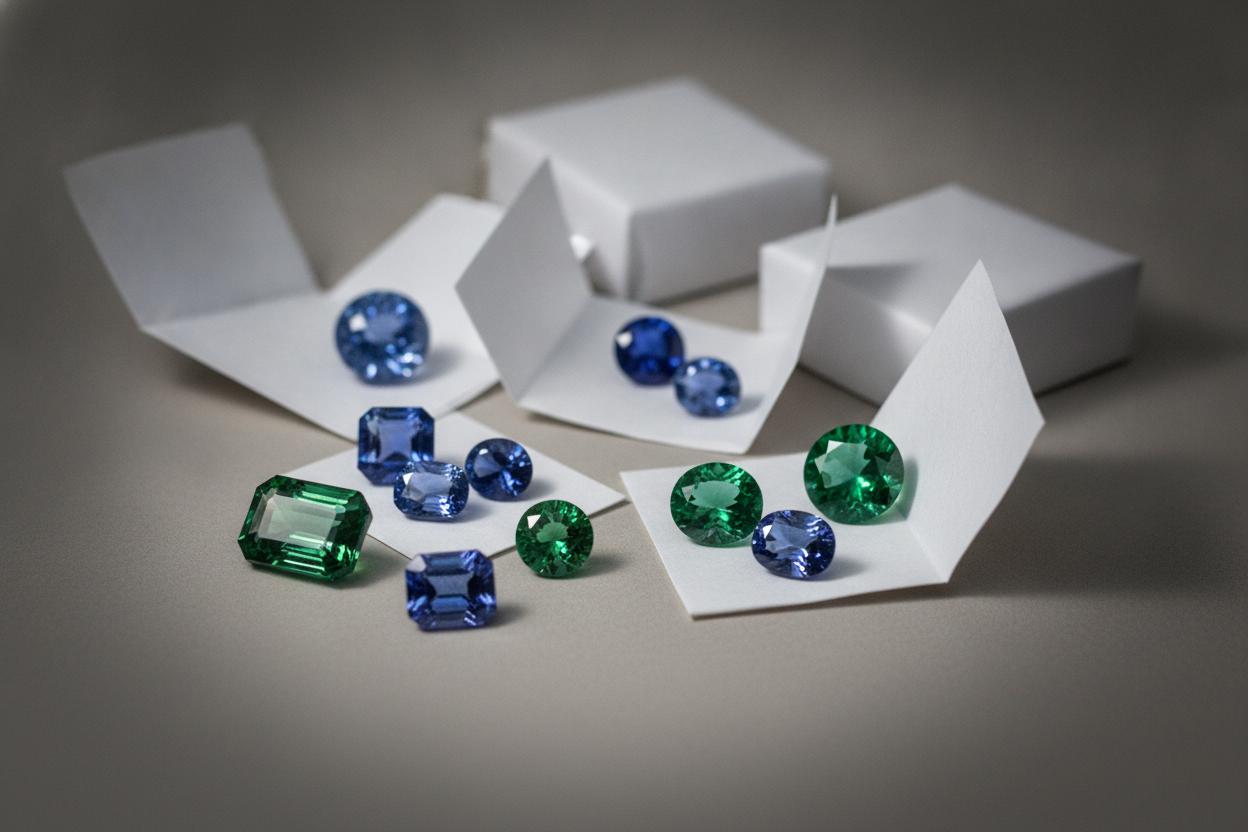
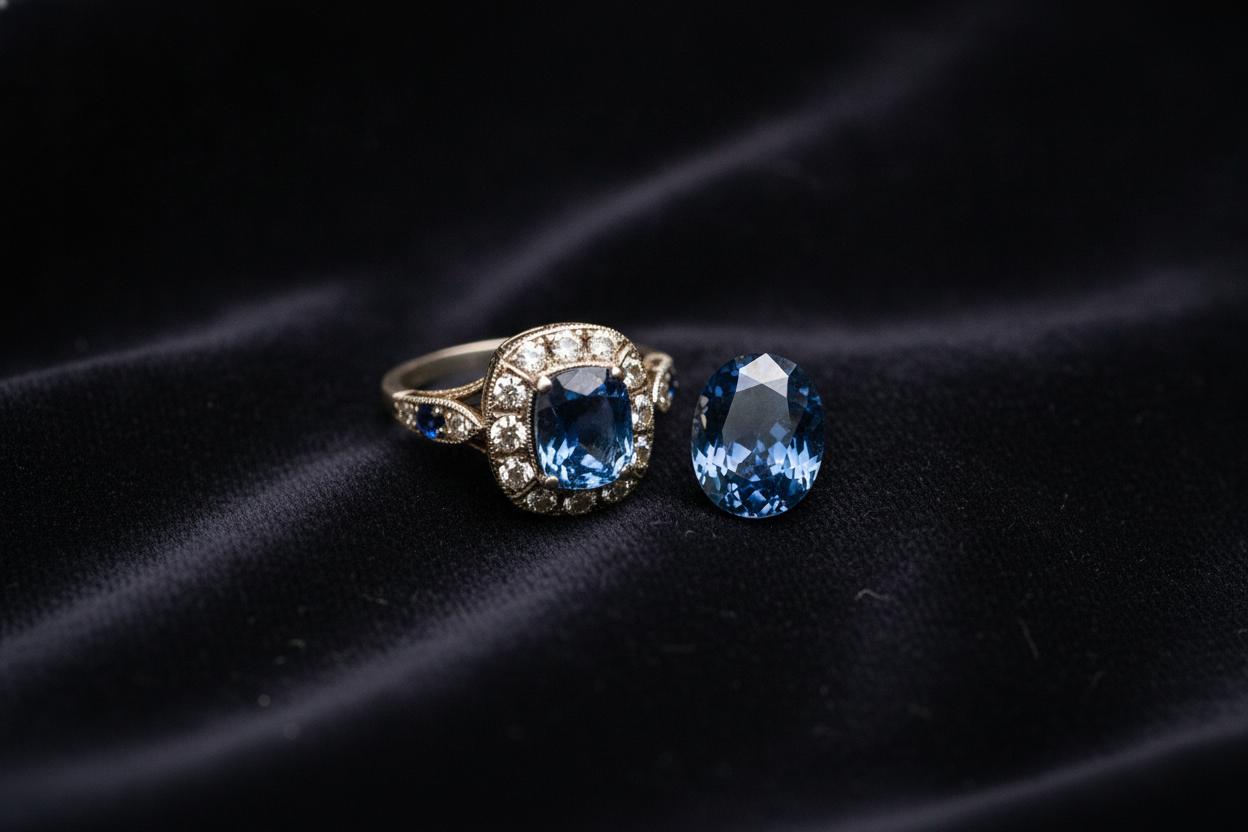
Two sapphires can match in colour, clarity and cut, and differ sharply in price because one carries a Kashmir origin and the other does not. The market pays for scarcity, historical association and a particular quality of colour that certain deposits produced reliably.
Kashmir sapphire, Mogok ruby and Colombian emerald carry the strongest origin premiums in the trade. These names reference deposits that are exhausted, politically constrained or historically small, so supply cannot expand to meet demand.
Origin also functions as shorthand for character. A Ceylon sapphire is expected to show a lively, slightly lighter blue with good transparency; a Mogok ruby, a fluorescent red that glows in daylight. Buyers are purchasing an expectation as much as a geography.
The origins that matter
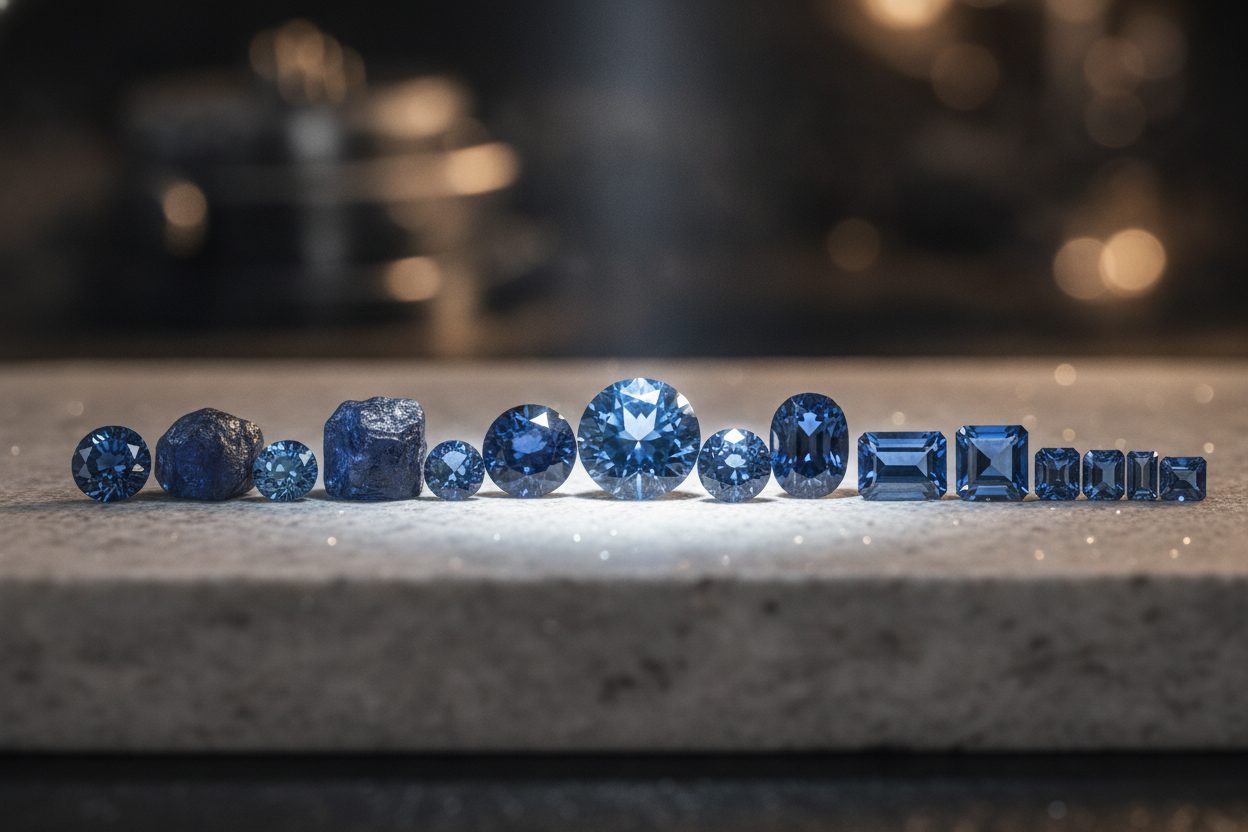
- Sri Lanka (Ceylon) — the longest continuously worked sapphire source. Known for a broad colour range, strong transparency and a high proportion of material that reaches market unheated.
- Kashmir — a brief, high-altitude production from the 1880s onward. The velvety, slightly sleepy blue is the benchmark against which other blue sapphire is measured.
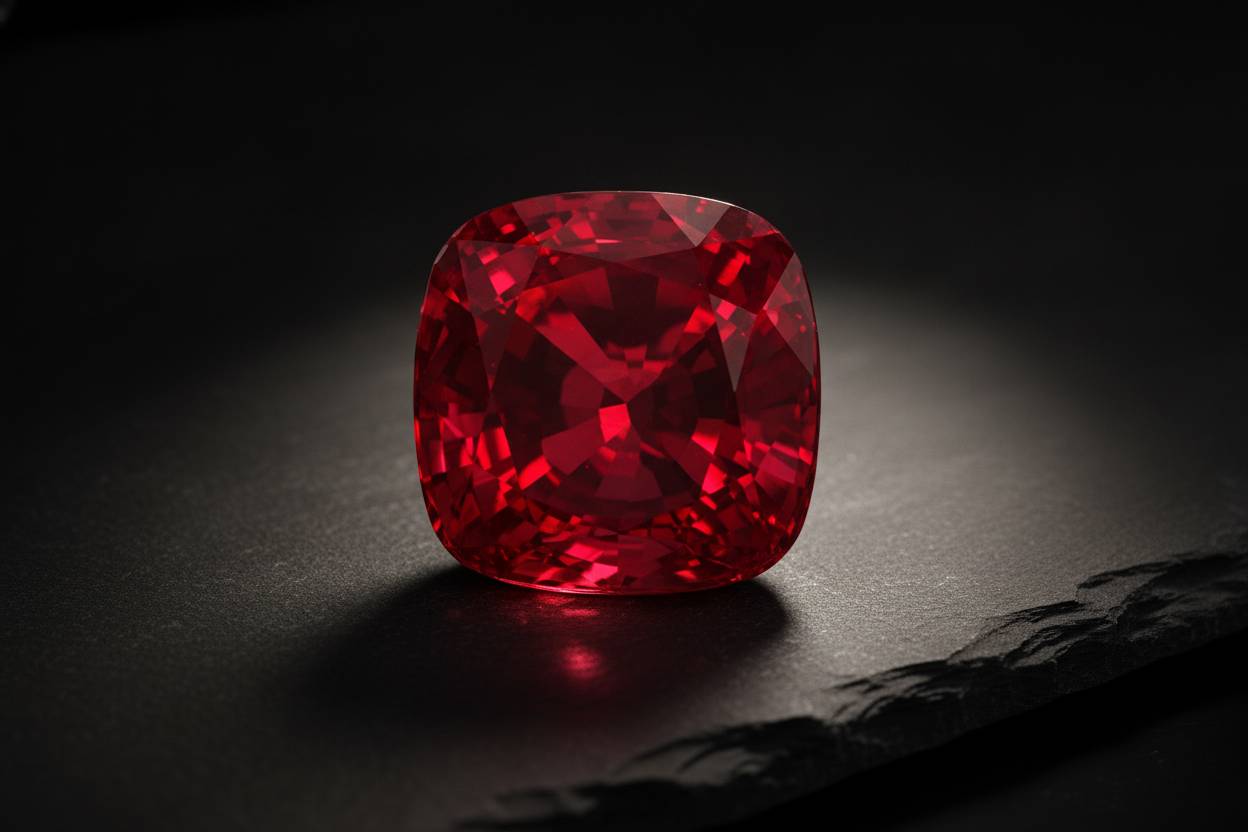
- Burma (Myanmar) — Mogok and Mong Hsu for ruby, with Mogok also producing fine sapphire and spinel. Chromium-rich, strongly fluorescent red is the signature.
- Mozambique — the dominant modern ruby source. Montepuez material can rival Burmese quality and frequently appears unheated.
- Madagascar — a major supplier of sapphire in both metamorphic and basaltic types, with chemistry that can closely shadow Sri Lankan material.
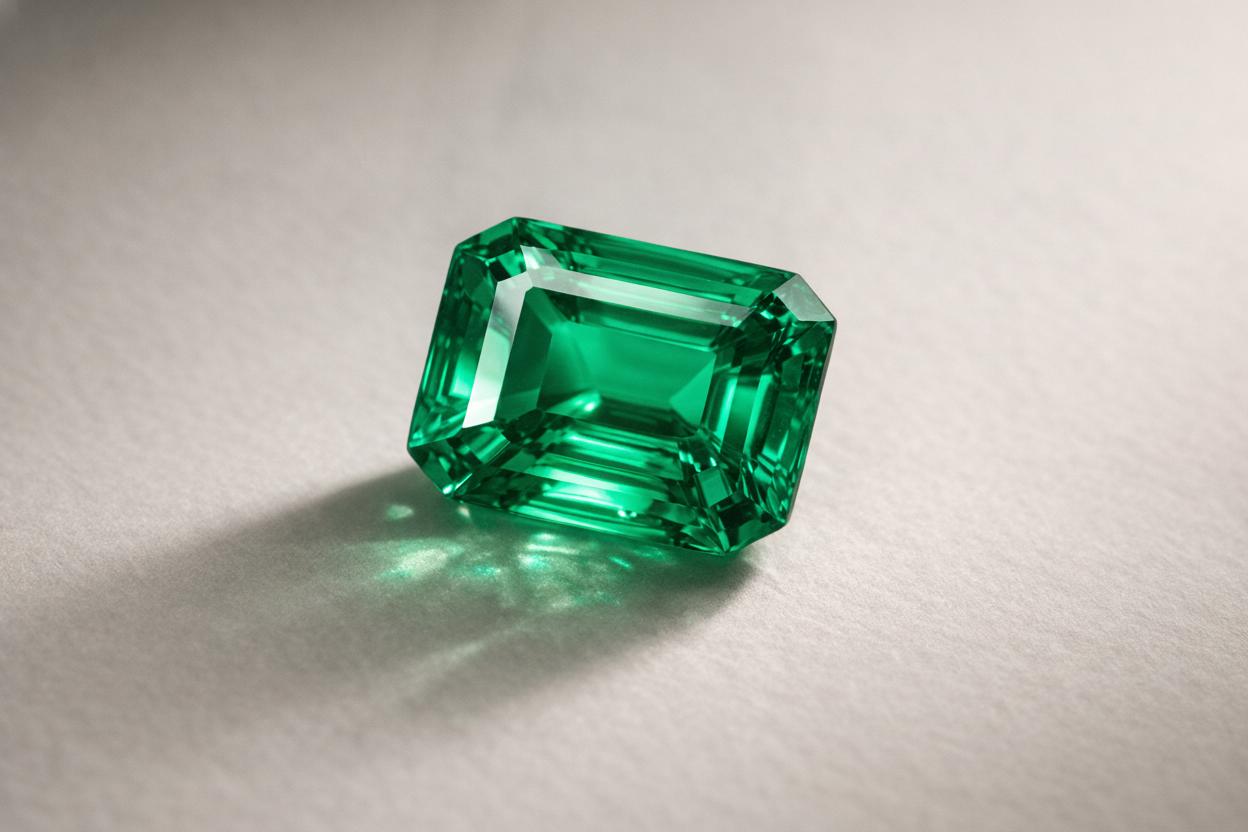
- Colombia and Zambia — the two poles of fine emerald. Colombian stones lean warm and slightly bluish-green; Zambian stones are typically cooler and more saturated.
Fingerprints a deposit leaves
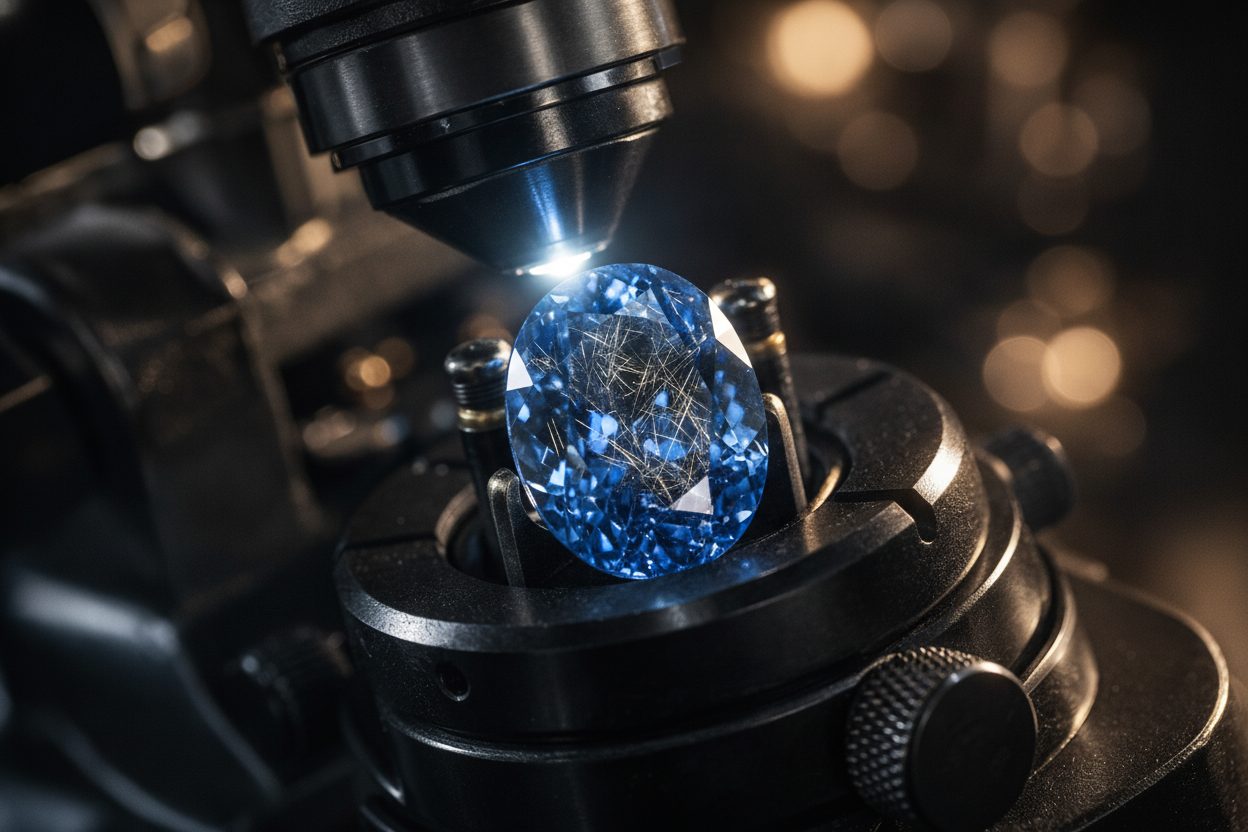
Origin determination rests on the idea that a gem records the geology that formed it. Three bodies of evidence are read together.
Inclusions
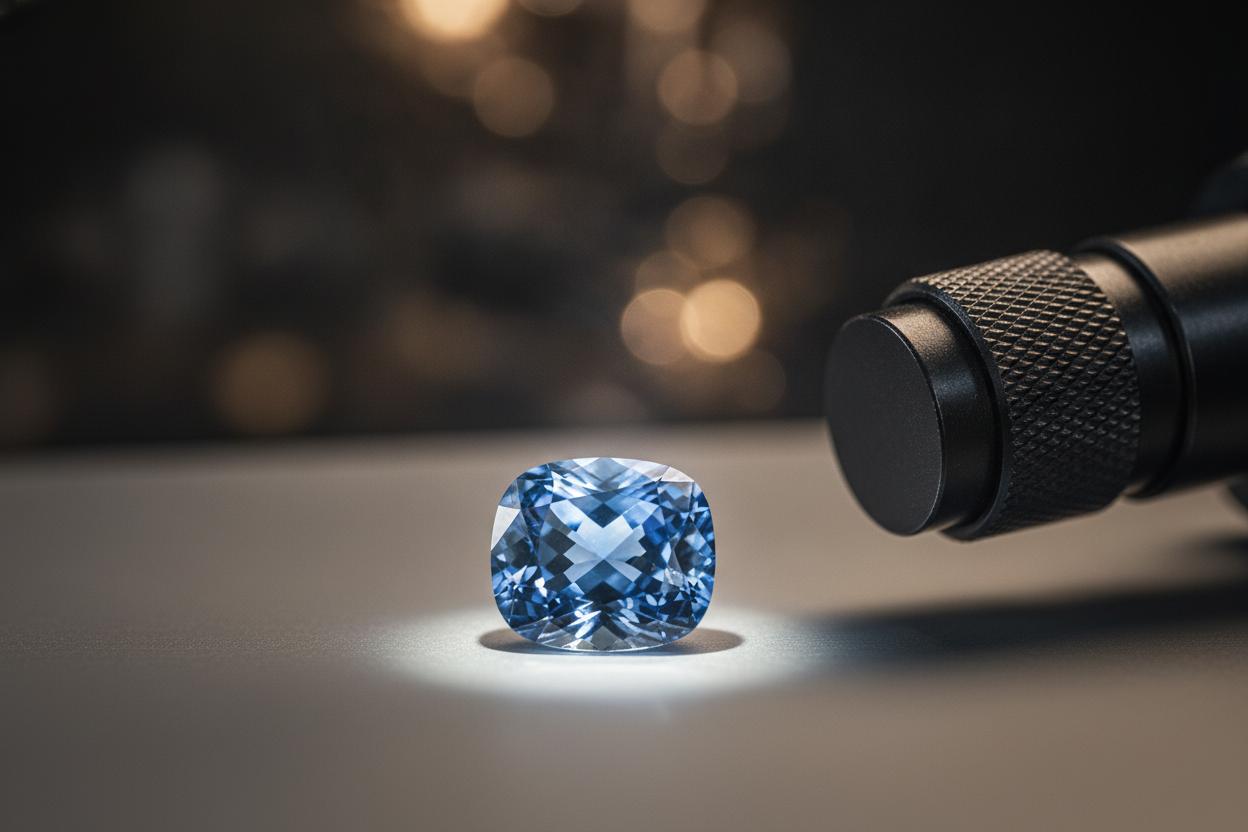
Microscopy remains the first line of enquiry. Dense, fine rutile producing a velvety sheen points toward Kashmir; coarse, long rutile silk and zircon haloes are common in Sri Lankan sapphire; residual carbonate and amphibole inclusions are typical of Mogok ruby.
Trace-element chemistry
Laser ablation ICP-MS measures elements present at very low concentrations — iron, gallium, magnesium, titanium, chromium and vanadium in corundum. The ratios between them, rather than any single value, describe the geological environment of formation.
Spectra and isotopes
UV-Vis-NIR and FTIR spectra record iron content, colour centres and clues to heat treatment. Some laboratories, SSEF among them, have also applied oxygen isotope analysis to support origin opinions on selected material.
More from Sapphire



Where AI gemstone grading fits
Trace-element data is multidimensional, and deposits overlap. A gemmologist comparing six elemental ratios against thousands of reference stones is doing, by eye and experience, what a classification algorithm does systematically.
This is the core of AI gemstone grading as laboratories currently practise it: supervised models trained on chemical data from samples collected at the mine, with documented provenance. Gübelin Gem Lab's Provenance Proof initiative and SSEF's published work on machine-learning origin classification are the most visible examples.
Image-based models are a second, less mature strand, aimed at colour and clarity consistency rather than origin. They are useful for repeatability across large volumes of commercial goods, not for the stones where origin premiums apply.
Limits of an algorithmic origin call
A model knows only what it has been shown. New deposits, or old deposits whose reference samples were never collected, can produce a confident but wrong classification.
Chemical overlap is the persistent problem. Metamorphic sapphire from Madagascar and Sri Lanka can sit so close in trace-element space that chemistry alone cannot separate them, and the inclusion scene decides the matter.
Heat treatment complicates both strands. Heating alters inclusions and can shift spectral features, which is why reputable laboratories report origin and treatment together rather than in isolation. Independent laboratories also disagree on individual stones — this is normal, and a reason to obtain a second opinion where the sum at stake justifies it.
Reading an origin report
A laboratory report states origin as a conclusion, usually with wording such as "Sri Lanka (Ceylon)" and a separate line on treatment. Look for an explicit statement on heat, and for any qualifying comment the laboratory has attached.
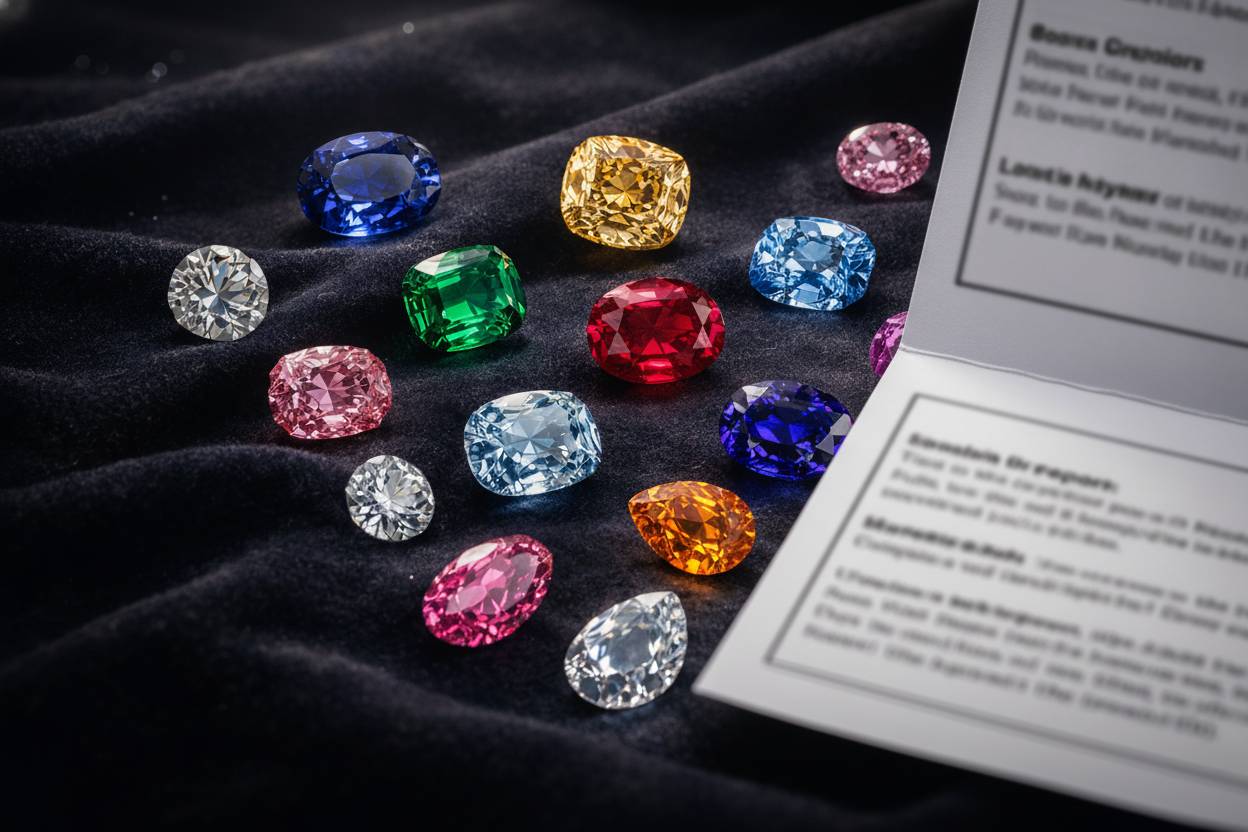
Judge the issuing laboratory before the conclusion. GIA, SSEF, Gübelin, AGL and Lotus Gemology maintain their own reference collections, and that collection is what makes an origin opinion defensible.
For a significant purchase, ask three questions: which laboratory issued the report, how recent it is, and whether the stone's identity can be matched to the document by weight, measurements and photograph.
Machine learning has made origin determination more consistent, not more certain. The honest position is that a well-supported origin opinion from a serious laboratory is the best evidence available — and that a buyer who understands the limits of that evidence negotiates from a far stronger position than one who treats it as absolute.
Frequently asked questions
Can AI determine a gemstone's origin on its own?+
No. Machine-learning models classify trace-element data and suggest likely sources with a confidence level, but a gemmologist must weigh inclusions, spectra and growth structure before an origin is stated. Laboratories present origin as an expert opinion supported by multiple lines of evidence.
Why do two laboratories sometimes give different origins?+
Each laboratory relies on its own reference collection of mine-documented samples, and deposits overlap chemically — Sri Lankan and Madagascan sapphire being a common example. Where the evidence is borderline, two competent laboratories can reasonably reach different conclusions.
Does origin matter more than colour?+
Colour, clarity and cut determine whether a stone is fine in the first place; origin then adjusts the price of a fine stone, sometimes dramatically. A mediocre Kashmir sapphire is still a mediocre sapphire, so buy the stone before you buy the name.
Is heat treatment detected by the same analysis as origin?+
They use overlapping techniques. Microscopy and FTIR or UV-Vis spectroscopy reveal heat-altered inclusions and spectral changes, while origin draws additionally on trace-element chemistry. Reputable reports state origin and treatment as separate conclusions.
Should I pay for an origin report on a smaller stone?+
Origin reports add meaningful cost and are most worthwhile where the origin premium is large — fine ruby, sapphire and emerald in sizes where provenance significantly moves the price. For modest commercial stones, a treatment-only identification report is usually the sensible choice.
Will AI grading replace gem laboratories?+
It is more likely to become a standard tool inside them. Algorithms improve consistency on chemical classification and high-volume colour assessment, but reference-sample collection, instrument work and final judgement remain human responsibilities.
From our Journal
Buying guides, origin stories, and notes from the trade.