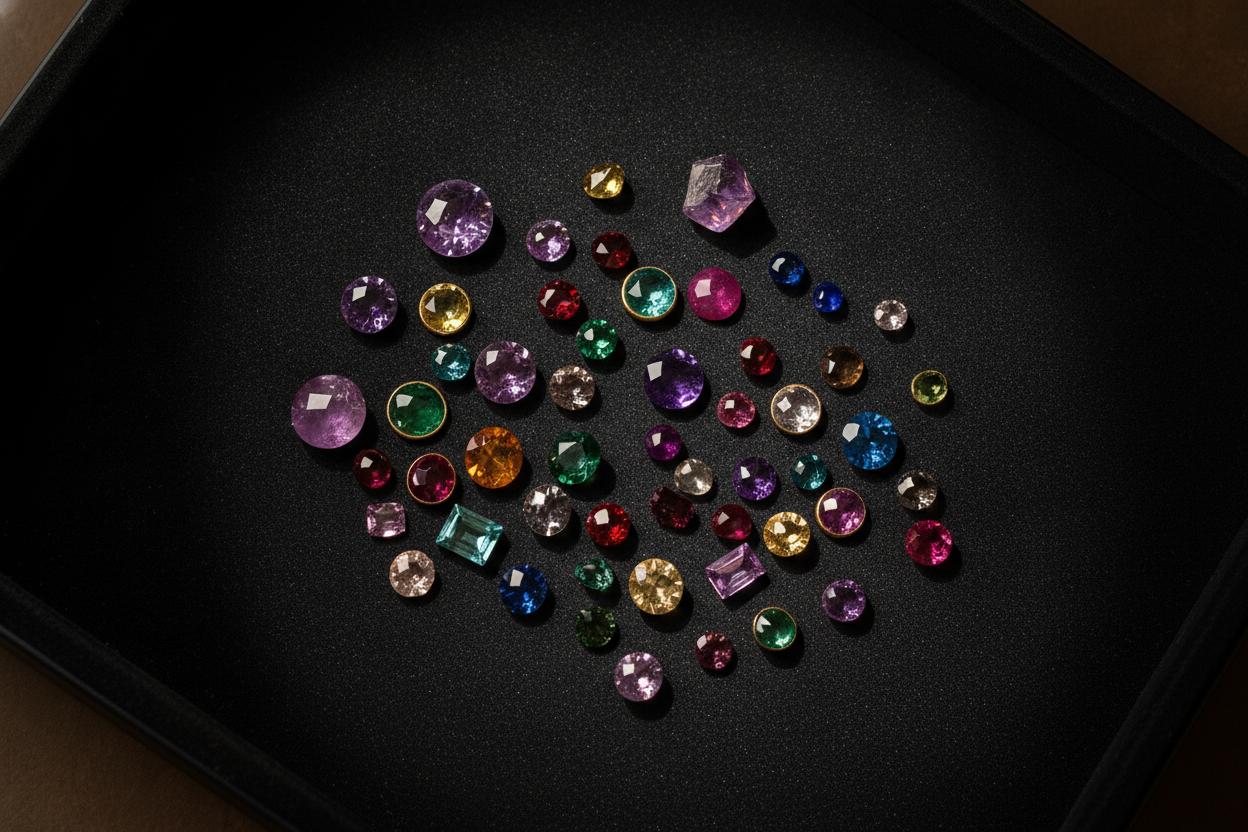
2019 Gem Fairs: Tucson vs Bangkok
The 2019 gem Fairs divided into two rival circuits: Tucson, clustered in late January and early February, and the Asian shows — principally Bangkok and Hong Kong — spread across spring and September. Tucson is where variety lives: rough, specimens, estate parcels and one-off collector stones spread across dozens of independent venues. The Asian fairs sit closer to the cutting factories, so they favour calibrated goods, matched parcels and repeatable production at tighter per-carat pricing. If you are hunting a single unusual stone, Tucson rewards legwork; if you are buying inventory you will need to reorder, Bangkok and Hong Kong are the more efficient rooms.
Both circuits sell the same species. What differs is who is standing behind the tray, and what that person can afford to let go for.
Two circuits, two economies
Tucson is not one fair but a loose federation of them. The AGTA GemFair and the GJX show anchor the coloured-stone trade, while a long tail of hotel and tent venues carries everything from Brazilian tourmaline rough to Sri Lankan sapphire parcels.
The Asian shows are structurally different. The Bangkok Gem and Jewelry Fair, run under Thailand's Department of International Trade Promotion, and the Hong Kong Jewellery and Gem Fair operate as manufacturer-facing trade events, with booths taken by cutting houses, treaters and factories rather than travelling dealers.
That single distinction drives almost every other difference. A Tucson dealer is often selling a finite pocket of goods they bought at origin; a Bangkok factory is selling capacity.
What each circuit does best
- Tucson: collector rarities, rough, unusual species, estate and old-cut material, single stones with character.
- Bangkok: heated and unheated sapphire and ruby, precision recutting, calibrated melee, deep parcels of one colour.
- Hong Kong: finished jewellery, pearls, jadeite, and the widest concentration of finance-backed buyers and sellers in one hall.
How to tell the goods apart on the floor
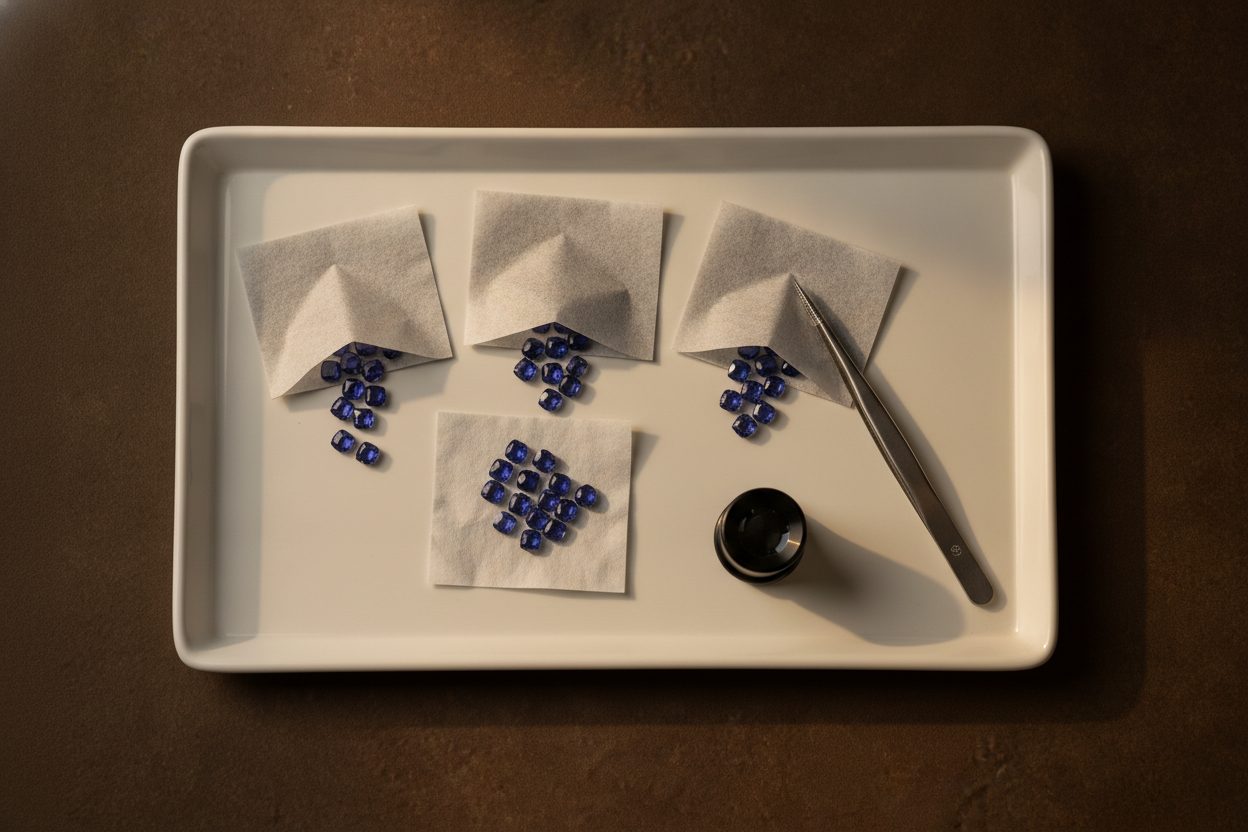
The clearest tell is parcel behaviour. At the Asian fairs, ask for twenty stones in the same hue at the same size and a factory will usually produce them; ask the same of a Tucson dealer and you will more often be shown three good ones and an apology.
Cutting style is the second tell. Bangkok and Chanthaburi-trained cutters optimise for yield and face-up colour, which means windows and bellied pavilions appear more often in commercial parcels; Tucson's American and European cutters lean toward precision faceting priced accordingly.
Treatment disclosure is the third. Heat is standard and openly stated across sapphire and ruby in Bangkok, and unheated goods are separated and priced as a distinct category. In Tucson, where stones pass through more hands, provenance and treatment history can be thinner — which is exactly where independent reports earn their fee.
Price and value: where the money sits
Standing nearer the source usually helps, but not uniformly. For calibrated commercial goods and mid-grade parcels, buying at the factory end of the chain in Bangkok removes a layer of margin, and the saving compounds across a large order.
For fine single stones, the logic inverts. A top unheated Ceylon sapphire or a fine Mozambique ruby is priced against a global collector market, not against local supply, so the same stone will carry a comparable ask in Tucson, Bangkok or Hong Kong.
Where Tucson genuinely undercuts is in the unloved and the unfashionable — spinel in odd colours, sphene, zircon, older cuts, and rough that no factory wants to programme. Value there comes from knowing what a stone can become after recutting.
The honest summary: buy volume in Asia, buy oddities in Arizona, and expect no discount on the truly fine anywhere.
Verification at the 2019 gem Fairs
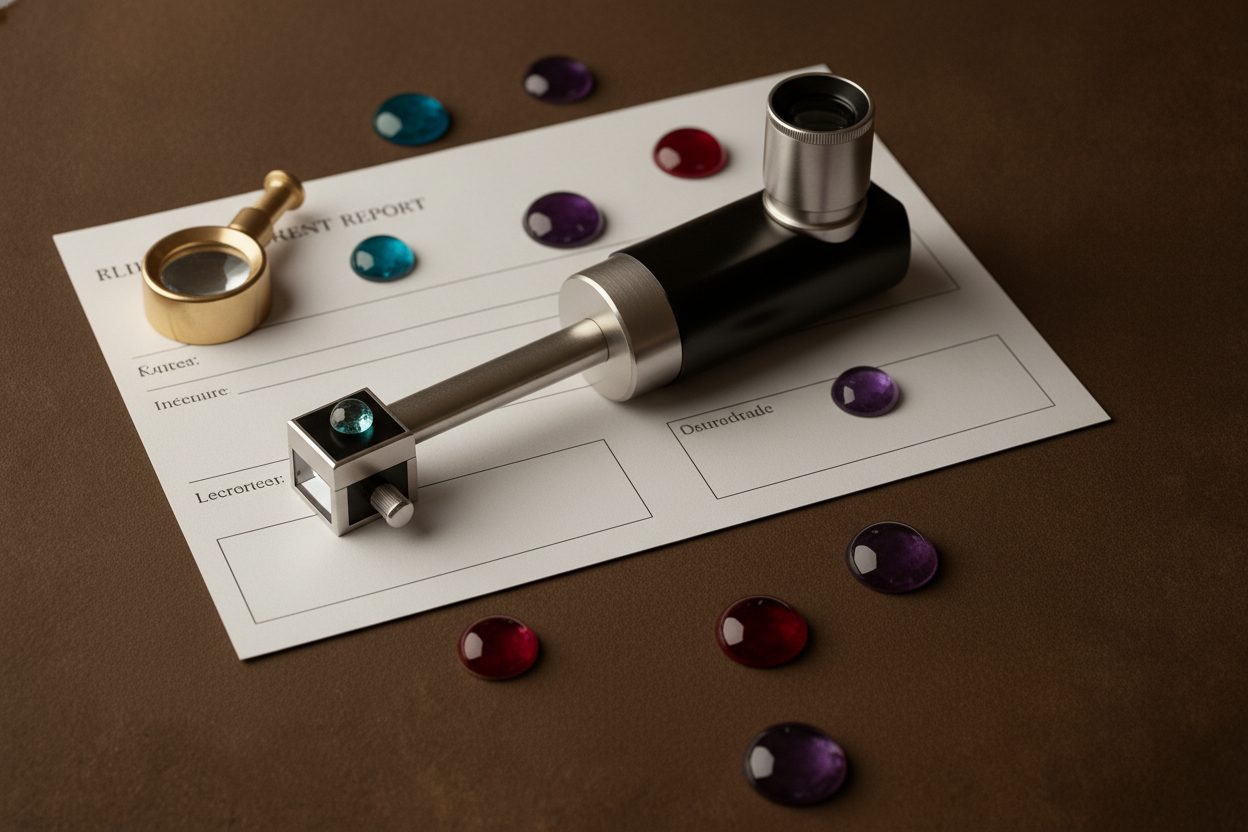
Both circuits host laboratory presence on or near the floor, and by 2019 this had become part of normal buying practice rather than a courtesy. GIA, the Gübelin Gem Lab, SSEF and AGL all serve the Western circuit; AIGS and GIT operate in Bangkok, with the Hong Kong shows carrying their own on-site testing.
Two categories should never be bought on a handshake. The first is any sapphire or ruby sold as unheated; the second is any stone whose origin premium — Kashmir, Burma, Colombia — is doing the pricing work.
Field instruments help but do not settle these questions. A refractometer will separate sapphire (roughly 1.76–1.77) from spinel (near 1.72) and both from cubic zirconia in seconds, and specific gravity will confirm the reading — but heat and origin are laboratory determinations.
Choosing which fair to attend
Match the fair to the job rather than to the reputation. A jeweller who needs 300 matched 3mm blue sapphires has one sensible destination; a private collector chasing a 6-carat colour-change garnet has another.
Consider also the calendar. The Tucson block falls early in the year, which makes it useful for setting a season's direction, while the September Asian fairs sit close enough to the fourth quarter to solve gaps rather than create plans.
And consider your own capacity to verify. Tucson demands more independent checking because the chain behind each stone is longer and less documented; the Asian fairs demand more scepticism about disclosure norms you may not share.
A practical comparison summary
- Widest species range: Tucson, by a considerable margin.
- Best parcel depth and repeatability: Bangkok.
- Best finished jewellery and pearl selection: Hong Kong.
- Best for rough and recutting projects: Tucson.
- Tightest pricing on commercial calibrated goods: Bangkok.
- Equal pricing on genuinely fine stones: all three.
Looking back at the 2019 gem fairs, the useful lesson was not that one circuit beat the other. It was that buyers who arrived with a defined brief, a laboratory relationship and a firm ceiling left with better stones than those who arrived to browse.
Frequently asked questions
Which 2019 gem fair was better for buying sapphire?+
Bangkok, for depth of parcels and factory-level pricing on heated and calibrated goods, with clear separation of unheated material. For a single fine unheated stone, pricing was broadly comparable across Tucson, Bangkok and Hong Kong, since such stones are priced against a global collector market.
Can a private buyer attend these fairs, or are they trade-only?+
The Asian fairs and the AGTA GemFair in Tucson operate as trade events requiring business credentials. Several Tucson venues, however, admit the public on certain days, which is why Tucson remains the more accessible circuit for private collectors.
Is it safe to buy an unheated sapphire at a gem fair without a report?+
No. Heat treatment cannot be reliably determined by eye or with field instruments, and the unheated premium is significant. Buy only with a report from a recognised laboratory such as GIA, SSEF, Gübelin, AGL, GIT or AIGS, or make the sale conditional on one.
What can I verify myself on the show floor?+
Species identification is largely within reach: a refractometer separates sapphire (about 1.76–1.77) from spinel (about 1.72), and specific gravity confirms it. Hardness, crystal system and inclusion patterns also help, but origin and treatment require laboratory testing.
Why are cutting styles different between the two circuits?+
Asian cutting centres traditionally optimise for weight retention and face-up colour, which produces more windowed or deep pavilions in commercial parcels. Western precision cutters, well represented in Tucson, prioritise optical performance and price their work accordingly.
Is buying rough at a gem fair worth it?+
It can be, and Tucson is the stronger circuit for it, since factories rarely release material they can programme themselves. It only pays if you can assess yield and colour behaviour in the rough and have a trusted cutter, otherwise faceted stones are the safer purchase.
From our Journal
Buying guides, origin stories, and notes from the trade.