Gemstone Investment Basics: Origin
Gemstone investment basics reduce to three questions: how rare is the material, how fine is the individual stone, and how well documented is its origin. Provenance matters because the market pays sustained premiums for stones from historic sources — Kashmir sapphire, Mogok ruby, Colombian emerald — where a specific geology produced colour and texture that later deposits have never reliably matched. For a serious collector, the origin opinion printed on a report from a respected laboratory deserves as much scrutiny as the colour description, because it can account for a large part of what you are paying.
Origin alone is not value. A dull Burmese ruby is still a dull ruby. Origin acts as a multiplier on quality, not a substitute for it.
Why origin moves the price
Coloured stones have no fungible benchmark. Unlike bullion, every ruby is a one-off, so the trade leans on shorthand that signals a likely quality band — and origin is the oldest shorthand there is.
Behind the shorthand sits real geology. A deposit's host rock and trace-element chemistry set the limits of what colour can form there, and some of those limits are unusually flattering.
The second driver is supply. Kashmir's Padar valley workings, discovered after a landslide in the 1880s, were productive for only a brief period before the finest material ran out. A closed source with a legendary reputation is the clearest case of scarcity the coloured-stone market offers.
The classic sources
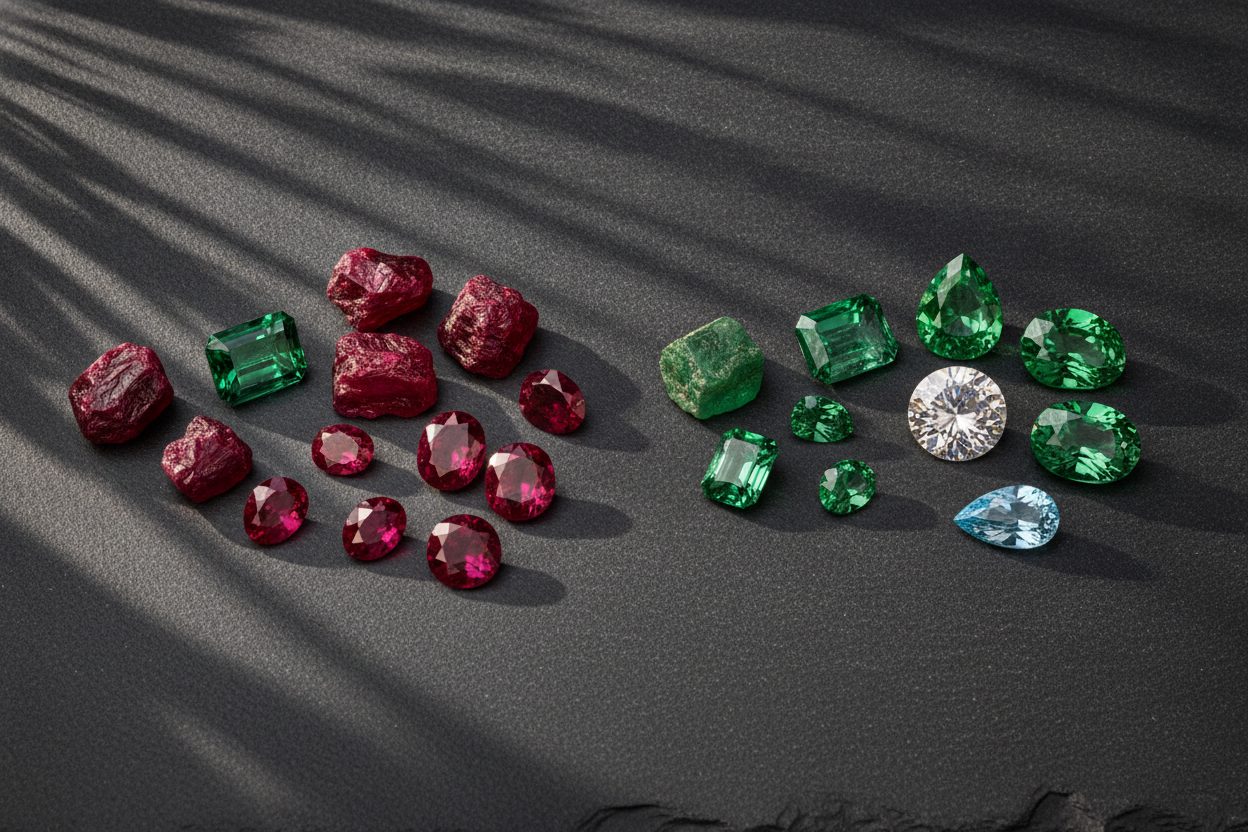
A collector should be able to name the deposits that carry a premium and understand why.
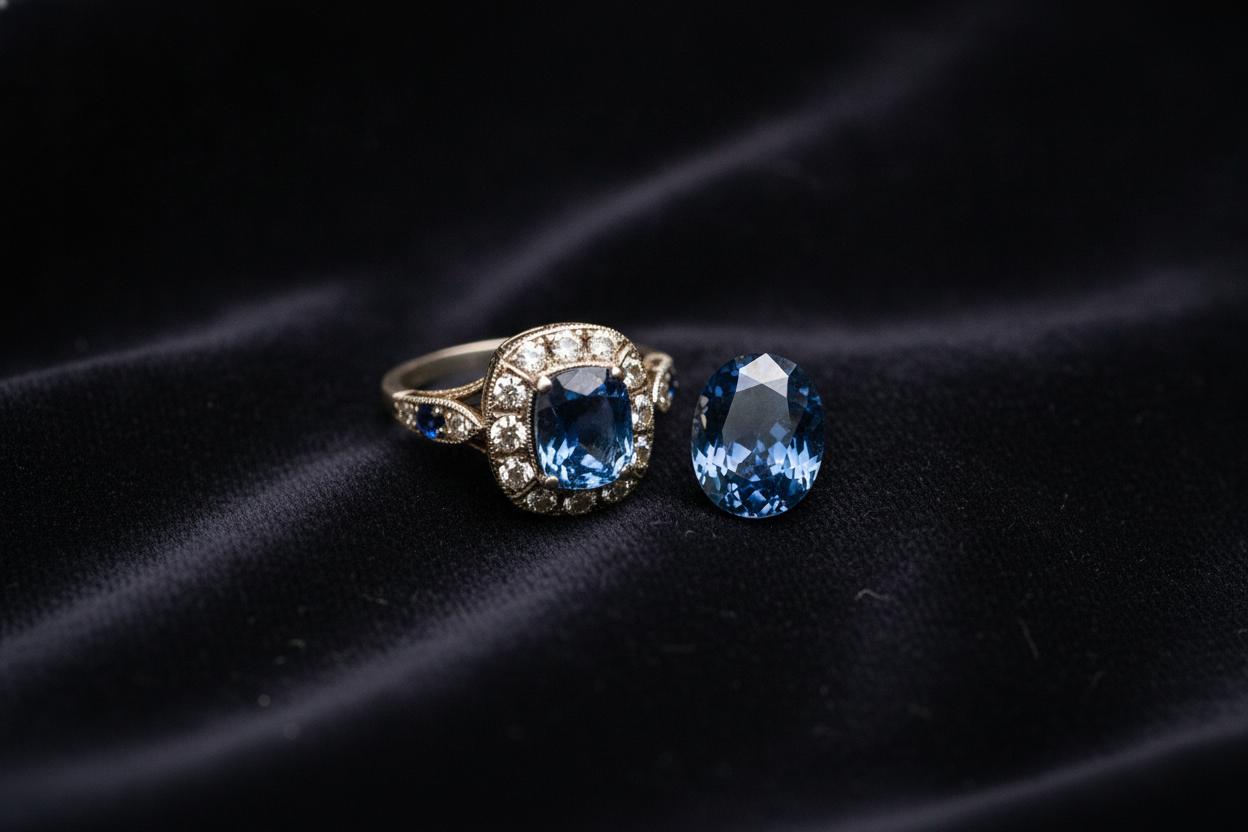
- Kashmir — sapphire of a velvety, slightly sleepy blue, caused by fine light-scattering inclusions. Effectively historic material.
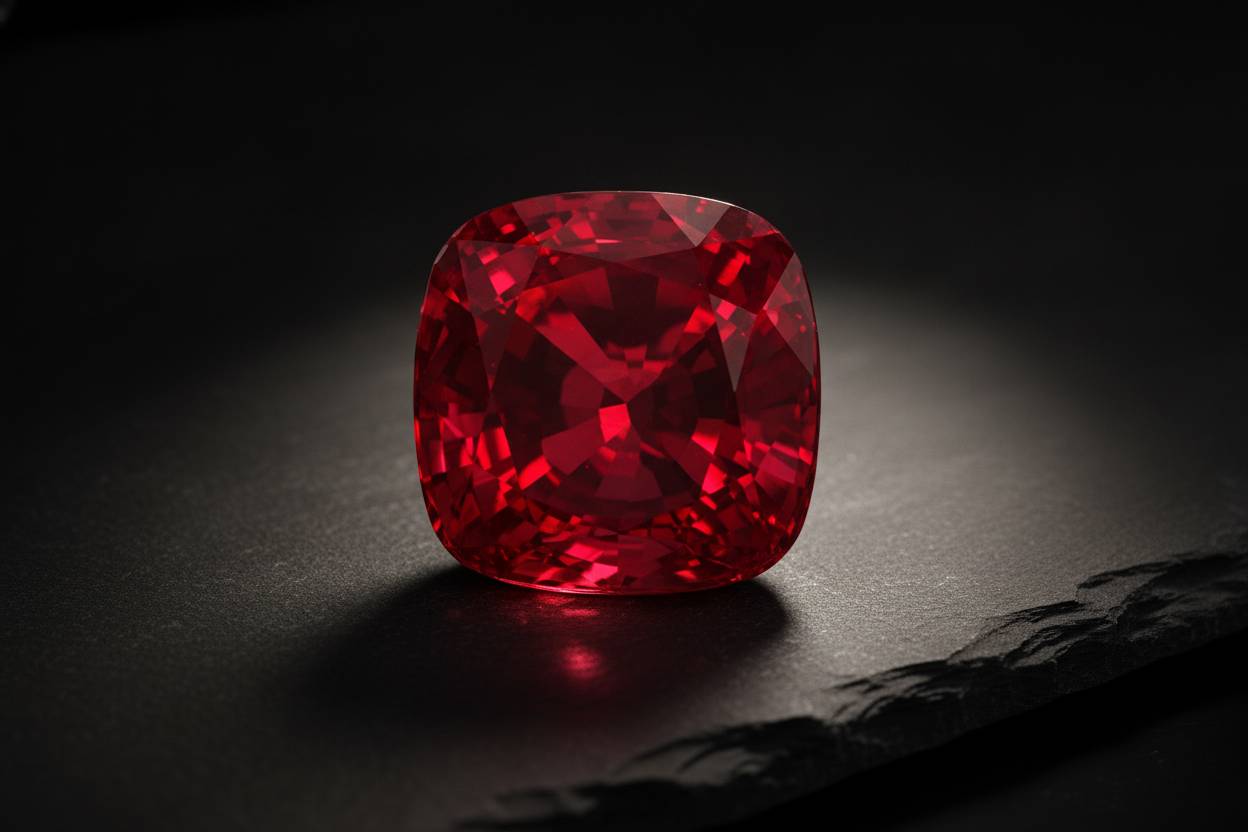
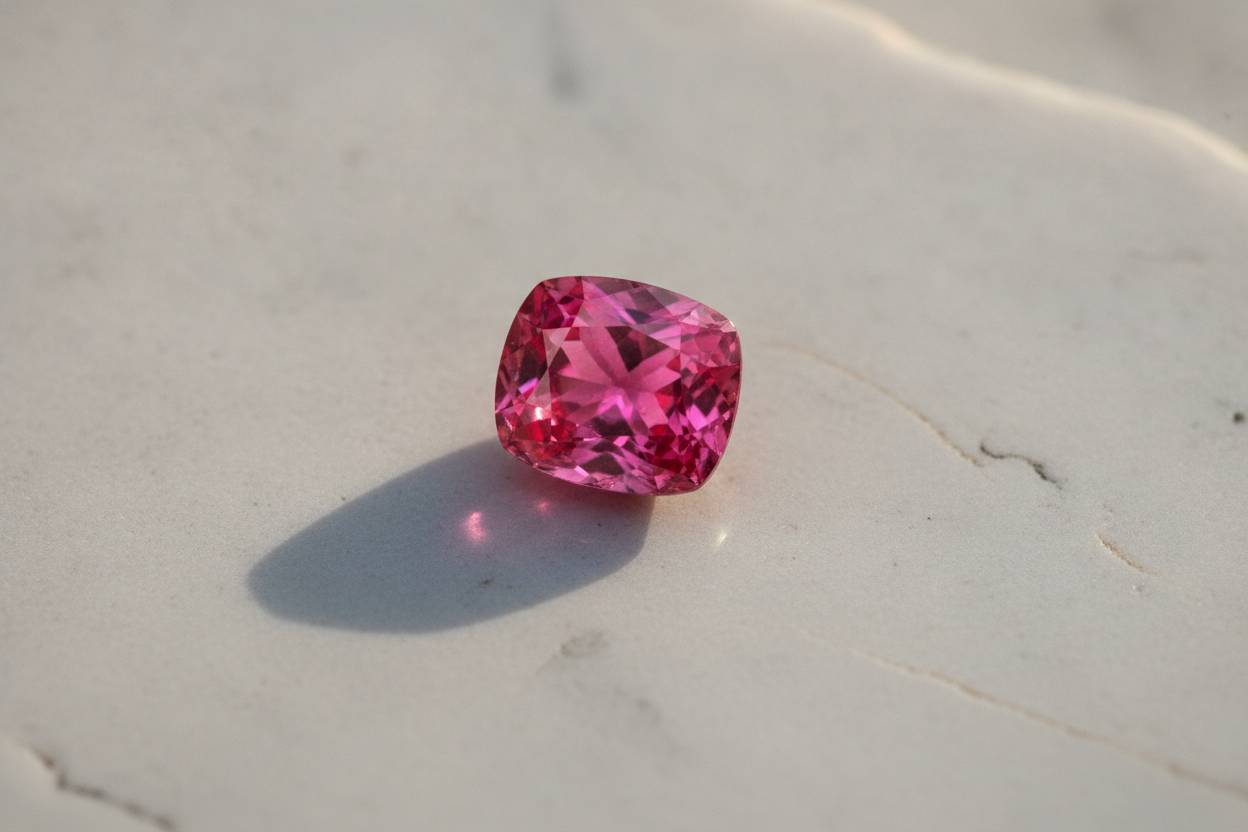
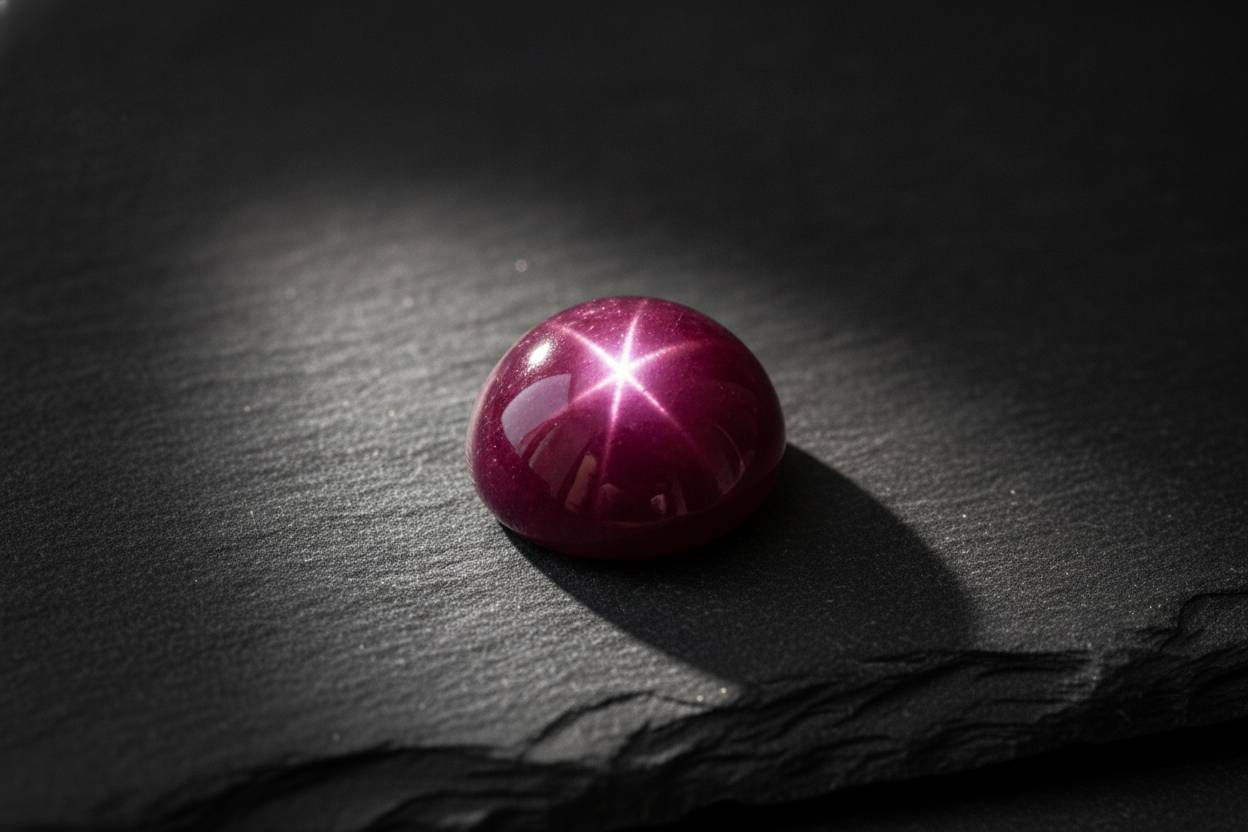
- Mogok, Myanmar — marble-hosted ruby, low in iron, which allows strong red fluorescence and the saturated red the trade calls pigeon's blood. Mogok also yields fine red and pink spinel.
- Sri Lanka — alluvial gem gravels around Ratnapura and Elahera, source of Ceylon sapphire in a wide colour range, including padparadscha. Bright, lively blues rather than inky ones.
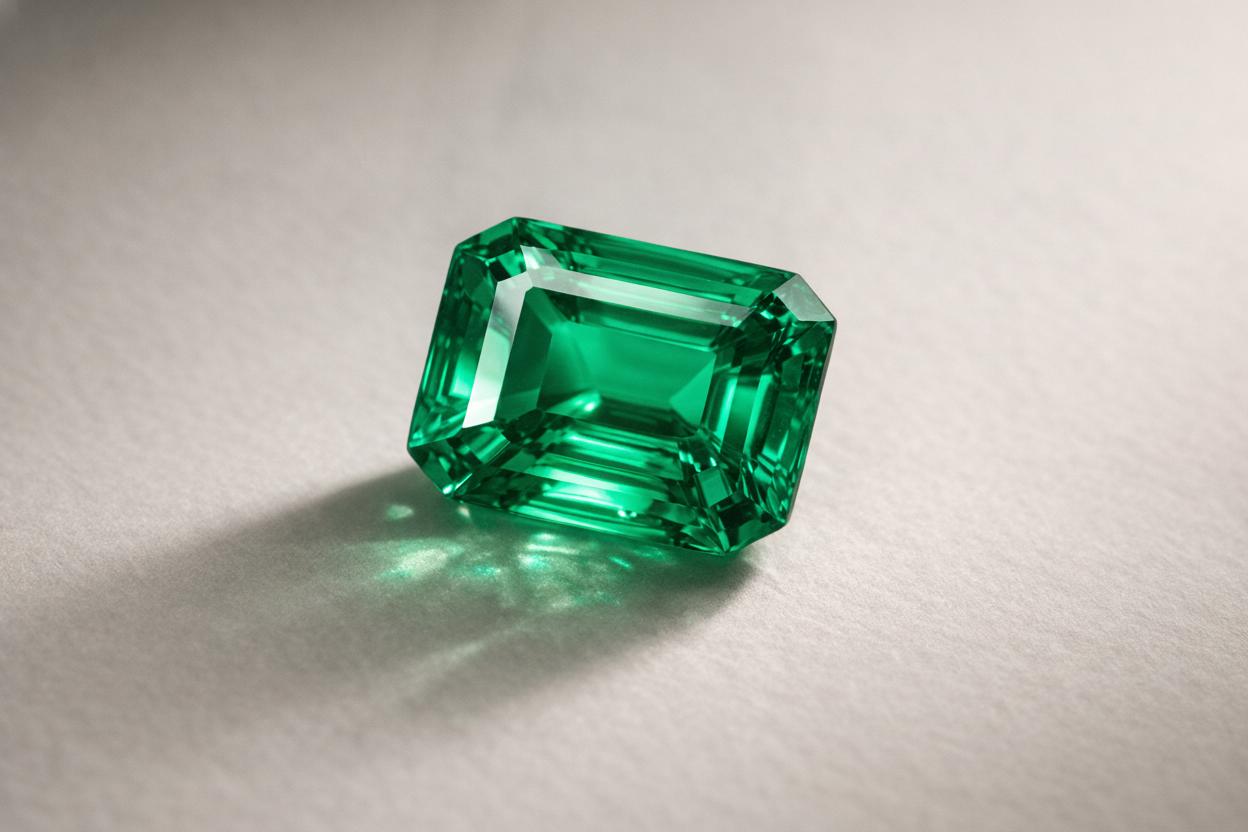
- Colombia — Muzo, Chivor and Coscuez, where emerald formed in black shales, giving a slightly warm, pure green and characteristic three-phase inclusions.
- Zambia — Kafubu emerald, often cleaner and cooler, with a bluish cast from higher iron.
- Mozambique — Montepuez ruby, amphibolite-hosted and more iron-rich, now a major supplier of fine material.
- Madagascar — sapphire from Ilakaka and pink to orange stones from the Bekily region.
- Brazil — the original copper-bearing tourmaline from São José da Batalha in Paraíba state, with later copper-bearing finds in Nigeria and Mozambique.
- Tanzania — Merelani for tanzanite, a single commercial source worldwide, and Mahenge for vivid pink-red spinel.
Note how several of these are recent. Mozambique ruby and Zambian emerald compete on quality while trading below the classic names, which is where value often sits for a patient buyer.
How geology shapes colour
Corundum is aluminium oxide, trigonal, Mohs 9, with a refractive index near 1.762–1.770 and specific gravity around 4.00. Those constants hold everywhere; what varies is the handful of trace elements the host rock supplied.
Iron is the critical variable in ruby and blue sapphire. Low-iron, marble-hosted rubies fluoresce strongly and appear to glow; iron-rich basalt-related stones look darker and more subdued in the same light.
In emerald, chromium and vanadium produce green while iron pushes it bluer, which is why Colombian and Zambian stones read differently side by side. Inclusion environment matters too: Colombian emeralds typically carry three-phase inclusions of liquid, gas and a salt crystal, a fingerprint of their hydrothermal formation.
More from Sapphire



How labs determine origin
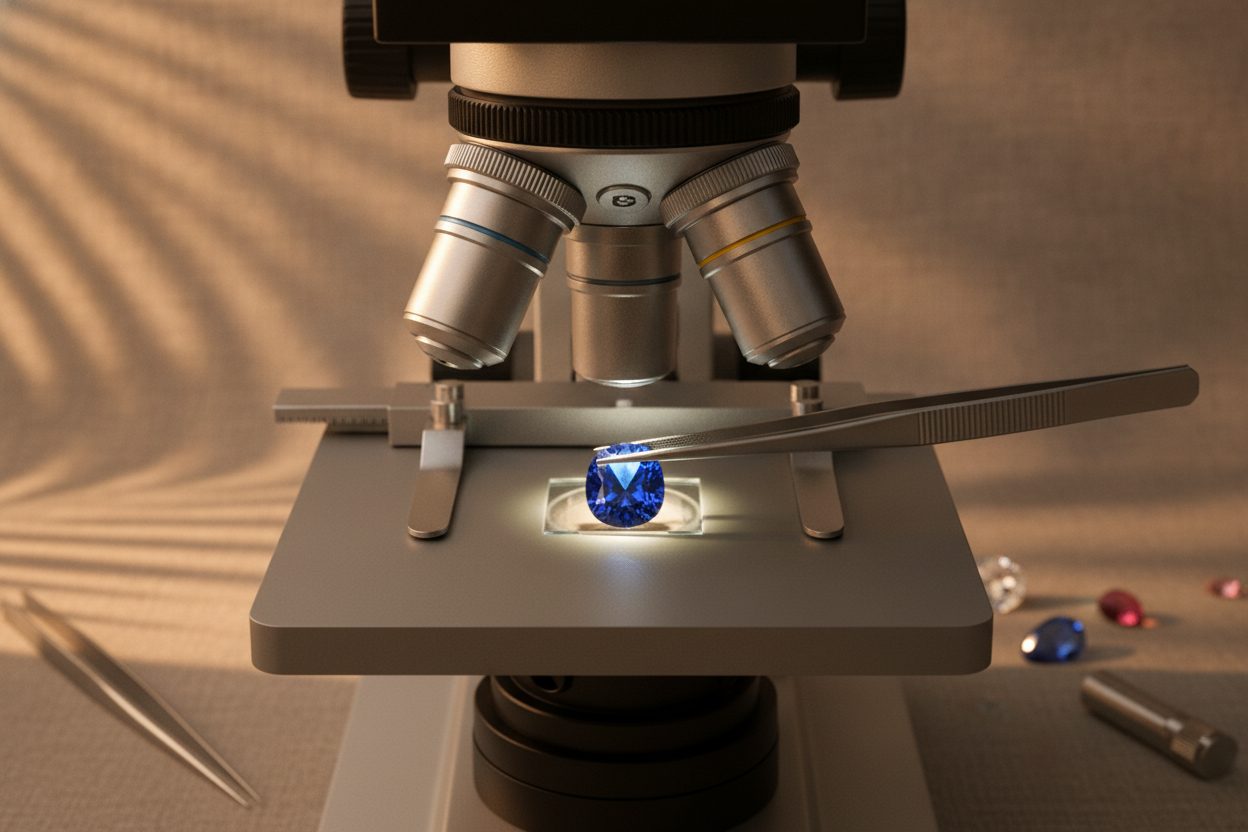
Origin determination is a reasoned opinion, not a measurement. Laboratories such as GIA, SSEF, Gübelin, AGL and GRS combine several lines of evidence before committing to a country.
What the laboratory examines
- Inclusion study — microscopic mineral inclusions, growth structures and fluid features that reflect the host rock.
- Trace-element chemistry — ratios of iron, gallium, chromium, vanadium, titanium and magnesium, measured by techniques including LA-ICP-MS.
- Spectroscopy — UV-Vis-NIR and FTIR spectra, which also help detect heat and filling.
- Reference comparison — matching results against collections of samples physically dug from known mines.
The method has real limits. Metamorphic sapphires from Sri Lanka and Madagascar can overlap chemically, and a clean stone with few inclusions gives the gemmologist less to work with.
When evidence is thin, a careful laboratory will say the origin is inconclusive. That is an honest answer, and two reputable labs occasionally reach different conclusions on the same stone.
Gemstone investment basics in practice
Treat the report as part of the asset. For any stone where origin carries a premium, buy with a recent report from a laboratory the international trade recognises, and keep it with the stone.
Origin premiums concentrate at the top of the market. Untreated, fine-colour stones in meaningful sizes are where a Burmese or Kashmir attribution changes the number; on heated commercial goods it rarely moves the needle.
Durability underwrites long holding periods. Corundum at Mohs 9 and spinel at Mohs 8 tolerate wear and recutting far better than emerald, which is Mohs 7.5 to 8 but structurally compromised by fissures and almost always filled.
Where origin claims go wrong
Most disappointment comes from paperwork rather than stones. A memo describing a sapphire as Ceylon on a seller's letterhead is a sales statement, not a laboratory opinion.
Watch for older reports that predate current chemical testing, for origin stated without any treatment comment, and for trade names used as if they were places. Ceylon, pigeon's blood and royal blue describe appearance or tradition; only a laboratory opinion addresses geography.
The soundest discipline is simple: buy the stone first on colour, life and condition, then let the origin and the report confirm what your eye already decided. Provenance rewards collectors who would have wanted the gem regardless.
Frequently asked questions
Does the cut of a gemstone affect its investment value?+
Yes. Cut controls how much of a stone's colour and brightness you actually see, and a poorly proportioned stone with windowing or extinction sells at a clear discount. Coloured stones are cut to retain weight more often than diamonds, so judging face-up performance rather than carat weight alone is essential.
Is origin more important than colour when buying a coloured stone?+
No. Colour, clarity and cut determine the base value of a stone, and origin acts as a premium on top of that. A Kashmir or Burmese attribution adds little to a mediocre gem, but can add substantially to an outstanding one.
Can a laboratory always tell where a gemstone came from?+
Not always. Origin determination relies on inclusions, trace-element chemistry and spectroscopy compared against reference stones of known provenance, and some deposits overlap chemically. Reputable laboratories will state that an origin is inconclusive rather than guess.
Which laboratories are trusted for origin reports?+
GIA, SSEF, Gübelin, AGL and GRS are the names most widely accepted in the international trade for origin and treatment opinions. For stones where origin carries a premium, a recent report from one of these is standard practice.
Are newer sources like Mozambique and Zambia worth collecting?+
They can be. Montepuez rubies and Kafubu emeralds reach fine quality while generally trading below equivalent Burmese or Colombian material. Buyers focused on the stone itself rather than the country often find better value there.
Should I only buy untreated stones?+
Untreated stones of fine quality are scarcer and carry the strongest premiums, so they suit long-term holding best. Heat alone is accepted across the trade and well disclosed; the treatments to approach with caution are fracture filling, diffusion and dyeing, all of which should be stated on the report.
From our Journal
Buying guides, origin stories, and notes from the trade.