Myanmar's 11,000-Carat Ruby Explained
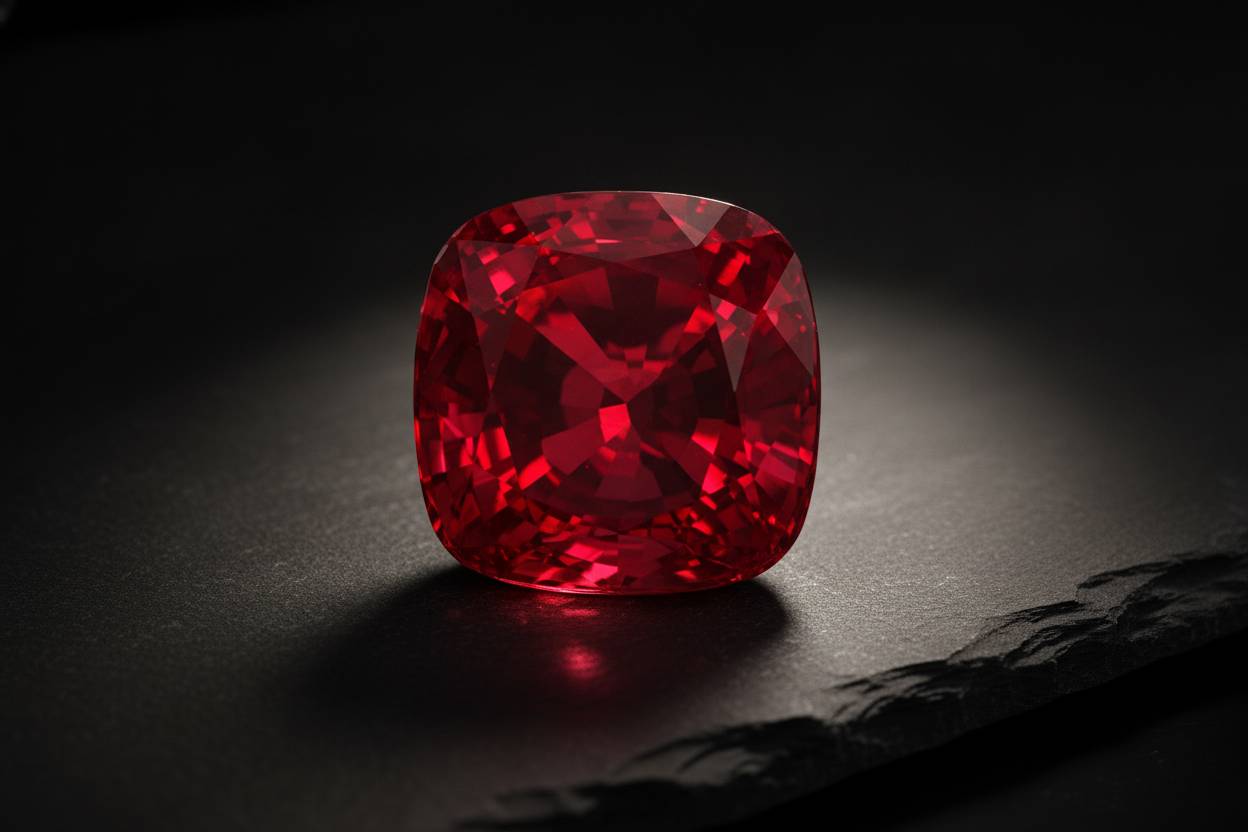
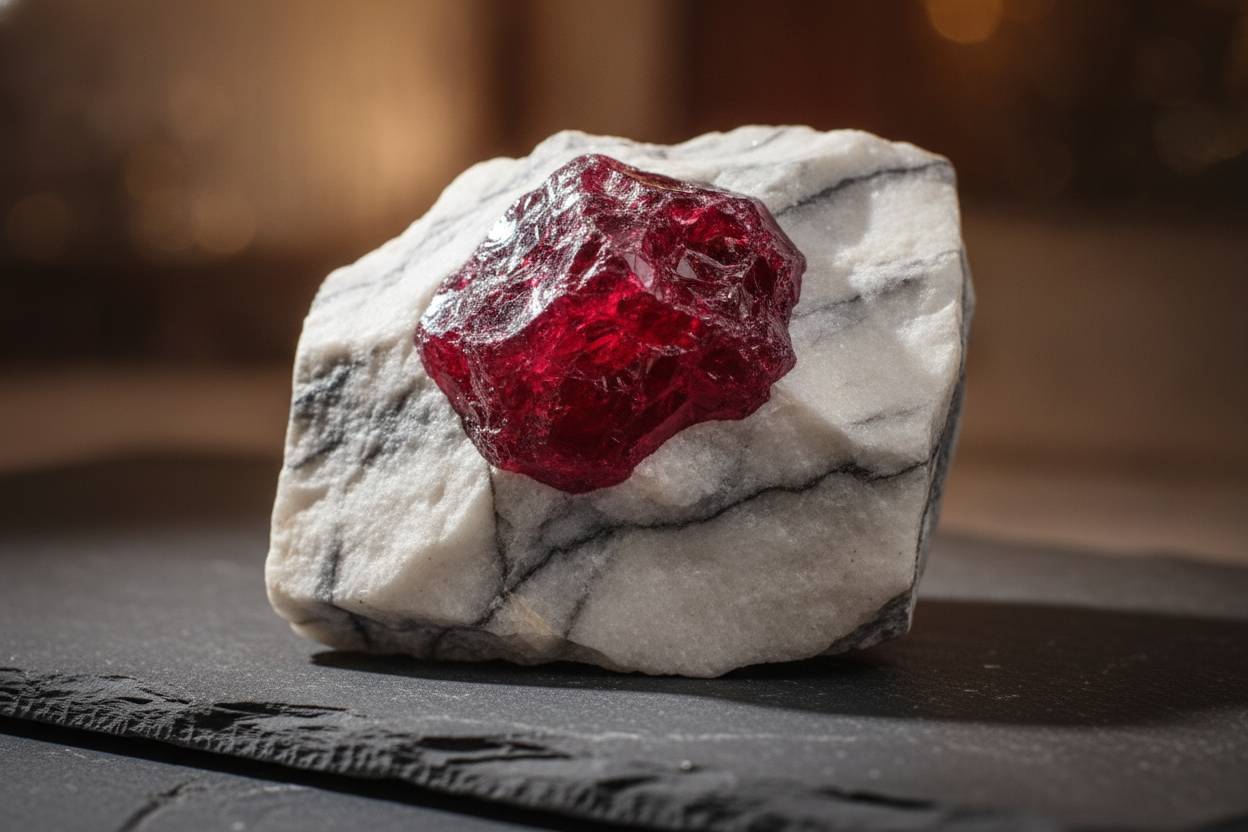
An 11,000-carat ruby is a single piece of rough weighing roughly 2.2 kilograms, since one carat is fixed at 0.2 grams. Reports of finds on this scale emerge from Myanmar's ruby belts every few years, and they almost always describe opaque to semi-translucent corundum destined for carving, cabochons or museum display — not a faceted gem of that weight. The significance of a Myanmar 11000 carat ruby is therefore cultural and geological far more than commercial: it is a reminder that the Mogok valley still produces red corundum in sizes no other source reliably matches, and that in Burmese tradition a stone of this magnitude has never been treated as an ordinary commodity.
Myanmar 11000 carat ruby in context
Large rough is not rare because red corundum is rare; it is rare because clean red corundum is. Chromium, the element that colours ruby, also strains the crystal lattice as it substitutes for aluminium, which is why ruby so often grows small, fractured and included.
A multi-kilogram crystal is therefore a geological event rather than a market one. It tells you the host rock allowed uninterrupted growth over a long period — something the marbles of the Mogok Stone Tract have done for a very long time.
Buyers should separate two questions that press reports routinely merge. How much does the stone weigh, and how much of it would survive as transparent, faceted gem material? The second number is almost always a tiny fraction of the first.
Ruby's meaning in Burma
In Burmese, ruby is padamya, and the stone occupies a position in local culture that no other gem shares. Sanskrit texts had already named ruby ratnaraj — king of gems — and that hierarchy travelled with Buddhism and trade into upper Burma.
The best-documented piece of Burmese ruby lore concerns warriors who were said to implant small rubies beneath the skin to confer invulnerability in battle. The practice is recorded in European travellers' accounts and repeated in standard gemmological histories, most thoroughly in Richard Hughes's work on ruby and sapphire.
What matters for a modern buyer is not whether the belief was literally true. It is that ruby in this region was understood as a stone of sovereignty, protection and life force — a meaning attached to the colour of blood, not invented by marketing.
Mogok, valley of rubies
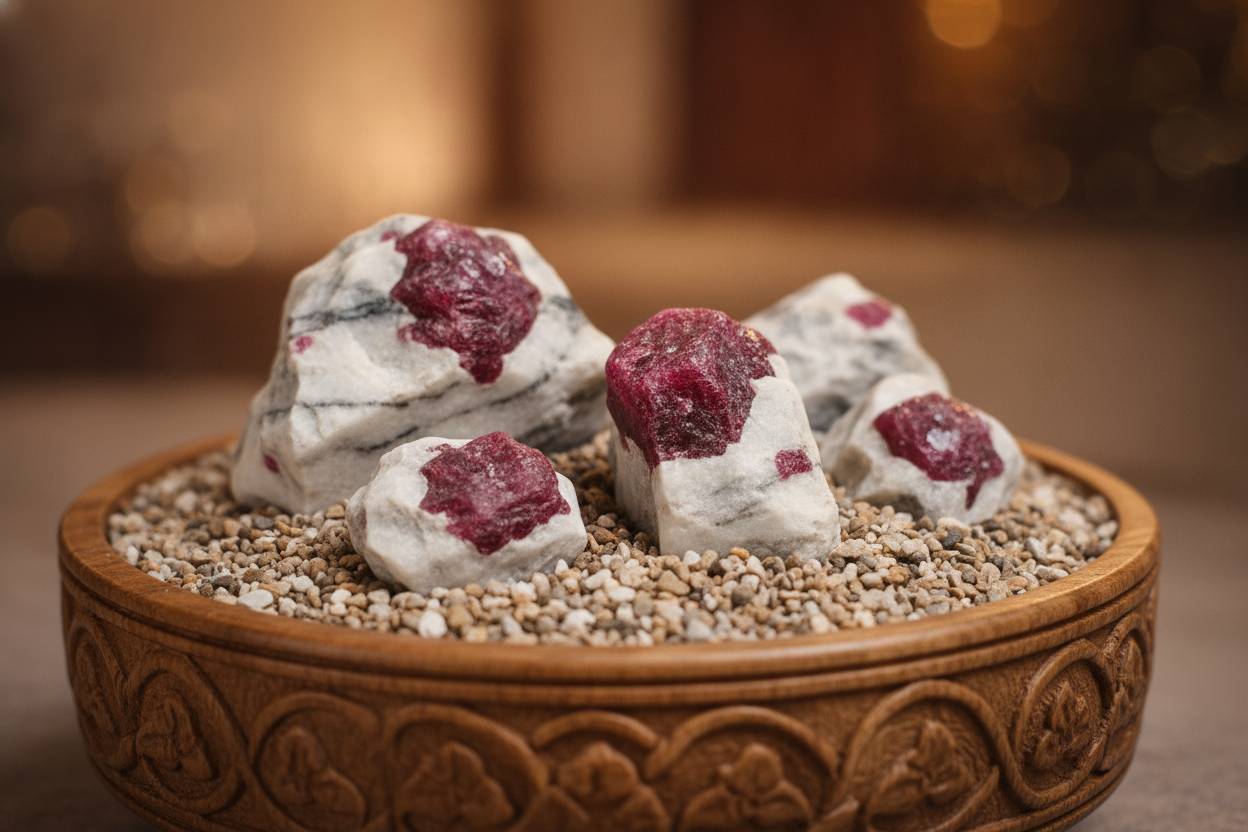
Mogok lies in the Mandalay Region, in a belt of metamorphosed limestone where ruby, spinel and sapphire occur together. Mining there is centuries old, and the tract came under direct Burmese crown control in the late sixteenth century.
That royal control produced one of the most telling traditions in gem history. Stones above a certain size belonged to the king by right, which meant a miner who found exceptional rough faced surrendering it without compensation.
Trade accounts record the predictable consequence: large crystals were sometimes broken into smaller pieces before anyone official saw them. The legend of the Nga Mauk ruby, a famous stone said to have been split and partly concealed from the court, survives as the best-known version of that story.
Set against this history, a publicly announced 11,000-carat find represents a genuine reversal. For most of Mogok's past, the rational response to a giant ruby was to hide it.
More from Ruby
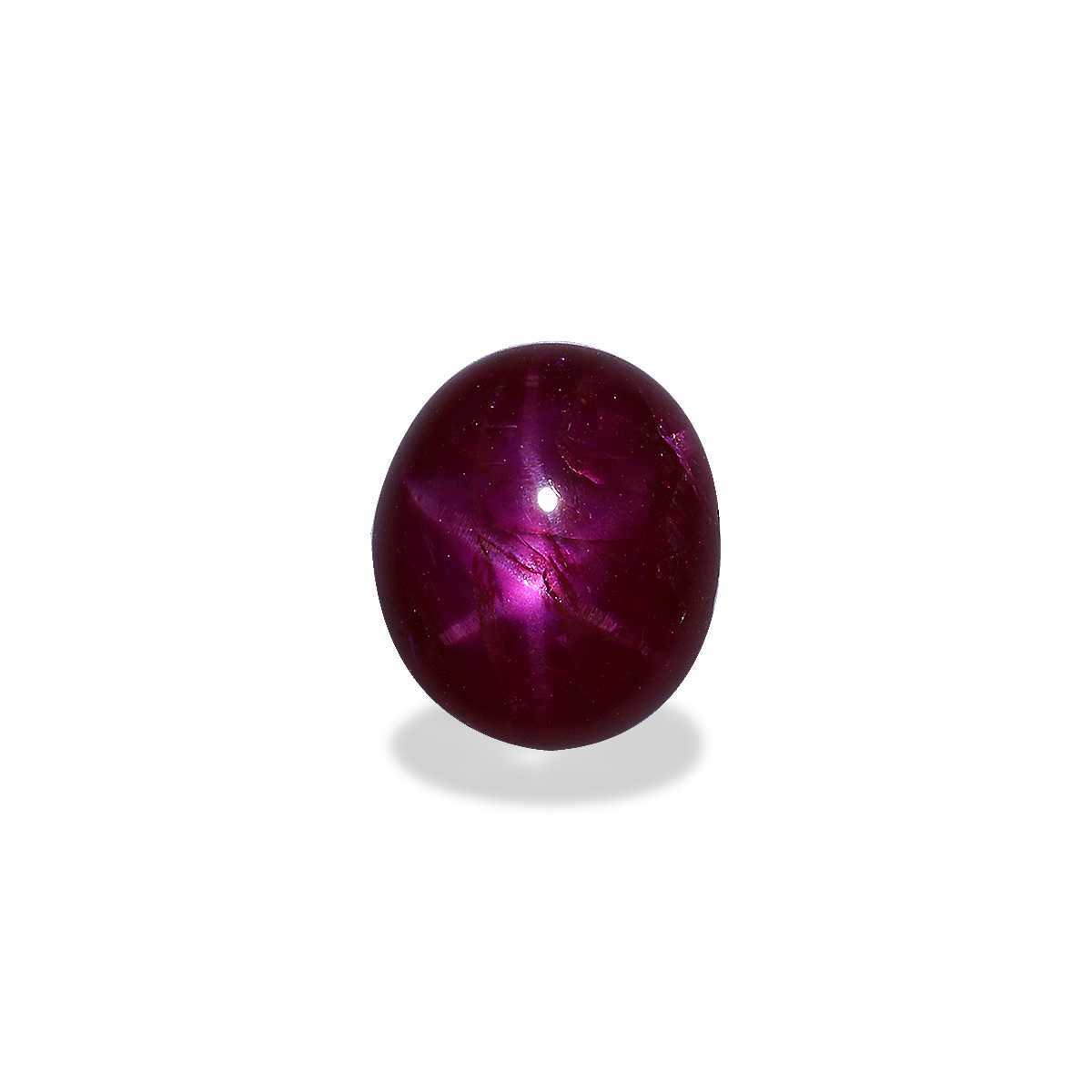
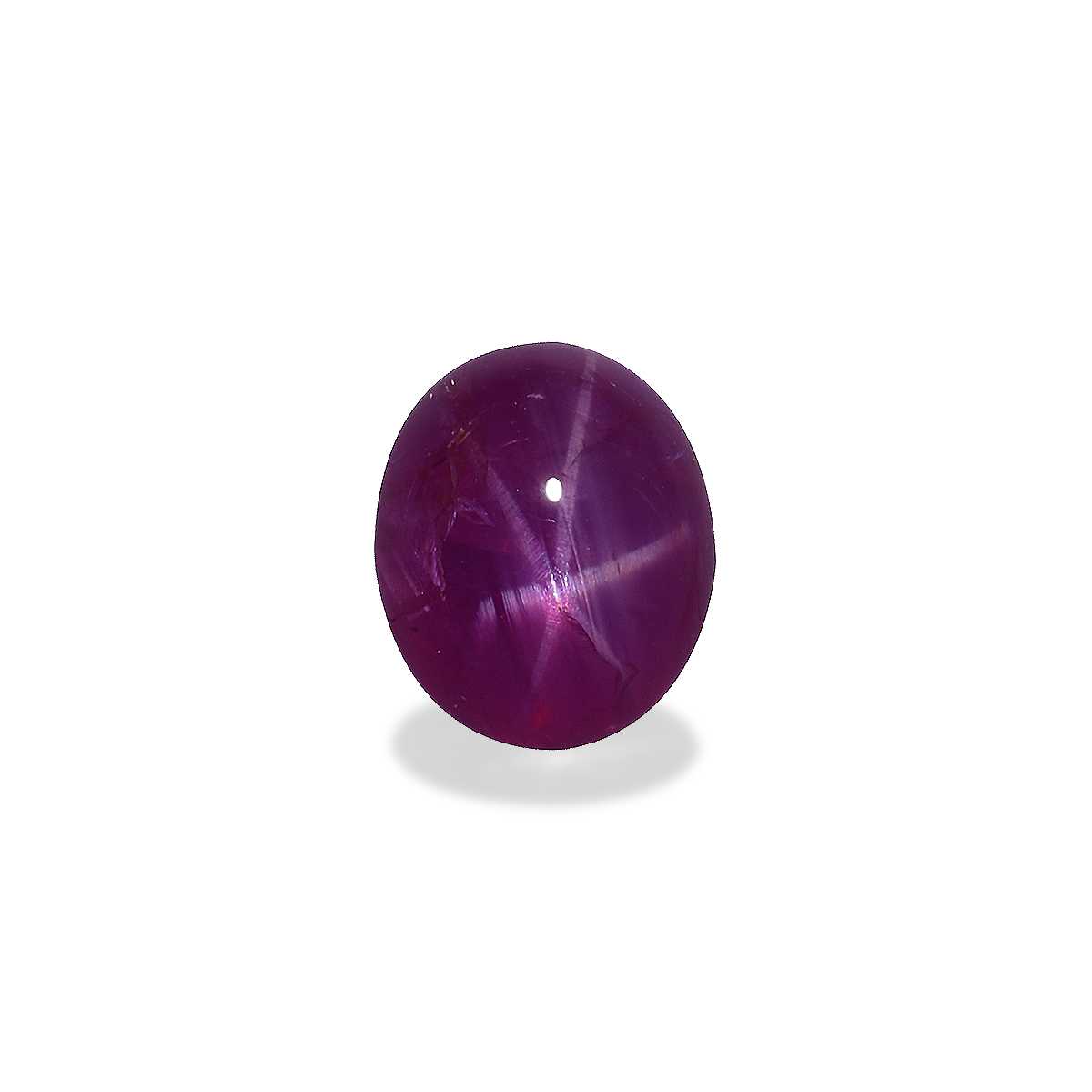
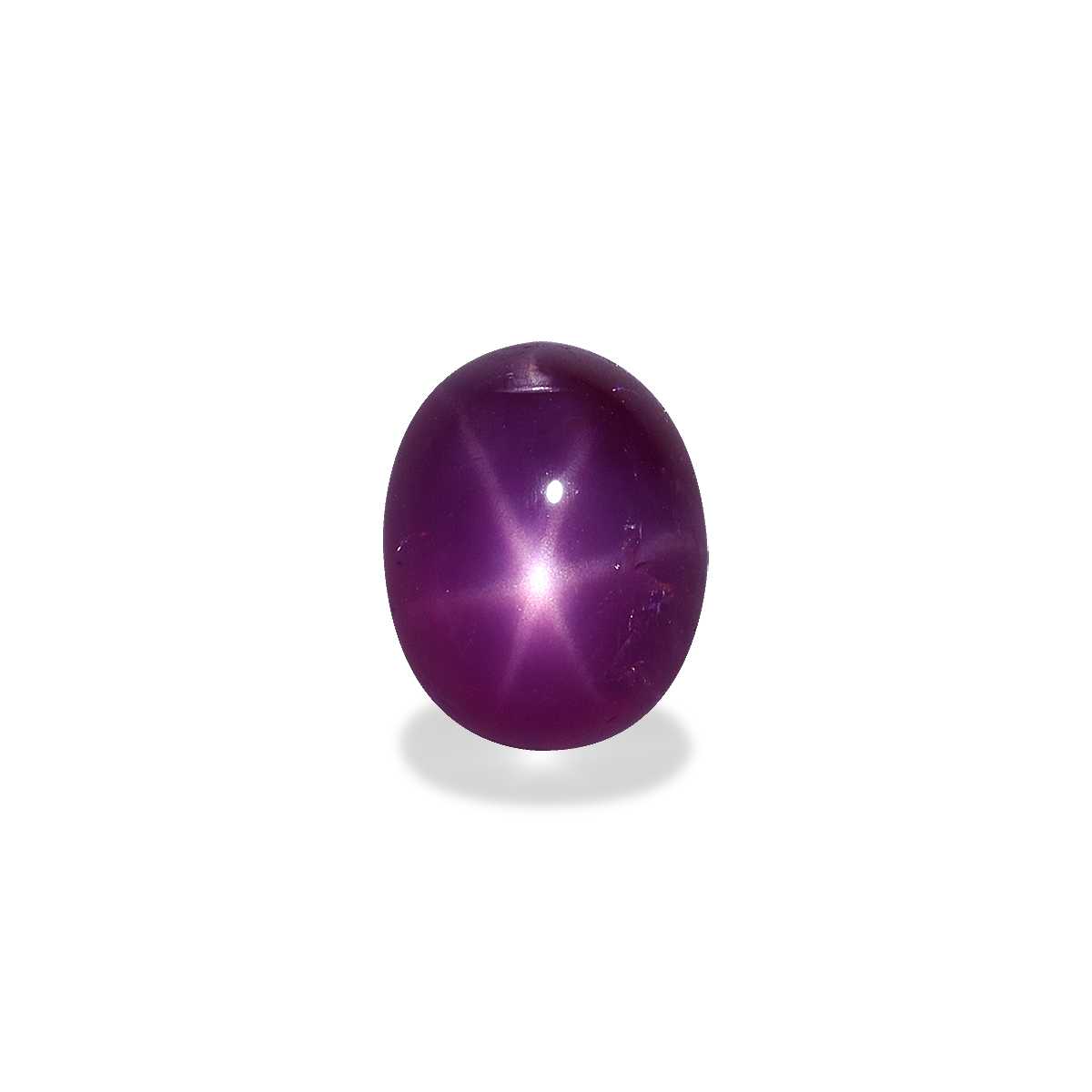
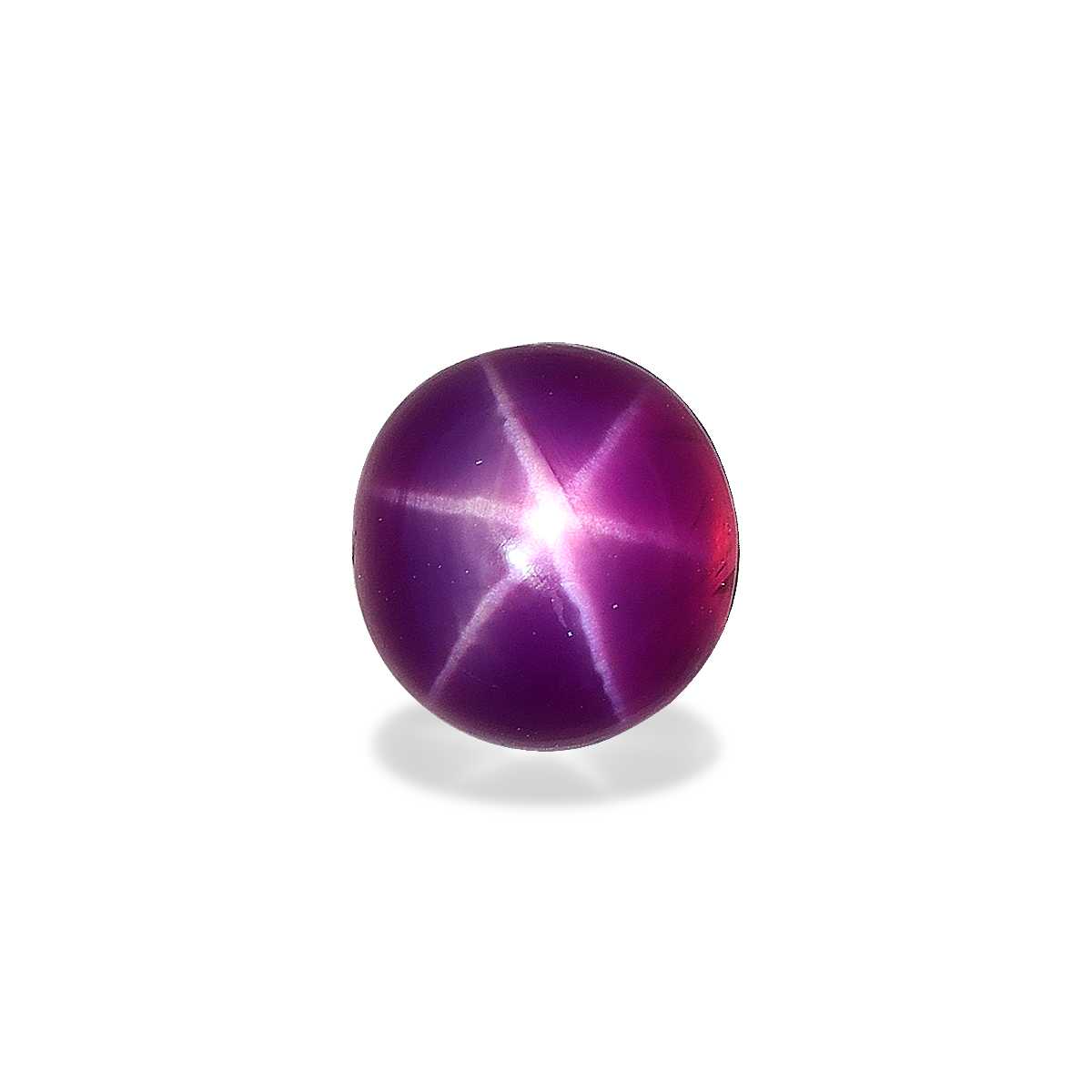
What ruby actually is
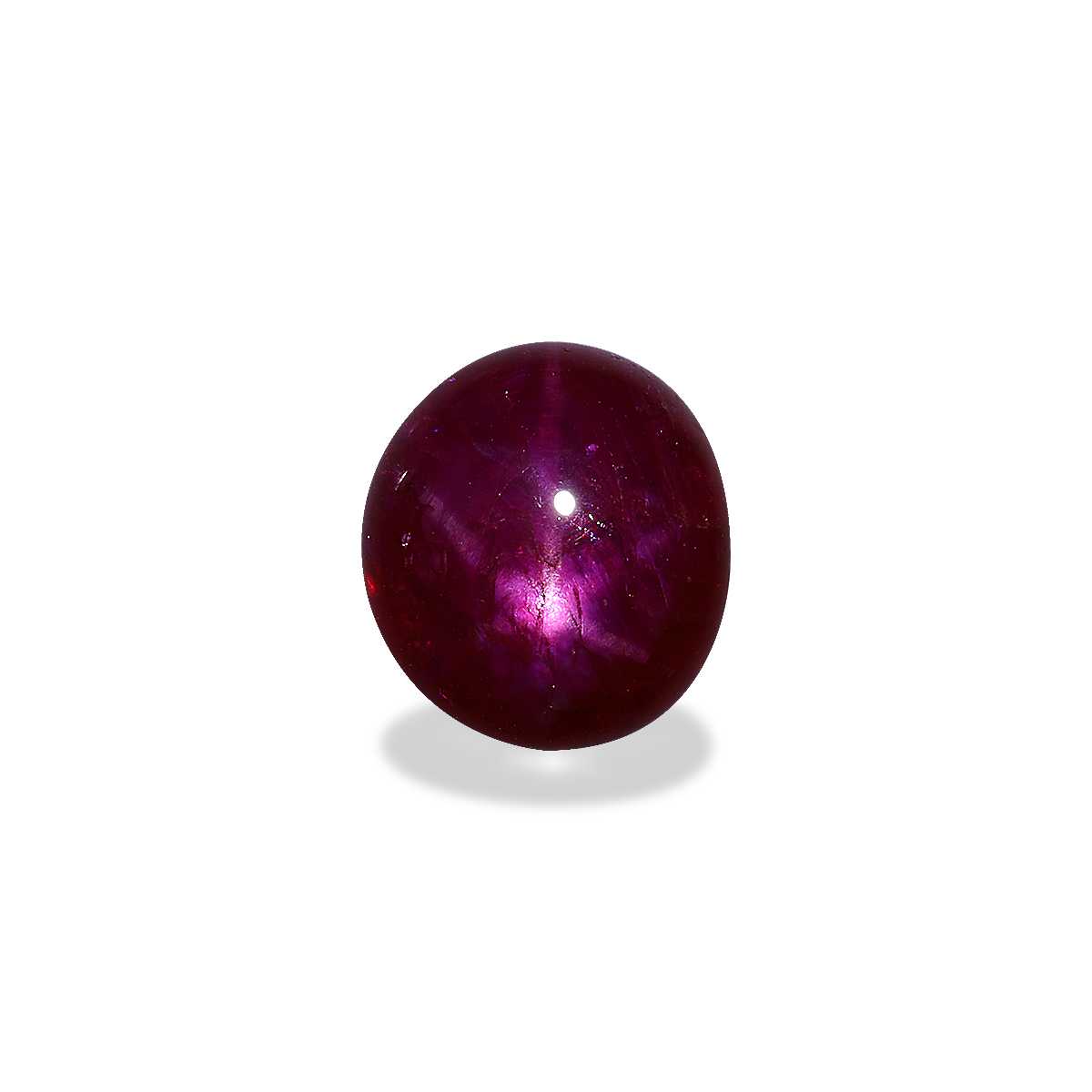
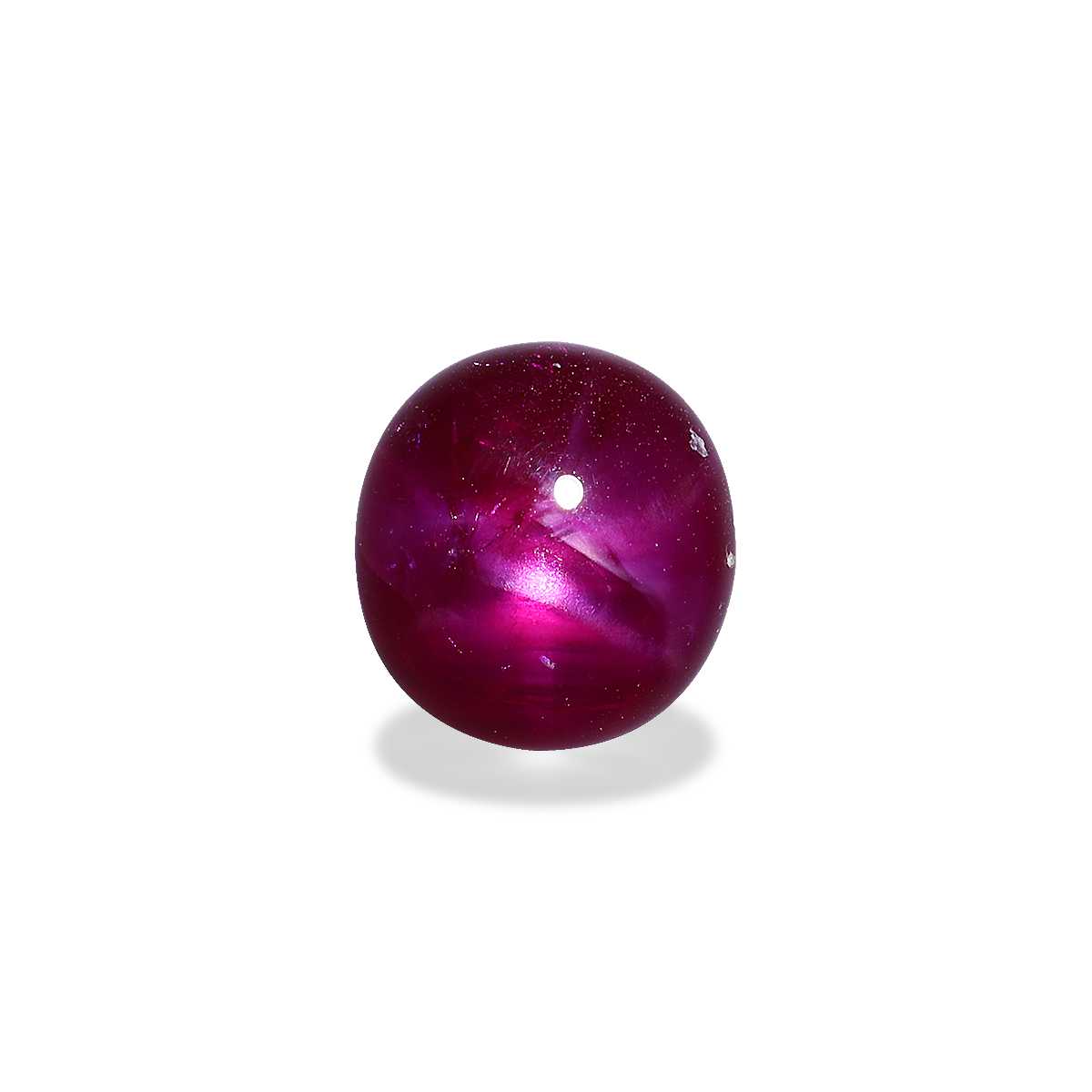
Ruby is the red variety of corundum, aluminium oxide, coloured by trace chromium. Sapphire is the same species in every other colour, which is why the two share identical physical constants.
- Crystal system: trigonal
- Mohs hardness: 9
- Refractive index: approximately 1.762–1.770, uniaxial negative
- Specific gravity: around 4.00
Burmese ruby is distinguished chemically by low iron content. Iron quenches fluorescence, so Mogok material typically glows strongly red under ultraviolet light and in sunlight — the optical basis of the colour that the trade calls pigeon's blood.
Hardness of 9 makes ruby second only to diamond among commonly worn gems, with no cleavage. That durability is one reason rubies survive as heirlooms across generations of daily wear.
How giant rough is valued
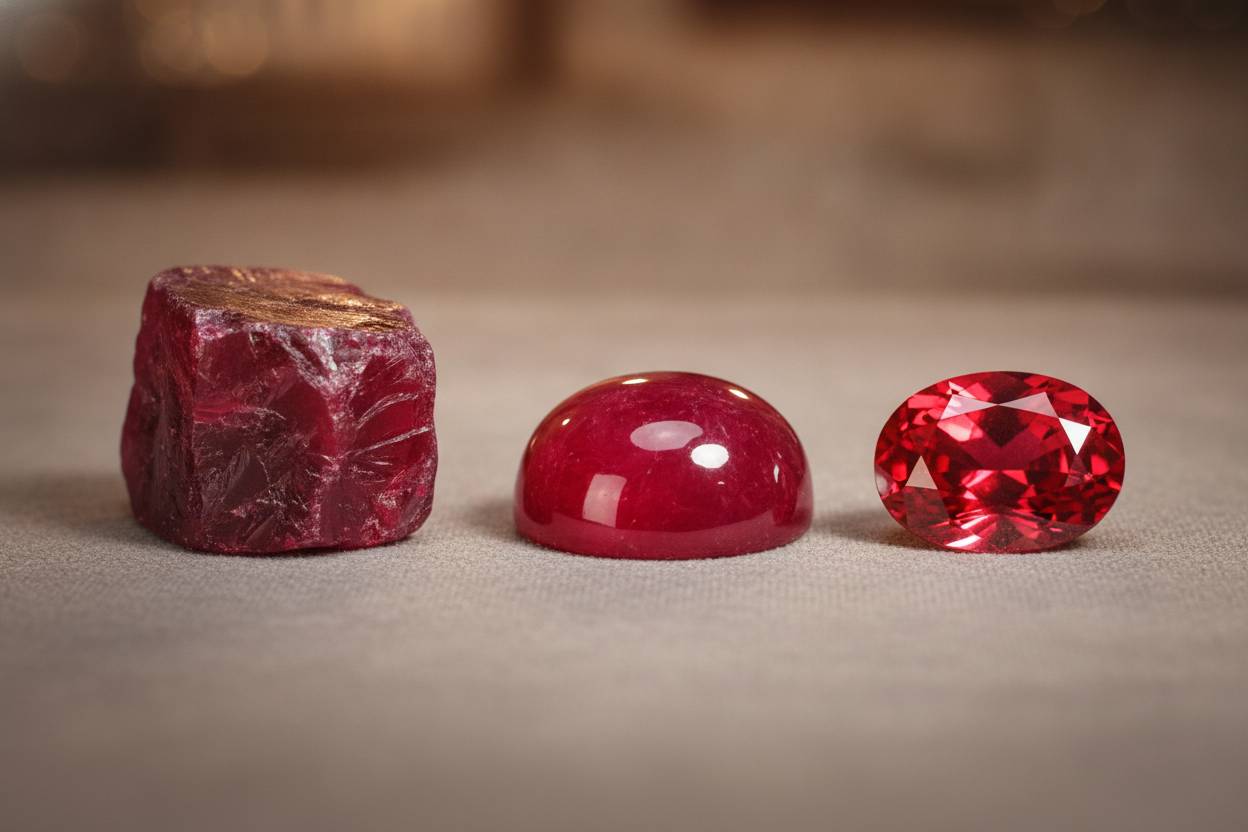
Ruby pricing is driven by transparency, colour saturation and the absence of disruptive fractures, with weight as a multiplier applied afterwards. A heavy but opaque crystal does not inherit the per-carat value of fine faceting rough.
Material of this scale is usually assessed as a carving block, a cabochon source or a specimen. Specimen value turns on crystal form, provenance documentation and intactness — qualities a cutter would happily destroy and a collector will not.
No credible figure for such a stone exists until it has been independently examined and, in most cases, offered publicly. Announcements that attach a headline valuation before any laboratory report should be treated as claims, not data.
Reading a big-find claim
Several questions separate a meaningful discovery from an inflated one.
- Has a recognised laboratory confirmed the species? Large red material from marble-hosted deposits can be ruby, red spinel or a heavily included mixture.
- What is the stated transparency? "Gem quality" used without qualification carries no technical meaning.
- Is the locality specified? Mogok, Mong Hsu and Namya are distinct deposits with different typical appearances.
- Who is making the claim, and what do they stand to gain?
Apply the same discipline to a stone you are buying. A laboratory report naming species, origin opinion and treatment status does more for your confidence than any story about the mine it came from.
Giant rough makes news because it is visible proof that an old source is still working. The gems you can actually wear are far smaller, and their value rests on colour, clarity and honest disclosure — the same criteria the Mogok trade has quietly understood for centuries.
Frequently asked questions
How big is an 11,000-carat ruby in grams?+
One metric carat equals exactly 0.2 grams, so 11,000 carats is 2.2 kilograms. That is the weight of the rough crystal, not of any gem that could be cut from it.
Could an 11,000-carat ruby be faceted into one gem?+
In practice, no. Crystals of that size are almost always opaque or heavily included, and they are worked as carvings, cabochons or left intact as mineral specimens.
Why is Burmese ruby considered the benchmark?+
Mogok ruby is low in iron, which allows strong red fluorescence under ultraviolet light and daylight. That fluorescence reinforces the body colour and produces the saturated red the trade calls pigeon's blood.
Is the story about Burmese warriors implanting rubies real?+
It is recorded in historical travellers' accounts and repeated in standard gemmological histories, including Richard Hughes's work on ruby and sapphire. It is documented lore rather than a verified medical practice, and it reflects ruby's association with protection and sovereignty.
How can I verify a ruby's origin before buying?+
Request a report from a recognised laboratory such as GIA, SSEF, Gübelin or AGL stating species, treatment status and origin opinion. Origin determination is an expert opinion based on inclusions and trace-element chemistry, not an absolute certainty.
Does a large discovery change ruby prices?+
Rarely. Fine faceted ruby is priced on colour, clarity and size within the range buyers actually wear, and a single oversized specimen adds almost nothing to that supply.
From our Journal
Buying guides, origin stories, and notes from the trade.