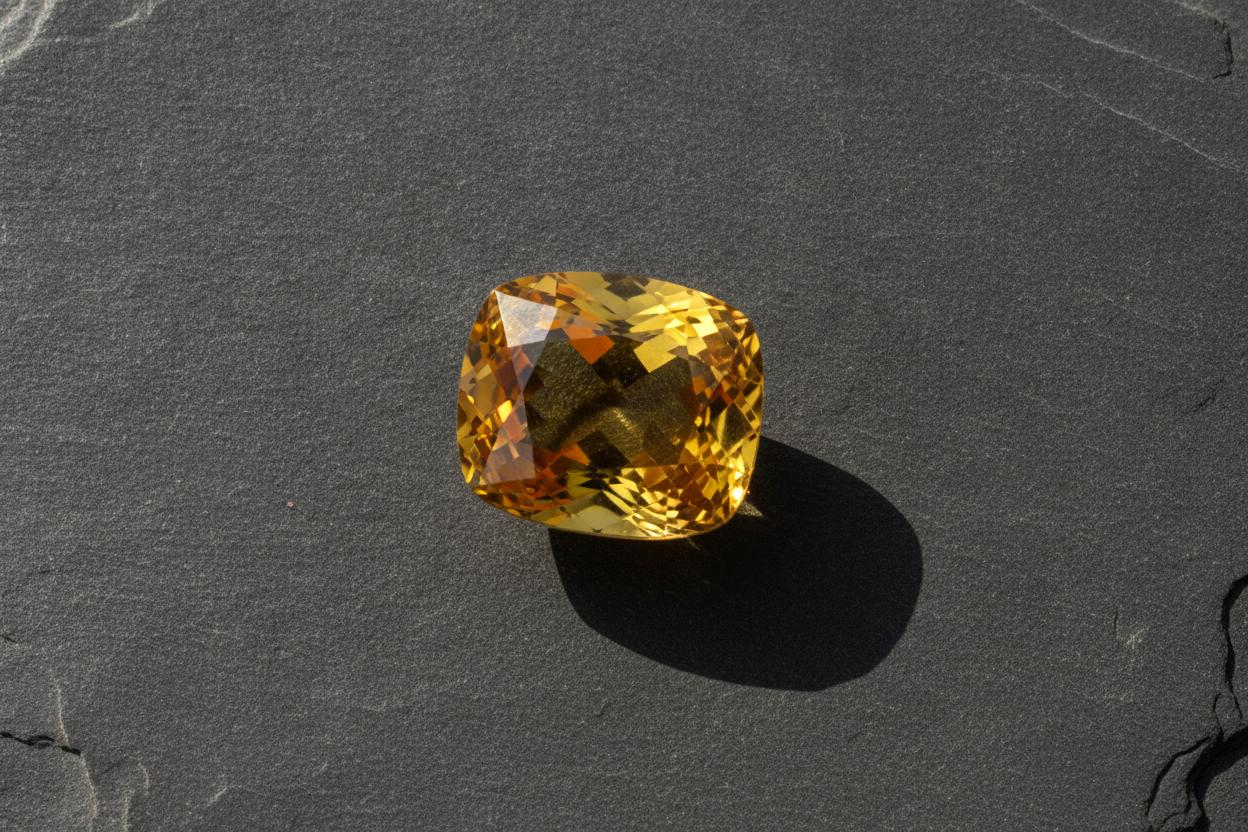
Yellow Tourmaline: Meaning & Symbolism
The yellow tourmaline meaning and symbolism most often cited today centres on sunlight, clarity of thought and personal confidence — associations that come from the colour itself rather than from any single ancient tradition tied to this gem. Historically, tourmaline as a species carried a reputation for drawing things to it, a belief rooted in a genuine physical property: tourmaline crystals develop an electrical charge when heated or compressed. Gemmologically, yellow tourmaline is elbaite, a lithium-rich tourmaline coloured by trace elements such as iron, with a Mohs hardness of 7–7.5 and a refractive index of 1.62–1.64. Our yellow material comes from Africa and is unheated.
Meaning is worth knowing accurately. The sections below separate what is documented from what is modern belief, and then set out what you are actually buying.
Yellow tourmaline meaning and symbolism
Yellow has been read as a solar colour across a wide range of cultures — linked to harvest, warmth, intellect and prosperity. Gems that carry that colour tend to inherit the symbolism, and yellow tourmaline is no exception.
In modern crystal literature, yellow tourmaline is usually associated with the solar plexus: confidence, willpower, clear decision-making. These are beliefs held by practitioners, not demonstrated properties of the mineral, and we present them as such.
In Indian gem-astrology, the yellow stone traditionally tied to Jupiter is yellow sapphire. Yellow tourmaline is sometimes offered in the trade as a more accessible yellow gem, though the two are entirely different species with different durability and optical behaviour.
The name and the ash-puller
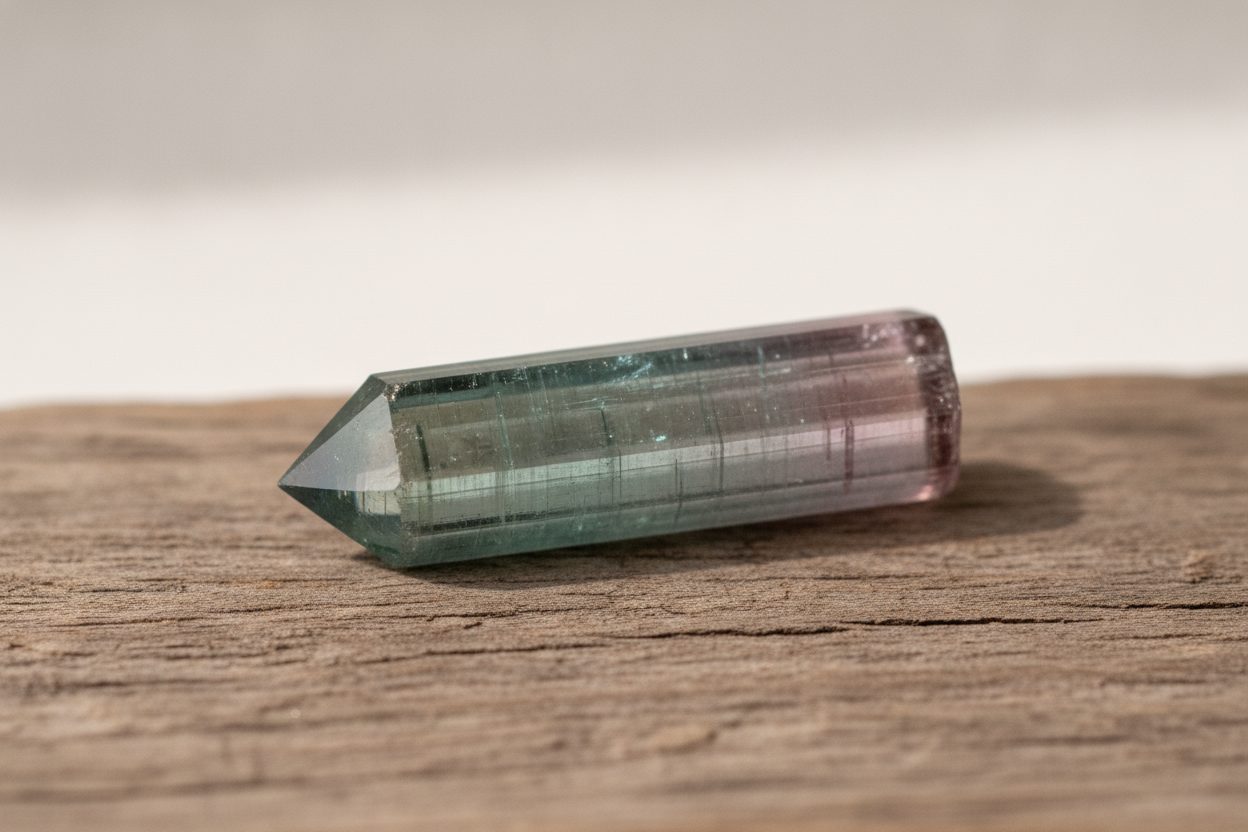
The word tourmaline derives from the Sinhalese turamali (or toramalli), a term applied in Sri Lanka to mixed-coloured gem gravels. The name itself records confusion: for centuries, stones we now classify as tourmaline were sold as rubies, emeralds or peridots depending on their colour.
Tourmaline reached northern Europe through Dutch East India trade in the early eighteenth century. There it earned the nickname aschentrekker — ash-puller — because warmed crystals attracted ash and could be used to clean pipe bowls.
That trick is pyroelectricity, and it is real. Tourmaline is both pyroelectric and piezoelectric, developing opposite charges at the ends of a crystal under temperature change or pressure. Much of the species' older folklore — that it attracts, protects, draws off what is unwanted — traces back to this observable behaviour rather than to invented mysticism.
Yellow in historic gem symbolism
Before mineralogy existed, gems were classified by colour. A yellow stone was read as a yellow stone, whatever its species, which is why yellow tourmaline, citrine, yellow sapphire and yellow beryl share overlapping bodies of lore.
Yellow gems were widely connected to the sun, to gold and therefore to abundance, and in several traditions to the mind and to speech. Medieval European lapidaries assigned yellow stones to cheerfulness and the dispelling of melancholy.
Knowing this helps you read claims critically. When a seller attaches a long ancient pedigree specifically to yellow tourmaline, they are usually borrowing colour symbolism that belonged to the whole yellow family.
What yellow tourmaline actually is
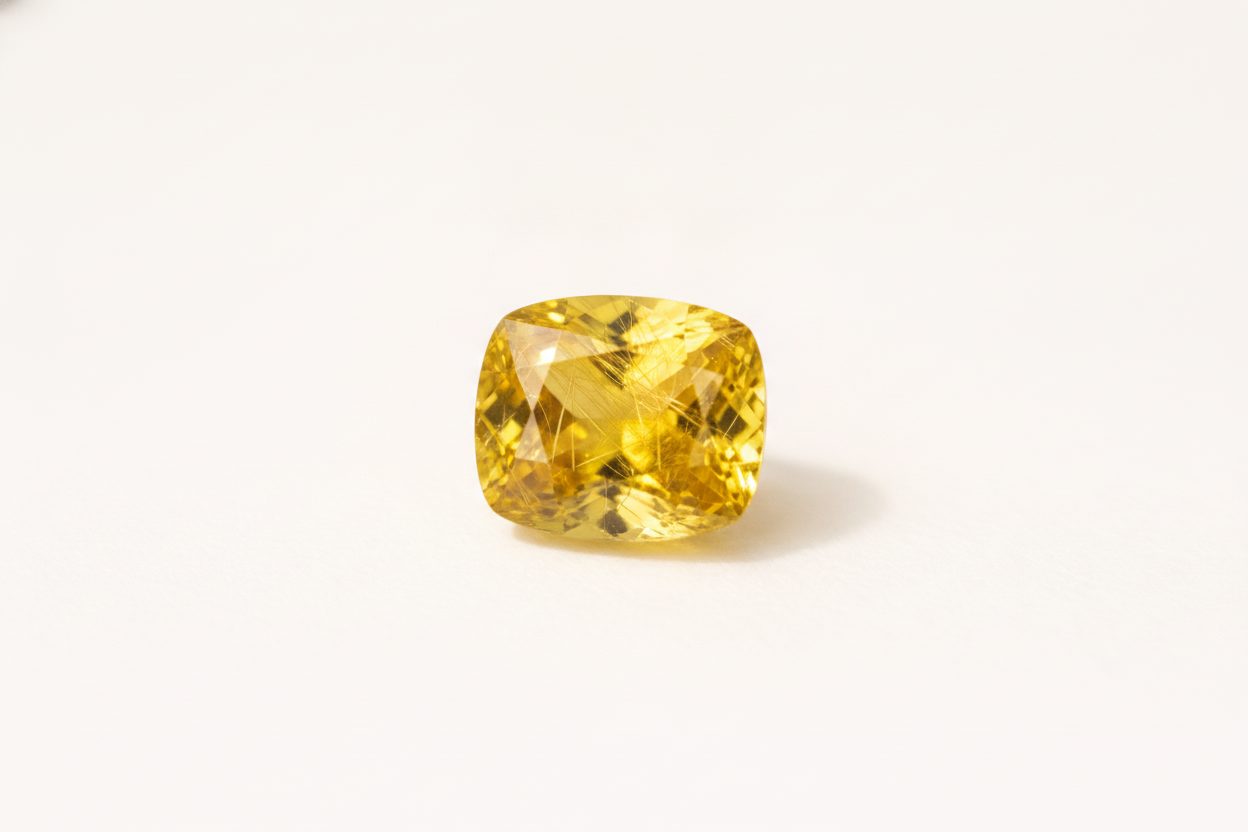
Yellow tourmaline sold as a faceted gem is almost always elbaite, the lithium-bearing member of the tourmaline group. It crystallises in the trigonal system, typically as elongated prisms with striated faces and a rounded-triangular cross-section.
Its colour comes from trace elements within the crystal structure, iron among them. Tones run from pale lemon and honey to a warmer golden yellow, and strong pleochroism means the body colour can shift noticeably as the stone is turned.
Key properties
- Species: tourmaline (elbaite)
- Mohs hardness: 7–7.5
- Refractive index: 1.62–1.64, with strong birefringence
- Cause of colour: trace elements such as iron
- Typical inclusions: needle-like rutile and other natural mineral inclusions
- Origin: African sources
- Treatment: unheated
Needle inclusions are normal in tourmaline and are part of how a gemmologist confirms the stone is natural. In quantity, though, they soften transparency — which matters for price.
What drives yellow tourmaline value
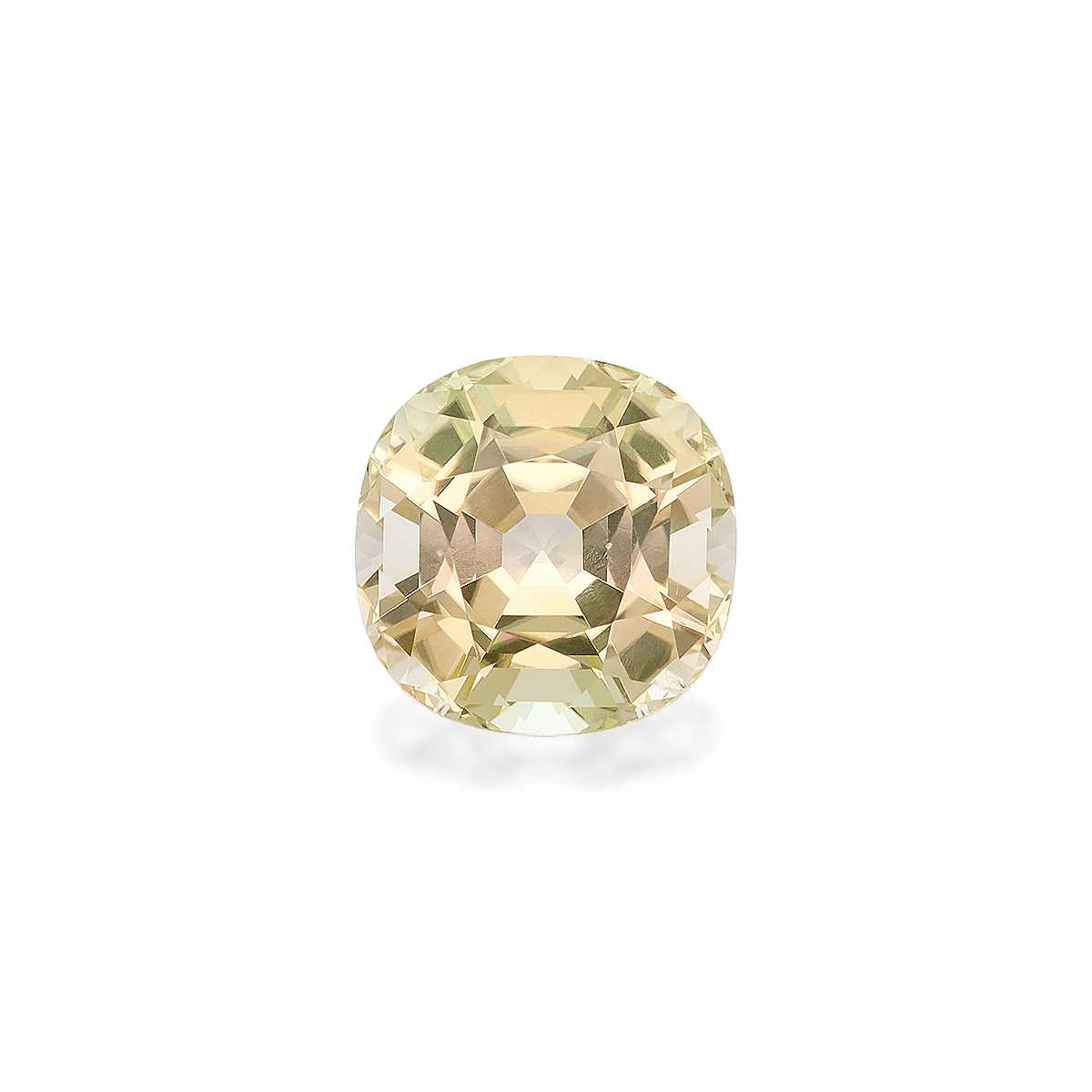
Three factors carry most of the weight: vivid colour, clarity and cut quality. A clean, saturated yellow with even colour distribution is scarcer than the pale, washed-out material that dominates the lower end of the market.
Cut is unusually consequential here. Tourmaline's strong pleochroism means the cutter must orient the rough so the best colour faces up, and a well-proportioned stone returns light where a windowed one goes flat and grey in the centre.
Clarity sits between the two. Fine needle clouds that only show under magnification have little effect; visible fractures or dense rutile that veil the stone reduce value sharply.
More from Yellow Tourmaline


Buying with the lore intact
Two mistakes recur among buyers of yellow tourmaline. The first is underrating inclusions — judging a stone from a bright studio photograph and discovering, in hand, that needles have dulled its transparency.
The second is assuming every yellow tourmaline on the market has the same treatment status. Tourmaline is a large group traded in many colours, and disclosure practices vary by seller; ask the specific question about the specific stone rather than generalising from one gem to another. Our yellow tourmaline is unheated, and we state that on the stone record.
A few practical checks:
- View the stone face-up in daylight and under warm light — pleochroism and tone shift will show.
- Look through the table at an angle for a central window, the usual sign of weight-retentive cutting.
- Ask what the inclusions are and whether any reach the surface.
- Confirm species and treatment on an independent laboratory report.
At 7–7.5 on the Mohs scale, yellow tourmaline is well suited to rings worn regularly, though it deserves a protective setting and should be kept away from knocks against harder stones. That durability is part of why the gem has survived as a worn object across centuries of changing symbolism — the meaning shifts, the crystal does not.
Frequently asked questions
Is yellow tourmaline the same as citrine or yellow sapphire?+
No. Citrine is quartz (Mohs 7, RI about 1.54–1.55) and yellow sapphire is corundum (Mohs 9), while yellow tourmaline is elbaite with a hardness of 7–7.5 and a refractive index of 1.62–1.64. They can look similar face-up but are separated easily by standard gemmological testing.
Is yellow tourmaline treated?+
The yellow tourmaline we offer is unheated. Treatment practice varies across the tourmaline group and between sellers, so always ask about the specific stone and request a laboratory report rather than assuming one yellow tourmaline matches another.
What does yellow tourmaline symbolise today?+
Modern lore links it to confidence, mental clarity and the solar plexus, drawing on long-standing associations between yellow gems and the sun, abundance and the intellect. These are cultural beliefs rather than demonstrated properties of the mineral.
Why is tourmaline called the ash-puller?+
Tourmaline is pyroelectric: a warmed crystal develops opposite charges at its ends and attracts light particles. Eighteenth-century Dutch traders used this to draw ash from pipe bowls, earning the nickname aschentrekker.
Where does yellow tourmaline come from?+
Our yellow tourmaline comes from African sources. Tourmaline is mined across several continents, so a yellow stone's origin should be stated for the individual gem rather than assumed from a single region.
Is yellow tourmaline durable enough for a ring?+
Yes, with sensible care. At 7–7.5 on the Mohs scale it suits everyday rings, but it benefits from a setting that shields the girdle and should be stored apart from harder gems such as sapphire and diamond.
From our Journal
Buying guides, origin stories, and notes from the trade.