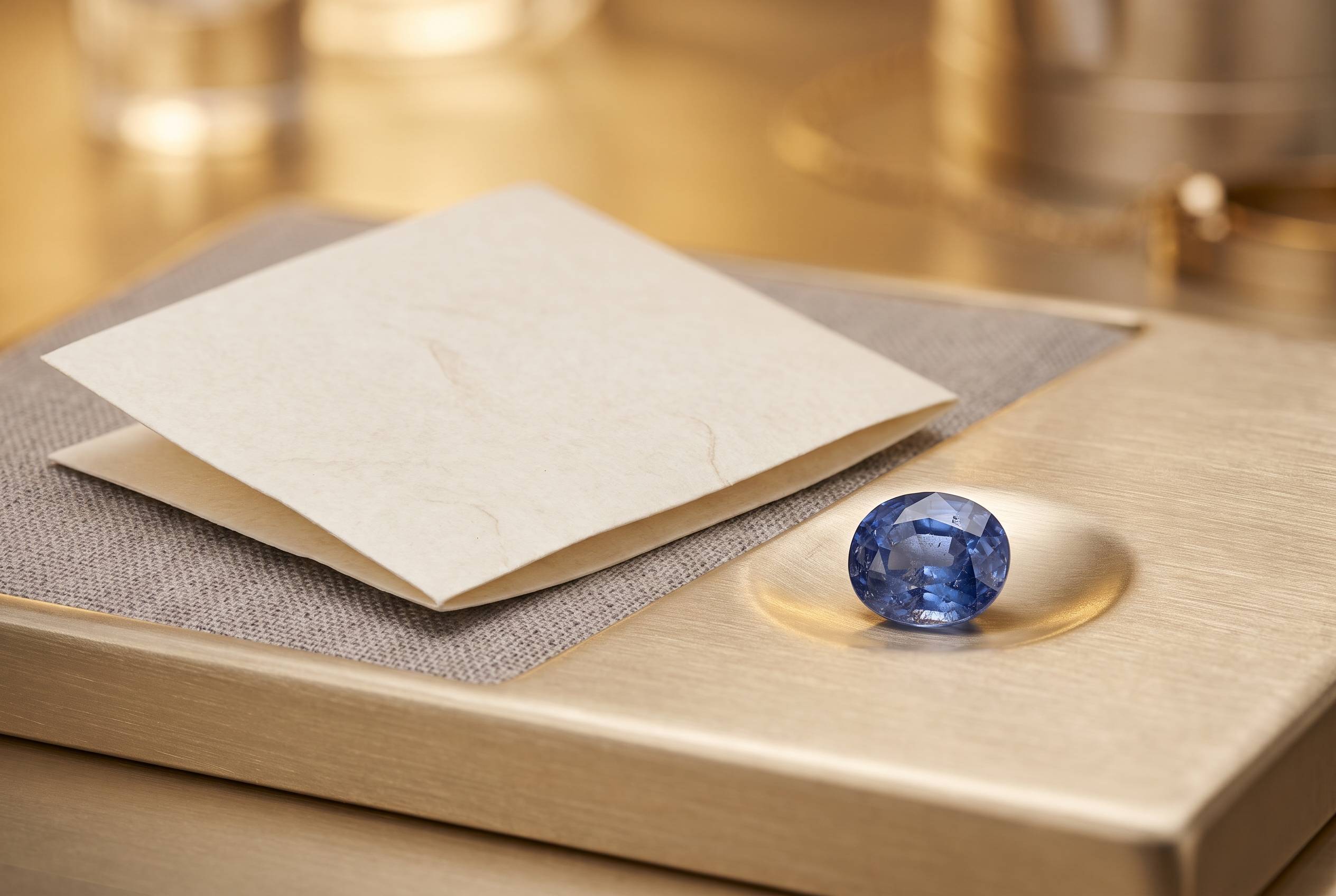
GRS Certified Gemstones Online Value
Price per carat for a GRS certified stone is set by four lines on the report read together: the colour call, the treatment statement, the origin opinion, and the size at which that particular combination still exists. Certification does not create value — it verifies it, and removes the discount a cautious buyer would otherwise apply for uncertainty. This STARLANKA value guide to GRS certified gemstones online explains how each entry on a GemResearch Swisslab report becomes money, and how to judge whether an asking price sits inside a fair range for its tier.
What a GRS report actually says
GemResearch Swisslab, founded by Dr Adolf Peretti, issues coloured stone reports that state species and variety, weight and measurements, cut, and the laboratory's opinion on treatment and geographic origin. It also assigns a trade colour description where the stone qualifies.
Those last three entries — treatment, origin, colour call — are the ones that carry commercial weight. Species and dimensions are facts any competent lab will agree on.
Read the report as a set of opinions with defined vocabulary, not as a grade. GRS does not rank stones on a single scale; it describes them, and the market prices the description.
Colour calls that move price
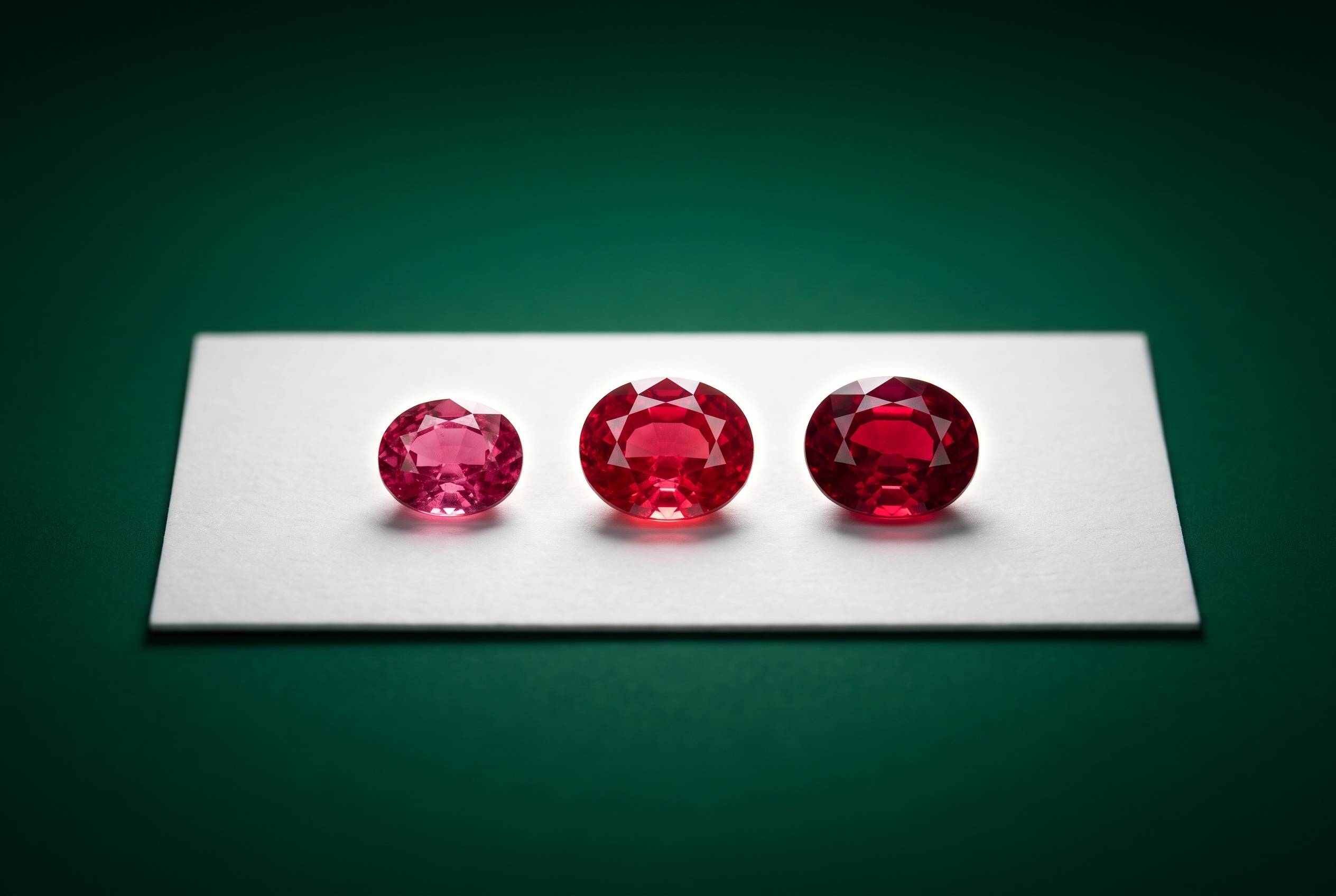
GRS uses named trade colours that have become reference points for ruby and sapphire. "Pigeon's Blood" for ruby, and "Royal Blue" and "Cornflower Blue" for sapphire, are the ones buyers search for by name.
These are descriptions of a saturation and tone range, not guarantees of beauty. Two stones can share a call and look materially different in the hand, because the call does not capture extinction, windowing, or how the stone behaves under warm light.
The practical effect is a step, not a slope. A stone that just crosses into a named colour typically trades well above one that sits just outside it, which is why the border cases are the most argued-over stones in the trade.
A disciplined buyer compares the colour call against the stone itself, under more than one light source. Where the stone comfortably deserves the call, the premium is defensible. Where it scrapes in, the premium is the thing you are actually paying for.
Origin opinion and its premium
Origin is determined by inclusion suites, trace element chemistry and spectroscopy, compared against reference collections of stones of known provenance. It is an opinion, and reputable labs state it as such.
Burmese ruby, Kashmir and Burmese sapphire, and Colombian emerald carry long-established premiums. Ceylon sapphire from Sri Lanka occupies its own respected tier, valued for the brightness that comes with lighter, more open blue.
Origin premiums compound with colour and treatment. An unheated Burmese ruby with a Pigeon's Blood call is priced in a different market from a heated Mozambique ruby of similar appearance, even when the two look close across a table.
Where chemistry is ambiguous, labs may decline an origin opinion or offer a broader one. That absence costs money, and it is honest — treat a report that hedges as more trustworthy, not less.
More from Sapphire
Treatment lines and value
Treatment disclosure is the single largest lever on price per carat for corundum. "No indication of thermal treatment" on a fine ruby or sapphire separates it from the vast majority of material on the market.
Heating is stable, accepted and disclosed, and heated stones represent sound value. Lattice diffusion, glass filling in fissures, and significant clarity enhancement sit far lower, and GRS language distinguishes between them.
For emerald, the report grades the degree of clarity enhancement — the quantity of oil or resin in fissures. Minor, moderate and significant are not cosmetic distinctions; each step down the scale is a step down in price.
- Unheated, fine colour — the top of the market, and the hardest to replace.
- Heated, fine colour — the broad middle, where most well-made jewellery sits.
- Diffused, filled or heavily enhanced — priced as treated goods, and should be sold as such.
Size, repeatability and rarity
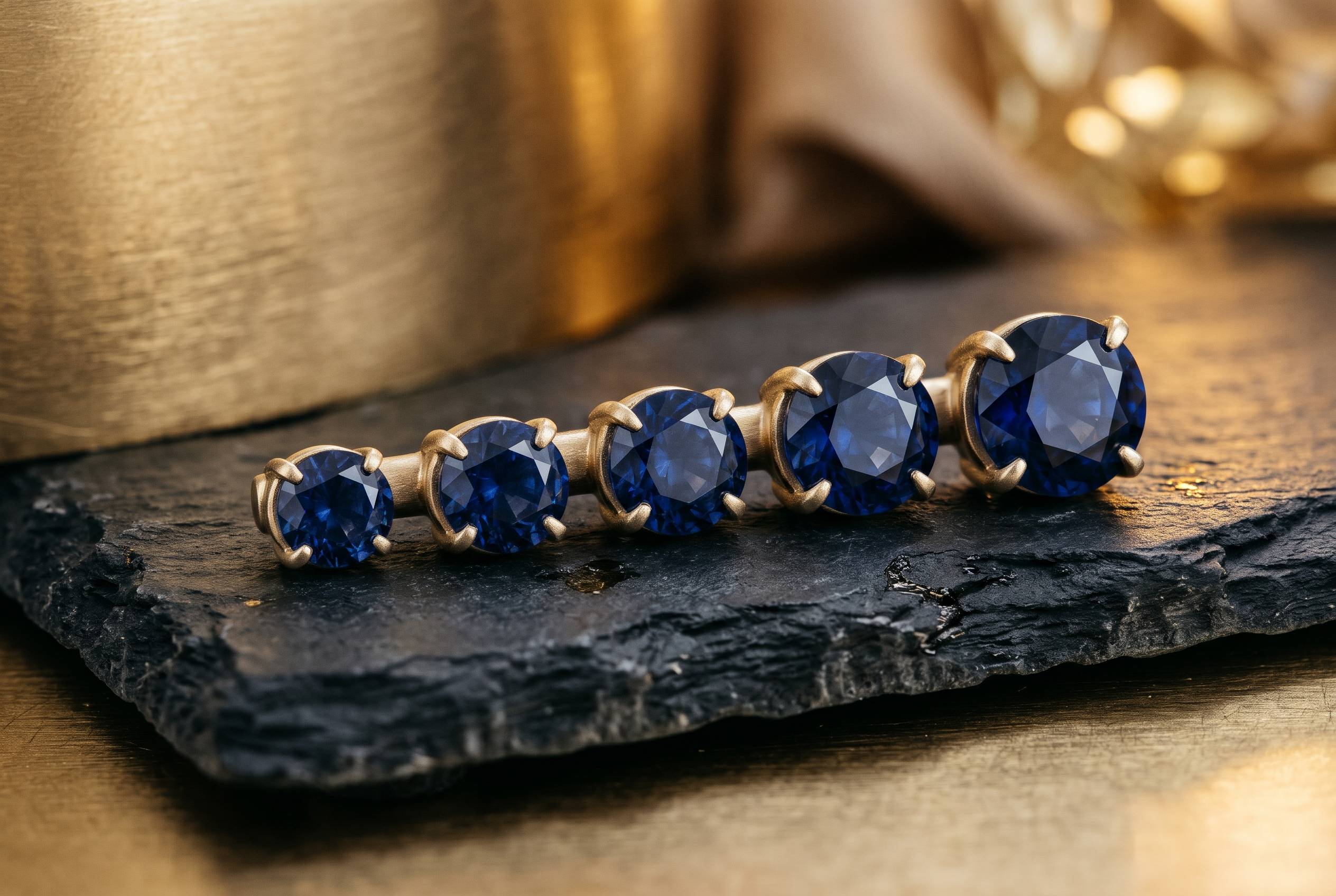
Price per carat rises with weight because fine rough large enough to yield a big clean stone is rare, and the rise is not linear. The jumps occur at the sizes the trade considers significant, and they are steepest where the combination of colour, origin and no treatment is already scarce.
Think in terms of repeatability. If a dealer could source ten near-identical stones within a month, the price reflects a supplied market; if the stone would take years to match, it is priced as a single object.
Durability sets the floor beneath all of this. Corundum — ruby and sapphire — is Mohs 9, with a refractive index near 1.762–1.770 and specific gravity around 4.00, which is why it survives daily wear. Emerald, a beryl at Mohs 7.5–8 with SG near 2.72, is harder but more fracture-prone, and is priced and set accordingly.
Buying GRS certified gemstones online
Match the report to the stone before anything else. Check that weight and measurements on the certificate correspond to the stone in front of you, and that the report number resolves on the laboratory's own verification system.
Then price the tier, not the paper. Establish which colour call, origin and treatment status the stone holds, then compare asking prices for that exact combination across several reputable sellers in the same size band.
A fair range is one where the price sits within the band of comparable certified stones, and the differences are explained by things you can see — cut quality, brightness, how the colour holds in low light. A price far below that band usually means something on the report has been read optimistically.
Recuts, old reports and stones recertified after mounting all deserve questions. Laboratory language has tightened over the years, and an older report may not reflect how the same stone would be described today.
Certification is a tool for removing doubt, not a substitute for looking. The strongest purchases are the ones where the report confirms what your eye had already concluded.
Frequently asked questions
Does a GRS certificate increase a gemstone's value?+
A certificate does not change the stone, but it removes the uncertainty discount a buyer would otherwise apply to treatment and origin claims. In practice, a certified fine stone realises more than an identical uncertified one, because the buyer is no longer carrying the risk.
What does "Pigeon's Blood" mean on a GRS report?+
It is a trade colour designation applied to rubies whose colour falls within a defined saturation and tone range, with a fluorescence component. It describes colour only — it says nothing about clarity, cut quality or origin, each of which is listed separately on the report.
Is GRS as reliable as GIA or SSEF?+
GRS, GIA, SSEF and Gübelin are all recognised internationally, and each has its own house style for colour terminology and origin wording. Serious stones are sometimes submitted to more than one lab; agreement between two reputable laboratories is the strongest position a buyer can hold.
How much more is an unheated sapphire worth than a heated one?+
The gap depends on colour, size and origin, and it widens as those improve — at fine colour in larger sizes the difference is substantial, while in commercial qualities it narrows considerably. Compare like-for-like certified stones in the same size band to see the spread in your tier.
Can I verify a GRS report number myself?+
Yes. GemResearch Swisslab maintains an online report verification service where the number, weight and photograph can be checked against their records. Always verify independently rather than relying on a scan supplied by the seller.
Why do some GRS reports omit an origin opinion?+
When the inclusion suite and trace element chemistry do not distinguish clearly between possible sources, a responsible laboratory declines to state an origin. The omission reduces price but reflects honest practice, and is preferable to an overconfident call.
From our Journal
Buying guides, origin stories, and notes from the trade.