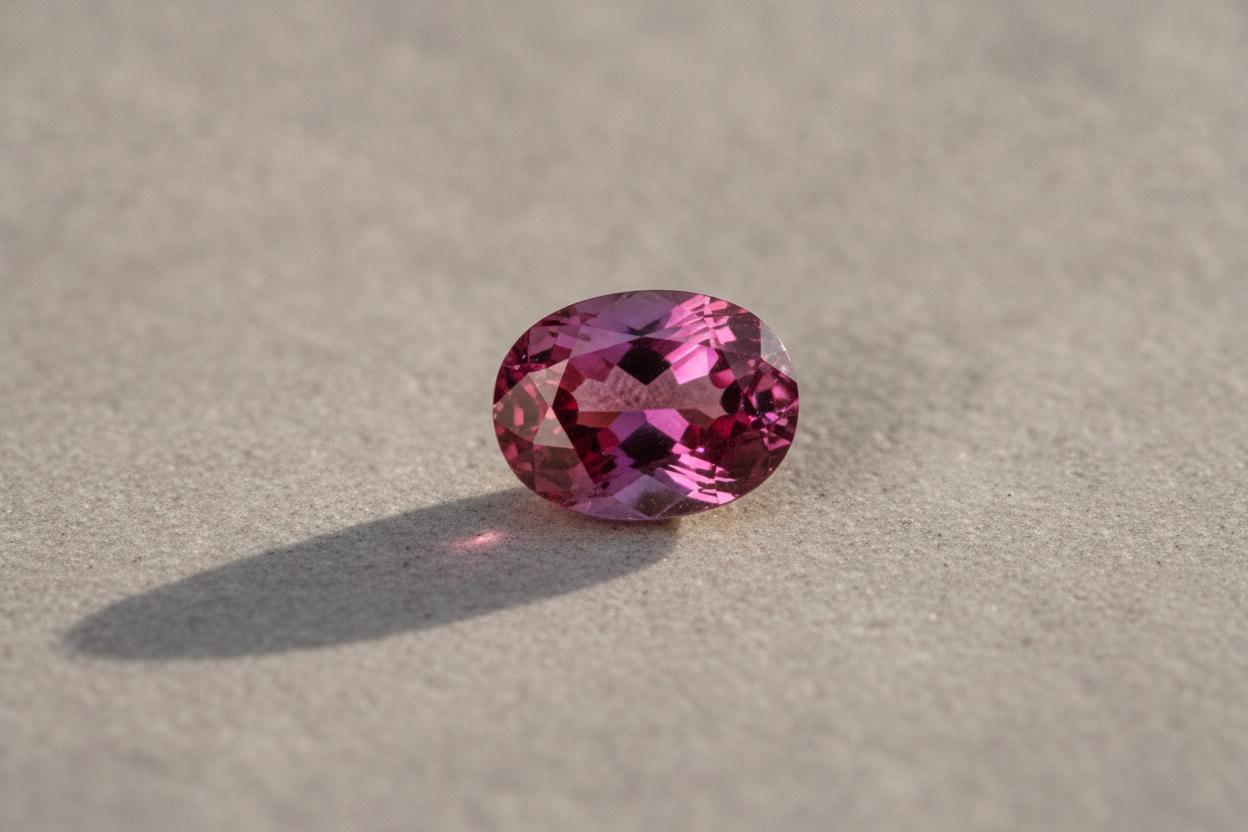
How to Choose Rhodolite Garnet
To learn how to choose rhodolite garnet sensibly, judge three things in order: the vividness of the colour, the clarity, and only then the carat weight. Rhodolite is a pyrope-almandine garnet coloured by manganese, and it is not typically treated, so what you see in the stone is what nature produced — you are paying for natural quality, never for enhancement. Price per carat climbs steeply when a stone is both eye-clean and vivid in tone; it falls away quickly when the colour goes sleepy or the interior is hazy.
The rest of this guide sets out each value driver, the size tiers where scarcity bites, and the two errors that cost buyers the most.
What rhodolite actually is
Rhodolite is a variety of garnet, not a species of its own. It sits between pyrope and almandine in composition, which is why it reads differently from the darker garnets most people have seen in antique jewellery.
The gemmological markers are consistent: a Mohs hardness of 7.5 and a refractive index of 1.74 to 1.76. Those figures matter commercially, because they place rhodolite comfortably within the range of stones suitable for rings as well as pendants and earrings.
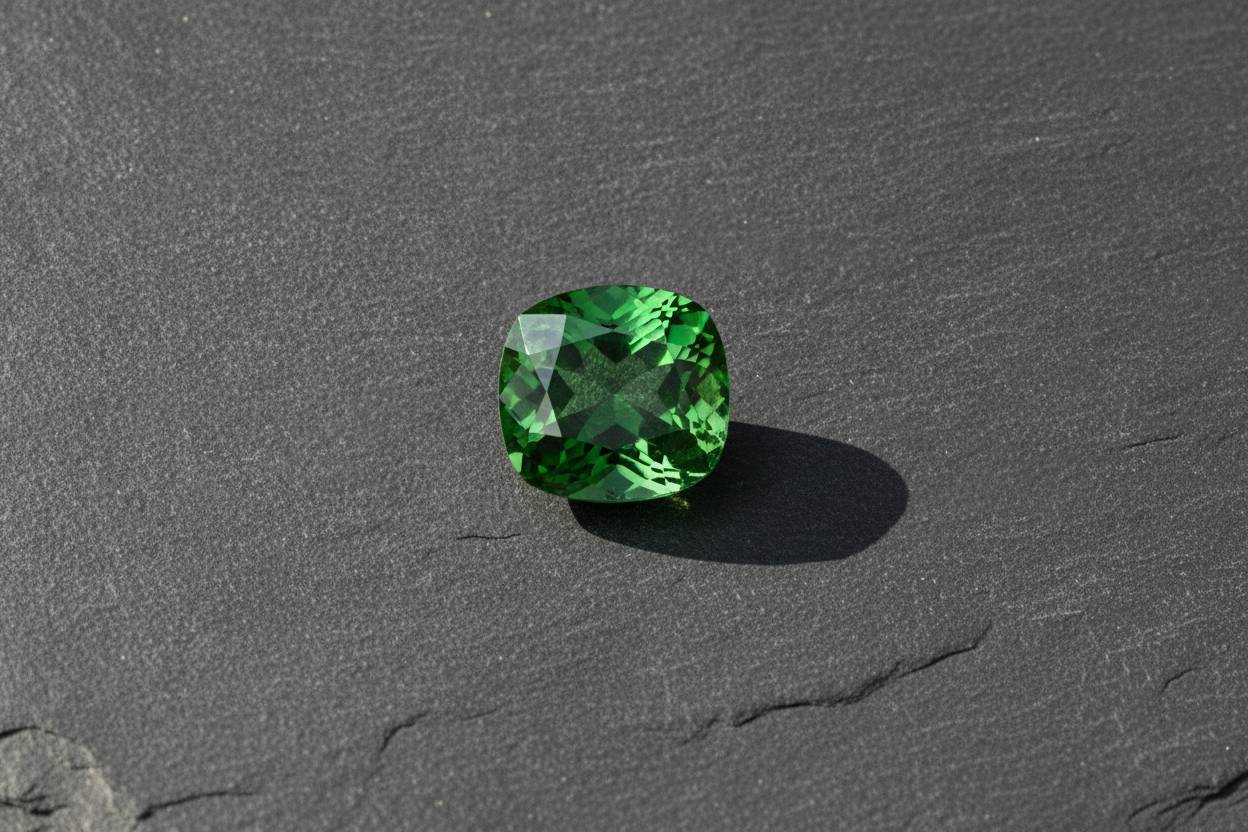
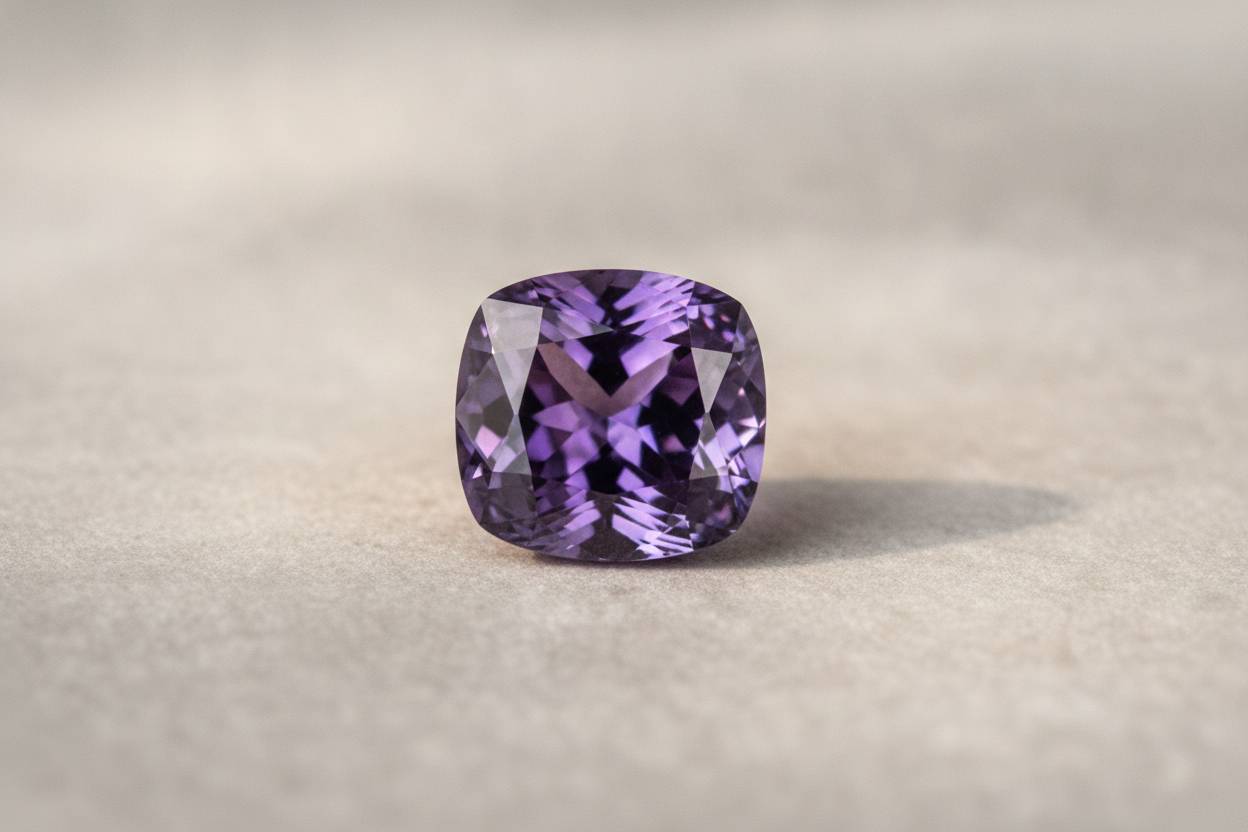
Manganese is the cause of colour. The result is the rose-to-purple range the trade recognises as rhodolite, and the best material is described simply as vivid.
Colour sets the ceiling
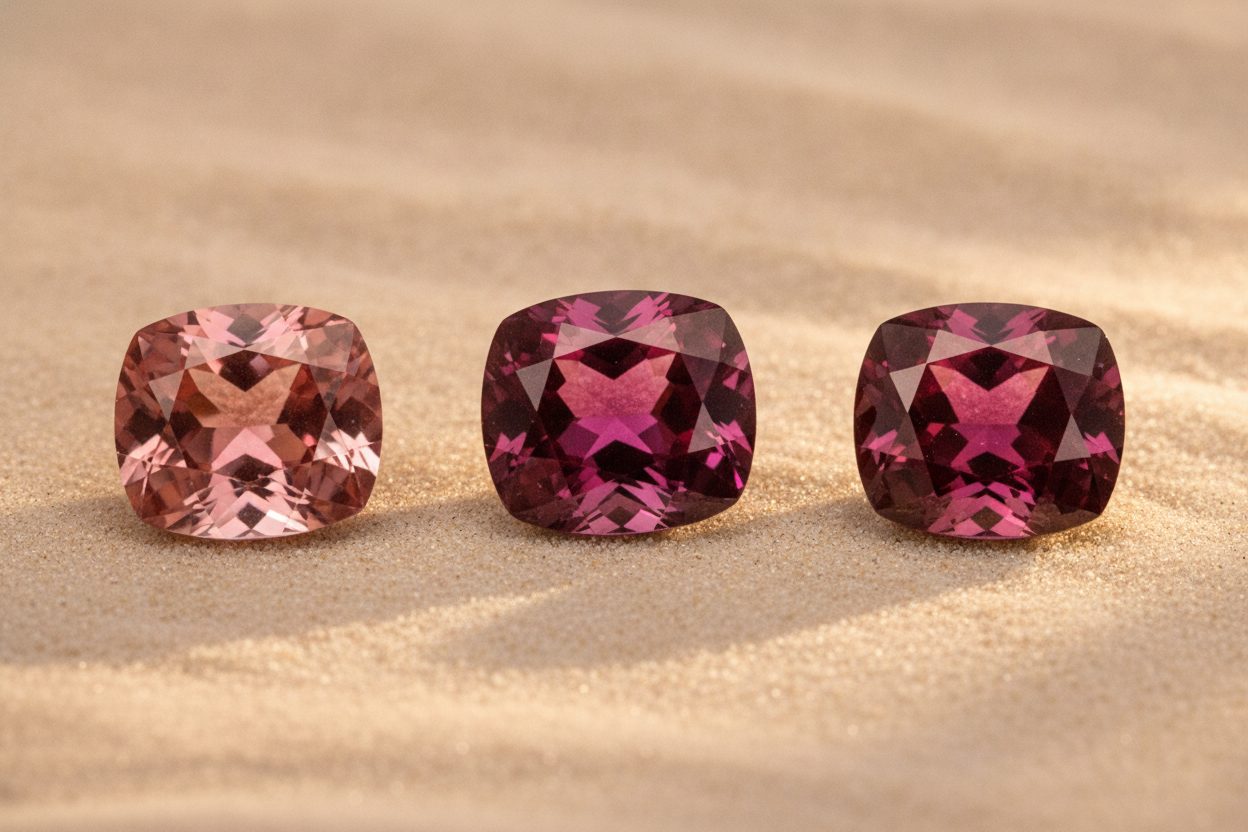
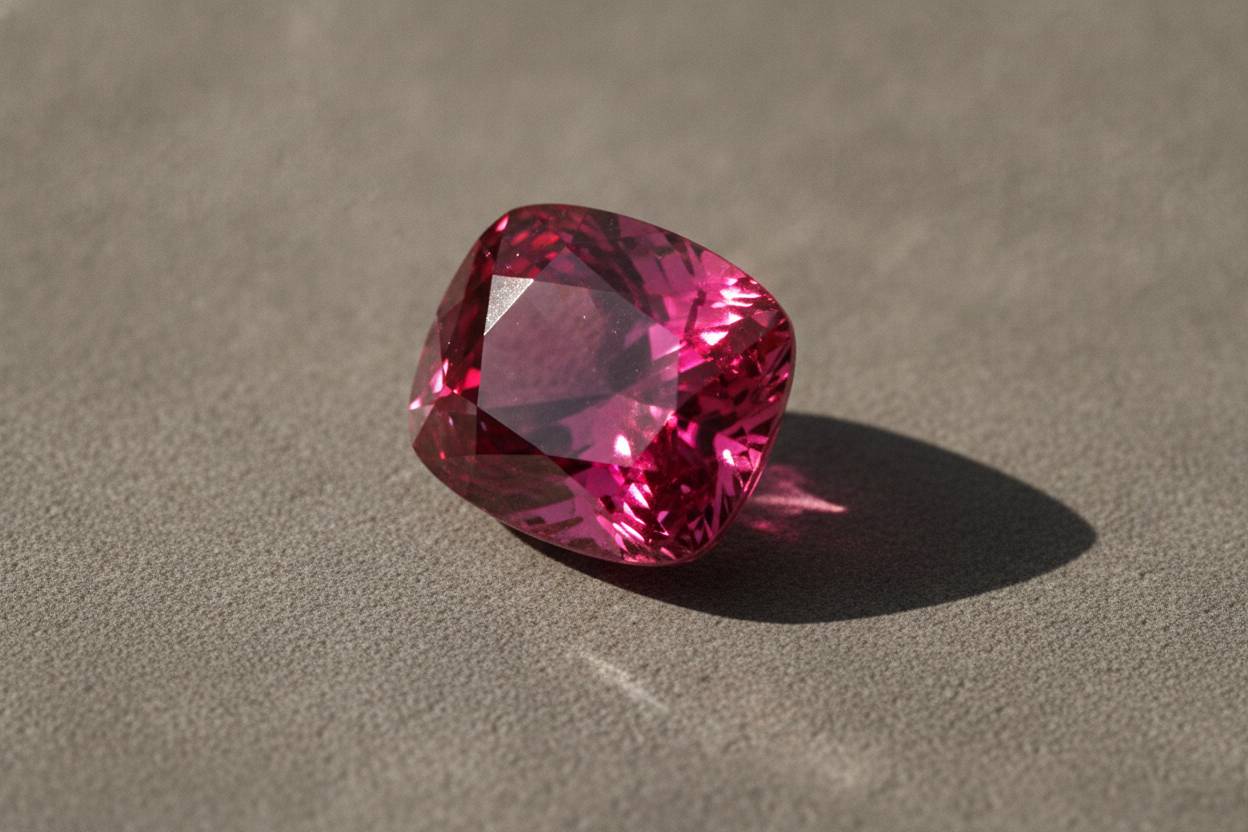
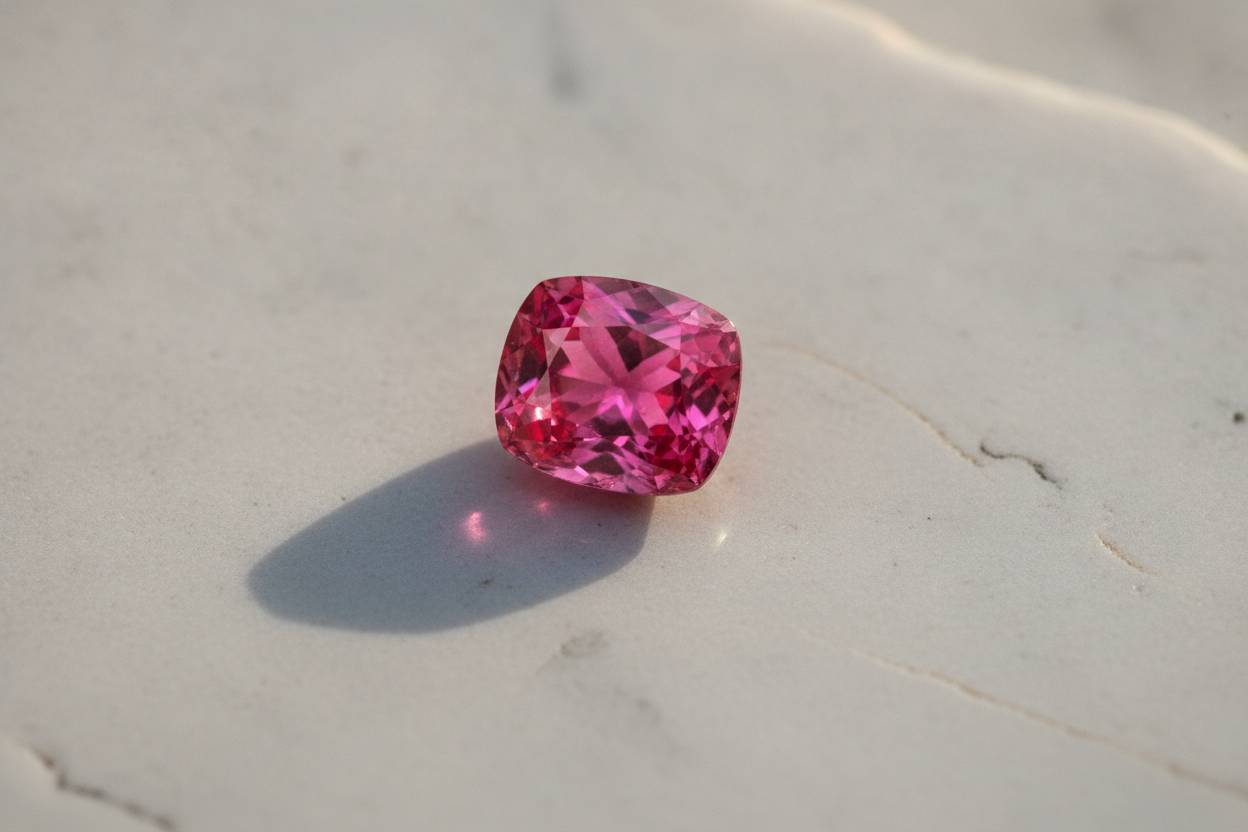
Colour is the first and largest lever on price per carat. A vivid, cleanly saturated rhodolite with a lively purplish cast sits in a different commercial bracket from a stone of the same weight that reads muddy or flat.
Assess colour under two light sources. Daylight flatters almost everything; ordinary indoor lighting is the honest test, and a stone that holds its vividness there is the one worth paying for.
Watch for extinction — the dark patches that open and close as the stone moves. Heavy extinction is usually a cutting fault rather than a colour fault, but the market prices it as a colour problem because that is how the eye experiences it.
Tone, not just hue
Two stones can share a hue and differ sharply in value because one is too dark. Over-dark material loses the internal glow that distinguishes rhodolite from commoner garnets, and the price per carat reflects that loss.
Why clarity decides the tier
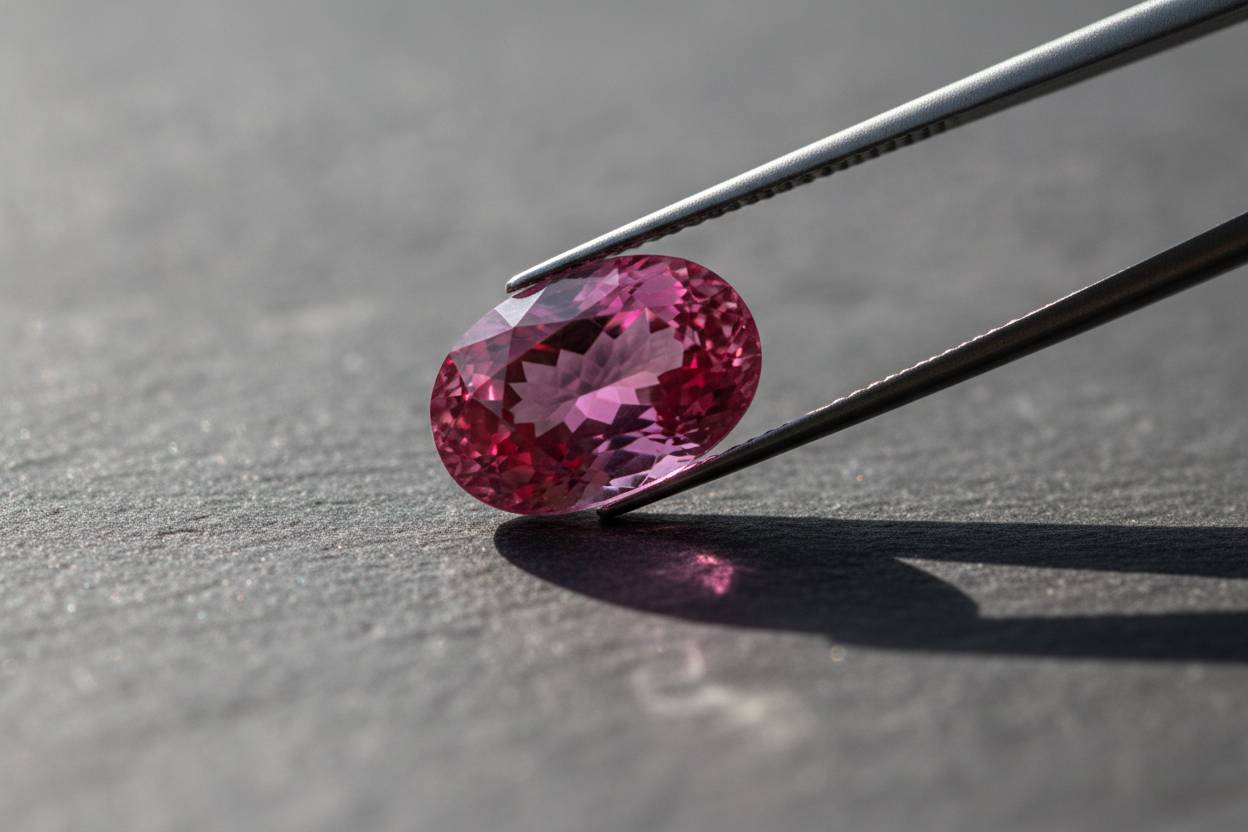
Exceptional clarity is a genuine value driver in rhodolite, and it is the factor buyers most often skip. Fine material can be clean to the unaided eye, so a stone with visible inclusions is not merely typical — it is below the top tier, and should be priced accordingly.
Examine the stone face-up, at arm's length, then with a loupe. Needles and fingerprints that scatter light across the table matter far more than a small inclusion tucked near the girdle.
Because rhodolite is reasonably available in commercial grades, the premium attaches to the clean, vivid combination rather than to either quality alone. A clean but dull stone and a vivid but included stone both sit in the middle of the market.
More from Rhodolite Garnet


Size tiers and scarcity
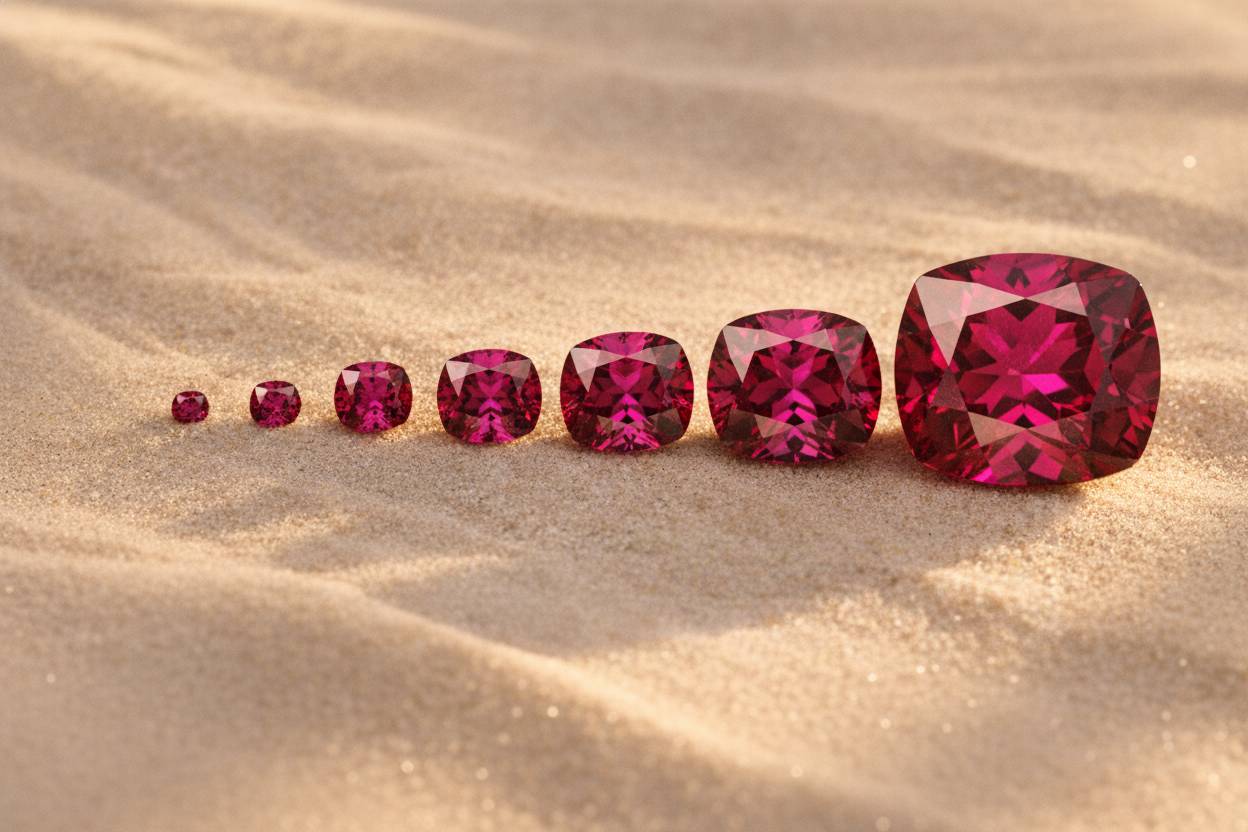
Size is the third driver, and it behaves as it does across coloured stones: price per carat rises in steps rather than evenly. Small calibrated goods are widely available; larger stones that remain vivid and eye-clean are considerably scarcer.
The practical consequence is that a five-carat stone can cost several times the per-carat price of a one-carat stone of identical quality. Expect the steepest jumps where fine colour and clean interiors become hard to find together.
If budget is fixed, it is usually better to drop a size tier and hold the colour than to buy a larger stone that has gone dark or cloudy.
Origin and the untreated question
Most rhodolite on the market today comes from Africa, with Tanzania among the established sources. Origin carries less of a price premium here than it does for sapphire or ruby, so treat it as provenance information rather than a value multiplier.
More important is that rhodolite is not typically treated. There is no routine enhancement to discount for and no disclosure question hanging over the stone, which simplifies comparison between sellers considerably.
That said, ask the question anyway and expect a plain answer. A dealer who cannot state clearly that the material is untreated is a dealer worth leaving.
What a fair price looks like
A fair range is best understood as a grid rather than a single figure: colour grade on one axis, clarity on the other, with size stepping the whole grid upward. Compare like with like, and insist that any quoted comparison matches on all three.
Independent laboratory identification is inexpensive relative to the stone and worth having above modest sizes, if only to confirm the variety. Recognised laboratories such as GIA and SSEF publish their reporting standards openly.
Rhodolite Garnet price guide
Rhodolite Garnet price guide (per carat, USD)
Based on 20 rhodolite garnet in stock, updated October 19, 2026.
Where buyers lose money
Two mistakes account for most overpaying. The first is confusing rhodolite with other garnet varieties — almandine, pyrope, spessartine and malaia all appear under loose descriptions, and they do not share a price structure.
The second is ignoring clarity when assessing value. Buyers fixate on colour and carat weight, then pay a top-tier price for a stone with a visibly included interior that no setting will hide.
If the description says only "garnet" and gives no weight, measurement or clarity comment, you are not being given enough to price the stone.
Request measurements in millimetres alongside carat weight. A heavy stone with a small face has excess depth, and you are paying per carat for weight you will never see.
Rhodolite rewards a methodical buyer. Hold the colour standard, check the clarity honestly, accept the size that the first two allow — and you will pay a fair price for a stone that was never altered to earn it.
Frequently asked questions
Is rhodolite garnet treated or heated?+
Rhodolite garnet is not typically treated. There is no routine enhancement applied to the material, so the colour and clarity you see are natural, and no treatment discount applies when comparing prices.
What is the difference between rhodolite and other garnets?+
Rhodolite is a pyrope-almandine garnet coloured by manganese, with a refractive index of 1.74 to 1.76 and a Mohs hardness of 7.5. Almandine, pyrope, spessartine and malaia garnets differ in composition and colour, and they are priced on separate scales.
Which matters more for value, colour or clarity?+
Colour sets the ceiling, but clarity decides which tier a stone lands in. The highest prices per carat go to stones that are both vivid and eye-clean; either quality alone places the stone in the middle of the market.
Is rhodolite garnet hard enough for an engagement ring?+
At 7.5 on the Mohs scale, rhodolite is suitable for ring wear with sensible care. A protective setting and removal during manual work will keep the facet edges crisp over time.
Does origin affect rhodolite garnet prices?+
Far less than it does for sapphire or ruby. Most fine rhodolite comes from Africa, with Tanzania a well-established source, but buyers should treat origin as provenance information rather than a price premium.
Should I get a laboratory report for a rhodolite garnet?+
For modest sizes it is optional, but above a few carats a report from a recognised laboratory such as GIA is worth the cost. It confirms the variety, which is the single most common point of confusion in garnet buying.
From our Journal
Buying guides, origin stories, and notes from the trade.