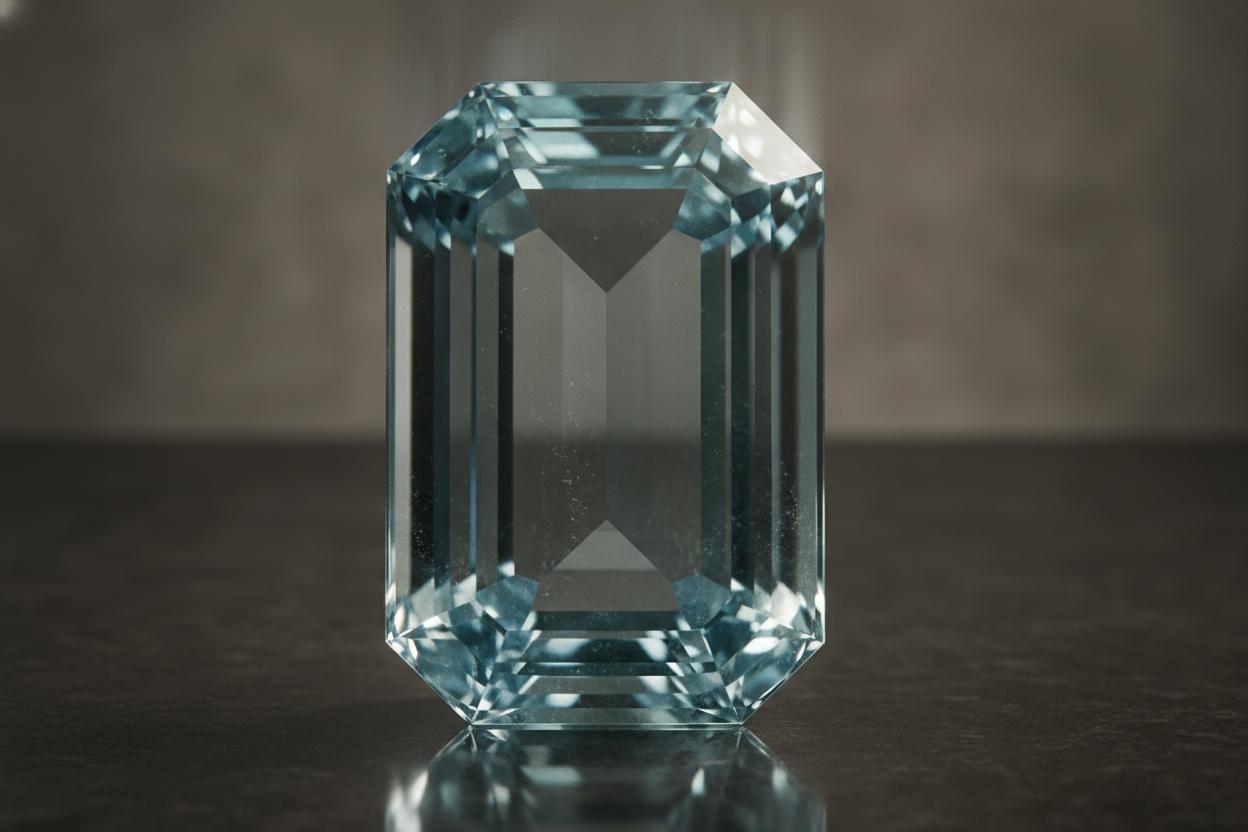
Aquamarine: How to Spot the Real Thing
Genuine aquamarine is a beryl coloured by iron, with a refractive index of 1.577–1.583 and a Mohs hardness of 7.5–8. The checks that settle identity fastest are the RI reading, the characteristic liquid inclusions, gas bubbles and crystals seen under magnification, and the stone's clear dichroism — noticeably paler through one direction of the crystal than the other. The red flags worth pausing over are trade names such as Santa Maria used with no defined colour reference, blue topaz or synthetic spinel offered as aquamarine, glass betrayed by round bubbles, photographs shot under blue-biased light, and an invoice that states neither treatment status nor a verifiable origin.
Properties that confirm real aquamarine
Aquamarine belongs to the beryl family and forms in the hexagonal system, so cut stones are doubly refractive. A refractometer reading between 1.577 and 1.583 is the single most decisive non-destructive test a gemmologist will run.
Its hardness of 7.5–8 makes it a durable stone for everyday jewellery, but hardness is never a field test — scratching a mounted gem damages it and proves little. Leave hardness to the specification sheet and use optics instead.
Dichroism is the check most buyers can appreciate without instruments. Rotate the stone in daylight and the blue should strengthen and weaken along different axes; a singly refractive imitation shows one flat colour from every angle.
What the inclusions tell you
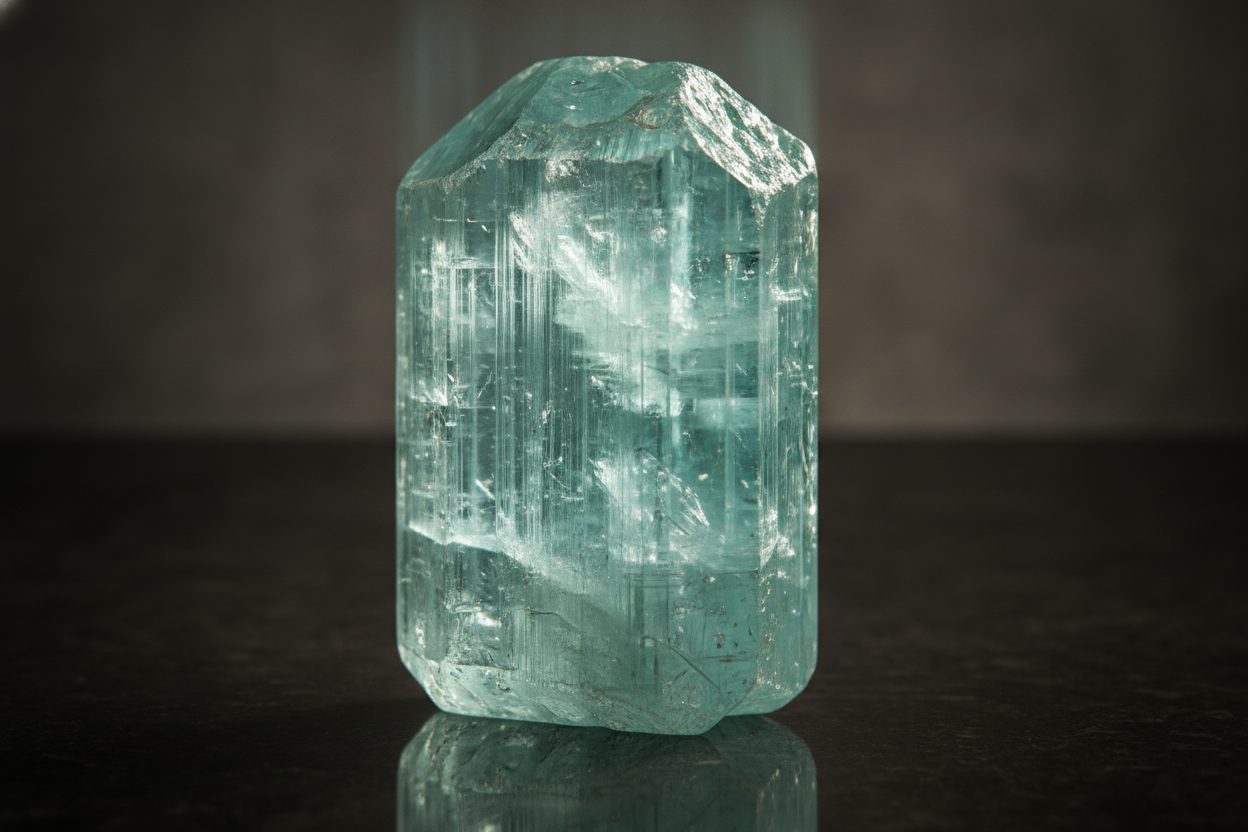
Natural aquamarine is frequently clean to the eye, which is precisely why its inclusions matter under a loupe. The typical population is liquid inclusions, gas bubbles held inside those liquid-filled cavities, and small crystals.
Long, fine parallel channels are common in beryl and often read as faint internal lines when the stone is tilted. They follow the crystal's growth direction, which is a structural signature glass cannot reproduce.
Learn the difference between a gas bubble trapped inside a liquid inclusion and a free spherical bubble suspended in a transparent medium. The first belongs in a natural beryl. The second, especially in clusters of varying size with rounded edges, points to glass or a moulded paste.
Simulants mistaken for aquamarine
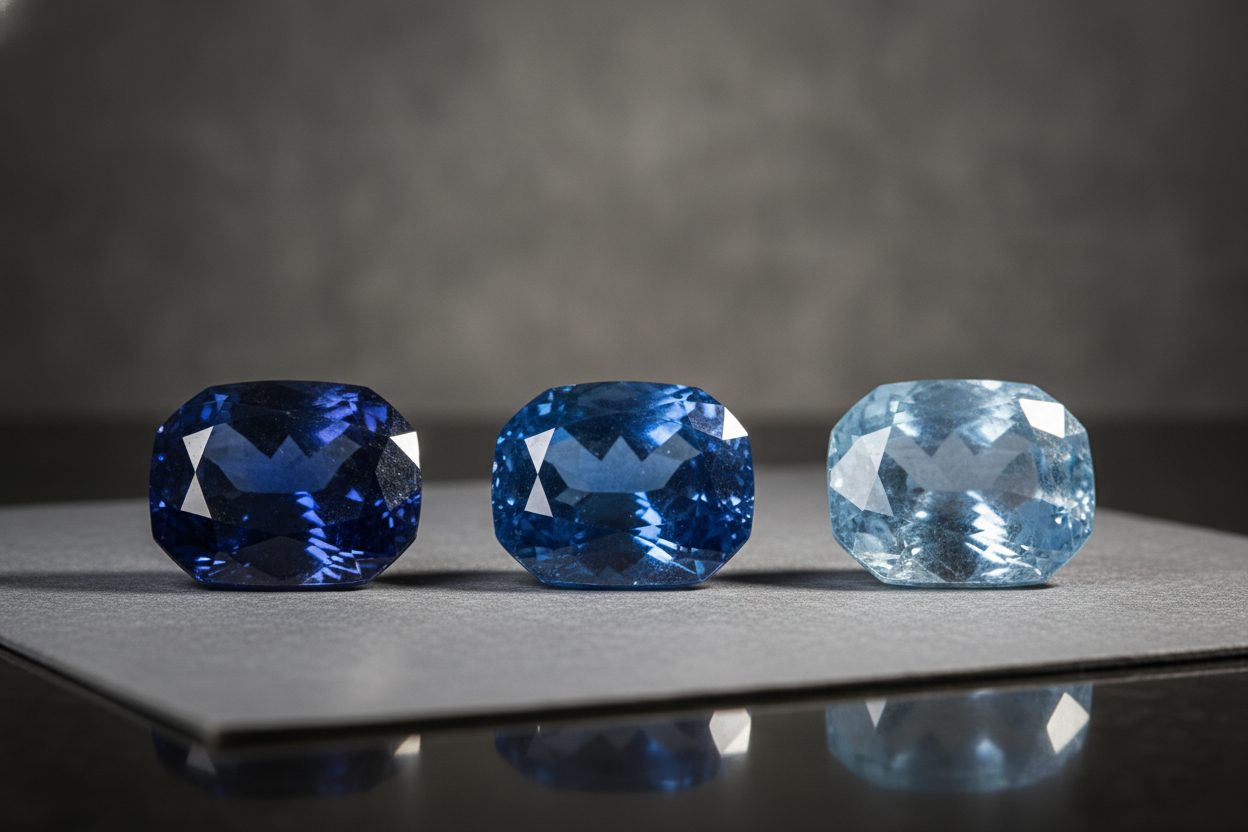
Blue topaz is the most common substitution, partly because it is abundant in a saturated sky blue that aquamarine rarely reaches at low cost. It reads a clearly different refractive index and has a distinctly different feel in the hand, being denser than beryl of the same size.
Synthetic blue spinel appears often in older jewellery and in inexpensive suites. It is singly refractive, so it shows no dichroism at all — a two-second check that eliminates it.
Glass, blue-tinted quartz and assembled doublets round out the field. Glass shows rounded bubbles, swirl-like flow structures and softer facet edges from polishing; doublets reveal a joining plane when viewed through the pavilion at an angle.
The subtler confusion: pale blue everything
The costlier mistake is not a synthetic — it is paying aquamarine prices for a weakly coloured stone of another species, or for a very pale beryl presented as fine goods. Colour saturation is a primary value driver, and washed-out material should be priced accordingly.
More from Aquamarine



Heated vs unheated: the treatment line
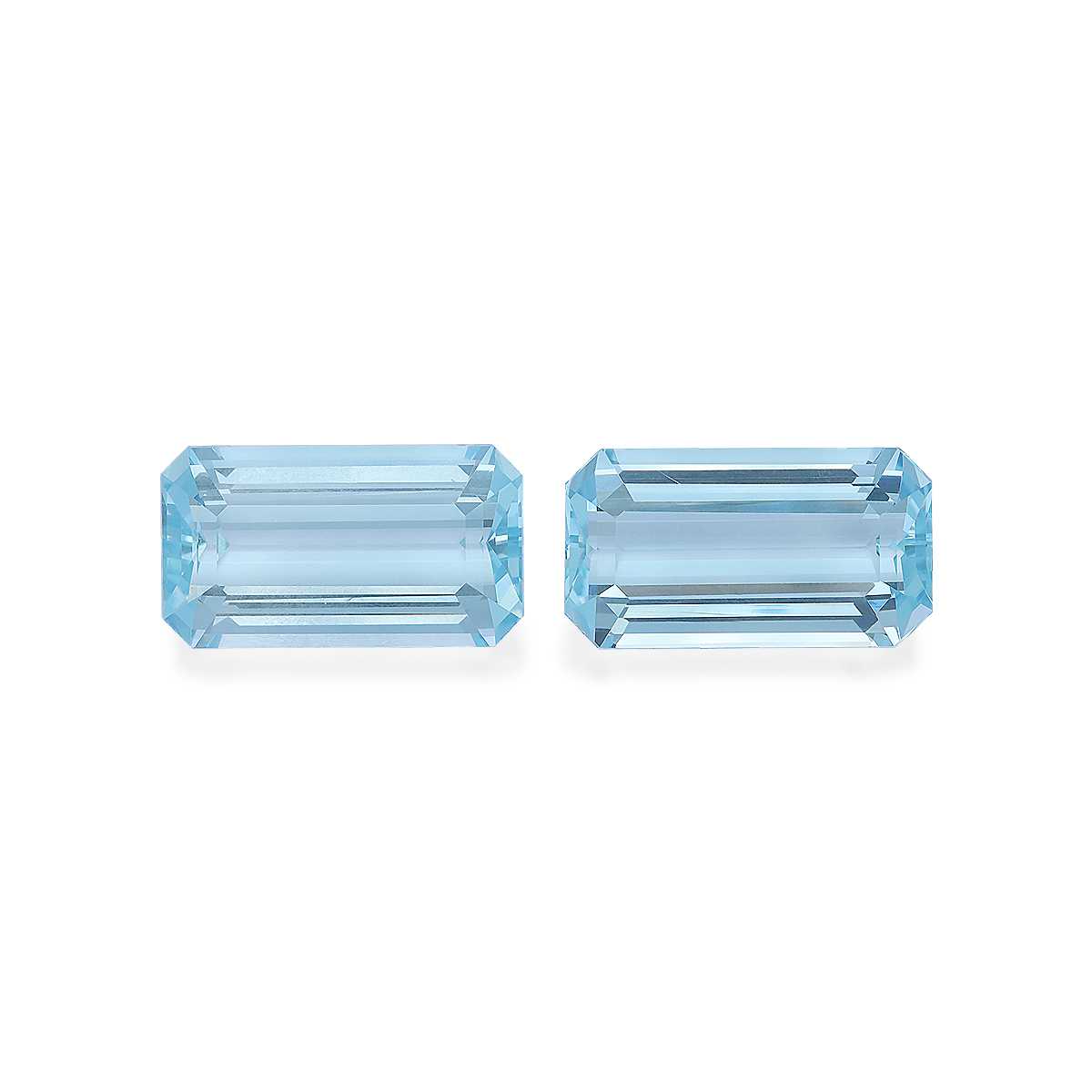
Two states circulate in the trade: unheated and heated. Heat is used to move greenish or yellowish tones toward a purer blue, and the result is stable and permanent.
Because the process leaves little to detect in most stones, a seller who claims certainty without a laboratory report is overstating what they know. Treat "unheated" as a documented finding, not a verbal assurance.
Understand what the disclosure means rather than assuming it dictates price on its own. Colour saturation, clarity, cut quality and size are what move value, and a well-cut, strongly coloured stone remains a well-cut, strongly coloured stone regardless of which line the report prints.
Red flags on listings, labels, invoices
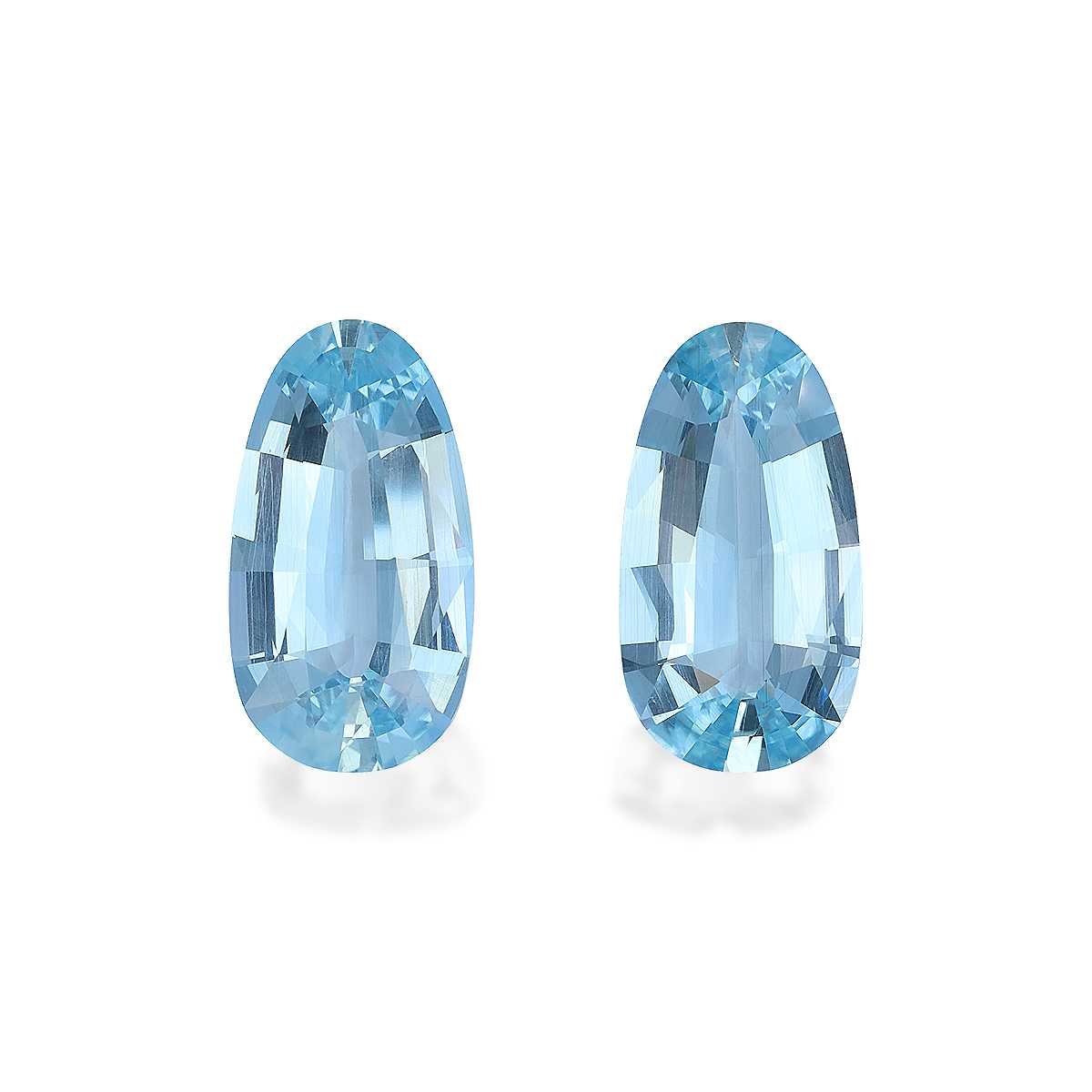
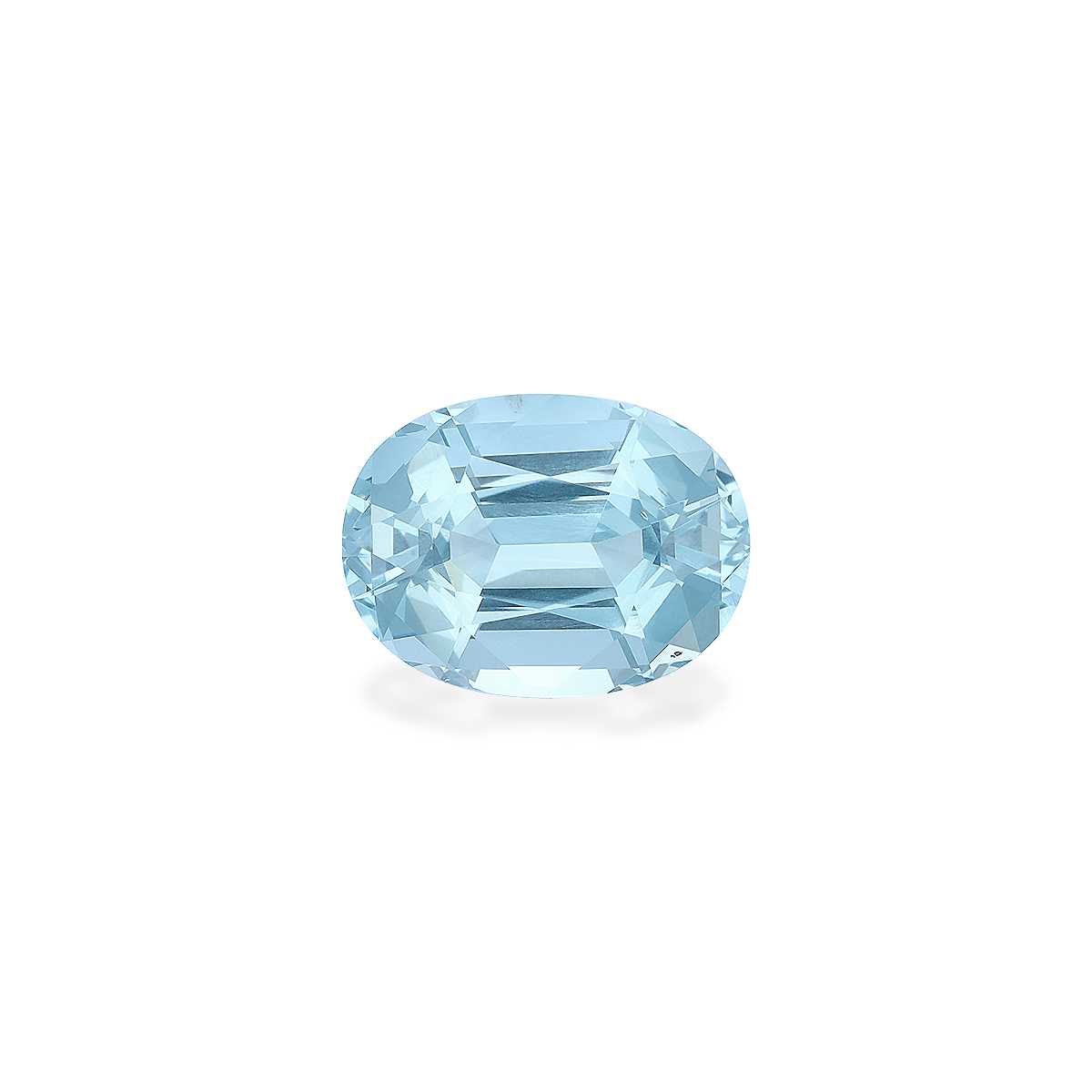
Aquamarine is easy to photograph dishonestly. Blue-biased lighting, heavy saturation editing and dark backgrounds all deepen an ordinary stone; ask for images in diffused daylight against a neutral grey card.
- Trade names without reference. Santa Maria describes a deeply saturated blue. Used loosely, with no laboratory comment or comparison stone, it is marketing language rather than a grade.
- Unsupported origin claims. Material comes from Brazil, Madagascar, Zambia, India and several African sources. Origin stated as fact without a report from a laboratory that performs origin determination should be read as an opinion.
- Invented grading ladders. "AAAA" and similar tiers have no agreed definition across the trade.
- Windowed cuts. If you can read print through the table, light is escaping the pavilion and the colour will look thinner in wear.
- Weight without dimensions. Overly deep stones carry hidden weight that never reaches the eye.
- No returns, no report. For any significant purchase, insist on both.
Questions worth asking before you pay
Ask whether the stone has been heated, and who determined that. Ask for the measurements alongside the carat weight, and for an unedited daylight image or a short video under mixed lighting.
For stones of consequence, ask for a report from a recognised laboratory — GIA, SSEF, Gübelin, AGL or a comparable independent lab. A report will confirm species and variety, state treatment findings, and record the measurements you were quoted.
Finally, ask the seller to describe the inclusions they can see. A dealer who can tell you where the liquid inclusions sit and how the crystals are distributed has actually examined the gem.
Identification is rarely a single dramatic test. It is the accumulation of small agreements — refractive index, dichroism, inclusion type, honest photography and a disclosure that matches the report — and when one of them refuses to line up, that is the moment to slow down.
Frequently asked questions
How can I tell aquamarine from blue topaz?+
Aquamarine has a refractive index of 1.577–1.583, while blue topaz reads noticeably higher and feels heavier for its size. Blue topaz is also commonly available in a strong, even sky blue that natural aquamarine rarely reaches at low prices.
Is aquamarine treated?+
Aquamarine circulates both unheated and heated. Heat is used to shift greenish or yellowish tones toward a purer blue, and the result is stable and permanent; treatment status should be disclosed and, ideally, supported by a laboratory report.
What inclusions should I expect in a natural aquamarine?+
Liquid inclusions, gas bubbles contained within those liquid-filled cavities, and small crystals are typical. Free-floating spherical bubbles with swirl-like flow patterns instead suggest glass rather than natural beryl.
What does "Santa Maria" mean on an aquamarine listing?+
Santa Maria is a trade colour name for a deeply saturated blue. It is a descriptive term rather than a defined grade, so it carries weight only when supported by a laboratory report or a direct comparison you can see.
Is aquamarine hard enough for daily wear?+
At 7.5–8 on the Mohs scale, aquamarine is well suited to rings, pendants and earrings worn regularly. Like any faceted gem it can chip on a sharp knock, so protective settings are sensible for ring stones.
Do I need a laboratory report to buy aquamarine?+
For modest stones, a reputable seller's written disclosure and a clear return policy are usually sufficient. For significant purchases, a report from a recognised laboratory such as GIA, SSEF, Gübelin or AGL confirms species, treatment findings and measurements.
From our Journal
Buying guides, origin stories, and notes from the trade.