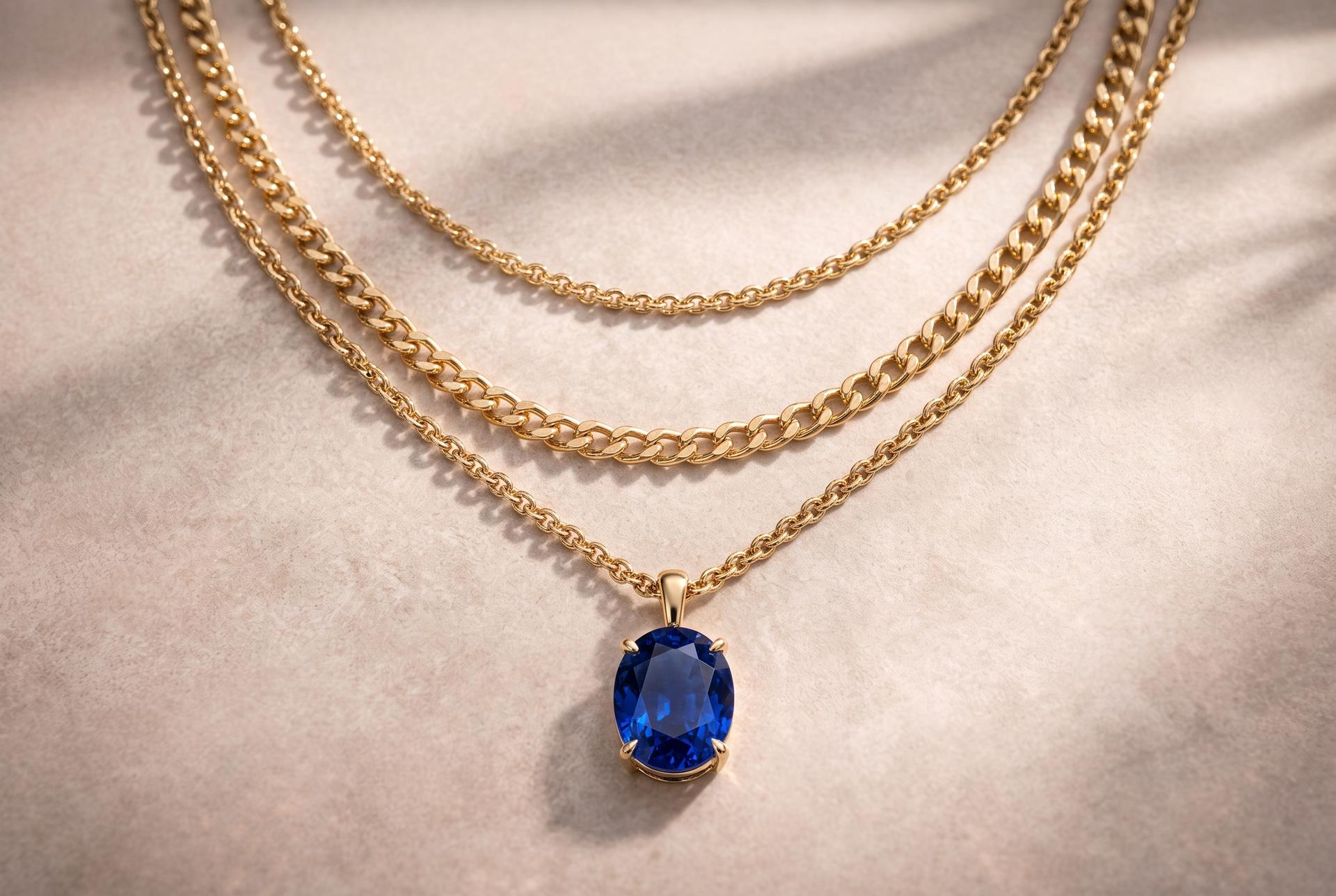
Multi-Length Necklace Layering: Price Guide
The price of multi-length necklace layering is set by three things in order of weight: the gold used in the chains, the gemstones hanging from them, and the quality of the small parts nobody photographs — clasps, jump rings and bails. A stack of three chains in solid gold costs roughly what those chains weigh in metal plus fabrication; add a sapphire or spinel pendant and the centre stone can quietly become the largest single line item. Fair value comes from matching chain gauge to the length it has to hold, and from paying for stones you will actually see, not carat weight hidden under a collar.
Layering is old. Portraits from the Renaissance through the Edwardian period show stacked chains at different drops, and the look has returned because it lets one good stone carry a whole outfit.
What you are actually paying for
A layered set is not one object. It is several independently priced pieces that happen to be worn together, and each follows its own cost logic.
- Metal — priced by weight and purity. A heavier chain in a longer drop costs more simply because there is more gold in it.
- Fabrication — labour for drawing, linking, soldering and polishing. Handmade link chains cost more than machine-made ones of identical weight.
- Gemstones — priced per carat, and highly variable by species and quality.
- Findings — clasps, extenders, bails. Small cost, outsized influence on whether the piece survives daily wear.
Understanding which of these dominates a given quote tells you whether you are buying metal, craft or colour. Most disappointing purchases are mispriced in exactly one of those four columns.
Chain weight sets the floor
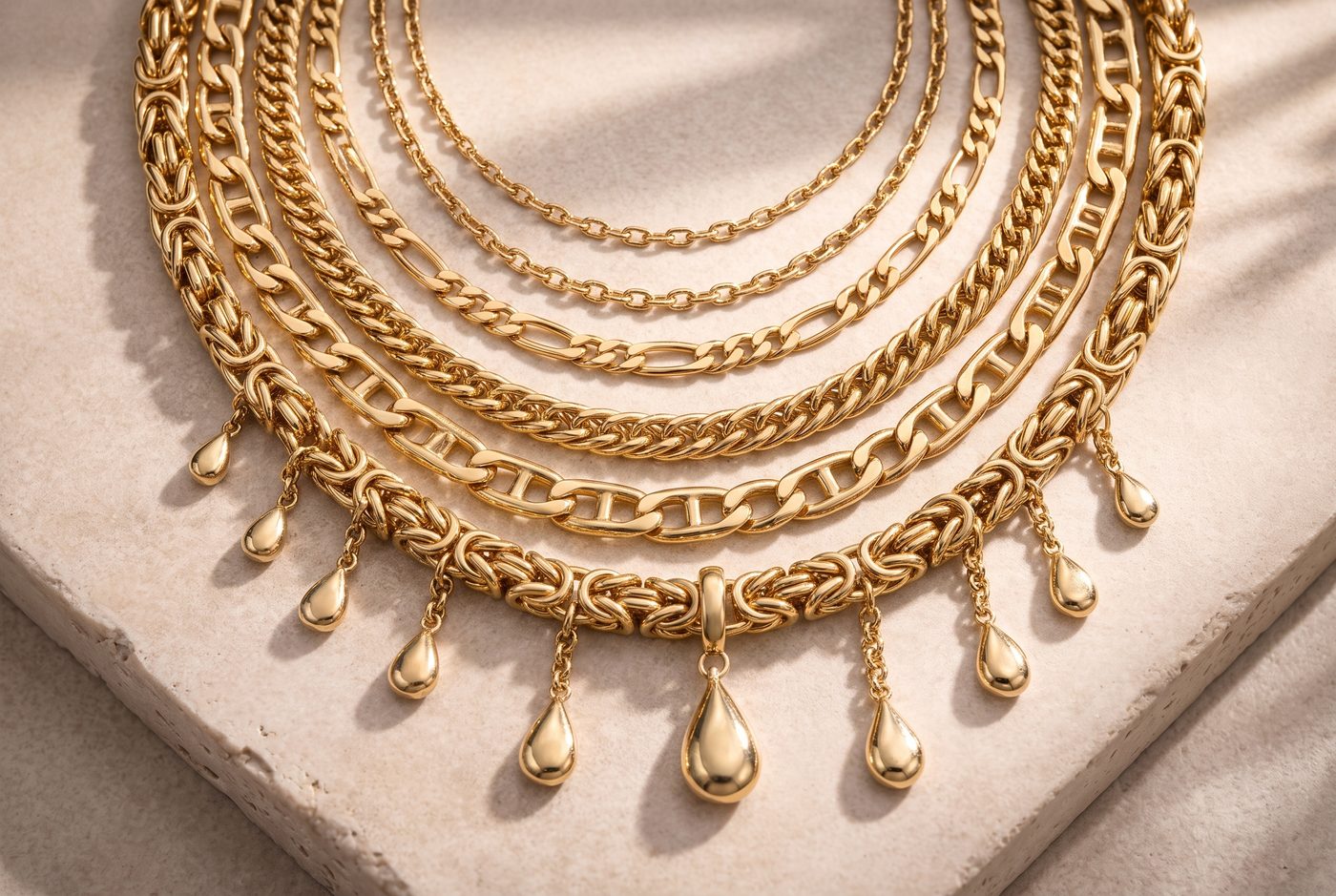
Gold chain is sold, effectively, by the gram. Purity governs the metal content — 18-karat gold is 18 parts gold in 24, 14-karat is 14 — so the same design in 18k always carries more intrinsic cost than in 14k.
Length compounds this. A long opera-drop chain contains considerably more metal than a short choker of the same gauge, which is why the longest piece in a stack is often the most expensive before any stone is added.
Gauge matters structurally, not just financially. A chain too fine for its length will stretch and kink where it crosses the collarbone, and repair labour over a few years can exceed what the heavier gauge would have cost at purchase.
Hollow versus solid
Hollow chains look substantial and weigh little, which lowers the price sharply. They also crush, and crushed hollow links are rarely repairable. For a chain that will be worn against other chains and rubbed daily, solid construction is the honest buy.
Where gemstones change the price
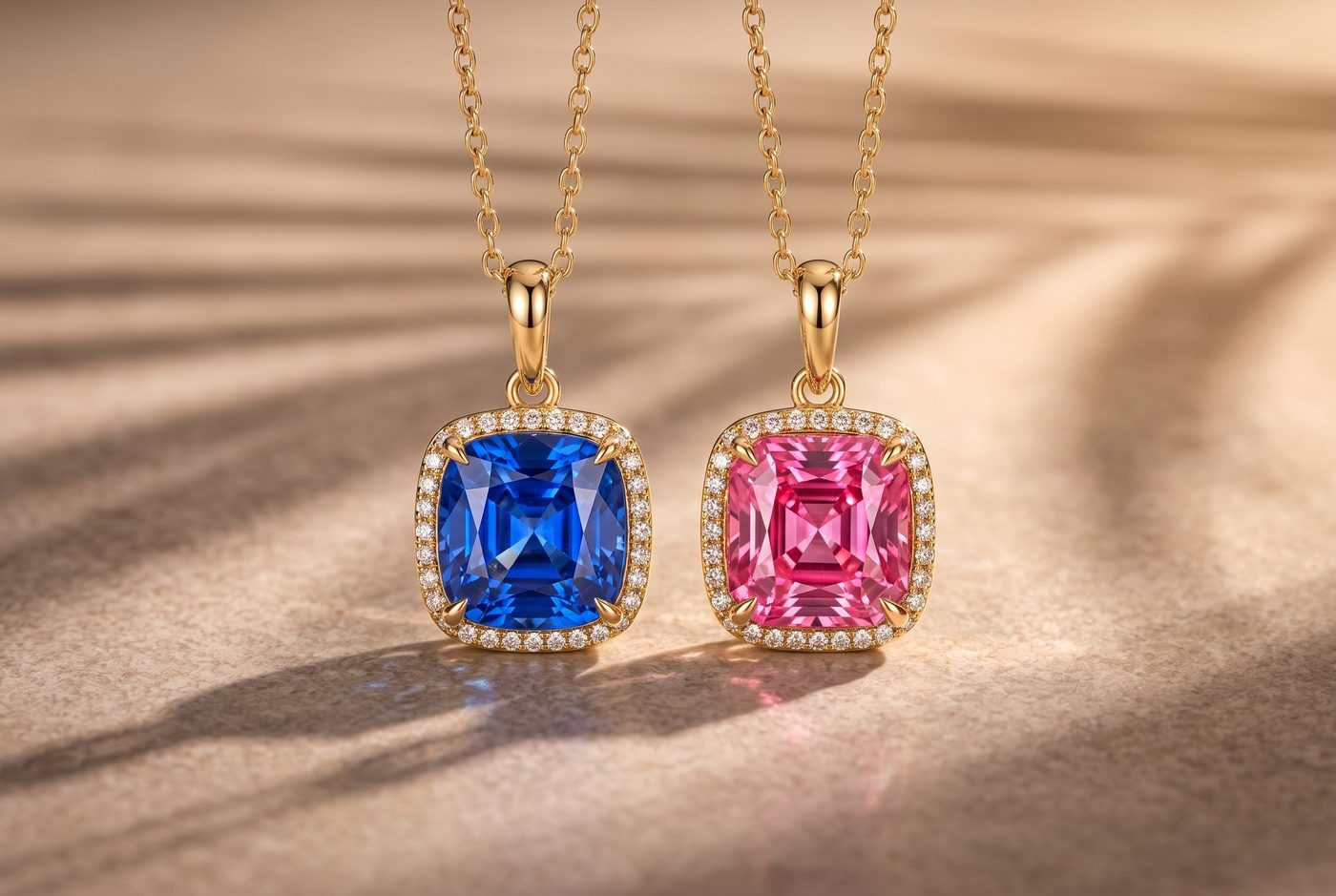
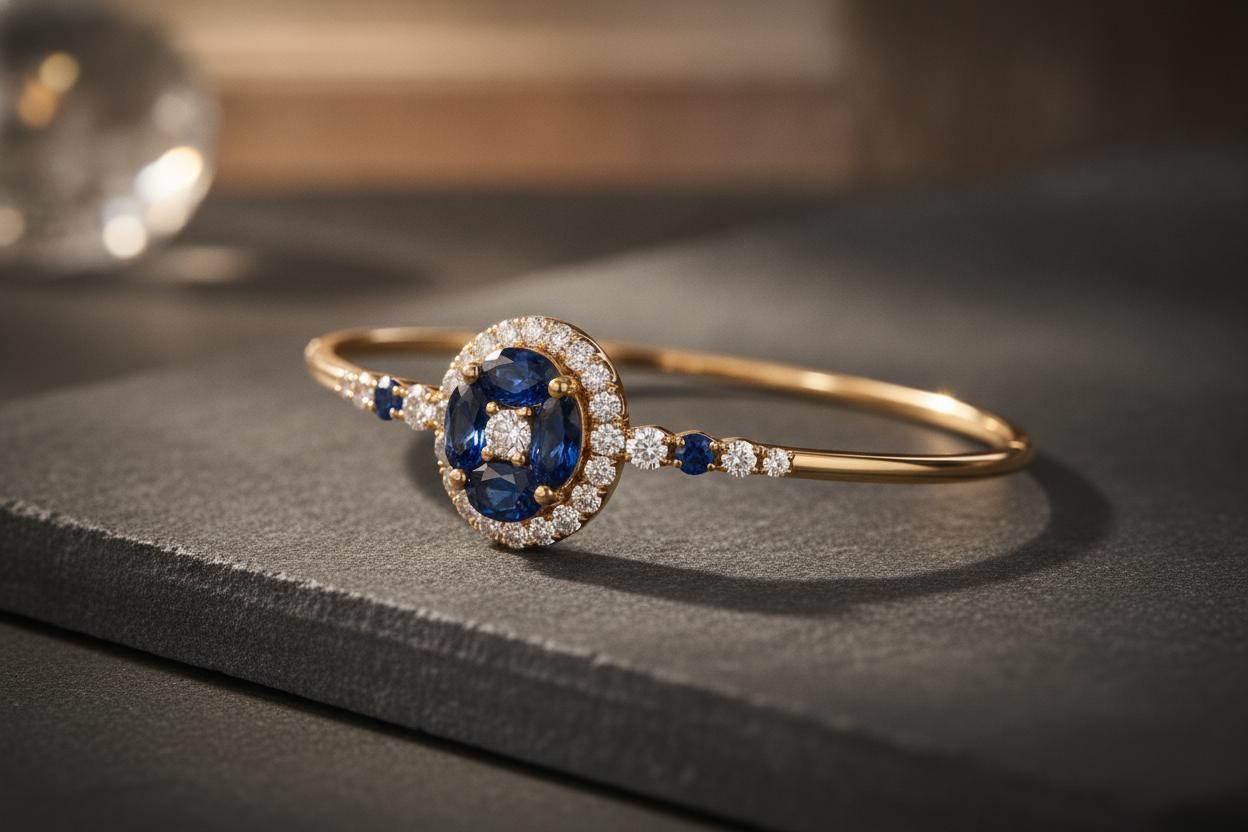
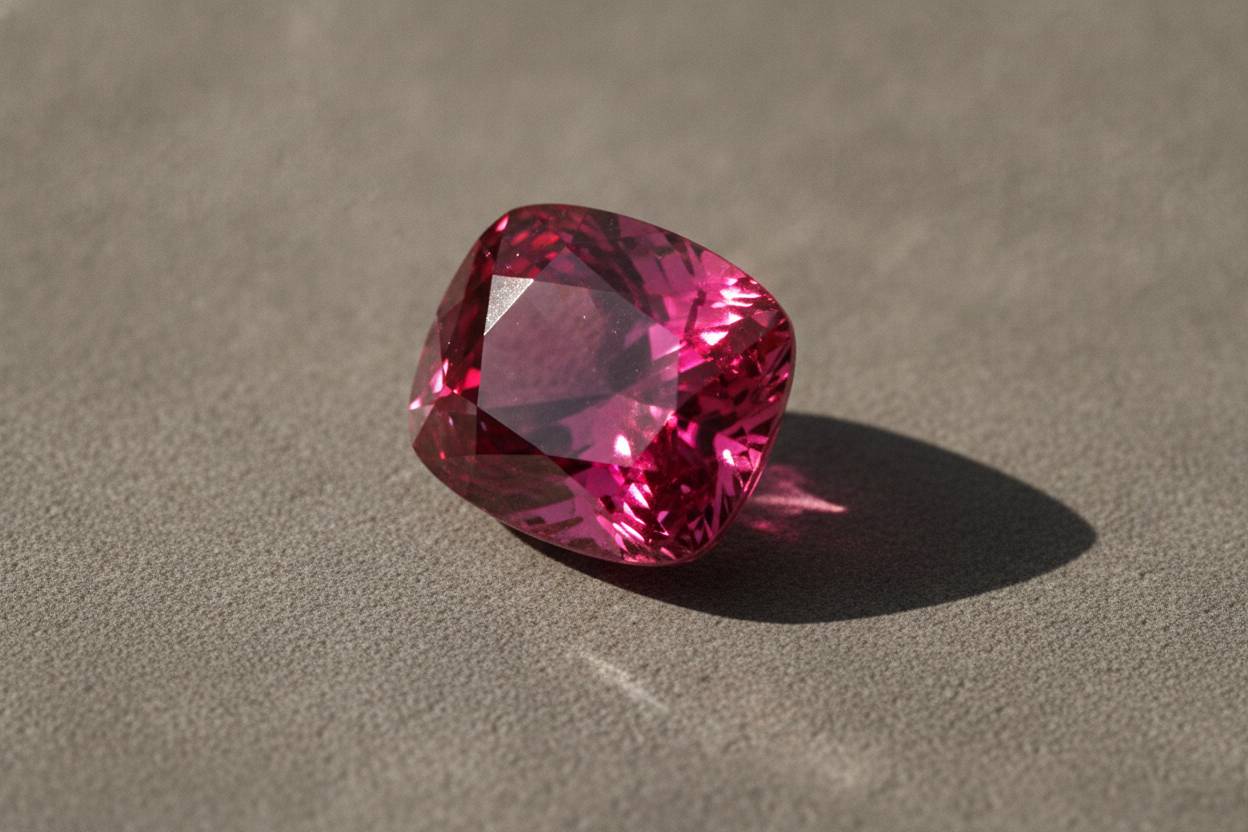
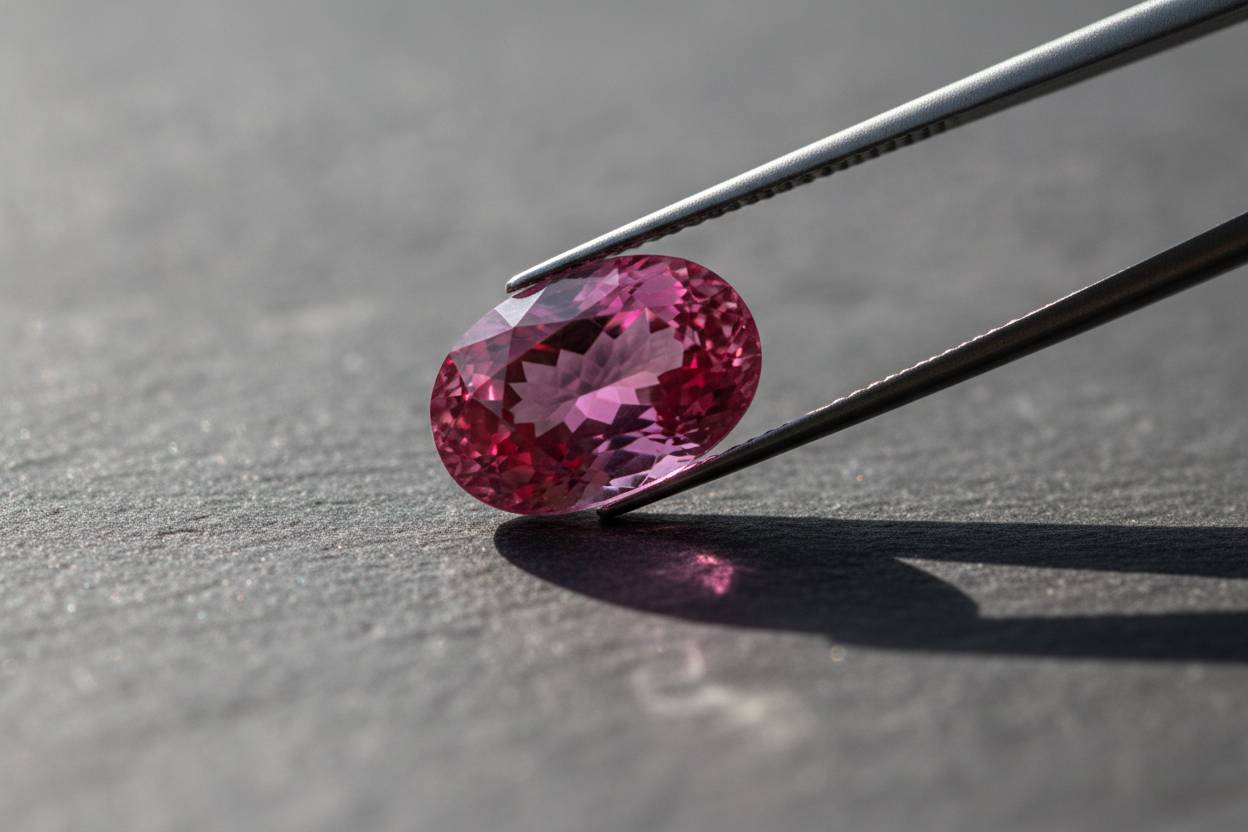
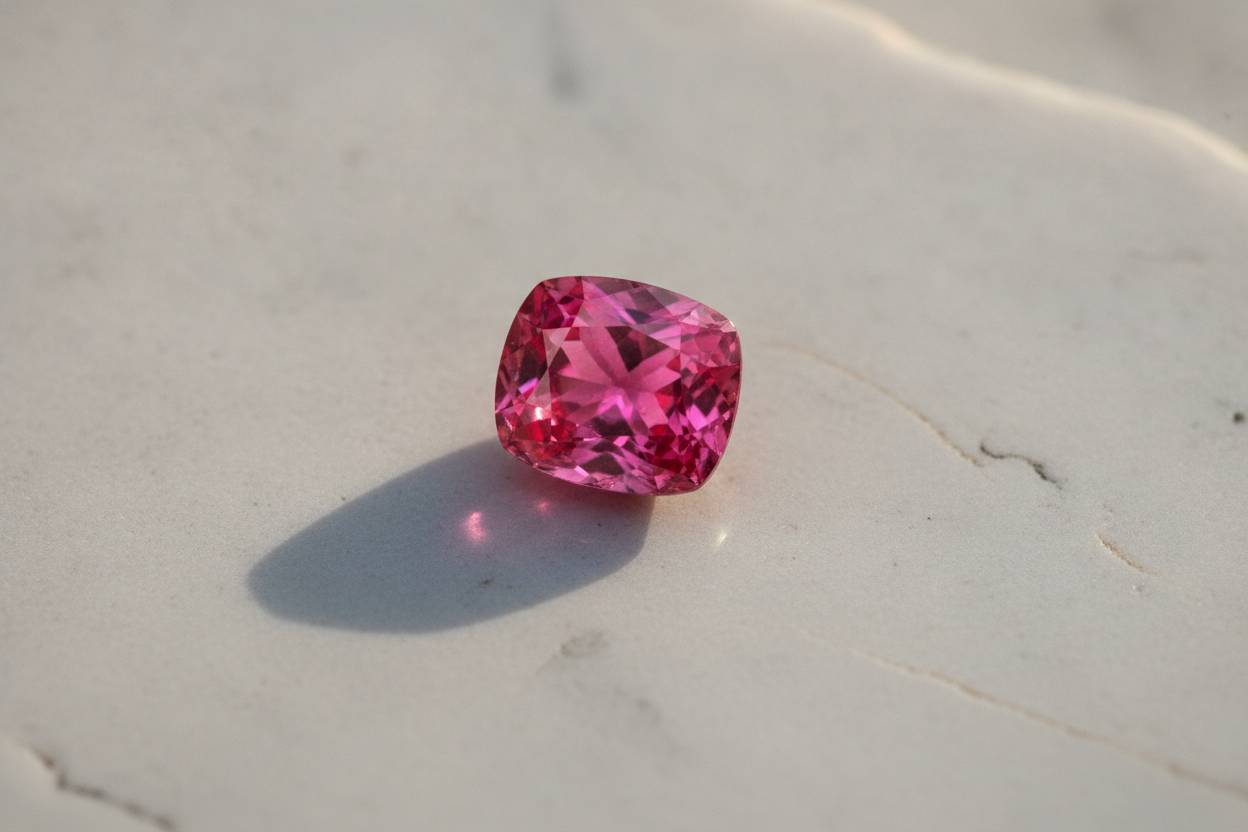
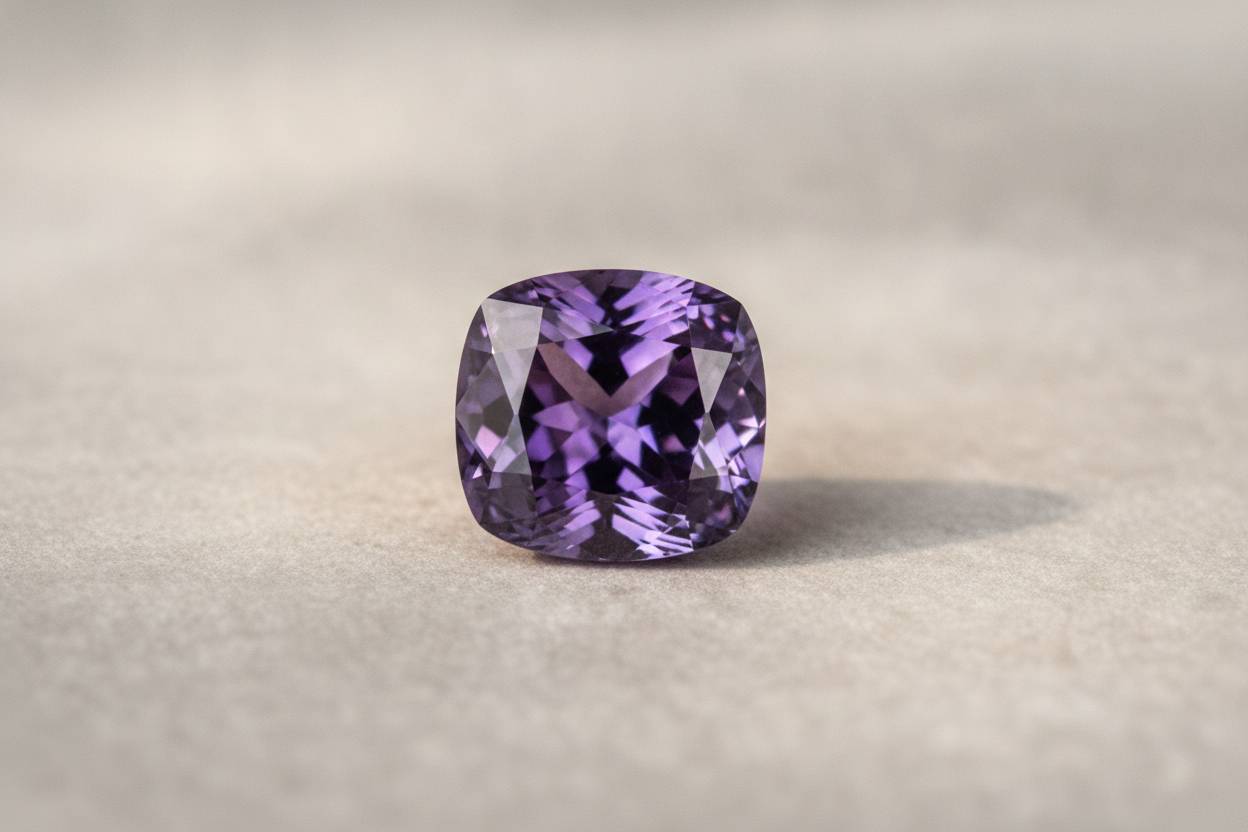
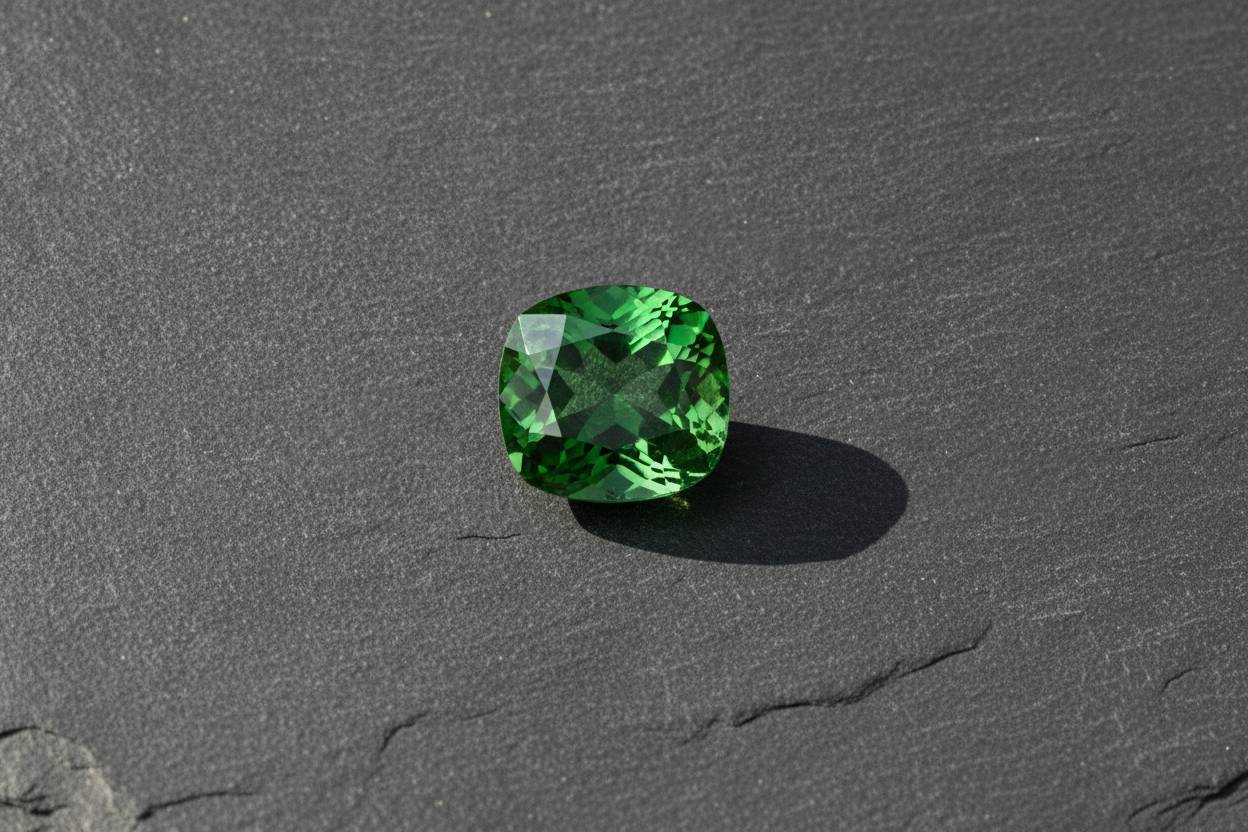
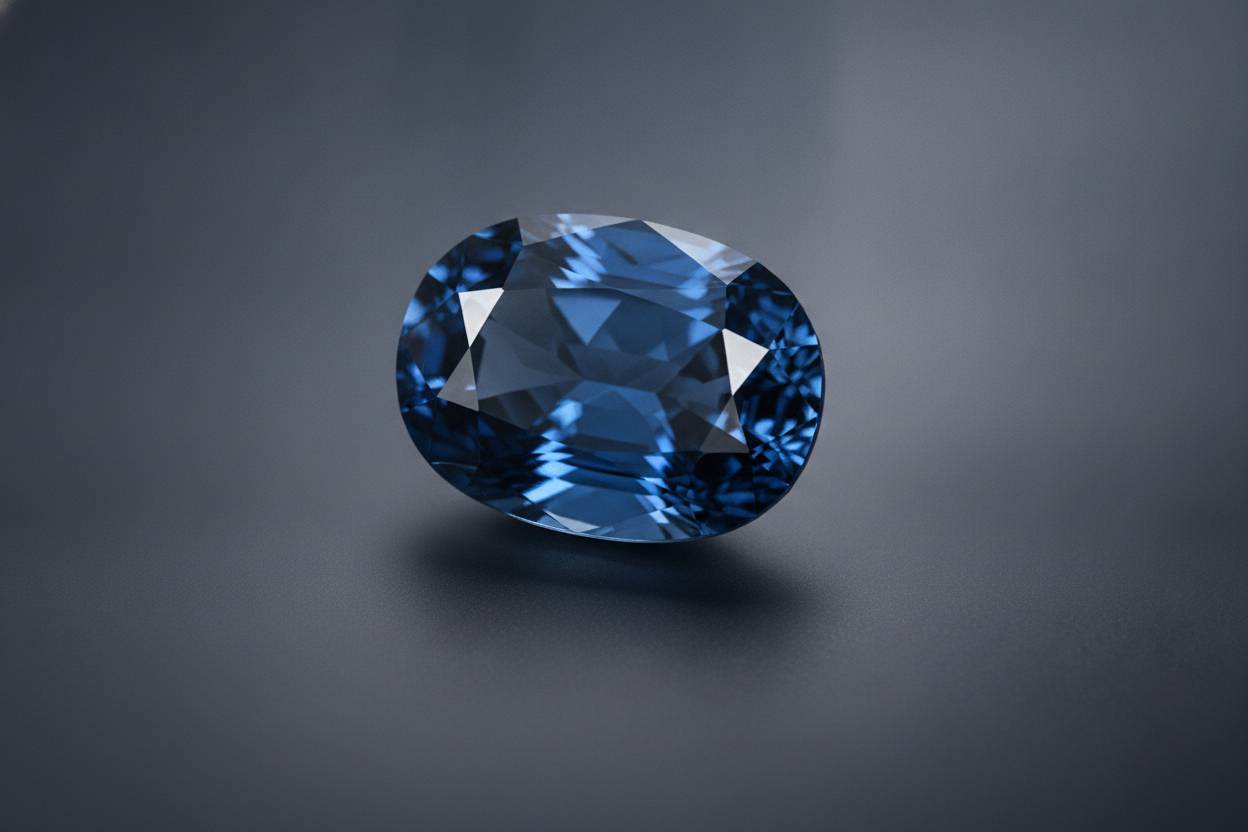
The moment a pendant enters the stack, per-carat pricing takes over. A Ceylon blue sapphire, an unheated spinel and a tourmaline of similar size sit at very different price points, and within each species colour saturation does more to move value than carat weight alone.
For layering specifically, size discipline pays. Pendants in a stack are read at conversational distance, so a smaller stone with vivid, even colour outperforms a larger, greyer one — and costs less.
Durability is a value factor here too. Sapphire sits at 9 on the Mohs scale and spinel at 8, both comfortable against metal chains, while emerald at 7.5 to 8 is brittle along its inclusions and pearls, at roughly 2.5 to 4.5, abrade quickly when chains cross them. A softer stone in a layered set is a maintenance cost disguised as a purchase price.
Clasps, bails and hidden cost
Findings are where cheap sets reveal themselves. An open jump ring soldered shut costs a few minutes of a goldsmith's time; an open one costs you the pendant.
Look for soldered-closed rings, a clasp sized to the chain gauge rather than smaller, and a bail wide enough that the pendant hangs flat instead of twisting. Layering multiplies the number of these junctions, so the failure rate rises with every chain you add.
Magnetic layering clasps and multi-strand spacers are worth their modest cost. They stop tangling, which is the single most common reason layered sets end up unworn in a drawer.
Budgeting a layered stack
Build the stack in order of permanence rather than buying it all at once. The approach below spreads cost sensibly and avoids the compromises that come from splitting one budget three ways.
- The anchor — one fine gemstone pendant on a chain matched to its weight. This is where the gem budget belongs.
- The spacer — a plain solid chain at a clearly different length, ideally a few centimetres apart so the pieces do not collide.
- The accent — a shorter chain or station necklace with small stones, added last.
Done this way, multi-length necklace layering becomes a collection that grows rather than a set that must be replaced whole. Each piece also works alone, which is a form of value that rarely appears on a price tag.
Where buyers overpay
The commonest error is paying gold prices for plated base metal sold as a layering set. Plating wears fastest exactly where chains rub each other, so a stack destroys it faster than a single necklace would.
The second is buying a large, pale centre stone because the carat weight sounds impressive. Saturation and cut quality drive both appearance and resale far more reliably than size.
The third is ignoring length spacing. Chains of similar drop tangle constantly, and a set you fight with every morning is money spent on something you will not wear.
Buy the chains for what they weigh and how they are made. Buy the stone for its colour. The layering takes care of itself.
Frequently asked questions
How many necklaces should I layer?+
Two or three is the practical limit for comfort and cost control. Beyond that, chains tangle more, clasp failures multiply, and the individual pieces stop reading clearly against one another.
What lengths work best together?+
Leave a clear gap between each drop so the chains sit on separate planes rather than colliding. A choker, a mid-length and a longer pendant chain is the most reliable three-piece arrangement.
Is solid gold worth the extra cost for layering?+
For chains worn daily, yes. Plating wears away fastest where chains rub each other, and hollow links crush under the friction of a stack, so solid construction usually costs less over the life of the set.
Which gemstones suit layered necklaces best?+
Harder species handle the constant contact best — sapphire at 9 on the Mohs scale and spinel at 8 are both well suited. Pearls and emeralds are more vulnerable to abrasion and chipping in a stack.
Should I buy a layering set or build it piece by piece?+
Building it piece by piece almost always yields better quality, because the full budget goes into one good anchor piece first. Pre-made sets tend to spread cost thinly across three compromised chains.
How do I stop layered necklaces from tangling?+
Space the lengths clearly, use a multi-strand spacer clasp at the back, and store each chain separately rather than together in one box. Tangling is the main reason layered sets stop being worn.
From our Journal
Buying guides, origin stories, and notes from the trade.